Search News
Industry Portal
Popular Tags
IMC Raises BAF to 18% on East Asia–North Europe Routes
Author
Time
Click Count
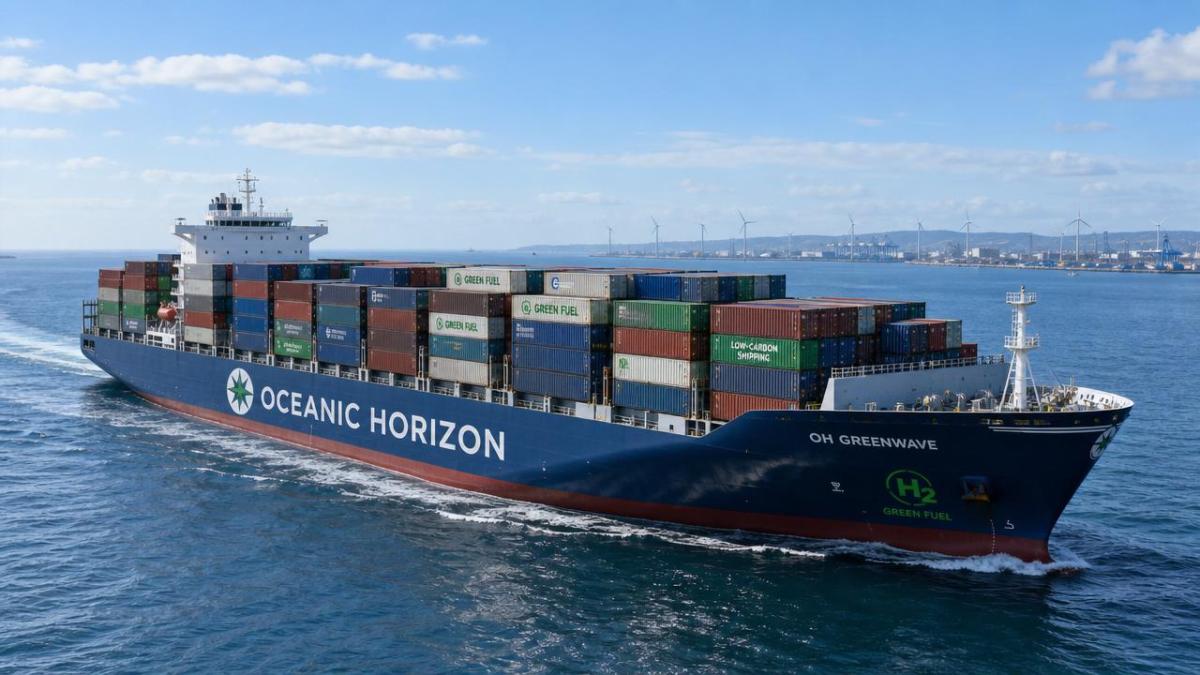
International Maritime Carriers (IMC) announced a 6-percentage-point increase in the Bunker Adjustment Factor (BAF) for East Asia–North Europe mainline services, effective May 15, 2026. The adjustment—driven primarily by green fuel cost pressures—signals heightened cost volatility for exporters, high-value cargo shippers, and multimodal logistics planners operating across this critical trade corridor.
Event Overview
On May 4, 2026, IMC issued a formal notice stating that the BAF on East Asia–North Europe routes will rise from 12% to 18%, effective May 15, 2026. The increase is attributed to two verified cost drivers: green methanol bunkering premiums at Rotterdam Port reaching USD 820 per tonne, and EU Emissions Trading System (ETS) carbon allowance prices exceeding EUR 128 per tonne.
Industries Affected
Direct Exporters & Importers of High-Value Goods
Companies shipping premium industrial equipment, inspection UAVs, or cargo drones face disproportionate BAF impact: these items often move under time-sensitive, value-based freight terms where surcharge pass-through is less negotiable. The 6%-point BAF hike directly raises landed cost benchmarks and may compress margin visibility for Q2 2026 shipments.
Manufacturers Relying on Air Freight Alternatives
Firms using maritime transport as a cost-optimized alternative to air freight—including those shifting from air to sea for UAVs or precision components—now confront recalibrated breakeven thresholds. A higher BAF narrows the cost advantage of sea over air, especially for medium-weight, high-value consignments with tight delivery windows.
Integrated Logistics & Multimodal Service Providers
Third-party logistics (3PL) firms and NVOCCs managing end-to-end East Asia–North Europe flows must revise rate cards, update customer contracts, and reassess service-level commitments tied to fixed-cost structures. The timing—mid-Q2—complicates budget reconciliation and spot-market quoting accuracy.
What Stakeholders Should Monitor and Do Now
Track official BAF methodology updates from IMC and competing alliances
IMC’s notice cites green methanol and EU ETS pricing as drivers—but does not specify whether the 18% reflects a fixed formula or discretionary adjustment. Stakeholders should monitor for published calculation rules or index references, as future BAF revisions may follow similar triggers.
Lock in Q2 container space for priority lanes before May 15
Given the effective date of May 15, 2026, forward bookings made prior to that date will retain the 12% BAF level. Exporters with firm Q2 shipment schedules—particularly those moving inspection UAVs or cargo drones—should confirm booking confirmations and bill-of-lading issuance dates to ensure pre-adjustment rates apply.
Evaluate land-sea intermodal alternatives for time-flexible cargo
The notice explicitly recommends assessing land-sea intermodal options. For non-urgent shipments, rail-forwarded containers via China–Europe rail corridors (e.g., via Duisburg or Warsaw) may offer more predictable surcharge profiles than deep-sea legs exposed to volatile green fuel premiums.
Editorial Observation / Industry Perspective
Observably, this BAF revision functions less as an isolated cost event and more as a structural signal: it confirms that green fuel adoption is now materially priced into core trade lanes—not just as pilot premiums but as operational line items affecting mainstream routing decisions. Analysis shows the linkage between Rotterdam’s methanol infrastructure rollout and transcontinental rate-setting underscores how port-level decarbonization efforts are rapidly cascading into global freight economics. From an industry standpoint, the 18% BAF is better understood as an early indicator of ETS-driven cost normalization—not a temporary spike—and warrants inclusion in long-term tariff modeling, not just short-term budget contingency planning.
Conclusion
This BAF adjustment reflects a measurable shift in how environmental compliance costs are embedded in maritime trade. It does not represent a one-off anomaly but rather confirms that green fuel premiums and carbon pricing are now integral to baseline ocean freight cost structures on major routes. Current understanding should treat this as a calibration point—not an exception—to be monitored, modeled, and operationally absorbed across procurement, contracting, and route design processes.
Source Attribution
Main source: Official IMC announcement dated May 4, 2026. Note: Green methanol pricing at Rotterdam Port and EU ETS allowance levels cited are publicly verifiable as of May 4, 2026. Ongoing monitoring is advised for IMC’s BAF calculation methodology disclosure and potential follow-up adjustments beyond May 15, 2026.
Recommended News
 May 30, 2026Wholesale Cosmetic Sponges: Cost vs Quality ChecksWholesale cosmetic sponges sourcing made smarter: compare cost, material safety, durability, packaging, and supplier quality checks before bulk buying.
 May 30, 2026Industrial Automation Technology: ROI Signals for 2026Industrial automation technology ROI signals for 2026: see how AI, predictive maintenance, connected data, and resilient operations guide smarter capital decisions.
 May 30, 2026Belt Tension and Friction Metrics: What to TrackBelt tension and friction metrics reveal slip, wear, energy loss, and reliability risks—learn what to track for smarter maintenance and automation performance.
 May 30, 2026Squeaky Plush Dog Toys: Safety Checks Before BuyingSqueaky plush dog toys can delight dogs safely—learn key buying checks for fabric, seams, squeaker placement, size, and materials before you choose.
 May 30, 2026Global Buyers: Supplier Risk Signals in 2026Global buyers can spot 2026 supplier risk signals early—financial stress, compliance gaps, digital weakness, and material exposure—to secure resilient sourcing.
 May 30, 2026Vietnam Introduces Ban-and-Disclosure List for Pesticide/Biocide Actives; Bio-Plastic Mulch Exporters Must Submit Migration DataVietnam’s new ban-and-disclosure list for pesticide/biocide actives impacts bio-plastic mulch exporters—submit migration data by July 1, 2026 to avoid shipment delays.
 May 30, 2026Saudi Arabia Enforces New Washer Efficiency Standard: Functional Coatings Must Pass Condensation-Aging TestFunctional Coatings for washers must now pass SASO 2663:2026’s condensation-aging test—key to Saudi market access. Act before May 2026.
 May 30, 2026U.S. Launches New 301 Investigation Targeting Industrial Catalysts Over Forced Labor ConcernsIndustrial catalysts under new U.S. Section 301 investigation for forced labor risks—key implications for exporters, suppliers & compliance teams.
 May 30, 2026DBDPE Added to REACH SVHC Candidate List: Impurity Profiling Now Required for Electronic-Grade Chemical ExportsDBDPE added to REACH SVHC list—impurity profiling now mandatory for electronic-grade chemical exports. Act now to avoid shipment delays, customs rejections, and lost EU contracts.
 May 30, 2026EU IMERA Act Enters Force: Supply Chain Scrutiny for Harmonic Reducers, Servo ActuatorsHarmonic Reducers & Servo Actuators importers: EU IMERA Act now enforces supply chain transparency—act before 29 May 2026 to avoid delays.
 May 29, 2026ODM Pet Product Sourcing: Risks to Review FirstODM pet sourcing can speed launches, but hidden risks matter. Review safety, compliance, IP, quality, capacity, and supplier controls before you commit.
 May 29, 2026Retail Data Mistakes That Distort Demand ForecastsRetail data mistakes can quietly distort demand forecasts. Learn how to spot weak signals, improve governance, reduce inventory risk, and make smarter business decisions.
 May 29, 2026Seamless Activewear Manufacturer: Quality Signs That MatterChoose a seamless activewear manufacturer with confidence. Learn key quality signs, testing standards, traceability checks, and risk controls for safer, reliable sourcing.
 May 29, 2026Custom Makeup Bags: Cost Traps to Check Before OrderingCustom makeup bags can hide costs in materials, branding, testing, packaging, and freight. Learn key traps to avoid before ordering and protect your budget.
 May 29, 2026How to Compare Material Innovation Companies in 2026Material innovation companies in 2026: learn how to compare performance, scalability, sustainability, AI readiness, and business value before you choose.
 May 29, 2026China-ASEAN FTA 3.0 Finalized: AI Supply Chain Tools Gain Formal RecognitionChina-ASEAN FTA 3.0 officially recognizes AI supply chain tools — including Supply Chain LLMs and Digital Twin AI — as core infrastructure for regional trade.
 May 29, 2026EU REACH Adds Restrictions on Impurities in Electronic-Grade ChemicalsEU REACH now restricts arsenic, antimony & bismuth impurities in electronic-grade chemicals—0.1 ppb limit effective May 2026. Ensure compliance for photoresist solvents & etchant additives.
 May 29, 2026EU Proposes 30% Single-Country Sourcing Cap for Critical ActuatorsEU proposes 30% single-country sourcing cap for critical actuators — key implications for torque logic, servo actuators & global supply chain resilience.
 May 29, 2026China Extends Zero-Tariff Access to All African Diplomatic Partners: Cost Drop for Functional Coatings & Engineering Resins ExportsFunctional Coatings & Engineering Resins exporters gain major cost advantage: China’s zero-tariff access for 20 African diplomatic partners starts 1 May 2026.
 May 29, 2026EU IMERA Regulation Enters Force: Supply Chain Monitoring Expands for Precision Drive ComponentsEU IMERA Regulation now active—harmonic reducers, planetary gearboxes & servo actuators face new supply chain monitoring. Act now to assess critical dependency risks.
 May 28, 2026Advanced Materials for Industrial Automation: How to Compare DurabilityAdvanced materials for industrial automation: learn how to compare durability with real-world evidence, lifecycle cost insights, and failure-mode analysis for smarter, longer-lasting decisions.
 May 28, 2026Automation Technology for Factories: Cost vs Output GainsAutomation technology for factories: compare total cost, ROI, and output gains with a finance-focused framework for smarter approvals, lower risk, and stronger production performance.
 May 28, 2026Manufacturing Technology Trends 2026: Which Bets Carry Less Risk?Manufacturing technology trends for 2026: discover lower-risk bets in AI, automation, connectivity, and materials that improve resilience, ROI, and smarter procurement decisions.
 May 28, 2026Smart Manufacturing Technology: What Improves Line Efficiency?Smart manufacturing technology boosts line efficiency by cutting downtime, improving OEE visibility, and speeding quality response. Discover a practical checklist for measurable factory gains.