Search News
Industry Portal
Popular Tags
Vietnam Introduces Ban-and-Disclosure List for Pesticide/Biocide Actives; Bio-Plastic Mulch Exporters Must Submit Migration Data
Author
Time
Click Count
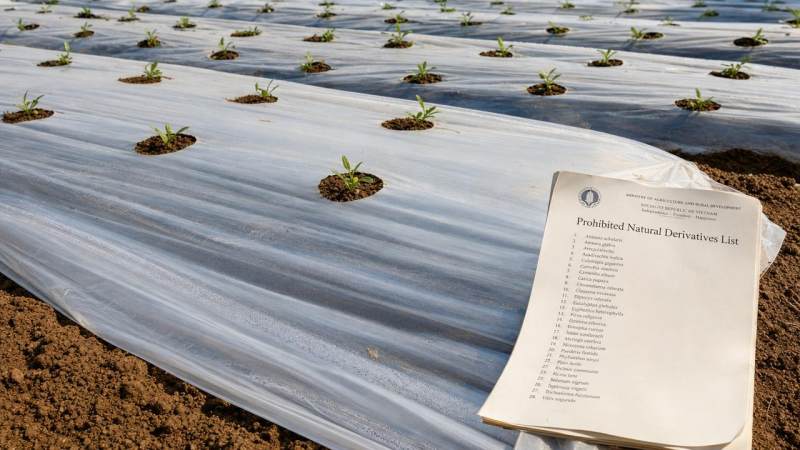
On May 20, 2026, Vietnam’s Ministry of Agriculture and Rural Development (MARD) issued a new regulatory requirement affecting imports of bio-plastic agricultural mulch films and controlled-release packaging. The measure mandates additional reporting on active ingredient migration and prohibits 12 high-risk natural derivatives — triggering immediate supply chain adjustments among exporters, particularly in China’s bio-plastics sector.
Event Overview
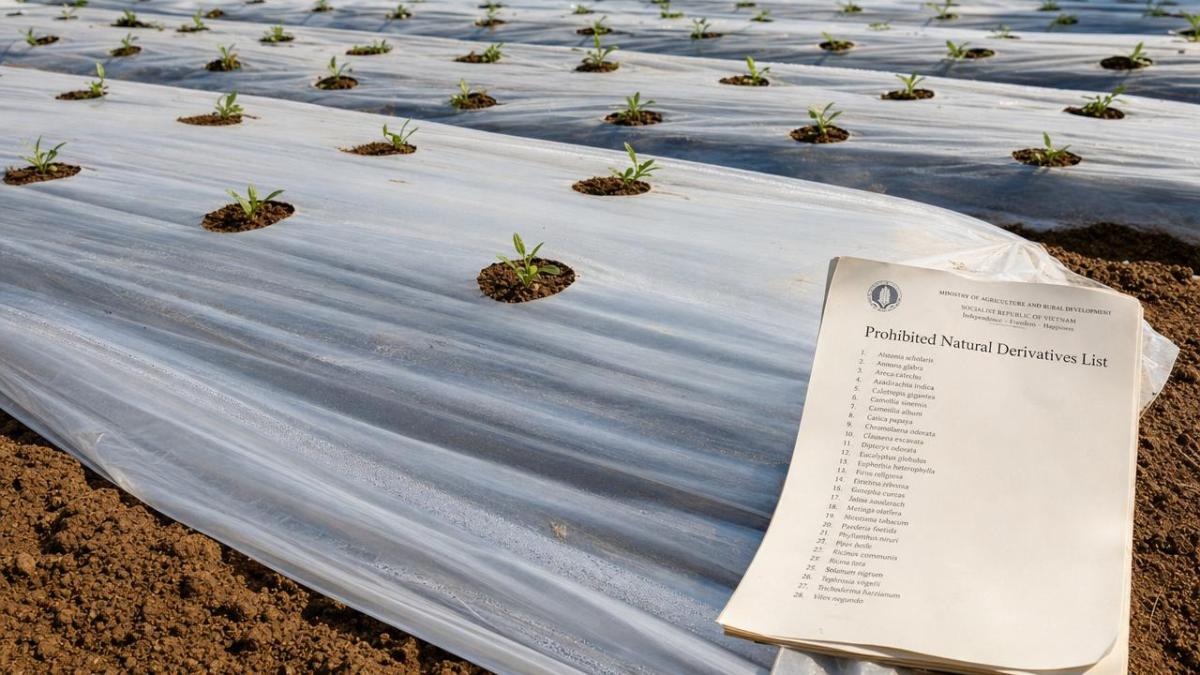
On May 20, 2026, Vietnam’s Ministry of Agriculture and Rural Development (MARD) published a regulatory notice requiring all imported agricultural mulch films and slow-release packaging materials containing bio-plastics to submit certified test reports on the migration rates of active ingredients — such as plant extracts or microbial metabolites — into soil or crops. Concurrently, MARD listed 12 high-risk naturally derived substances prohibited for use in such products. The regulation enters into force on July 1, 2026. As of publication, two Chinese bio-plastic mulch exporters have reportedly withdrawn orders due to compliance constraints.
Industries Affected
Direct Exporters of Bio-Plastic Agricultural Films
These companies face immediate customs clearance hurdles. Under the new rule, they must generate and submit third-party migration testing data — a step previously not required for bio-plastic mulch entering Vietnam. Delays or rejections may occur if documentation is incomplete or fails to meet Vietnamese methodological expectations.
Suppliers of Bio-Based Active Ingredients
Manufacturers and distributors of plant-derived or microbially sourced actives used in functional agri-films are affected because 12 listed substances are now banned. Their product portfolios require immediate review against the official prohibition list. If any supplied ingredient appears on the list, formulation adjustments or substitution efforts become necessary before shipment.
Contract Manufacturers & Compounders
Firms that blend bio-polymers with active ingredients for finished mulch films must verify both raw material compliance and final product behavior. Migration testing applies to the end product — not just individual components — meaning compounders bear responsibility for validating performance under Vietnamese soil/crop exposure conditions.
Testing Laboratories & Regulatory Support Providers
Laboratories accredited for migration analysis (especially under Vietnamese-standardized protocols) are likely to see increased demand. However, no official Vietnamese test method has been publicly released yet — creating uncertainty about acceptable analytical parameters, sampling depth, duration, or environmental simulation conditions.
What Relevant Companies or Practitioners Should Focus On — And How to Respond Now
Monitor Official Updates from MARD and Vietnam Customs
The prohibition list and migration reporting requirements are confirmed, but technical specifications — including accepted test methods, required detection limits, and report format — remain pending. Stakeholders should track MARD’s official portal and Vietnam’s National Agro-Chemical Registration Portal for updates prior to July 1, 2026.
Identify and Isolate High-Risk Formulations Immediately
Exporters and formulators should cross-check current product formulations against the published list of 12 banned natural derivatives. Any match requires either removal or formal justification — though no exemption pathway is indicated in the May 20 notice. Prioritization should focus on SKUs destined for Vietnam.
Distinguish Between Policy Signal and Operational Readiness
This is a regulatory mandate, not a guidance document — enforcement begins July 1, 2026. However, the absence of finalized test methodology means full operational readiness depends on further clarification. Companies should initiate migration testing now using internationally recognized approaches (e.g., OECD 106/107 adapted for polymer matrices), while treating results as provisional until Vietnamese validation criteria are published.
Prepare Documentation and Supplier Communication Protocols
Exporters should request updated Certificates of Conformance and active ingredient declarations from upstream suppliers. Internal checklists for pre-shipment documentation — including test report metadata (lab accreditation, test standard applied, sample preparation details) — should be drafted and shared across quality assurance and logistics teams.
Editorial Perspective / Industry Observation
Observably, this regulation signals Vietnam’s shift toward function-based regulation of bio-plastic agri-inputs — moving beyond polymer composition to assess real-world biological interaction. It treats bio-plastic films not merely as inert coverings, but as delivery systems for bioactive agents. Analysis shows this reflects broader ASEAN trends toward harmonizing pesticide-related oversight across material categories. From an industry perspective, it is less a one-off compliance hurdle and more an early indicator of how regulators may evaluate next-generation agri-tech materials — especially where biological activity intersects with environmental release. Current attention should focus less on whether the rule will change, and more on how quickly supporting technical frameworks (test standards, lab capacity, interpretation guidelines) mature.
This development underscores a growing regulatory reality: bio-based does not automatically mean low-regulation. For exporters, the distinction between ‘bio-plastic’ and ‘bio-active plastic’ is now operationally decisive in Vietnam — and potentially elsewhere.
Information Sources
Main source: Official notice published by Vietnam’s Ministry of Agriculture and Rural Development (MARD), dated May 20, 2026.
Areas requiring ongoing observation: Publication of Vietnamese national test methodology for active ingredient migration; official list of accredited laboratories; and potential amendments to the 12-substance prohibition list ahead of July 1, 2026 implementation.
Recommended News
 Jun 01, 2026Custom Makeup Bags: Material Choices and Cost TrapsCustom makeup bags sourcing guide: compare materials, avoid hidden cost traps, and choose smarter specs for durable, compliant, brand-ready cosmetic bags.
 Jun 01, 2026Consumer Sector Trends Shaping Product DemandConsumer sector trends are reshaping product demand through sustainability, AI personalization, and resilient supply chains—discover strategies to stay competitive.
 Jun 01, 2026Baby Clothing Safety Standards That Matter in 2026Baby clothing safety standards in 2026: learn key checks for chemicals, labels, fasteners, sleepwear and fabrics to choose safer, trusted garments with confidence.
 Jun 01, 2026Electric Toothbrush OEM: Cost vs Quality ChecklistElectric toothbrush OEM cost vs quality checklist: compare suppliers, components, compliance, customization, and TCO to reduce risk and build reliable oral-care products.
 Jun 01, 2026Product Compliance Risks to Check Before LaunchProduct compliance risks can delay launches and trigger recalls. Learn key checks for materials, testing, labeling, suppliers, and documentation before market release.
 Jun 01, 2026EU Proposes PFAS Migration Limits for Barrier Films under REACH Annex XVIIPFAS migration limits for barrier films: EU proposes ≤25 ng/cm² under REACH Annex XVII—key implications for exporters, manufacturers & labs. Act now.
 Jun 01, 2026Humanoid Robot Online Sales Up 20.6% in April, Driving Global Demand for Harmonic ReducersHarmonic reducers in high demand as humanoid robot online sales surge 20.6%—key insight for robotics suppliers, distributors & logistics providers.
 Jun 01, 2026New MOFCOM Rule: Bio-Plastics Agricultural Films Exported to ASEAN, Latin America Require ISO 17987:2025 Migration Testing from June 2026Bio-plastics agricultural films exported to ASEAN & Latin America must pass ISO 17987:2025 migration testing from June 2026—act now to avoid delays!
 Jun 01, 2026Vietnam Cement Expo Highlights Functional Coatings and Engineering Resins IntegrationVietnam Cement Expo 2026 spotlighted Functional Coatings and Engineering Resins integration—transforming how Southeast Asian infrastructure buyers select advanced concrete admixtures.
 Jun 01, 2026China Implements Export Spot Checks on Electronic-Grade Chemicals from June 1, 2026Electronic-grade chemicals export spot checks start June 1, 2026 in China — key update for semiconductor & electronics supply chains. Stay compliant & avoid delays.
 May 31, 2026Cast Iron Dumbbells Wholesale: Price and Quality ChecksCast iron dumbbells wholesale buyers: compare price, weight accuracy, coatings, packaging, and supplier reliability to cut defects and source with confidence.
 May 31, 2026Industrial Digitalization Risks Before System UpgradesIndustrial digitalization upgrades can expose hidden asset, data, cybersecurity, and workflow risks. Use this checklist to protect continuity and maximize long-term value.
 May 31, 2026Industrial Innovation Trends Shaping 2026 OperationsIndustrial innovation is reshaping 2026 operations through AI, automation, advanced materials, resilient supply networks, and smarter sustainability strategies.
 May 31, 2026Custom Cosmetic Packaging Costs: Hidden Factors to KnowCustom cosmetic packaging costs go beyond unit price. Discover hidden factors in materials, tooling, compliance, MOQs, and logistics to protect margins and launch smarter.
 May 31, 2026Best Cabinet Locks for Baby Proofing: What to CheckCabinet locks baby proofing made simple: compare magnetic, adhesive, latch, and handle locks to protect toddlers and choose safer, parent-friendly options.
 May 31, 2026Vietnam Mandates Migration Testing for Bio-Plastic Agri-FilmsVietnam mandates migration testing for bio-plastic agri-films under ISO 17971:2025—key compliance update for exporters, compounders & labs. Act now!
 May 31, 2026DBDPE Added to REACH SVHC Candidate List: Impurity Profiling Required for Electronic-Grade Chemical ExportsDBDPE added to REACH SVHC list—electronic-grade chemical exporters must now conduct impurity profiling & SCIP notifications for EU compliance.
 May 31, 2026EU IMERA Regulation Enters Force: Harmonic Reducer Imports Face Supply Chain ScrutinyEU IMERA Regulation now in force: Harmonic reducer imports face strict supply chain transparency rules—act now to avoid delays & ensure EU market access.
 May 30, 2026Wholesale Cosmetic Sponges: Cost vs Quality ChecksWholesale cosmetic sponges sourcing made smarter: compare cost, material safety, durability, packaging, and supplier quality checks before bulk buying.
 May 30, 2026Industrial Automation Technology: ROI Signals for 2026Industrial automation technology ROI signals for 2026: see how AI, predictive maintenance, connected data, and resilient operations guide smarter capital decisions.
 May 30, 2026Belt Tension and Friction Metrics: What to TrackBelt tension and friction metrics reveal slip, wear, energy loss, and reliability risks—learn what to track for smarter maintenance and automation performance.
 May 30, 2026Squeaky Plush Dog Toys: Safety Checks Before BuyingSqueaky plush dog toys can delight dogs safely—learn key buying checks for fabric, seams, squeaker placement, size, and materials before you choose.
 May 30, 2026Global Buyers: Supplier Risk Signals in 2026Global buyers can spot 2026 supplier risk signals early—financial stress, compliance gaps, digital weakness, and material exposure—to secure resilient sourcing.
 May 30, 2026Vietnam Introduces Ban-and-Disclosure List for Pesticide/Biocide Actives; Bio-Plastic Mulch Exporters Must Submit Migration DataVietnam’s new ban-and-disclosure list for pesticide/biocide actives impacts bio-plastic mulch exporters—submit migration data by July 1, 2026 to avoid shipment delays.