Search News
Industry Portal
Popular Tags
Seamless Activewear Manufacturer: Quality Signs That Matter
Author
Time
Click Count
Selecting a seamless activewear manufacturer is not just a sourcing decision—it is a quality and risk-control checkpoint. For quality control and safety management teams, the right partner must demonstrate consistent fabric performance, stable seam-free construction, traceable production processes, and compliance-ready testing standards. As demand grows for durable, ergonomic, and responsibly produced performance apparel, understanding the key quality signs can help teams reduce defects, protect end users, and build a more resilient supply chain.
In a B2B environment shaped by material science, intelligent automation, and tighter procurement governance, the evaluation process must go beyond price, MOQ, and sample appearance. A reliable seamless activewear manufacturer should be assessed through measurable indicators: yarn stability, knitting precision, wash durability, chemical safety, defect control, and documentation readiness.
Quality Signals That Separate Reliable Manufacturers from Risky Suppliers
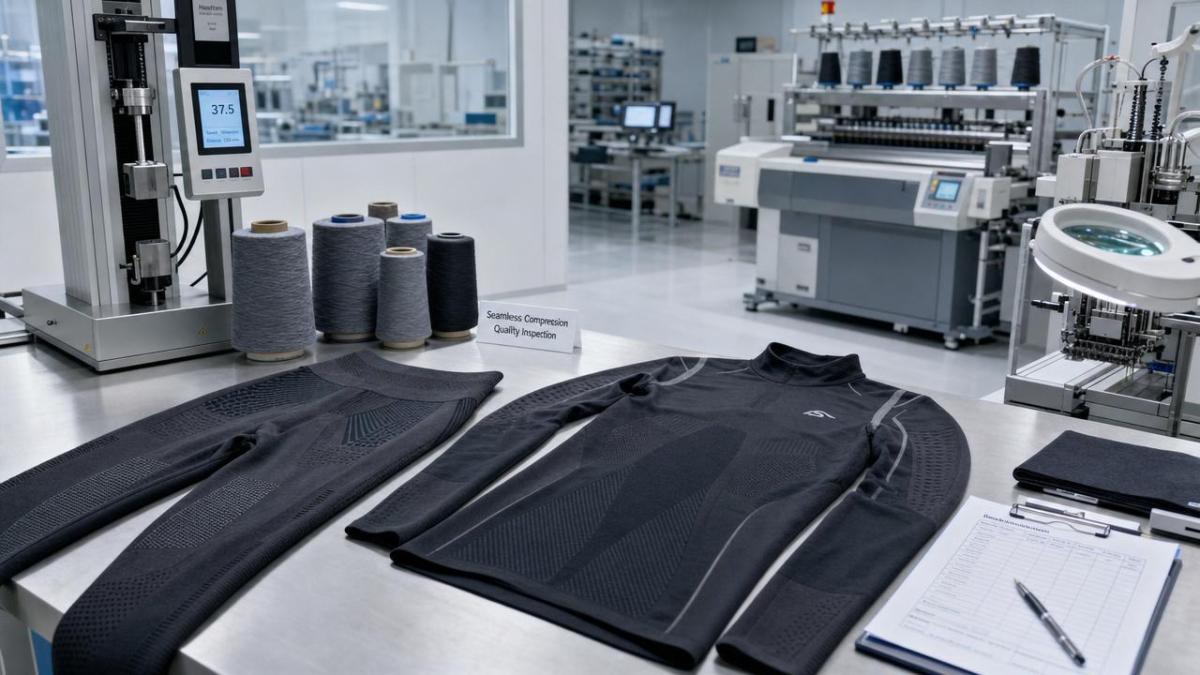
For quality control personnel, the first screening stage should identify whether a supplier can maintain repeatable performance across 3 to 5 production batches, not only produce an attractive first sample. Seamless garments rely on integrated knitting zones, compression mapping, and controlled elasticity, so minor process variation can create visible and functional defects.
Fabric Consistency and Yarn Control
A competent seamless activewear manufacturer should define yarn composition, denier range, elastane ratio, and moisture-management expectations before bulk production. Common activewear blends include nylon-spandex, polyester-spandex, or recycled synthetic fibers, often with elastane content between 8% and 25% depending on compression requirements.
QC teams should request incoming material inspection records, including color lot control, yarn strength checks, and shrinkage behavior after 3 to 5 wash cycles. If the supplier cannot explain how yarn variation affects fit, opacity, and recovery, bulk order risk increases significantly.
Seam-Free Construction Stability
Seamless does not mean risk-free. It means fewer stitched seams, but higher dependence on machine programming and knitting tension. Safety managers should pay attention to pressure zones around waistbands, cuffs, underarms, and thigh panels, where excessive compression may affect comfort during 60 to 120 minutes of training.
A qualified supplier should provide dimensional tolerances for key measurement points. For performance apparel, common internal control ranges may be within ±1.0 cm for garment length and ±0.5 cm to ±1.5 cm for high-stretch circumference points, depending on fabric recovery and size grade.
Early Warning Signs During Supplier Review
- The supplier provides only visual samples without wash, stretch, or abrasion data.
- Size grading rules are unclear across at least 4 core sizes, such as S, M, L, and XL.
- Compression zones are described by marketing language rather than measurable tension or recovery tests.
- Color consistency is not managed by batch references, lab dips, or controlled lighting inspection.
Testing Standards and Inspection Points for QC Teams
A seamless activewear manufacturer suitable for institutional buyers should be able to support structured testing before, during, and after production. The goal is not to overload the supplier with paperwork, but to verify that each risk point has a defined control method, frequency, and acceptance threshold.
The following table summarizes practical inspection areas that quality teams can use when comparing manufacturers. These checks are common in performance apparel procurement and can be adapted to brand-specific requirements, regional regulations, and product risk levels.
The key conclusion is that inspection should not be limited to final garment appearance. A capable seamless activewear manufacturer links test results with process controls, allowing QC teams to trace issues back to yarn lots, machine settings, dyeing conditions, or packing procedures.
Chemical Safety and Skin Contact Risk
Because activewear remains in close contact with skin and sweat, chemical safety must be treated as a safety management issue. Buyers should ask for testing aligned with applicable requirements for restricted substances, pH value, azo dyes, formaldehyde, and nickel release in trims where relevant.
For items marketed to high-intensity training, yoga, running, or recovery use, risk assessment should also consider prolonged wear of 2 to 8 hours. Materials that pass basic appearance inspection may still fail if odor control finishes, dyes, or softeners are not properly managed.
Process Traceability and Corrective Action
Traceability is a practical requirement, not a luxury. A supplier should retain records for yarn batches, machine numbers, operator shifts, dye lots, inspection results, and rework quantities. For institutional procurement, retaining key records for at least 12 to 24 months can support complaint investigation and supplier scorecards.
- Confirm raw material source and lot identification before knitting.
- Verify machine settings for compression zones and size grading.
- Perform inline inspection at 20% to 30% production progress.
- Review corrective actions before final inspection approval.
- Archive test records and shipment documents for future audits.
Procurement Criteria for Safety Managers and Industrial Buyers
Procurement teams often compare suppliers by unit price, lead time, and production capacity. For safety managers, however, the more important question is whether the supplier can prevent foreseeable harm, avoid inconsistent production, and respond quickly when defects appear in the field.
A strong seamless activewear manufacturer should be evaluated through a balanced scorecard covering technical ability, compliance discipline, service response, and risk transparency. This approach aligns with advanced industrial benchmarking, where physical product performance and digital process intelligence are considered together.
The table below offers a practical B2B decision framework. It is designed for teams managing multiple SKUs, seasonal launches, or cross-border sourcing programs where 2 to 4 weeks of sampling time and 30 to 60 days of bulk production may be typical.
This framework helps purchasing teams avoid overvaluing low quotations. A manufacturer that provides transparent evidence, measurable controls, and a defined escalation path is often better suited for long-term supply continuity than a supplier offering only fast sampling and aggressive pricing.
Capacity, MOQ, and Delivery Reliability
Capacity claims should be verified at line level. If a supplier states monthly output of 50,000 pieces, buyers should ask how many machines are dedicated to seamless garments, how many operators support each shift, and what percentage of capacity is already committed.
MOQ also matters. Some seamless programs require higher minimums because yarn dyeing, machine setup, and size grading consume fixed resources. A practical MOQ may range from several hundred to several thousand pieces per style, depending on color count, complexity, and customization level.
Digital Benchmarking and Vertical AI in Supplier Control
For organizations using digital procurement tools, supplier evaluation can be strengthened through structured data. Defect rate, rework ratio, complaint frequency, on-time delivery, and test failure history can be converted into comparable benchmarks across 6 to 12 months.
This is where an intelligence-oriented industrial ecosystem such as G-AIE becomes valuable. By connecting material performance, automation capability, and procurement risk indicators, decision makers can compare a seamless activewear manufacturer with more discipline than traditional supplier interviews allow.
Common Defects, Root Causes, and Prevention Actions
Seamless activewear defects usually originate from several connected sources: yarn inconsistency, machine tension variation, dyeing instability, poor handling, or insufficient final inspection. For safety management teams, the concern is not only appearance but also whether defects affect comfort, movement, and product integrity.
Defects That Should Trigger Immediate Investigation
During pre-shipment inspection, QC teams should classify defects into critical, major, and minor levels. Critical defects may include sharp contamination, broken metal fragments, or chemical safety failure. Major defects often include holes, laddering, severe measurement deviation, color migration, or functional waistband failure.
- Laddering or dropped stitches near high-stretch areas after manual extension tests.
- Uneven compression between left and right panels exceeding internal tolerance.
- Opacity failure when fabric is stretched to expected wearing tension.
- Persistent odor, rough hand feel, or irritation complaints during wear trials.
- Packaging contamination caused by poor storage humidity or workshop control.
Prevention Through Pilot Runs
Before approving full-scale production, a pilot run of 100 to 300 pieces can expose hidden problems in sizing, color stability, labeling, and packing. This step is especially useful when a new yarn, new colorway, or new compression structure is introduced.
A reliable seamless activewear manufacturer should welcome pilot validation because it reduces dispute risk for both sides. The pilot should include at least 3 sizes, 1 dark color, 1 light color if available, and actual packing materials planned for shipment.
Recommended 5-Step Defect Containment Process
- Stop affected production lots and identify machine, operator, and yarn batch records.
- Separate finished goods, semi-finished goods, and packed cartons within 24 hours.
- Conduct sample-based retesting to confirm defect scale and safety relevance.
- Define rework, replacement, downgrade, or rejection decisions with documented criteria.
- Verify corrective action effectiveness in the next production batch.
How to Build a More Resilient Seamless Activewear Supply Chain
Resilience depends on more than a single factory audit. It requires a supplier relationship built around technical transparency, regular performance review, and shared improvement targets. For complex activewear programs, a quarterly review cycle can help identify recurring issues before they become commercial losses.
Supplier Onboarding Checklist
When onboarding a seamless activewear manufacturer, teams should combine document review, sample testing, production observation, and shipment validation. A 4-stage onboarding model can reduce decision bias and create a clear basis for supplier approval or conditional approval.
- Stage 1: Review company profile, production scope, compliance documents, and key equipment list.
- Stage 2: Develop samples with defined measurement points, material specifications, and test plans.
- Stage 3: Conduct pilot production and inspect at least 20% of pilot units where feasible.
- Stage 4: Approve bulk order only after corrective actions and documentation gaps are closed.
Balancing Cost, Safety, and Sustainability
Sustainable material selection is increasingly important, but recycled yarns or low-impact dyeing methods still require performance verification. Buyers should compare shrinkage, colorfastness, hand feel, and tensile behavior rather than assuming that a sustainability claim equals lower risk.
Cost decisions should include hidden quality costs such as reinspection, air freight recovery, returns processing, and customer complaint handling. A unit price difference of 3% to 8% may be outweighed by one failed shipment if quality controls are weak.
Questions to Ask Before Final Approval
Before signing a purchase agreement, QC and safety managers should ask direct, evidence-based questions. The answers reveal whether the manufacturer is process-driven or merely order-driven.
- Which 5 product parameters are controlled most tightly during seamless knitting?
- How are yarn lot changes communicated before and during bulk production?
- What is the standard response time for major defects found during inline inspection?
- How are restricted substance risks managed for dyes, finishes, and accessories?
- Can inspection data be shared in a format suitable for supplier performance analytics?
Conclusion: Turning Supplier Selection into Quality Assurance
Choosing a seamless activewear manufacturer should be treated as a controlled quality decision. The strongest suppliers demonstrate stable materials, measurable construction control, practical testing discipline, and transparent traceability from yarn intake to final packing.
For quality control and safety management teams, the most valuable partner is not simply the fastest or cheapest factory. It is the manufacturer that can prove repeatability across batches, respond to defects within defined timelines, and support compliance-ready documentation.
G-AIE supports industrial buyers, procurement leaders, and technical evaluators by connecting material intelligence, automation benchmarking, and supplier risk analysis. If your team is comparing activewear suppliers or building a more resilient sourcing framework, contact us to discuss product details, request a tailored evaluation approach, or learn more about advanced industrial solutions.
Recommended News
 Sep 19, 2026When can a supply chain LLM reduce time spent finding shipment updates?Supply chain LLMs can cut shipment-update search time by connecting carrier events, ERP data, and documents—giving teams traceable answers and faster exception response.
 Sep 18, 2026How industrial monitoring equipment helps prevent unplanned downtimeIndustrial monitoring equipment helps teams detect early asset issues, prioritize maintenance, and prevent costly unplanned downtime. Explore practical strategies for reliable operations.
 Sep 17, 2026What next-gen harmonic drive research means for robot joint accuracyNext-gen harmonic drive research reveals how backlash, stiffness, thermal drift, and sensing shape robot joint accuracy. Explore smarter validation strategies.
 Sep 16, 2026How Southeast Asian climates affect cylinder seal frictionCylinder seal friction Southeast Asia: learn how humidity, heat, monsoons, and contamination affect motion stability, wear, and seal selection.
 Sep 15, 2026How to size DC gear motors for the required starting torqueGear motors DC sizing made practical: calculate starting torque, account for friction, gravity, inertia and voltage drop, then select a reliable motor with confidence.
 Sep 14, 2026How to verify high purity chemicals compliance before supplier approvalHigh purity chemicals compliance: learn how to verify supplier quality systems, CoAs, traceability, testing, and change control before approval.
 Sep 13, 2026What permits are needed to operate mapping drones in Europe?Mapping drones Europe: discover the permits, EASA categories, airspace approvals, site access, and GDPR checks needed for compliant aerial surveys.
 Sep 12, 2026What lead time should I expect for automatic transmission components? Planetary Gearboxes delivery forecasting for OEM planningWhat lead time should I expect for automatic transmission components? Get dynamic, AI-powered planetary gearbox delivery forecasting—designed for OEMs building next-gen hybrid & commercial powertrains.
 Sep 12, 2026Can polyamide replace metal in load-bearing components? Polymer Pulse structural performance data for 2026 applicationsCan polyamide replace metal in load-bearing components? Discover Polymer Pulse’s 2026 structural data—real-world performance, weight savings, and reliability breakthroughs.
 Sep 12, 2026How to handle a power electronics warranty claim: Harmonic Reducers documentation and escalation pathHow do I handle a power electronics warranty claim? Get a fast, intelligent, evidence-driven resolution for harmonic reducers—no bureaucracy, just precision diagnostics and real-time escalation.
 Sep 12, 2026Which motion control specifications matter most before purchase? Torque Logic selection criteria for automation engineersWhich motion control specifications are most important before purchase? Discover Torque Logic—the 4 non-negotiable, AI-aligned criteria that cut TCO by 27–41% and boost motion system availability to 99.992%.
 Sep 13, 2026Is agentic AI reliable enough for supplier screening? Supply Chain LLM validation framework for procurement teamsIs agentic AI reliable enough for supplier screening? Discover a rigorous LLM validation framework built for procurement teams—grounded in material traceability, regulatory compliance, and real-world operational constraints.
 Sep 14, 2026How to maintain edge AI systems after deployment: Predictive Maint AI operational protocols for field techniciansHow do I maintain edge AI systems after deployment? Discover predictive, physics-aware operational protocols designed for real-world field technicians—sustaining intelligence where silicon meets steel.
 Sep 15, 2026What compliance documents must a bioplastics supplier provide? Bio-Plastics regulatory checklist for procurementWhat compliance documents should a bioplastics supplier provide? Get our actionable regulatory checklist for food, medical & EU-bound applications.
 Sep 16, 2026How to prevent PET film defects during production: Barrier Films process control best practicesHow can I prevent PET film defects during production? Discover physics-driven barrier film process control—thermal precision, dynamic tension management & surface energy optimization.
 Sep 17, 2026Are thermoplastics suitable for long-term outdoor use? Engineering Resins durability assessment in 2026 UV/weather exposureAre thermoplastics suitable for long-term outdoor use? Discover 2026’s engineering resin durability insights — UV/weather resistance ranked, tested & actionable.
 Sep 18, 2026What to do when a servo motor fails during production: A Servo Actuators troubleshooting guide for maintenance teamsWhat should I do if a servo motor fails during production? Get a field-tested, AI-aware troubleshooting guide for maintenance teams—minimize downtime, maximize OEE.
 Sep 12, 2026How to compare wholesale party supplies by minimum order valueCompare wholesale party supplies by minimum order value, freight, SKU flexibility, and stock risk to choose suppliers that protect margins and simplify replenishment.
 Sep 11, 2026How proportional solenoid linearity affects precision motion controlProportional solenoid linearity directly affects precision motion control, valve metering, stability, and calibration. Learn how to evaluate performance for reliable automation.
 Sep 10, 2026When does supplier information platform automation reduce onboarding delays?Supplier information platform automation reduces onboarding delays by streamlining data collection, routing, renewals, and compliance checks—without replacing expert technical review.
 Sep 09, 2026How to size robotic motion systems for AMR payload changesRobotic motion systems for AMR payload changes: learn how to size motors, wheels, gearing, traction, and controls for safer, reliable performance.
 Sep 08, 2026How to perform a cylinder rod buckling calculation for long strokesCylinder rod buckling calculation made practical: learn how to assess effective length, end conditions, rod stiffness, load forces, and safety margins for reliable long-stroke cylinder design.
 Sep 07, 2026How to estimate the cost of industrial mechanical components before orderingIndustrial mechanical components cost: learn how to estimate material, machining, tooling, inspection, logistics, and hidden expenses before ordering. Compare quotes confidently and reduce sourcing risk.
 Sep 07, 2026What Is a Product Standards Database Used For?Product standards database guide: learn how to compare requirements, verify revisions, control specifications, and reduce compliance risks across design, sourcing, and production.