Search News
Industry Portal
Popular Tags
Automation Technology for Factories: Cost vs Output Gains
Author
Time
Click Count
For financial decision-makers, automation technology for factories is no longer just an operational upgrade—it is a capital allocation question tied directly to output, risk, and long-term competitiveness.
As labor volatility, quality demands, and energy costs rise, the real issue is not whether to automate, but how to evaluate cost versus measurable production gains with confidence and strategic clarity.
What Financial Approvers Really Need to Know Before Funding Factory Automation
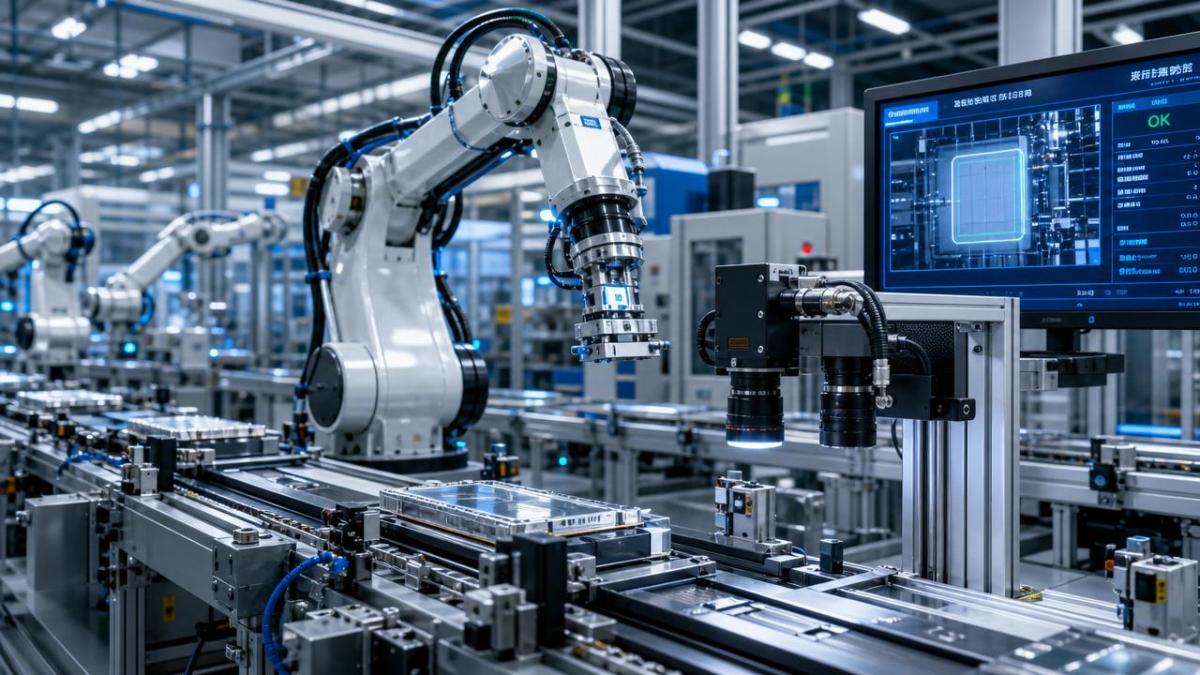
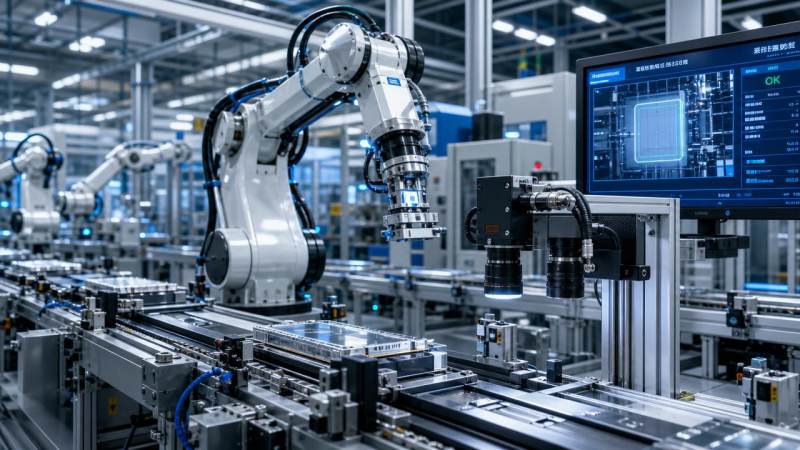
The core search intent behind automation technology for factories is practical and investment-driven: decision-makers want to know whether automation produces enough output, efficiency, and risk reduction to justify the capital spend.
For a financial approver, the answer is usually yes—but only when the project is scoped around the right bottleneck, measured against baseline production data, and aligned with a realistic payback model.
Most readers in this role are not looking for abstract definitions of robotics, AI, or smart manufacturing. They want a disciplined way to compare cost categories against output gains and downside protection.
That means the most valuable content is not a list of technologies. It is a framework for assessing throughput impact, labor economics, quality improvements, maintenance risk, and implementation timing.
In other words, the financial question is not “How advanced is this solution?” It is “What production constraint does it remove, how fast, and with what level of certainty?”
Why the Cost vs Output Question Has Become More Urgent
Factory automation decisions have become more urgent because industrial cost structures are changing faster than traditional capital approval cycles. Wage inflation, recruitment gaps, quality traceability demands, and energy volatility are pressuring margins at the same time.
Manual processes that once looked acceptable now carry hidden financial exposure. A line dependent on unstable labor, inconsistent cycle times, or frequent rework may appear cheaper on paper than it truly is.
For finance teams, this creates a wider evaluation lens. The comparison is no longer simply labor replaced versus equipment purchased. It includes lost output, scrap, compliance risk, downtime exposure, and customer service reliability.
Automation technology for factories is therefore increasingly evaluated as a resilience asset, not just a productivity tool. It can stabilize production in environments where labor availability or process repeatability is becoming a strategic constraint.
That is especially relevant for high-value manufacturing, multi-shift operations, and facilities where late delivery or quality failure has downstream penalties across supply chains.
Which Costs Actually Matter in an Automation Investment Review
One of the biggest mistakes in automation evaluation is underestimating total project cost at the approval stage. Capital equipment is only one part of the investment profile.
Financial reviewers should separate costs into at least five categories: equipment, integration, facility adaptation, workforce transition, and ongoing support. This gives a much clearer view of true capital exposure.
Equipment includes robots, conveyors, sensors, machine vision, PLC upgrades, autonomous handling systems, safety systems, and software licenses. These are visible costs and usually the easiest to quote.
Integration costs are often more important than hardware costs. They include controls engineering, MES or ERP connectivity, commissioning, data mapping, line balancing, testing, and startup support.
Facility adaptation may involve electrical upgrades, compressed air, guarding, floor space changes, HVAC considerations, or layout redesign. In brownfield plants, these items can materially affect payback timing.
Workforce transition costs include operator retraining, new maintenance skill requirements, temporary parallel operation, and potential productivity drag during ramp-up. Ignoring these creates overly optimistic ROI assumptions.
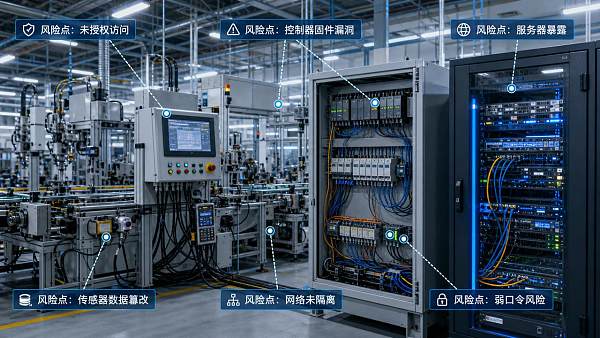
Ongoing support includes spare parts, service contracts, cybersecurity updates, calibration, software maintenance, and lifecycle refresh planning. For financial accuracy, these should be built into a multi-year ownership model.
A sound approval process should therefore focus on total cost of ownership rather than purchase price alone. Cheap automation with poor integration economics often underperforms more expensive but well-targeted systems.
Where Output Gains Usually Come From in Real Factory Automation
Output gains do not come from “automation” as a generic concept. They come from removing specific causes of lost productive capacity inside a process.
The first and most common gain is throughput improvement. When a station limits line speed due to manual handling, inspection delays, or inconsistent cycle times, automation can raise average hourly output.
The second gain is uptime stability. Automated systems, if properly engineered, reduce variability caused by fatigue, staffing gaps, and manual process drift. More consistent runtime often matters as much as nominal speed.
The third gain is quality yield. Machine vision, closed-loop controls, and repeatable motion reduce defects, rework, and scrap. For finance teams, this can unlock margin gains that are underestimated in labor-only ROI models.
The fourth gain is scheduling flexibility. A plant with automated material flow or robotic cell coverage may sustain night shifts, weekend production, or rapid order changes with less dependence on hard-to-fill labor positions.
The fifth gain is data visibility. Connected automation improves traceability around cycle time, alarms, quality deviations, and maintenance events. Better data does not generate output directly, but it improves decision quality and control.
Not every plant captures all five benefits. The strongest business case usually comes from one or two dominant gains that are already visible in baseline production data.
How to Calculate ROI Without Oversimplifying the Business Case
Many automation proposals fail internally because the ROI model is either too simplistic or too optimistic. A credible model should reflect both direct cash impact and operational risk reduction.
Start with current-state baseline data: labor hours, actual line throughput, scrap rates, rework costs, downtime hours, maintenance incidents, changeover losses, and missed delivery penalties where relevant.
Then model future-state assumptions conservatively. Do not assume immediate peak performance after installation. Include ramp-up time, learning curves, staged commissioning, and realistic utilization in the first year.
Direct benefits typically include labor redeployment, increased output, reduced scrap, lower overtime, and lower external quality costs. These should be quantified with traceable assumptions, not broad percentages.
Indirect benefits may include reduced turnover risk, better customer retention, improved compliance readiness, lower incident exposure, and stronger planning reliability. These can be harder to monetize but still matter in approval discussions.
Finance leaders often find it useful to run three cases: conservative, expected, and upside. This prevents the business case from depending on best-case conditions and improves confidence across stakeholders.
Key metrics should include payback period, internal rate of return, net present value, and sensitivity to output variance. If the model collapses when assumptions shift slightly, the project likely needs redesign or narrower scope.
Strong automation technology for factories should survive disciplined scrutiny. If value depends on heroic assumptions, the issue is not finance resistance—it is project quality.
What Risks Can Erode the Expected Gains
Financial decision-makers are right to be cautious because many automation projects underdeliver for predictable reasons. Most failures are not caused by the technology itself, but by weak problem definition and poor execution discipline.
The first risk is automating a non-bottleneck process. If the selected step is not constraining output, throughput gains will disappoint regardless of technical success.
The second risk is underestimating integration complexity. A well-performing robot or inspection unit can still fail financially if upstream and downstream processes remain unstable.
The third risk is bad data at project approval. If baseline labor, scrap, or downtime data is incomplete, the expected savings may be inflated or misallocated from the beginning.
The fourth risk is workforce misalignment. Even strong systems struggle when operators, maintenance teams, and supervisors are not trained early enough to support adoption and troubleshooting.
The fifth risk is lifecycle neglect. Automation is not a one-time purchase; it is an operating capability. Without maintenance discipline, spare strategy, and software support, gains erode over time.
There is also strategic risk in doing nothing. Plants that delay automation too long may face rising cost per unit, slower response to demand shifts, and declining attractiveness to customers requiring quality consistency and traceability.
Which Factory Scenarios Usually Justify Automation Fastest
Not every factory should automate at the same speed or scale. The best candidates share several traits that make cost recovery more visible and operational impact more measurable.
High-volume, repetitive processes are strong candidates because cycle consistency and labor replacement potential are easier to model. Packaging, material handling, pick-and-place, welding, and inspection often fit this profile.
Operations with chronic labor shortages also justify automation faster. If open positions regularly constrain output, the value of stable capacity can exceed traditional labor-savings calculations.
Processes with high scrap or rework rates are another priority area. Quality-focused automation can create outsized financial returns when defects are expensive, regulated, or damaging to customer confidence.
Facilities running multiple shifts often benefit because automation assets can be utilized more fully. The more hours a productive asset runs, the stronger the economics typically become.
Factories serving high-mix, high-value sectors may also justify selective automation, especially when digital traceability, precision, or repeatability is linked to compliance and margin protection.
By contrast, low-volume and frequently changing processes may require modular or semi-automated approaches rather than full fixed automation. That distinction is important for capital efficiency.
How Financial Leaders Can Make Better Approval Decisions
The most effective approval process is not centered on vendor promises. It is centered on operational evidence, scenario testing, and alignment between production, engineering, maintenance, and finance.
First, require a bottleneck-based justification. Every proposal should identify the exact source of lost output or excess cost and show how the automation solution removes it.
Second, ask for baseline and target KPIs. These should include throughput, OEE-related losses, defect rates, labor allocation, and planned versus unplanned downtime. If the baseline is vague, the case is weak.
Third, stage capital where possible. Pilot cells, phased deployment, or modular implementation can reduce approval risk while generating real performance data before larger expansion.
Fourth, test interoperability and support assumptions. A technically attractive solution can become financially unattractive if spare parts, integration support, or software ownership are too dependent on external specialists.
Fifth, evaluate strategic fit. The best automation technology for factories supports not only current output goals but future network flexibility, digitalization maturity, and resilience across supply chains.
For enterprise-scale manufacturers, this matters even more. Automation should be viewed as part of an industrial system architecture, not a one-off machine purchase.
Cost vs Output Gains: The Right Conclusion for Financial Decision-Makers
For financial approvers, the correct question is not whether automation costs money. It unquestionably does. The more important question is whether the investment removes a costly production constraint with measurable and durable returns.
When properly selected and implemented, automation technology for factories can increase throughput, stabilize quality, reduce operational volatility, and improve long-term cost structure. These benefits often compound over time.
But not all projects deserve approval. Strong cases are grounded in baseline data, realistic ramp-up planning, full lifecycle costing, and a clear line of sight between automation and business-critical output gains.
The finance function adds real value when it pushes beyond headline ROI and asks deeper questions about bottlenecks, sensitivity, integration risk, and asset utilization. That discipline improves outcomes, not just budget control.
In today’s industrial environment, the cost of delay can be as meaningful as the cost of investment. The factories that win are not necessarily the ones that automate everything first, but the ones that automate the right constraints with the clearest economic logic.
That is the lens through which automation should be funded: not as a technology trend, but as a strategic production and capital efficiency decision.
Recommended News
 Jun 01, 2026Custom Makeup Bags: Material Choices and Cost TrapsCustom makeup bags sourcing guide: compare materials, avoid hidden cost traps, and choose smarter specs for durable, compliant, brand-ready cosmetic bags.
 Jun 01, 2026Consumer Sector Trends Shaping Product DemandConsumer sector trends are reshaping product demand through sustainability, AI personalization, and resilient supply chains—discover strategies to stay competitive.
 Jun 01, 2026Baby Clothing Safety Standards That Matter in 2026Baby clothing safety standards in 2026: learn key checks for chemicals, labels, fasteners, sleepwear and fabrics to choose safer, trusted garments with confidence.
 Jun 01, 2026Electric Toothbrush OEM: Cost vs Quality ChecklistElectric toothbrush OEM cost vs quality checklist: compare suppliers, components, compliance, customization, and TCO to reduce risk and build reliable oral-care products.
 Jun 01, 2026Product Compliance Risks to Check Before LaunchProduct compliance risks can delay launches and trigger recalls. Learn key checks for materials, testing, labeling, suppliers, and documentation before market release.
 Jun 01, 2026EU Proposes PFAS Migration Limits for Barrier Films under REACH Annex XVIIPFAS migration limits for barrier films: EU proposes ≤25 ng/cm² under REACH Annex XVII—key implications for exporters, manufacturers & labs. Act now.
 Jun 01, 2026Humanoid Robot Online Sales Up 20.6% in April, Driving Global Demand for Harmonic ReducersHarmonic reducers in high demand as humanoid robot online sales surge 20.6%—key insight for robotics suppliers, distributors & logistics providers.
 Jun 01, 2026New MOFCOM Rule: Bio-Plastics Agricultural Films Exported to ASEAN, Latin America Require ISO 17987:2025 Migration Testing from June 2026Bio-plastics agricultural films exported to ASEAN & Latin America must pass ISO 17987:2025 migration testing from June 2026—act now to avoid delays!
 Jun 01, 2026Vietnam Cement Expo Highlights Functional Coatings and Engineering Resins IntegrationVietnam Cement Expo 2026 spotlighted Functional Coatings and Engineering Resins integration—transforming how Southeast Asian infrastructure buyers select advanced concrete admixtures.
 Jun 01, 2026China Implements Export Spot Checks on Electronic-Grade Chemicals from June 1, 2026Electronic-grade chemicals export spot checks start June 1, 2026 in China — key update for semiconductor & electronics supply chains. Stay compliant & avoid delays.
 May 31, 2026Cast Iron Dumbbells Wholesale: Price and Quality ChecksCast iron dumbbells wholesale buyers: compare price, weight accuracy, coatings, packaging, and supplier reliability to cut defects and source with confidence.
 May 31, 2026Industrial Digitalization Risks Before System UpgradesIndustrial digitalization upgrades can expose hidden asset, data, cybersecurity, and workflow risks. Use this checklist to protect continuity and maximize long-term value.
 May 31, 2026Industrial Innovation Trends Shaping 2026 OperationsIndustrial innovation is reshaping 2026 operations through AI, automation, advanced materials, resilient supply networks, and smarter sustainability strategies.
 May 31, 2026Custom Cosmetic Packaging Costs: Hidden Factors to KnowCustom cosmetic packaging costs go beyond unit price. Discover hidden factors in materials, tooling, compliance, MOQs, and logistics to protect margins and launch smarter.
 May 31, 2026Best Cabinet Locks for Baby Proofing: What to CheckCabinet locks baby proofing made simple: compare magnetic, adhesive, latch, and handle locks to protect toddlers and choose safer, parent-friendly options.
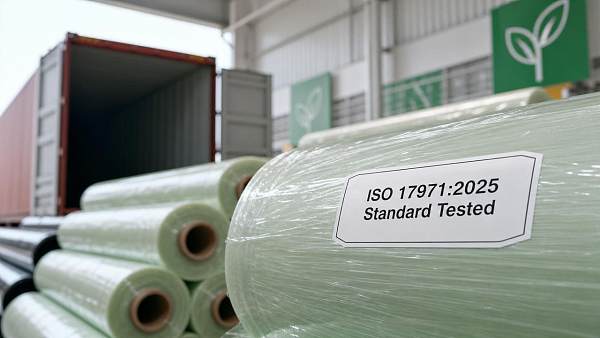
 May 31, 2026Vietnam Mandates Migration Testing for Bio-Plastic Agri-FilmsVietnam mandates migration testing for bio-plastic agri-films under ISO 17971:2025—key compliance update for exporters, compounders & labs. Act now!
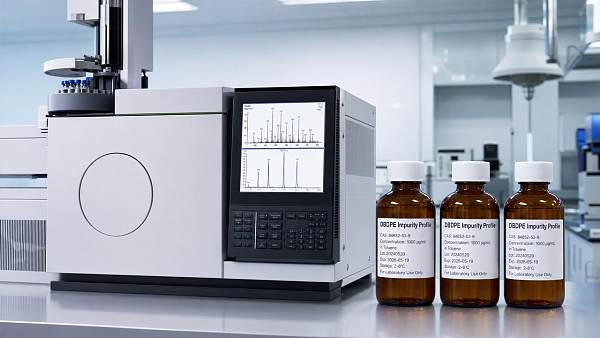
 May 31, 2026DBDPE Added to REACH SVHC Candidate List: Impurity Profiling Required for Electronic-Grade Chemical ExportsDBDPE added to REACH SVHC list—electronic-grade chemical exporters must now conduct impurity profiling & SCIP notifications for EU compliance.
 May 31, 2026EU IMERA Regulation Enters Force: Harmonic Reducer Imports Face Supply Chain ScrutinyEU IMERA Regulation now in force: Harmonic reducer imports face strict supply chain transparency rules—act now to avoid delays & ensure EU market access.
 May 30, 2026Wholesale Cosmetic Sponges: Cost vs Quality ChecksWholesale cosmetic sponges sourcing made smarter: compare cost, material safety, durability, packaging, and supplier quality checks before bulk buying.
 May 30, 2026Industrial Automation Technology: ROI Signals for 2026Industrial automation technology ROI signals for 2026: see how AI, predictive maintenance, connected data, and resilient operations guide smarter capital decisions.
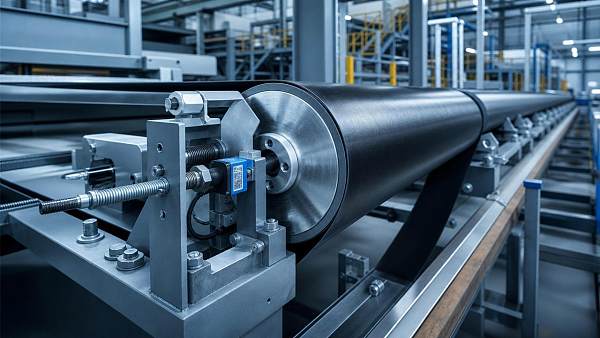
 May 30, 2026Belt Tension and Friction Metrics: What to TrackBelt tension and friction metrics reveal slip, wear, energy loss, and reliability risks—learn what to track for smarter maintenance and automation performance.
 May 30, 2026Squeaky Plush Dog Toys: Safety Checks Before BuyingSqueaky plush dog toys can delight dogs safely—learn key buying checks for fabric, seams, squeaker placement, size, and materials before you choose.
 May 30, 2026Global Buyers: Supplier Risk Signals in 2026Global buyers can spot 2026 supplier risk signals early—financial stress, compliance gaps, digital weakness, and material exposure—to secure resilient sourcing.
 May 30, 2026Vietnam Introduces Ban-and-Disclosure List for Pesticide/Biocide Actives; Bio-Plastic Mulch Exporters Must Submit Migration DataVietnam’s new ban-and-disclosure list for pesticide/biocide actives impacts bio-plastic mulch exporters—submit migration data by July 1, 2026 to avoid shipment delays.