Search News
Industry Portal
Popular Tags
Piston Pump Volumetric Efficiency Data: What Counts as Acceptable Loss?
Author
Time
Click Count
For users and operators, understanding piston pump volumetric efficiency data is essential for judging whether performance loss is normal or a warning sign.
Small efficiency drops may be acceptable over time, but excessive loss can indicate wear, leakage, or poor operating conditions.
In industrial systems, tighter uptime targets and smarter monitoring have made piston pump volumetric efficiency data a practical decision tool, not just a test value.
This matters across fluid power, process equipment, mobile hydraulics, energy systems, and automated production lines.
Why piston pump volumetric efficiency data now matters more than before
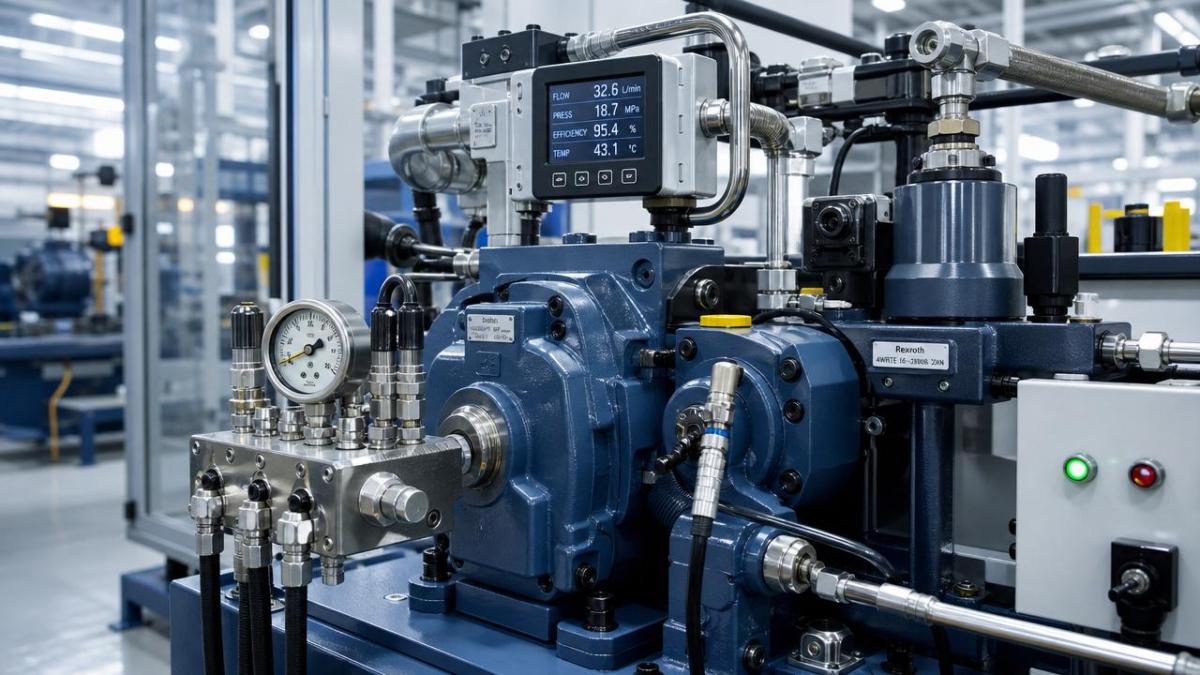
Across industry, acceptable loss is being judged more carefully because equipment is expected to run longer, cleaner, and with less unplanned intervention.
A piston pump may still operate while losing internal sealing quality, yet output flow can drift enough to affect motion accuracy, pressure stability, and energy use.
That is why piston pump volumetric efficiency data has become central to maintenance planning, asset benchmarking, and operating risk assessment.
The trend is clear: teams increasingly compare current readings with baseline performance instead of relying only on failure events.
What counts as acceptable loss depends on trend, duty, and baseline
There is no single universal number for acceptable loss, because piston pump volumetric efficiency data changes with pressure, speed, temperature, viscosity, and pump design.
Still, broad operating ranges can support first-level judgment when a tested baseline is available.
These values are not substitutes for manufacturer limits, but they help frame piston pump volumetric efficiency data in practical operating language.
A five-point drop from baseline may matter more than the absolute reading if the decline happens quickly.
The strongest trend signals come from rate of loss, not only final percentage
A pump that declines from 96% to 92% over years may be healthy for its duty cycle.
A pump that falls from 94% to 88% within months deserves attention, even if it still meets basic flow demand.
This is where piston pump volumetric efficiency data supports predictive judgment.
Trend-based review helps distinguish normal aging from abnormal leakage paths, contamination damage, thermal stress, or unstable operating conditions.
Useful warning patterns
- Efficiency loss accelerates at higher pressure.
- Cold-start values look normal, but hot-running values drop sharply.
- Flow instability appears together with noise or rising case drain flow.
- Efficiency decline follows fluid contamination events.
- Performance worsens after viscosity changes or fluid substitution.
Why acceptable loss thresholds are shifting in modern industrial environments
The tolerance for efficiency loss is narrowing because systems are more integrated, digitally supervised, and energy-sensitive than before.
A modest drop in piston pump volumetric efficiency data can now trigger larger downstream costs.
In this context, piston pump volumetric efficiency data is no longer isolated mechanical information.
It is part of a wider operational intelligence picture that connects reliability, quality, and energy performance.
The impact spreads across maintenance, production stability, and lifecycle cost
When acceptable loss is judged too loosely, hidden inefficiency can persist until pressure control, actuator speed, or thermal balance becomes unstable.
When judged too aggressively, useful service life may be wasted through early overhaul.
That balance is why piston pump volumetric efficiency data should be interpreted in relation to system criticality.
Where the impact is most visible
- Hydraulic motion control, where flow loss affects positioning behavior.
- Process circulation systems, where reduced output changes throughput stability.
- Mobile equipment, where hot-duty leakage reduces field responsiveness.
- Test rigs and high-precision lines, where efficiency decline distorts repeatable results.
- Energy-intensive plants, where internal leakage raises total operating cost.
In each case, the same piston pump volumetric efficiency data can mean different business risk.
A moderate loss may be acceptable for intermittent duty, yet unacceptable for continuous, accuracy-driven service.
What to check before deciding that loss is acceptable
Before concluding that a drop is normal, several conditions should be reviewed together.
- Compare current values with the original acceptance test or early-life reference.
- Confirm test pressure, speed, and fluid temperature were consistent.
- Review viscosity, cleanliness, and signs of aeration or cavitation.
- Check case drain flow, noise, vibration, and thermal behavior.
- Separate pump loss from valve leakage or downstream actuator leakage.
- Look at duty severity, including high-pressure dwell time and start-stop frequency.
This approach makes piston pump volumetric efficiency data more trustworthy and more actionable.
A practical decision model for judging acceptable loss
A simple framework can turn raw piston pump volumetric efficiency data into a maintenance decision.
The most important takeaway for future monitoring
The best use of piston pump volumetric efficiency data is not a one-time pass or fail judgment.
It is a trend signal that becomes stronger when linked with pressure, temperature, case drain, fluid condition, and real production behavior.
Acceptable loss is usually a controlled, explainable, gradual decline.
Unacceptable loss is rapid, unstable, condition-sensitive, or large enough to affect system output and cost.
Build a baseline, track changes at repeatable test points, and respond to the rate of deterioration before failure forces the decision.
Used this way, piston pump volumetric efficiency data supports more reliable maintenance timing, stronger asset visibility, and better long-term system performance.
Recommended News
 Jun 01, 2026Custom Makeup Bags: Material Choices and Cost TrapsCustom makeup bags sourcing guide: compare materials, avoid hidden cost traps, and choose smarter specs for durable, compliant, brand-ready cosmetic bags.
 Jun 01, 2026Consumer Sector Trends Shaping Product DemandConsumer sector trends are reshaping product demand through sustainability, AI personalization, and resilient supply chains—discover strategies to stay competitive.
 Jun 01, 2026Baby Clothing Safety Standards That Matter in 2026Baby clothing safety standards in 2026: learn key checks for chemicals, labels, fasteners, sleepwear and fabrics to choose safer, trusted garments with confidence.
 Jun 01, 2026Electric Toothbrush OEM: Cost vs Quality ChecklistElectric toothbrush OEM cost vs quality checklist: compare suppliers, components, compliance, customization, and TCO to reduce risk and build reliable oral-care products.
 Jun 01, 2026Product Compliance Risks to Check Before LaunchProduct compliance risks can delay launches and trigger recalls. Learn key checks for materials, testing, labeling, suppliers, and documentation before market release.
 Jun 01, 2026EU Proposes PFAS Migration Limits for Barrier Films under REACH Annex XVIIPFAS migration limits for barrier films: EU proposes ≤25 ng/cm² under REACH Annex XVII—key implications for exporters, manufacturers & labs. Act now.
 Jun 01, 2026Humanoid Robot Online Sales Up 20.6% in April, Driving Global Demand for Harmonic ReducersHarmonic reducers in high demand as humanoid robot online sales surge 20.6%—key insight for robotics suppliers, distributors & logistics providers.
 Jun 01, 2026New MOFCOM Rule: Bio-Plastics Agricultural Films Exported to ASEAN, Latin America Require ISO 17987:2025 Migration Testing from June 2026Bio-plastics agricultural films exported to ASEAN & Latin America must pass ISO 17987:2025 migration testing from June 2026—act now to avoid delays!
 Jun 01, 2026Vietnam Cement Expo Highlights Functional Coatings and Engineering Resins IntegrationVietnam Cement Expo 2026 spotlighted Functional Coatings and Engineering Resins integration—transforming how Southeast Asian infrastructure buyers select advanced concrete admixtures.
 Jun 01, 2026China Implements Export Spot Checks on Electronic-Grade Chemicals from June 1, 2026Electronic-grade chemicals export spot checks start June 1, 2026 in China — key update for semiconductor & electronics supply chains. Stay compliant & avoid delays.
 May 31, 2026Cast Iron Dumbbells Wholesale: Price and Quality ChecksCast iron dumbbells wholesale buyers: compare price, weight accuracy, coatings, packaging, and supplier reliability to cut defects and source with confidence.
 May 31, 2026Industrial Digitalization Risks Before System UpgradesIndustrial digitalization upgrades can expose hidden asset, data, cybersecurity, and workflow risks. Use this checklist to protect continuity and maximize long-term value.
 May 31, 2026Industrial Innovation Trends Shaping 2026 OperationsIndustrial innovation is reshaping 2026 operations through AI, automation, advanced materials, resilient supply networks, and smarter sustainability strategies.
 May 31, 2026Custom Cosmetic Packaging Costs: Hidden Factors to KnowCustom cosmetic packaging costs go beyond unit price. Discover hidden factors in materials, tooling, compliance, MOQs, and logistics to protect margins and launch smarter.
 May 31, 2026Best Cabinet Locks for Baby Proofing: What to CheckCabinet locks baby proofing made simple: compare magnetic, adhesive, latch, and handle locks to protect toddlers and choose safer, parent-friendly options.
 May 31, 2026Vietnam Mandates Migration Testing for Bio-Plastic Agri-FilmsVietnam mandates migration testing for bio-plastic agri-films under ISO 17971:2025—key compliance update for exporters, compounders & labs. Act now!
 May 31, 2026DBDPE Added to REACH SVHC Candidate List: Impurity Profiling Required for Electronic-Grade Chemical ExportsDBDPE added to REACH SVHC list—electronic-grade chemical exporters must now conduct impurity profiling & SCIP notifications for EU compliance.
 May 31, 2026EU IMERA Regulation Enters Force: Harmonic Reducer Imports Face Supply Chain ScrutinyEU IMERA Regulation now in force: Harmonic reducer imports face strict supply chain transparency rules—act now to avoid delays & ensure EU market access.
 May 30, 2026Wholesale Cosmetic Sponges: Cost vs Quality ChecksWholesale cosmetic sponges sourcing made smarter: compare cost, material safety, durability, packaging, and supplier quality checks before bulk buying.
 May 30, 2026Industrial Automation Technology: ROI Signals for 2026Industrial automation technology ROI signals for 2026: see how AI, predictive maintenance, connected data, and resilient operations guide smarter capital decisions.
 May 30, 2026Belt Tension and Friction Metrics: What to TrackBelt tension and friction metrics reveal slip, wear, energy loss, and reliability risks—learn what to track for smarter maintenance and automation performance.
 May 30, 2026Squeaky Plush Dog Toys: Safety Checks Before BuyingSqueaky plush dog toys can delight dogs safely—learn key buying checks for fabric, seams, squeaker placement, size, and materials before you choose.
 May 30, 2026Global Buyers: Supplier Risk Signals in 2026Global buyers can spot 2026 supplier risk signals early—financial stress, compliance gaps, digital weakness, and material exposure—to secure resilient sourcing.
 May 30, 2026Vietnam Introduces Ban-and-Disclosure List for Pesticide/Biocide Actives; Bio-Plastic Mulch Exporters Must Submit Migration DataVietnam’s new ban-and-disclosure list for pesticide/biocide actives impacts bio-plastic mulch exporters—submit migration data by July 1, 2026 to avoid shipment delays.