Search News
Industry Portal
Popular Tags
Vietnam Mandates Migration Testing for Bio-Plastic Agri-Films
Author
Time
Click Count
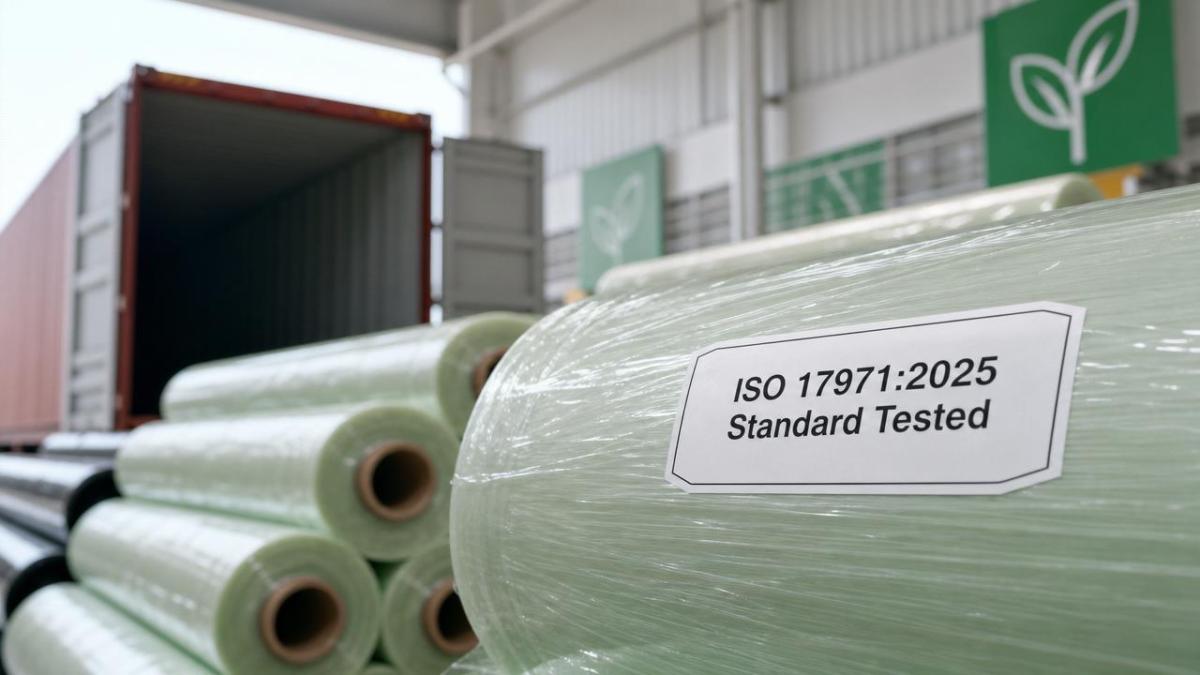
On May 15, 2026, Vietnam’s Ministry of Agriculture and Rural Development (MARD) issued the Notice on Chemical Management for Agricultural Plastic Products, requiring exporters of bio-plastic mulch films and seedling trays to submit active ingredient migration test reports—per ISO 17971:2025—at customs clearance. Non-compliant shipments will be rejected as potential food-contact material violations. This update directly affects agri-film exporters, polymer compounders, and regulatory compliance teams serving the Vietnamese market.
Event Overview
On May 15, 2026, Vietnam’s Ministry of Agriculture and Rural Development (MARD) published the Notice on Chemical Management for Agricultural Plastic Products. The notice mandates that all agricultural plastic products containing bio-based polymers—including mulch films and seedling trays—must, upon import into Vietnam, be accompanied by a migration test report for any incorporated fungicidal or insecticidal active ingredients. Testing must follow ISO 17971:2025. Shipments lacking such documentation will be treated as non-compliant with food-contact material regulations and subject to return.
Industries Affected
Exporters of Agri-Films and Horticultural Plastics
These companies face immediate operational impact: customs clearance now hinges on submission of validated migration data—not just product composition or safety declarations. Delays or rejections may occur if reports are incomplete, outdated, or not aligned with ISO 17971:2025’s specific exposure conditions (e.g., simulant type, temperature, duration).
Biopolymer Compounders and Additive Suppliers
Suppliers of masterbatches or functional additives—including antimicrobial agents used in bio-plastic formulations—must now ensure traceability and test readiness for migration behavior. Their technical dossiers may need updating to support downstream clients’ compliance claims, especially where active ingredients are proprietary or multi-source.
Third-Party Testing and Regulatory Consultancies
Laboratories accredited for ISO 17971:2025 testing—and consultants advising on Vietnamese agri-plastic registration—will see increased demand for migration assessment services. However, capacity constraints may emerge if testing infrastructure in ASEAN-aligned labs remains limited.
Key Considerations and Recommended Actions
Monitor MARD’s official implementation guidance
MARD has not yet published transitional timelines, accepted laboratory lists, or exemptions (e.g., for low-dose or non-leaching formulations). Stakeholders should track updates via MARD’s official portal and Vietnam’s National Agency for Technical Regulation (NATR), as enforcement details will determine real-world lead times and cost burdens.
Prioritize high-volume export SKUs for early migration testing
Not all bio-plastic agri-films contain biocidal actives—but those that do (e.g., copper-infused PHA films, chitosan-blended PE alternatives) require urgent validation. Companies should audit current formulations, identify SKUs with registered pesticidal claims, and schedule ISO 17971:2025 testing before Q3 2026 to avoid clearance bottlenecks.
Distinguish policy signal from binding requirement
The Notice is enforceable upon publication (May 15, 2026), but practical enforcement may phase in gradually—especially for shipments already en route or under existing import licenses. Firms should verify whether grandfathering applies to pre-notice contracts, rather than assuming blanket applicability.
Align internal documentation with Vietnamese customs’ data fields
Vietnamese customs e-declaration systems may soon require structured uploads of migration reports (e.g., PDF with metadata tagging). Exporters should prepare standardized reporting templates—including substance identity (CAS/EC number), test conditions, and migration limits—and validate them with local customs brokers ahead of first submissions.
Editorial Perspective / Industry Observation
Observably, this Notice signals Vietnam’s shift toward harmonizing agri-plastic regulation with food-contact material frameworks—even when end-use is non-food (e.g., soil mulching). It reflects growing regional scrutiny of chemical leaching from biodegradable alternatives, particularly where antimicrobials are added for shelf-life or disease suppression. Analysis shows this is less a standalone ban and more a disclosure-driven risk-mitigation step: MARD is not prohibiting specific actives outright but requiring empirical evidence of migration behavior under standardized conditions. From an industry perspective, it marks the beginning of a broader trend—where ‘bio-based’ no longer implies ‘low-regulatory-scrutiny’, and functional additives trigger compliance obligations previously reserved for food packaging.
Conclusion
This Notice establishes a new, mandatory data requirement for bio-plastic agri-films entering Vietnam—not a prohibition, but a procedural threshold tied to migration science. It underscores that regulatory convergence between agricultural inputs and food-contact materials is accelerating in emerging markets. Currently, it is best understood as an operational compliance checkpoint, not a market access barrier—provided stakeholders proactively align testing, documentation, and supply chain communication with ISO 17971:2025 and MARD’s forthcoming implementation notes.
Source: Vietnam Ministry of Agriculture and Rural Development (MARD), Notice on Chemical Management for Agricultural Plastic Products, effective May 15, 2026. Ongoing monitoring is advised for MARD’s supplementary guidance, including laboratory accreditation lists and transitional provisions.
Recommended News
 Sep 19, 2026When can a supply chain LLM reduce time spent finding shipment updates?Supply chain LLMs can cut shipment-update search time by connecting carrier events, ERP data, and documents—giving teams traceable answers and faster exception response.
 Sep 18, 2026How industrial monitoring equipment helps prevent unplanned downtimeIndustrial monitoring equipment helps teams detect early asset issues, prioritize maintenance, and prevent costly unplanned downtime. Explore practical strategies for reliable operations.
 Sep 17, 2026What next-gen harmonic drive research means for robot joint accuracyNext-gen harmonic drive research reveals how backlash, stiffness, thermal drift, and sensing shape robot joint accuracy. Explore smarter validation strategies.
 Sep 16, 2026How Southeast Asian climates affect cylinder seal frictionCylinder seal friction Southeast Asia: learn how humidity, heat, monsoons, and contamination affect motion stability, wear, and seal selection.
 Sep 15, 2026How to size DC gear motors for the required starting torqueGear motors DC sizing made practical: calculate starting torque, account for friction, gravity, inertia and voltage drop, then select a reliable motor with confidence.
 Sep 14, 2026How to verify high purity chemicals compliance before supplier approvalHigh purity chemicals compliance: learn how to verify supplier quality systems, CoAs, traceability, testing, and change control before approval.
 Sep 13, 2026What permits are needed to operate mapping drones in Europe?Mapping drones Europe: discover the permits, EASA categories, airspace approvals, site access, and GDPR checks needed for compliant aerial surveys.
 Sep 12, 2026What lead time should I expect for automatic transmission components? Planetary Gearboxes delivery forecasting for OEM planningWhat lead time should I expect for automatic transmission components? Get dynamic, AI-powered planetary gearbox delivery forecasting—designed for OEMs building next-gen hybrid & commercial powertrains.
 Sep 12, 2026Can polyamide replace metal in load-bearing components? Polymer Pulse structural performance data for 2026 applicationsCan polyamide replace metal in load-bearing components? Discover Polymer Pulse’s 2026 structural data—real-world performance, weight savings, and reliability breakthroughs.
 Sep 12, 2026How to handle a power electronics warranty claim: Harmonic Reducers documentation and escalation pathHow do I handle a power electronics warranty claim? Get a fast, intelligent, evidence-driven resolution for harmonic reducers—no bureaucracy, just precision diagnostics and real-time escalation.
 Sep 12, 2026Which motion control specifications matter most before purchase? Torque Logic selection criteria for automation engineersWhich motion control specifications are most important before purchase? Discover Torque Logic—the 4 non-negotiable, AI-aligned criteria that cut TCO by 27–41% and boost motion system availability to 99.992%.
 Sep 13, 2026Is agentic AI reliable enough for supplier screening? Supply Chain LLM validation framework for procurement teamsIs agentic AI reliable enough for supplier screening? Discover a rigorous LLM validation framework built for procurement teams—grounded in material traceability, regulatory compliance, and real-world operational constraints.
 Sep 14, 2026How to maintain edge AI systems after deployment: Predictive Maint AI operational protocols for field techniciansHow do I maintain edge AI systems after deployment? Discover predictive, physics-aware operational protocols designed for real-world field technicians—sustaining intelligence where silicon meets steel.
 Sep 15, 2026What compliance documents must a bioplastics supplier provide? Bio-Plastics regulatory checklist for procurementWhat compliance documents should a bioplastics supplier provide? Get our actionable regulatory checklist for food, medical & EU-bound applications.
 Sep 16, 2026How to prevent PET film defects during production: Barrier Films process control best practicesHow can I prevent PET film defects during production? Discover physics-driven barrier film process control—thermal precision, dynamic tension management & surface energy optimization.
 Sep 17, 2026Are thermoplastics suitable for long-term outdoor use? Engineering Resins durability assessment in 2026 UV/weather exposureAre thermoplastics suitable for long-term outdoor use? Discover 2026’s engineering resin durability insights — UV/weather resistance ranked, tested & actionable.
 Sep 18, 2026What to do when a servo motor fails during production: A Servo Actuators troubleshooting guide for maintenance teamsWhat should I do if a servo motor fails during production? Get a field-tested, AI-aware troubleshooting guide for maintenance teams—minimize downtime, maximize OEE.
 Sep 12, 2026How to compare wholesale party supplies by minimum order valueCompare wholesale party supplies by minimum order value, freight, SKU flexibility, and stock risk to choose suppliers that protect margins and simplify replenishment.
 Sep 11, 2026How proportional solenoid linearity affects precision motion controlProportional solenoid linearity directly affects precision motion control, valve metering, stability, and calibration. Learn how to evaluate performance for reliable automation.
 Sep 10, 2026When does supplier information platform automation reduce onboarding delays?Supplier information platform automation reduces onboarding delays by streamlining data collection, routing, renewals, and compliance checks—without replacing expert technical review.
 Sep 09, 2026How to size robotic motion systems for AMR payload changesRobotic motion systems for AMR payload changes: learn how to size motors, wheels, gearing, traction, and controls for safer, reliable performance.
 Sep 08, 2026How to perform a cylinder rod buckling calculation for long strokesCylinder rod buckling calculation made practical: learn how to assess effective length, end conditions, rod stiffness, load forces, and safety margins for reliable long-stroke cylinder design.
 Sep 07, 2026How to estimate the cost of industrial mechanical components before orderingIndustrial mechanical components cost: learn how to estimate material, machining, tooling, inspection, logistics, and hidden expenses before ordering. Compare quotes confidently and reduce sourcing risk.
 Sep 07, 2026What Is a Product Standards Database Used For?Product standards database guide: learn how to compare requirements, verify revisions, control specifications, and reduce compliance risks across design, sourcing, and production.