Search News
Industry Portal
Popular Tags
Low Noise Hydraulic Pump Wholesale: When Noise Reduction Cuts Downtime
Author
Time
Click Count
For enterprise buyers, low noise hydraulic pump wholesale is no longer just a cost decision—it is a strategy to reduce unplanned downtime, improve workplace safety, and protect system reliability. As industrial operations demand quieter, smarter, and more resilient equipment, choosing the right hydraulic pump supplier can directly impact maintenance cycles, productivity, and long-term operational performance.
In high-duty manufacturing, mobile equipment, automated material handling, metal processing, and integrated production lines, pump noise is rarely an isolated comfort issue. It often signals cavitation, pressure instability, poor alignment, air ingress, fluid contamination, or oversized system design. For decision-makers managing uptime targets, spare parts budgets, and workforce safety, low noise hydraulic pump wholesale should be evaluated as a system-level reliability investment.
At G-AIE, where material science and intelligent automation converge, procurement teams increasingly benchmark hydraulic components not only by price and flow rate, but by acoustic performance, lifecycle consistency, digital service readiness, and supplier response capability. That shift matters because a 3 dB to 8 dB reduction in operating noise can support safer work zones, better diagnostics, and fewer disruptions across 2-shift or 3-shift industrial schedules.
Why Noise Reduction Matters More Than Many Buyers Assume
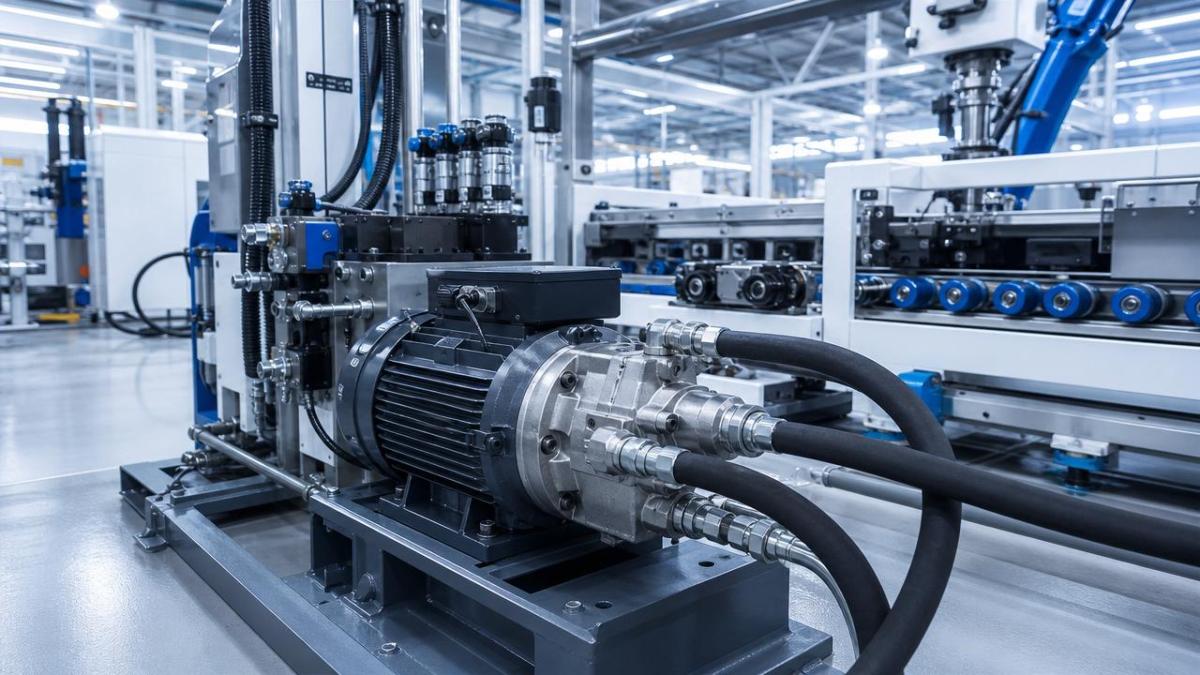
Low noise hydraulic pump wholesale becomes strategically important when buyers connect sound levels with failure risk. In many plants, pumps running above 72 dB to 78 dB under normal load may still meet output requirements, yet the elevated noise can indicate internal wear, suction restriction, or pressure ripple that accelerates seal damage and shortens maintenance intervals.
For enterprise environments, noise reduction has at least 4 operational benefits: earlier fault detection, lower operator fatigue, improved compliance with workplace exposure limits, and less vibration transfer into nearby valves, manifolds, sensors, and rigid piping. In dense industrial layouts, these secondary effects can influence the reliability of entire hydraulic circuits rather than a single pump alone.
The link between acoustics and downtime
Downtime related to hydraulic systems often begins with small symptoms. A rising noise profile over 2 to 6 weeks may precede pressure fluctuation, overheating, or unstable actuator response. When procurement teams source pumps only by nominal displacement and unit cost, they may miss noise-related design factors such as rotor geometry, housing rigidity, bearing quality, and inlet flow stability.
In wholesale purchasing, this matters because one mismatched batch can affect dozens of assemblies. If 20 pumps are deployed across several lines and even 15% develop abnormal vibration within the first service cycle, maintenance teams face repeated inspections, fluid replacement, and unplanned stops that can exceed the initial savings from a lower purchase price.
Where quieter pumps create measurable value
- Automated production cells where sensor stability and predictable pressure output are critical
- Food, packaging, and electronics facilities where enclosed spaces amplify noise
- Metalworking lines operating 16 to 24 hours per day with high thermal load
- Warehouse automation systems where human-machine interaction is continuous
- Mobile hydraulic fleets that require lower cabin and external operating noise
In these settings, low noise hydraulic pump wholesale supports more than worker comfort. It can reduce troubleshooting time, improve service planning, and limit the hidden cost of repeated tuning, hose reinforcement, and premature component replacement.
How to Evaluate Low Noise Hydraulic Pump Wholesale Options
A disciplined sourcing process should compare wholesale offers across 5 dimensions: acoustic performance, hydraulic efficiency, material durability, integration compatibility, and supplier support. Buyers should request test conditions, not just marketing claims. A pump rated at 65 dB in one setup may perform very differently at higher viscosity, higher pressure, or different mounting conditions.
The table below highlights practical checkpoints procurement directors can use during supplier screening. These criteria are especially relevant when ordering for multi-site operations, framework contracts, or OEM production environments where consistency matters as much as unit price.
The key takeaway is that low noise hydraulic pump wholesale should be assessed under real operating conditions. Buyers who verify both acoustic data and installation fit are more likely to reduce commissioning issues within the first 30 to 90 days after deployment.
Technical questions buyers should ask suppliers
- At what rpm, pressure, and oil viscosity was the noise level measured?
- What is the recommended suction line design and inlet pressure range?
- How does the pump perform in continuous duty above 8 hours per shift?
- What spare parts should be stocked for 12-month preventive maintenance?
- Can the supplier support batch traceability and replacement scheduling?
Common sourcing mistakes
One common mistake is treating “low noise” as a universal product label instead of a performance outcome. Noise can increase because of reservoir design, hose routing, coupler misalignment, or fluid aeration. Another mistake is accepting a pump that meets initial sound requirements but lacks parts availability, resulting in 2-week to 6-week delays when service kits are needed.
A third mistake is ignoring system scaling. A pump that performs quietly in a pilot unit may behave differently after rollout to 50 machines if the plant uses different oils, ambient temperatures from 10°C to 40°C, or longer inlet lines. Wholesale decisions should therefore include validation on at least 1 representative application before full-volume release.
Procurement Strategy: From Unit Price to Lifecycle Cost Control
For enterprise procurement, the strongest business case for low noise hydraulic pump wholesale is lifecycle stability. A lower upfront price can lose its advantage quickly if the pump drives more inspection labor, more fluid contamination events, or more stoppages across a 12-month to 36-month ownership window.
The most effective sourcing teams use a total-cost framework that combines direct acquisition cost with service frequency, replacement lead time, expected acoustic stability, and integration effort. This is especially relevant in advanced industrial ecosystems where hydraulic hardware must support automation, data visibility, and production continuity.
A practical decision matrix for enterprise buyers
The following table can be adapted for RFQ scoring. It helps cross-functional teams align engineering, maintenance, and procurement priorities before awarding a wholesale contract.
This approach allows procurement leaders to compare low noise hydraulic pump wholesale offers on measurable business impact. In many cases, the winning supplier is not the cheapest bidder, but the one with the most stable lead time, strongest documentation, and lowest operational disruption risk.
How G-AIE-style benchmarking improves supplier selection
In complex industrial ecosystems, component sourcing increasingly benefits from benchmark logic rather than transactional purchasing alone. Buyers should compare pumps by material durability, acoustic repeatability across batches, compatibility with intelligent monitoring, and field-service readiness. This is where multidisciplinary evaluation becomes valuable, especially when hydraulic assets interact with sensors, automation controls, and predictive maintenance systems.
A reliable supplier should be able to support 3 stages of adoption: pre-sale technical validation, startup guidance, and post-installation service feedback. If a vendor cannot provide clear installation tolerances, oil cleanliness recommendations, or pressure matching guidance, the cost risk shifts directly to the buyer’s maintenance team.
Implementation, Maintenance, and Risk Reduction After Purchase
Even the best low noise hydraulic pump wholesale decision can underperform without correct commissioning. Many field noise complaints trace back to installation factors rather than the pump core itself. Enterprises should therefore standardize startup and maintenance routines across plants, contractors, and service teams.
A 5-step rollout checklist
- Verify shaft alignment, base rigidity, and coupling condition before energizing.
- Confirm suction line sizing, reservoir level, and air-tight connections.
- Check oil cleanliness grade and viscosity against operating temperature range.
- Record baseline dB level, pressure, flow behavior, and housing temperature in the first 8 hours.
- Review performance again after 100 to 200 operating hours for trend changes.
This 5-step process gives maintenance teams an objective reference. When later noise rises by 4 dB, temperature climbs by 8°C, or pressure ripple increases, teams can respond before the issue turns into a hard failure.
Maintenance practices that protect acoustic performance
To preserve the value of low noise hydraulic pump wholesale, maintenance should include fluid analysis, suction inspection, seal review, and vibration checks at scheduled intervals. In medium-duty industrial use, a monthly visual inspection and a deeper review every 1,000 to 2,000 hours is a common starting point. High-contamination or high-temperature applications may require shorter cycles.
Buyers should also stock critical consumables. A practical inventory plan often includes seal kits, filters, and at least 1 replacement unit per critical production cluster. That approach can reduce exposure to transport delays, customs interruptions, or rush-order pricing during emergency events.
Frequently overlooked risks
- Using the wrong oil viscosity for seasonal temperature swings
- Installing pumps too close to vibration-sensitive electronics
- Ignoring suction-side restrictions during line expansion
- Replacing only the pump while leaving contaminated fluid in the circuit
- Failing to document baseline noise after installation
Each of these issues can make a technically sound pump seem unreliable. For enterprise buyers, the objective is not only to source low noise units, but to create a repeatable operating standard that keeps noise, wear, and stoppage risk under control across the asset lifecycle.
What Enterprise Buyers Should Do Next
Low noise hydraulic pump wholesale delivers the greatest value when acoustic performance, reliability, and service capability are evaluated together. For B2B decision-makers, the right supplier can help reduce unplanned maintenance, improve installation consistency, and support safer, more stable operations across multiple sites or production lines.
If your organization is reviewing hydraulic sourcing strategy, start by defining 4 essentials: operating pressure range, expected duty cycle, noise target, and response-time requirement for service parts. From there, compare suppliers on documented test conditions, integration fit, and lifecycle support rather than price alone.
G-AIE supports enterprise buyers looking for technically grounded, future-ready industrial decisions at the intersection of physical performance and intelligent operations. To reduce downtime risk and identify the right low noise hydraulic pump wholesale solution for your application, contact us today to discuss your operating requirements, request a tailored sourcing framework, or learn more about broader industrial benchmarking solutions.
Recommended News
 May 27, 2026Manufacturing Conglomerates: Supply Chain Risk SignalsManufacturing conglomerates need early supply chain risk signals to stay resilient. Learn how to spot weak warnings sooner, reduce disruption costs, and make smarter sourcing decisions.
 May 27, 2026Material Science for Smart Manufacturing: Key Use CasesMaterial science for smart manufacturing drives uptime, precision, efficiency, and supply resilience. Explore key use cases and evaluation insights for smarter factory decisions.
 May 27, 2026Sustainable Materials for Construction: Cost vs LifespanSustainable materials for construction: compare upfront cost, lifespan, maintenance, and ROI. Discover how finance teams can make smarter, lower-risk building decisions.
 May 27, 2026Advanced Materials Supplier Checklist for Stable QualityAdvanced materials supplier checklist for stable quality: learn how to assess tolerances, traceability, compliance, and supply continuity to reduce sourcing risk and improve resilience.
 May 27, 2026How to Evaluate a Smart Materials Manufacturer in 2026Smart materials manufacturer selection in 2026 demands more than price. Learn how to compare quality, traceability, compliance, and supply resilience for smarter sourcing decisions.
 May 26, 2026Resilient Manufacturing Strategies for Supply Chain DisruptionResilient manufacturing strategies to reduce supply chain disruption, protect production continuity, and improve agility with practical checklists, sourcing controls, and execution insights.
 May 26, 2026Safety Regulatory Compliance in Hydraulics: 7 Audit Risks to FixSafety regulatory compliance in hydraulics starts with fixing 7 critical audit risks. Learn practical steps to reduce findings, protect uptime, and strengthen workplace safety.
 May 26, 2026Industrial Digitalization Costs: What Drives ROI First?Industrial digitalization ROI starts with downtime, energy, scrap, and labor visibility. Learn which cost drivers pay back first and how to prioritize investments with confidence.
 May 26, 2026How Manufacturing Intelligence Platforms Improve OEE in 2026Manufacturing intelligence platform strategies for 2026: learn how to improve OEE faster with real-time analytics, root-cause visibility, and scalable deployment across complex production sites.
 May 26, 2026Industrial Automation Solutions: Cut Downtime Without a Full RetrofitIndustrial automation solutions help cut downtime, reduce maintenance costs, and improve uptime without a full retrofit. See how phased upgrades deliver faster ROI with less disruption.
 May 26, 2026GAIE 2026 Closes with Cybernetic Wheeled Humanoids Drawing Regional Procurement InterestGAIE 2026 spotlighted cybernetic wheeled humanoids—driving regional procurement interest amid rising ISO 10218-1:2026, multilingual UI, and local spare parts demands.
 May 26, 2026ZKH Q1 Overseas Revenue Jumps 612%; Servo Actuators Drive MRO Export GrowthServo actuators drive ZKH’s 612% overseas revenue surge—discover how MRO export growth reshapes global automation procurement and supply chain strategy.
 May 26, 2026Guolian Unveils Pakistan Digital HQ, Launching First South Asian Supply Chain LLMGuolian launches Pakistan Digital HQ & first South Asian Supply Chain LLM—Urdu-English bilingual, ERP-integrated, and commercially billed for tariff compliance, BOM parsing, and contract intelligence.
 May 26, 2026Saudi PIF’s Al-Ula Solar Park Deploys Solar-LIT UAVs, Spurring GCC Certification RushSolar-LIT UAVs deployed at Saudi PIF’s Al-Ula Solar Park spark GCC certification rush—discover how localization, IP68 resilience & data sovereignty reshape solar inspection standards.
 May 25, 2026Modular Hydraulic Unit Trends: Where Standardization Cuts Project DelaysModular hydraulic unit trends show how standardization cuts project delays, speeds integration, and lowers risk—helping industrial teams deliver reliable systems faster.
![]() May 25, 2026Industrial Hydraulic Investment Insights: Cost Risks That Matter in 2026Industrial hydraulic investment insights for 2026: uncover the cost risks that shape ROI, from energy and maintenance to supplier dependency, compliance, and automation readiness.
May 25, 2026Industrial Hydraulic Investment Insights: Cost Risks That Matter in 2026Industrial hydraulic investment insights for 2026: uncover the cost risks that shape ROI, from energy and maintenance to supplier dependency, compliance, and automation readiness. May 25, 2026High Pressure Hydraulic Market Growth in 2026: What Is Driving Demand?High pressure hydraulic market growth in 2026 is driven by automation, infrastructure renewal, energy efficiency, and smart maintenance. Discover where demand is rising fastest.
![]() May 25, 2026Digital Twin for Hydraulic Systems: When Does It Improve Uptime?Digital twin for hydraulic systems: learn when it truly boosts uptime through predictive maintenance, better failure diagnosis, and smarter implementation decisions.
May 25, 2026Digital Twin for Hydraulic Systems: When Does It Improve Uptime?Digital twin for hydraulic systems: learn when it truly boosts uptime through predictive maintenance, better failure diagnosis, and smarter implementation decisions.![]() May 25, 2026Aerospace Hydraulic System Alerts: What Fault Codes Often Signal FirstAerospace hydraulic system alerts often reveal pressure drift, contamination, valve faults, or sensor issues first. Learn how to spot early codes, cut downtime, and improve maintenance decisions.
May 25, 2026Aerospace Hydraulic System Alerts: What Fault Codes Often Signal FirstAerospace hydraulic system alerts often reveal pressure drift, contamination, valve faults, or sensor issues first. Learn how to spot early codes, cut downtime, and improve maintenance decisions.![]() May 25, 2026JPMorgan Upgrades A-Share AI & Robotics StocksJPMorgan upgrades A-share AI & robotics stocks—spotlight on Torque Logic’s drive modules and Servo Actuators amid energy security + robotics momentum.
May 25, 2026JPMorgan Upgrades A-Share AI & Robotics StocksJPMorgan upgrades A-share AI & robotics stocks—spotlight on Torque Logic’s drive modules and Servo Actuators amid energy security + robotics momentum.![]() May 25, 2026EU Proposes 'AI-Driven Supply Chain Resilience' CertificationAI-Driven Supply Chain Resilience certification is coming to the EU in 2027 — discover how Digital Twin AI compliance affects your industrial exports, traceability, and carbon reporting.
May 25, 2026EU Proposes 'AI-Driven Supply Chain Resilience' CertificationAI-Driven Supply Chain Resilience certification is coming to the EU in 2027 — discover how Digital Twin AI compliance affects your industrial exports, traceability, and carbon reporting.![]() May 25, 2026Saudi PIF Solar Projects Deploy BlueX Tech's Solar-LIT UAVsSaudi PIF solar projects deploy BlueX Tech's Solar-LIT UAVs for extreme-environment inspection—99.2% accuracy in desert sandstorms. Discover how this sets new regional O&M standards.
May 25, 2026Saudi PIF Solar Projects Deploy BlueX Tech's Solar-LIT UAVsSaudi PIF solar projects deploy BlueX Tech's Solar-LIT UAVs for extreme-environment inspection—99.2% accuracy in desert sandstorms. Discover how this sets new regional O&M standards.![]() May 25, 2026IBM to Build U.S.'s First Quantum Wafer FabIBM to Build U.S.'s First Quantum Wafer Fab — a $2B milestone advancing quantum sensing chips & AI inference co-processors. Key for semiconductor, AI chip, and quantum software firms.
May 25, 2026IBM to Build U.S.'s First Quantum Wafer FabIBM to Build U.S.'s First Quantum Wafer Fab — a $2B milestone advancing quantum sensing chips & AI inference co-processors. Key for semiconductor, AI chip, and quantum software firms.![]() May 25, 2026Dutch Envoy Clarifies EU-Korea Litho Competition, Harmonic Reducer Export Outlook BrightensHarmonic reducer export outlook brightens as Dutch envoy clarifies EU-Korea litho competition—unlock new market access in semiconductor precision motion control supply chains.
May 25, 2026Dutch Envoy Clarifies EU-Korea Litho Competition, Harmonic Reducer Export Outlook BrightensHarmonic reducer export outlook brightens as Dutch envoy clarifies EU-Korea litho competition—unlock new market access in semiconductor precision motion control supply chains.