Search News
Industry Portal
Popular Tags
How Supply Chain Intelligence Solutions Help Reduce Planning Risk
Author
Time
Click Count
For business evaluators navigating volatile sourcing, shifting demand, and tighter performance expectations, supply chain intelligence solutions provide the visibility needed to reduce planning risk with greater confidence. By combining market signals, supplier insights, and operational data, these solutions help organizations test scenarios earlier, spot disruptions faster, and make more resilient decisions across complex industrial ecosystems.
Why planning risk is rising across industrial supply networks
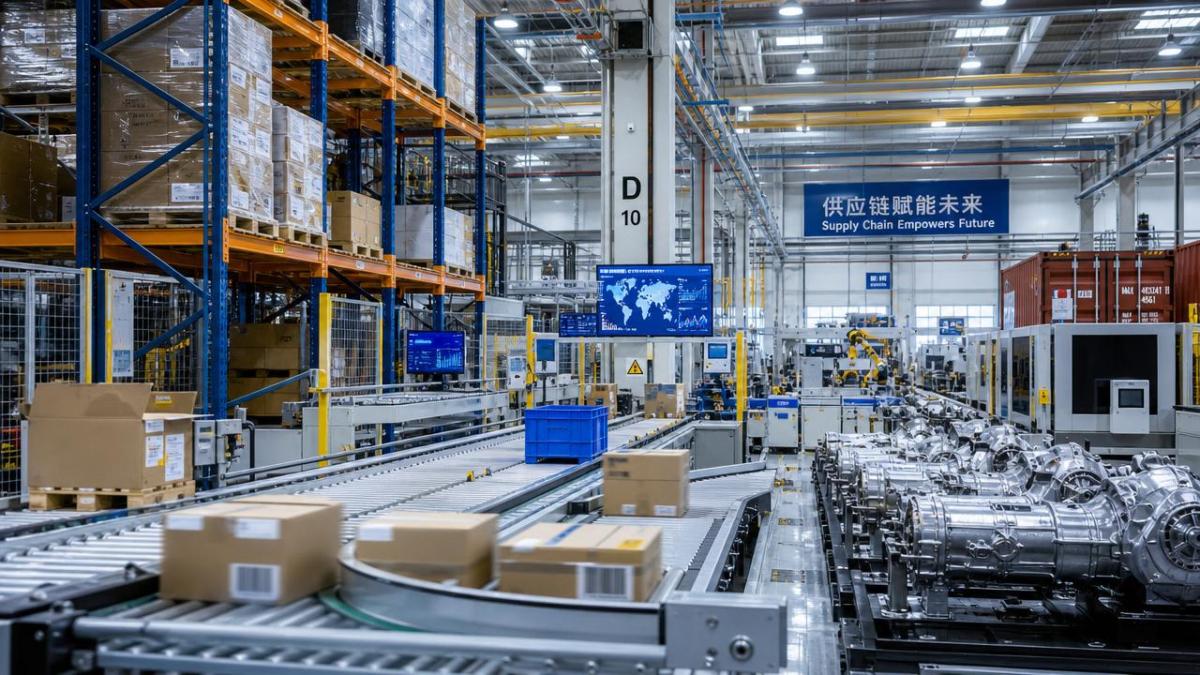
Planning risk is no longer limited to forecast error. In complex industrial environments, it now includes supplier instability, material substitution challenges, logistics delays, regulatory shifts, and weak coordination between commercial targets and plant-level realities. For business evaluators, that makes traditional spreadsheet-driven planning too slow and too narrow.
This is where supply chain intelligence solutions matter. They connect procurement data, supplier performance history, market pricing, inventory status, production constraints, and external disruption signals into a decision framework that can be reviewed before risk turns into cost, delay, or customer service failure.
What typically drives planning risk
- Demand plans are updated quarterly, while actual customer, channel, or project-level demand changes weekly.
- Supplier scorecards focus on historical delivery, but miss financial stress, capacity bottlenecks, or dependence on critical sub-tier sources.
- Material availability is treated as a procurement issue even when the real risk comes from engineering specification rigidity or delayed qualification of alternatives.
- Planning teams often lack one shared view across sourcing, operations, quality, and commercial stakeholders.
In broad industrial sectors, these gaps are amplified by long lead-time components, multi-country suppliers, technical compliance requirements, and capital-intensive production assets. A planning error can easily affect purchase commitments, factory utilization, customer delivery windows, and working capital at the same time.
What supply chain intelligence solutions actually do
Many organizations use the term loosely, but robust supply chain intelligence solutions do more than visualize dashboards. Their core value lies in transforming fragmented operational signals into decision-grade intelligence. For business evaluators, the question is not whether a platform has analytics, but whether those analytics reduce uncertainty before commitments are made.
Core capabilities that reduce planning risk
- Early warning detection based on supplier lead-time drift, shipment variability, commodity movements, and capacity stress indicators.
- Scenario modeling that compares plan A, B, and C across cost, service level, inventory exposure, and production continuity.
- Supplier intelligence that extends beyond delivery history to include concentration risk, dependence on specific materials, and likely resilience under disruption.
- Cross-functional visibility linking procurement, production, quality, engineering, and demand planning assumptions.
- Benchmarking support that helps evaluators compare internal planning assumptions against broader industrial patterns.
G-AIE is well positioned in this space because its institutional focus sits at the intersection of material science and intelligent automation. That matters when planning risk is tied not only to volumes and dates, but also to technical material suitability, qualification constraints, and performance trade-offs across high-value industrial ecosystems.
Which planning decisions benefit most from supply chain intelligence solutions?
Not every decision requires the same level of intelligence. Business evaluators should prioritize use cases where uncertainty has the highest downstream cost. The table below shows where supply chain intelligence solutions usually create the clearest planning benefit in diversified industrial operations.
For evaluators, the key takeaway is simple: the best use of supply chain intelligence solutions is not generic reporting. It is targeted risk compression in the planning decisions that lock in cost, capacity, and service outcomes early.
How to compare solution options without getting distracted by dashboards
A common procurement mistake is selecting a platform based on interface quality rather than decision impact. Attractive visualization matters, but only after the solution proves it can improve planning inputs, scenario reliability, and exception handling across industrial operations.
The comparison below can help business evaluators distinguish basic reporting tools from stronger supply chain intelligence solutions.
The strongest solutions are especially valuable when the enterprise manages both physical asset performance and digital planning complexity. That is the gap G-AIE addresses through technical benchmarking, cross-domain intelligence, and an ecosystem view rather than an isolated software view.
What business evaluators should check before approving a project
Approval decisions often fail because teams ask whether the tool is advanced, not whether the operating model is ready. Before investing in supply chain intelligence solutions, evaluators should test the organization’s planning maturity, data discipline, and cross-functional ownership.
Practical selection checklist
- Define the risk problem first. Is the pain concentrated in sourcing volatility, lead-time uncertainty, material qualification, or forecast instability?
- Identify the planning decisions that must improve. Examples include supplier award strategy, inventory policy, production sequencing, or alternative material planning.
- Review data availability. If supplier, quality, engineering, and planning data are disconnected, the project should include a phased integration plan.
- Assess scenario depth. Can the solution compare service, cost, and resilience trade-offs, or does it only report exceptions?
- Check adoption requirements. A system that planners, buyers, and operations leaders do not trust will not reduce planning risk.
In diversified industrial sectors, one more question is essential: does the provider understand how material science and automation decisions influence supply planning? G-AIE’s value is that it does not isolate procurement from technical context. That broader view is often decisive when evaluating resilient sourcing and production strategies.
Implementation risks, cost logic, and realistic expectations
Supply chain intelligence solutions can produce measurable planning benefits, but only if expectations are realistic. They will not eliminate uncertainty. They will, however, help organizations detect it sooner, quantify it better, and act with less bias.
Common implementation risks
- Poor master data quality causes false alerts and weak scenario credibility.
- Teams expect immediate full-network visibility, even though supplier and sub-tier data often require staged onboarding.
- The business case focuses only on labor savings instead of avoided expedite costs, reduced shortages, lower excess inventory, and better service continuity.
- Governance remains unclear, so nobody owns alert thresholds, scenario assumptions, or response workflows.
How to think about cost
For business evaluators, cost should be linked to planning exposure, not software price alone. In industrial settings, one sourcing disruption can trigger emergency freight, missed revenue, idle equipment, or quality risk from rushed substitutions. A useful intelligence project should therefore be assessed against avoided risk and faster decision cycles, not just license fees.
If budget is limited, a phased approach often works best. Start with one high-value planning problem such as critical supplier monitoring or long lead-time material planning. Then expand to broader network intelligence once data quality, workflows, and user confidence improve.
Standards, governance, and data credibility: what matters in practice?
While supply chain intelligence solutions are not defined by one universal certification, procurement and evaluation teams should still look for disciplined governance. In practice, credible programs align with common enterprise controls around data security, traceability, supplier documentation, and quality management processes.
Governance areas worth reviewing
- Data lineage: users should understand where risk signals come from and how frequently they are refreshed.
- Decision traceability: sourcing and planning changes should be recorded clearly enough for audit and cross-functional review.
- Supplier information discipline: qualification status, capacity assumptions, and performance records should be standardized.
- Scenario governance: planners need clear rules for assumptions, thresholds, and escalation paths.
G-AIE supports this evaluation logic well because its benchmark-oriented model helps organizations compare internal assumptions against broader industrial intelligence rather than relying only on isolated transactional data.
FAQ: practical questions business evaluators often ask
How do supply chain intelligence solutions differ from standard supply chain software?
Standard systems usually manage transactions, plans, or workflows. Supply chain intelligence solutions add interpretive capability. They combine internal and external signals, rank risk, support scenario testing, and help teams make better planning decisions under uncertainty. The difference is not only visibility, but planning judgment at scale.
Which organizations benefit most from these solutions?
They are particularly useful for organizations with multi-tier suppliers, long lead-time materials, technically constrained substitutions, high inventory exposure, or globally distributed manufacturing. Business evaluators in these environments often need stronger evidence before approving sourcing, inventory, or capacity strategies.
What should be prioritized in a first-phase deployment?
Start where planning uncertainty has the highest commercial or operational cost. Common starting points include critical supplier risk monitoring, demand-supply scenario planning for constrained product families, and intelligence around technically sensitive materials. A narrow first phase usually delivers faster organizational learning than a broad rollout.
What are the most common evaluation mistakes?
The biggest mistakes are overvaluing dashboards, underestimating data governance, and ignoring technical dependencies such as material qualification or automation constraints. Another common issue is expecting a single platform to solve weak planning discipline without process redesign or stakeholder alignment.
Why choose G-AIE for supply chain intelligence evaluation and planning support?
G-AIE is designed for decision-makers working where physical industrial performance and digital intelligence intersect. That matters when planning risk is tied to more than commercial variability. It also involves material behavior, automation dependencies, supplier capability, and resilience across a complex industrial ecosystem.
For business evaluators, G-AIE can support more grounded decisions by helping clarify which supply chain intelligence solutions fit your planning model, where technical benchmarking is needed, and how to compare options against real industrial constraints rather than generic software claims.
What you can discuss with us
- Parameter confirmation for risk indicators, planning inputs, and scenario assumptions.
- Solution selection support based on supplier complexity, material sensitivity, and operational maturity.
- Expected delivery timelines for phased intelligence deployment and cross-functional onboarding.
- Custom evaluation frameworks for procurement, planning, engineering, and executive review.
- Requirements related to documentation, quality processes, and industrial compliance expectations.
- Quote discussions for benchmark support, decision workshops, and tailored intelligence scopes.
If your team is assessing how to reduce planning risk with greater confidence, a focused conversation can quickly identify whether the priority is supplier resilience, material intelligence, scenario modeling, or broader industrial ecosystem visibility. That is often the fastest route to a decision that is both commercially disciplined and operationally realistic.
Recommended News
 May 17, 2026Industrial Automation Solutions for Stable Multi-Shift OutputIndustrial automation solutions help maintain stable multi-shift output with fewer errors, smarter alarms, and real-time control. See how to improve uptime, safety, and efficiency.
 May 17, 2026Material Science for Sustainable Materials: Key Trade-OffsMaterial science for sustainable materials explained through real industrial trade-offs—compare packaging, electronics, and structural use cases to improve performance, compliance, and long-term resilience.
 May 17, 2026Digital Supply Chain Management: Cost Leaks to Fix FirstDigital supply chain management starts with fixing the first cost leaks. Learn how to reduce premium freight, excess inventory, and supplier price leakage to protect margins fast.
 May 17, 2026Choosing an Automation Technology Supplier With Lower RiskAutomation technology supplier selection now shapes uptime, cyber readiness, and long-term ROI. Discover a lower-risk framework to compare suppliers with confidence.
 May 17, 2026Manufacturing Technology Innovations Worth Tracking This YearManufacturing technology innovations worth tracking this year: explore AI control, digital twins, smart factories, and advanced materials driving efficiency, resilience, and competitive growth.
 May 17, 2026How to Vet a Sustainable Materials Supplier in 2026Sustainable materials supplier selection in 2026 starts with traceability, carbon data, compliance, and resilience. Discover a practical buyer’s framework to reduce risk and source smarter.
 May 17, 2026Advanced Materials for Smart Manufacturing: What Performs BestAdvanced materials for smart manufacturing: compare alloys, polymers, composites, coatings, and additive feedstocks to improve uptime, automation fit, and lifecycle value.
 May 17, 2026Smart Materials for Industrial Applications That Cut DowntimeSmart materials for industrial applications help cut downtime through self-sensing composites, adaptive coatings, and smarter maintenance planning. Discover practical ways to boost uptime and reduce failure risk.
 May 17, 2026Industrial Automation Technology for Safer Line UpgradesIndustrial automation technology helps safety and quality leaders upgrade production lines with less risk, stronger compliance, and reliable uptime—explore the essential checklist.
 May 17, 2026AI in Manufacturing Benefits: Where ROI Shows Up FirstAI in manufacturing benefits appear first in predictive maintenance, quality control, scheduling, and energy savings. See where ROI starts fastest and how leaders reduce adoption risk.
 May 17, 2026China Unveils Ultra-High-Resolution QD Display Tech for AR/VRQuantum dot display tech unveiled: 5,000 PPI QD-CF for AR/VR light engines, 125% NTSC, VESA True Black 1000 certified — boost your optical platform integration now.
 May 17, 2026AI Terminal Intelligence Grading Standard ReleasedAI Terminal Intelligence Grading Standard (GB/Z 177—2026) released — discover how this new AI terminal benchmark impacts global manufacturers, exporters & certifiers in South Korea, UAE and beyond.
 May 17, 2026China's Shipbuilding Orders Surge 195.2% in Q1; Cargo Drones Launch Systems Emerge as Growth DriverCargo drones launch systems drive China's shipbuilding orders up 195.2% in Q1 2026 — discover how maritime infrastructure is transforming into integrated drone-ready platforms.
 May 17, 2026China-Europe Railway Express Surpasses 130,000 TrainsChina-Europe Railway Express surpasses 130,000 trains — boosting logistics for inspection UAVs, cargo drones & functional coatings with faster, climate-controlled rail solutions.
 May 17, 2026China's Digital Twin AI Solutions Gain Traction at Embedded World 2026China's Digital Twin AI solutions shine at Embedded World 2026—68.3% signing rate proves global demand for edge-deployable, EU-compliant predictive maintenance kits.
 May 17, 2026Vietnam Expands Toxicological Re-evaluation to All Metal-Based Industrial CatalystsVietnam mandates toxicological re-evaluation for all metal-based industrial catalysts — critical for exporters, importers & supply chains. Act now to avoid delays & rejection.
 May 17, 2026SABIC Adds Melt Strength Traceability to GCC Certification for Engineering ResinsSABIC’s new melt strength traceability requirement for GCC certification impacts PBT, PPS & PEEK resins—key for exporters, compounders & certifiers targeting Middle East markets.
 May 17, 2026U.S. BIS Adds Torque Logic Servo Components to Export Review ListTorque Logic servo components now face U.S. BIS export review—key for Chinese manufacturers & OEMs in Mexico, Vietnam, UAE. Act now to avoid delays.
 May 16, 2026Material Science for Smart Manufacturing Use CasesMaterial science for smart manufacturing drives smarter automation, lower downtime, and better quality. Explore practical use cases, evaluator insights, and strategies to reduce risk and improve factory performance.
 May 16, 2026Advanced Materials Supplier Cost and QualityAdvanced materials supplier cost and quality insights: learn how to compare price, compliance, traceability, and risk to choose a supplier that protects performance and long-term value.
 May 16, 2026Industrial Automation Systems Selection ChecklistIndustrial automation systems checklist for smarter selection: compare compatibility, uptime, cybersecurity, data visibility, and scalability to reduce risk and improve performance.
 May 16, 2026How to Vet a Smart Materials ManufacturerSmart materials manufacturer selection starts with the right checklist. Learn how to vet technical capability, quality systems, compliance, and delivery reliability.
 May 16, 2026Automation Technology for Factories: Key RisksAutomation technology for factories carries hidden risks in integration, downtime, cybersecurity, and supplier lock-in. Learn how to assess exposure before investing.
 May 16, 2026Material Science Research Shaping Bio-PlasticsMaterial science research is redefining bio-plastics with stronger performance, smarter processing, and verified sustainability—discover practical insights for scalable industrial adoption.