Search News
Industry Portal
Popular Tags
Industrial Automation Technology for Safer Line Upgrades
Author
Time
Click Count
For quality and safety leaders planning production line upgrades, industrial automation technology offers a practical path to reduce risk, improve compliance, and protect process stability. From smarter sensing and machine interlocks to data-driven monitoring, the right automation strategy helps teams modernize legacy systems without compromising worker safety, product quality, or operational continuity.
Why a Checklist Matters for Safer Line Upgrades
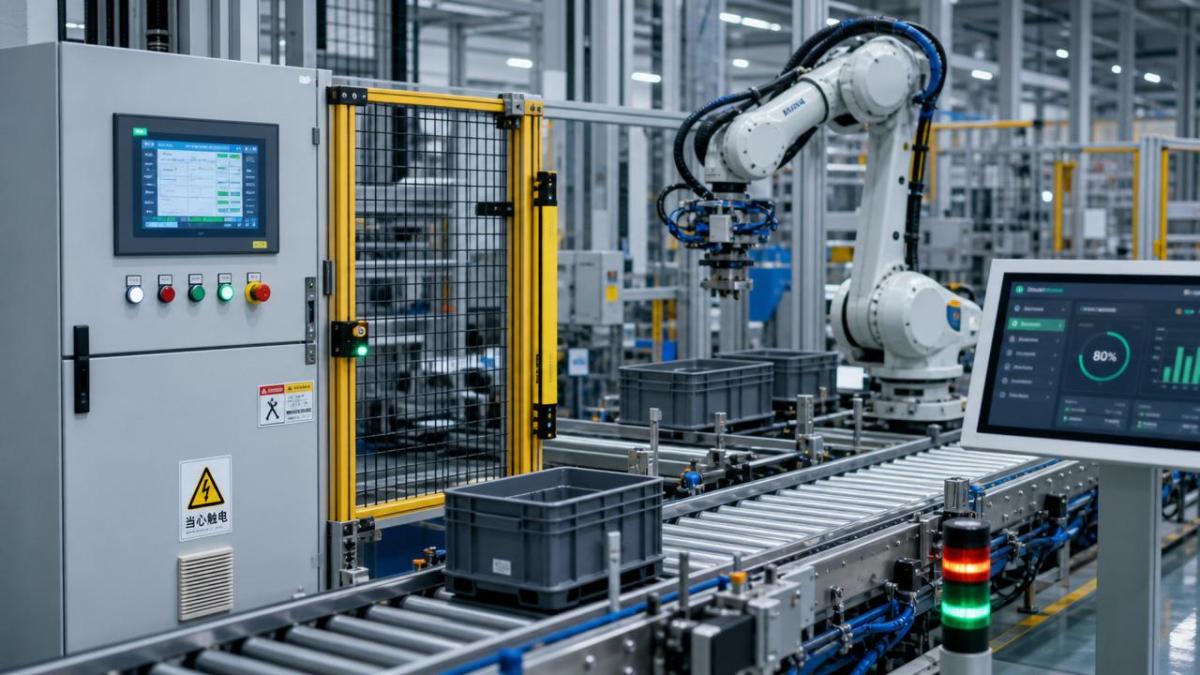
Line upgrades often fail when controls, mechanical changes, and human procedures are reviewed separately. A checklist keeps safety, quality, maintenance, and production constraints aligned from scope definition to restart.
In complex facilities, industrial automation technology touches sensors, PLC logic, HMI design, drives, alarms, traceability, and cybersecurity. Structured review prevents hidden interactions that can create downtime, nonconformance, or unsafe manual workarounds.
A checklist also supports repeatable decisions. It helps compare retrofit options, identify legacy risks, document change control, and confirm whether the upgrade improves resilience instead of simply adding digital features.
Core Checklist for Industrial Automation Technology Upgrades
- Define the hazard envelope before design changes. Map pinch points, energized zones, confined access, manual interventions, and startup states before selecting new controls or automation devices.
- Verify machine safeguarding requirements early. Review interlocks, emergency stops, guard switches, light curtains, and safe torque off functions against actual operator movement and maintenance access.
- Audit existing instrumentation performance. Check sensor drift, signal noise, wiring integrity, calibration records, and failure history before reusing field devices in an automation retrofit.
- Separate critical control layers clearly. Distinguish basic process control, safety logic, alarm management, and operator guidance to avoid hidden dependencies and confusing alarm behavior.
- Review PLC and HMI change impact systematically. Confirm naming conventions, screen hierarchy, permissives, fault codes, and restart logic remain understandable during abnormal process conditions.
- Test fail-safe behavior under realistic faults. Simulate power loss, communication dropouts, jam conditions, overtravel events, and sensor disagreement before production restart approval.
- Validate product quality checkpoints in parallel. Ensure industrial automation technology captures recipe control, lot traceability, reject handling, and in-process inspection without slowing critical throughput.
- Confirm maintenance access and lockout steps. New actuators, cabinets, and cable routing should not create unsafe servicing positions or extend isolation time unnecessarily.
- Harden network architecture for reliability. Segment industrial networks, secure remote access, control user permissions, and protect historian or MES links from disrupting machine operation.
- Run staged commissioning with documented acceptance criteria. Use dry runs, limited-load trials, and shift-based observation to verify stability before full-rate production release.
How the Checklist Applies Across Upgrade Scenarios
Legacy Line Retrofit
Older lines often contain mixed-vendor controls, undocumented modifications, and aging sensors. In this setting, industrial automation technology should begin with baseline mapping, not immediate replacement.
A practical retrofit sequence starts with I/O verification, control cabinet assessment, and safety circuit tracing. Only then should teams decide whether to retain panels, migrate PLCs, or add edge monitoring.
High-Variability Production
Lines handling frequent changeovers need automation that supports recipe integrity and setup consistency. Here, industrial automation technology should reduce manual adjustments that cause quality drift or missed steps.
Focus on guided HMI workflows, parameter lockouts, barcode verification, and event logging. These features improve repeatability while preserving operator awareness during short runs and mixed-product schedules.
Safety-Critical Material Handling
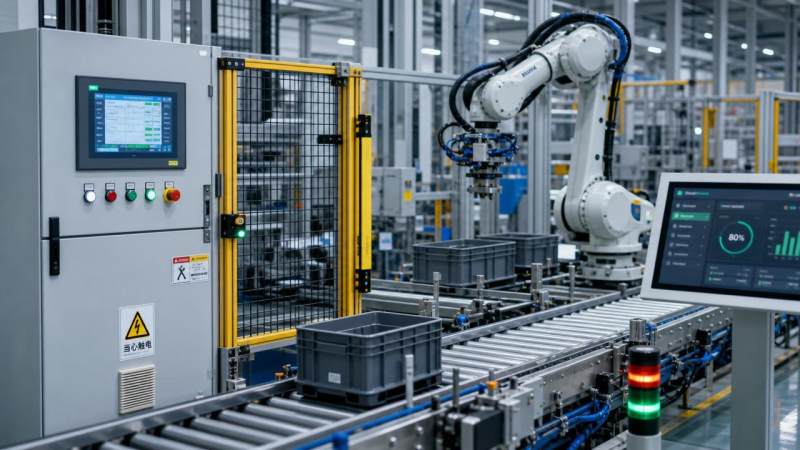
Conveying, palletizing, and robotic transfer zones create interaction risks during jams and recovery. Upgrades should prioritize safe access, status visibility, and restart sequencing over simple speed gains.
Use zoned interlocks, presence sensing, jam diagnostics, and safe motion controls. Effective industrial automation technology makes intervention predictable and limits the chance of unexpected movement.
Compliance-Driven Operations
Where audit trails and documented process control matter, automation upgrades must support evidence as well as performance. Data accuracy becomes part of safety and quality assurance.
Prioritize timestamp integrity, user access logs, change history, and exception reporting. In these environments, industrial automation technology is valuable only when records are trustworthy and easy to review.
Commonly Missed Risks During Automation Upgrades
Unclear ownership during commissioning. Safety validation, logic approval, and mechanical punch-list closure often sit with different functions. Without explicit responsibility, restart decisions can become rushed and inconsistent.
Alarm overload after modernization. New devices generate more data, but not every event deserves an alarm. Excessive alarm volume can hide critical states and undermine the value of industrial automation technology.
Bypassed safeguards during troubleshooting. Temporary jumpers, disabled permissives, or manual overrides may stay active longer than intended. Every bypass needs time limits, authorization, and verification before handover.
Poor operator screen design. A modern HMI can still confuse users if fault paths, equipment states, and recovery instructions are buried. Better graphics do not guarantee better decisions.
Cybersecurity treated as an IT afterthought. Remote diagnostics, vendor access, and plant-to-cloud links can expose control assets. Secure architecture must be built into industrial automation technology from the start.
Practical Execution Steps
- Start with a documented line walk that captures equipment states, manual touches, unsafe reaches, nuisance stops, and quality loss points.
- Build a change matrix linking each automation modification to safety impact, process impact, validation method, and restart criteria.
- Use FAT and SAT protocols that include abnormal condition tests, not only normal cycle demonstrations.
- Train on fault recovery scenarios, because startup instability often appears during the first intervention after a jam or sensor fault.
- Capture post-upgrade data for at least one operating cycle pattern, then compare stoppages, rejects, and interventions against the baseline.
Conclusion and Next Action
Safer line upgrades depend on disciplined evaluation, not automation for its own sake. The best industrial automation technology decisions improve control visibility, reduce manual risk, and strengthen process consistency under real operating conditions.
Begin with a checklist-based review of hazards, controls, quality checkpoints, and network resilience. Then prioritize changes that deliver measurable safety and stability before expanding into broader digital transformation.
When each upgrade step is validated against failure modes, human interaction, and traceable performance, industrial automation technology becomes a reliable foundation for safer, more resilient production lines.
Recommended News
 Sep 19, 2026When can a supply chain LLM reduce time spent finding shipment updates?Supply chain LLMs can cut shipment-update search time by connecting carrier events, ERP data, and documents—giving teams traceable answers and faster exception response.
 Sep 18, 2026How industrial monitoring equipment helps prevent unplanned downtimeIndustrial monitoring equipment helps teams detect early asset issues, prioritize maintenance, and prevent costly unplanned downtime. Explore practical strategies for reliable operations.
 Sep 17, 2026What next-gen harmonic drive research means for robot joint accuracyNext-gen harmonic drive research reveals how backlash, stiffness, thermal drift, and sensing shape robot joint accuracy. Explore smarter validation strategies.
 Sep 16, 2026How Southeast Asian climates affect cylinder seal frictionCylinder seal friction Southeast Asia: learn how humidity, heat, monsoons, and contamination affect motion stability, wear, and seal selection.
 Sep 15, 2026How to size DC gear motors for the required starting torqueGear motors DC sizing made practical: calculate starting torque, account for friction, gravity, inertia and voltage drop, then select a reliable motor with confidence.
 Sep 14, 2026How to verify high purity chemicals compliance before supplier approvalHigh purity chemicals compliance: learn how to verify supplier quality systems, CoAs, traceability, testing, and change control before approval.
 Sep 13, 2026What permits are needed to operate mapping drones in Europe?Mapping drones Europe: discover the permits, EASA categories, airspace approvals, site access, and GDPR checks needed for compliant aerial surveys.
 Sep 12, 2026What lead time should I expect for automatic transmission components? Planetary Gearboxes delivery forecasting for OEM planningWhat lead time should I expect for automatic transmission components? Get dynamic, AI-powered planetary gearbox delivery forecasting—designed for OEMs building next-gen hybrid & commercial powertrains.
 Sep 12, 2026Can polyamide replace metal in load-bearing components? Polymer Pulse structural performance data for 2026 applicationsCan polyamide replace metal in load-bearing components? Discover Polymer Pulse’s 2026 structural data—real-world performance, weight savings, and reliability breakthroughs.
 Sep 12, 2026How to handle a power electronics warranty claim: Harmonic Reducers documentation and escalation pathHow do I handle a power electronics warranty claim? Get a fast, intelligent, evidence-driven resolution for harmonic reducers—no bureaucracy, just precision diagnostics and real-time escalation.
 Sep 12, 2026Which motion control specifications matter most before purchase? Torque Logic selection criteria for automation engineersWhich motion control specifications are most important before purchase? Discover Torque Logic—the 4 non-negotiable, AI-aligned criteria that cut TCO by 27–41% and boost motion system availability to 99.992%.
 Sep 13, 2026Is agentic AI reliable enough for supplier screening? Supply Chain LLM validation framework for procurement teamsIs agentic AI reliable enough for supplier screening? Discover a rigorous LLM validation framework built for procurement teams—grounded in material traceability, regulatory compliance, and real-world operational constraints.
 Sep 14, 2026How to maintain edge AI systems after deployment: Predictive Maint AI operational protocols for field techniciansHow do I maintain edge AI systems after deployment? Discover predictive, physics-aware operational protocols designed for real-world field technicians—sustaining intelligence where silicon meets steel.
 Sep 15, 2026What compliance documents must a bioplastics supplier provide? Bio-Plastics regulatory checklist for procurementWhat compliance documents should a bioplastics supplier provide? Get our actionable regulatory checklist for food, medical & EU-bound applications.
 Sep 16, 2026How to prevent PET film defects during production: Barrier Films process control best practicesHow can I prevent PET film defects during production? Discover physics-driven barrier film process control—thermal precision, dynamic tension management & surface energy optimization.
 Sep 17, 2026Are thermoplastics suitable for long-term outdoor use? Engineering Resins durability assessment in 2026 UV/weather exposureAre thermoplastics suitable for long-term outdoor use? Discover 2026’s engineering resin durability insights — UV/weather resistance ranked, tested & actionable.
 Sep 18, 2026What to do when a servo motor fails during production: A Servo Actuators troubleshooting guide for maintenance teamsWhat should I do if a servo motor fails during production? Get a field-tested, AI-aware troubleshooting guide for maintenance teams—minimize downtime, maximize OEE.
 Sep 12, 2026How to compare wholesale party supplies by minimum order valueCompare wholesale party supplies by minimum order value, freight, SKU flexibility, and stock risk to choose suppliers that protect margins and simplify replenishment.
 Sep 11, 2026How proportional solenoid linearity affects precision motion controlProportional solenoid linearity directly affects precision motion control, valve metering, stability, and calibration. Learn how to evaluate performance for reliable automation.
 Sep 10, 2026When does supplier information platform automation reduce onboarding delays?Supplier information platform automation reduces onboarding delays by streamlining data collection, routing, renewals, and compliance checks—without replacing expert technical review.
 Sep 09, 2026How to size robotic motion systems for AMR payload changesRobotic motion systems for AMR payload changes: learn how to size motors, wheels, gearing, traction, and controls for safer, reliable performance.
 Sep 08, 2026How to perform a cylinder rod buckling calculation for long strokesCylinder rod buckling calculation made practical: learn how to assess effective length, end conditions, rod stiffness, load forces, and safety margins for reliable long-stroke cylinder design.
 Sep 07, 2026How to estimate the cost of industrial mechanical components before orderingIndustrial mechanical components cost: learn how to estimate material, machining, tooling, inspection, logistics, and hidden expenses before ordering. Compare quotes confidently and reduce sourcing risk.
 Sep 07, 2026What Is a Product Standards Database Used For?Product standards database guide: learn how to compare requirements, verify revisions, control specifications, and reduce compliance risks across design, sourcing, and production.