Search News
Industry Portal
Popular Tags
Material Science for Smart Manufacturing Use Cases

Author
Time
Click Count
Material science for smart manufacturing is redefining how technical evaluators assess performance, scalability, and long-term operational resilience. From advanced composites and functional coatings to data-driven process optimization, the right material decisions directly influence automation efficiency, product reliability, and sustainable output. This article explores practical use cases that connect material innovation with intelligent manufacturing strategies, helping industrial decision-makers benchmark technologies and reduce risk in complex production environments.
For technical evaluators, the core question is not whether material innovation matters, but where it creates measurable advantage. In smart manufacturing, materials influence machine uptime, sensor accuracy, process stability, quality consistency, and lifecycle cost.
The most valuable evaluation approach links material properties to specific production outcomes. Instead of reviewing strength, conductivity, or wear resistance in isolation, decision-makers need to assess how those properties affect automation readiness, throughput, maintenance intervals, and digital control.
That is why material science for smart manufacturing should be treated as a systems issue. The right choice depends on how materials interact with robotics, thermal loads, machine vision, predictive maintenance frameworks, compliance requirements, and sustainability goals.
What Technical Evaluators Actually Need to Prove Before Adopting a Material
In most industrial buying cycles, technical evaluators are asked to validate performance under real operating conditions rather than laboratory promises. They need evidence that a material can maintain consistency across shifts, production sites, and changing process parameters.
Three proof points usually matter most. First, the material must deliver a clear functional gain, such as lower friction, better heat tolerance, lighter weight, or stronger corrosion resistance. Second, it must integrate into existing automated workflows without excessive disruption.
Third, it must produce an acceptable risk-to-return profile over time. This includes procurement stability, qualification effort, maintenance impact, recyclability, and the ability to support future production expansion without creating process bottlenecks.
For that reason, material evaluation should include more than datasheet comparison. It should combine bench testing, pilot-line validation, process simulation, supplier capability review, and scenario-based cost analysis tied to expected production behavior.
Why Material Science Is Becoming Central to Smart Manufacturing Strategy
Smart manufacturing depends on reliable data, stable processes, and predictable machine behavior. Materials sit underneath all three. If a component deforms under thermal stress, creates surface inconsistency, or wears unpredictably, digital control systems become less effective.
Advanced factories increasingly rely on closed-loop automation, robotics, embedded sensing, and AI-assisted quality monitoring. These technologies require materials that perform consistently enough for software to model, predict, and optimize production behavior with confidence.
For example, a coating with uneven adhesion may generate variable friction and tool wear. A housing material with inconsistent thermal expansion may shift sensor alignment. In both cases, the automation stack loses accuracy, even if the digital system itself is well designed.
This is one reason material science for smart manufacturing has moved from a niche engineering topic to a strategic decision area. Materials now affect not only product properties, but also the intelligence layer that manages production efficiency.
Use Case 1: Lightweight Materials for Robotics and High-Speed Automation
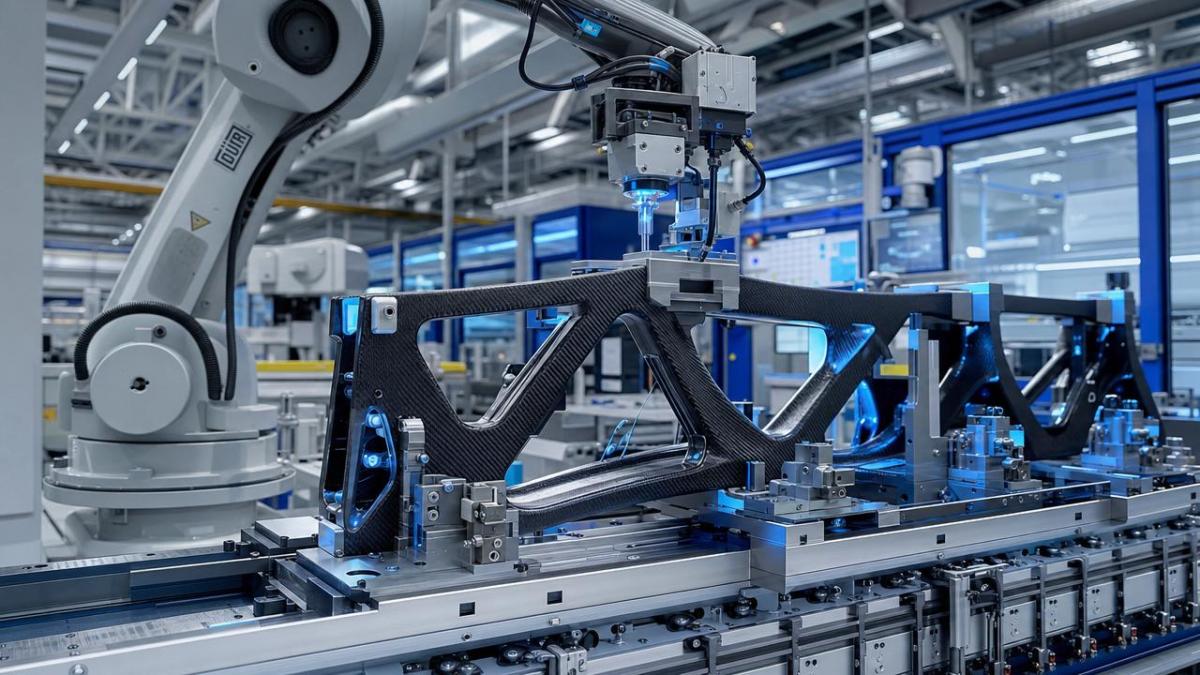
One of the clearest smart manufacturing use cases involves lightweight structural materials in robotic arms, end effectors, and moving assemblies. Reducing mass can improve acceleration, precision, energy efficiency, and cycle time without redesigning the full automation architecture.
Carbon fiber composites, advanced aluminum alloys, and hybrid polymer-metal structures are often evaluated for this purpose. Their value comes from lowering inertial loads, which allows motors and control systems to operate more efficiently during repetitive motion.
For technical evaluators, the key is to balance lightweighting benefits against fatigue performance, impact behavior, repairability, and attachment complexity. A material that reduces weight but introduces bonding challenges or inspection difficulty may not scale well in production.
Useful benchmarks include stiffness-to-weight ratio, vibration damping, thermal stability, dimensional repeatability, and expected maintenance frequency. In high-speed automated environments, the best material is often the one that preserves precision over millions of cycles.
Use Case 2: Wear-Resistant Surfaces That Reduce Downtime
Smart factories cannot achieve high equipment effectiveness if surfaces degrade too quickly. Wear-resistant materials and coatings are therefore critical in conveyors, forming tools, bearings, nozzles, molds, and contact interfaces exposed to abrasion or repeated friction.
Examples include ceramic coatings, nitrided steels, tungsten carbide layers, and engineered polymers designed for low-friction operation. These materials can extend component life, stabilize process quality, and reduce unplanned maintenance events across automated lines.
From an evaluation perspective, the business value is strongest where downtime is expensive and difficult to recover. If a bottleneck station fails because of material wear, the effect can spread through scheduling, labor planning, inventory flow, and customer delivery.
Technical teams should compare total operational impact, not just coating cost or substrate price. The real question is how the material affects replacement intervals, spare parts strategy, maintenance labor, and the predictability of output quality over time.
Use Case 3: Thermal Management Materials for Precision Production
Heat is a hidden source of variation in many manufacturing systems. Smart equipment may be digitally advanced, but if thermal drift changes dimensions, conductivity, or sensor behavior, precision can fall outside tolerance limits.
Materials with engineered thermal properties are increasingly used in battery manufacturing, semiconductor assembly, additive manufacturing, electronics production, and high-speed machining. Common priorities include heat dissipation, thermal insulation, and controlled expansion behavior.
Examples include phase-change materials, high-conductivity interface compounds, ceramic insulators, copper-based thermal spreaders, and specialty alloys with stable expansion characteristics. Their role is to keep processes repeatable under sustained operating intensity.
Technical evaluators should focus on temperature cycling durability, interface compatibility, contamination risk, and ease of integration into automated equipment. Thermal performance matters most when it improves process window stability, metrology accuracy, and defect reduction.
Use Case 4: Functional Materials That Improve Sensing and Machine Intelligence
Smart manufacturing depends on sensing, but sensors are only as reliable as the materials around them. Functional materials can improve signal quality, environmental resistance, and data reliability in connected production environments.
Examples include piezoelectric materials, conductive polymers, electromagnetic shielding materials, optically stable substrates, and chemically resistant encapsulants. These support applications such as vibration monitoring, proximity sensing, machine vision, and inline quality inspection.
When evaluating these options, teams should ask whether the material enhances data fidelity across real factory conditions. Dust, humidity, thermal variation, chemical exposure, and vibration can all compromise sensing if material selection is too narrow or generic.
This use case is especially important because poor material compatibility often appears as a software problem first. In reality, unstable signals, calibration drift, or intermittent failures may originate in packaging, shielding, or substrate behavior rather than analytics logic.
Use Case 5: Corrosion-Resistant Materials for Resilient Global Operations
In sectors with aggressive environments, corrosion directly undermines reliability, safety, and asset life. Smart manufacturing systems operating in chemical processing, food production, marine logistics, or humid climates require materials engineered for long-term resistance.
Stainless alloys, nickel-based materials, advanced coatings, fluoropolymers, and composite solutions can all play a role. The right choice depends on exposure profile, cleaning methods, temperature range, mechanical stress, and regulatory constraints.
For technical evaluators managing global deployment, corrosion resistance should be assessed across localized operating conditions. A material that performs well in one plant may fail earlier elsewhere because of water chemistry, sanitation routines, or airborne contaminants.
Here, material science for smart manufacturing supports resilience by reducing variability across sites. Standardized corrosion-resistant solutions can simplify maintenance planning, improve asset comparability, and support more accurate digital twins for distributed operations.
How to Evaluate Material Choices in a Smart Manufacturing Framework
To make defensible decisions, technical evaluators should use a multi-layer framework. The first layer is functional fit: does the material solve the immediate engineering problem better than current alternatives?
The second layer is process compatibility. Can it be machined, molded, joined, coated, inspected, or repaired using available production capabilities? If implementation requires major retooling, qualification costs may erase theoretical gains.
The third layer is automation impact. Teams should assess whether the material improves machine consistency, sensor reliability, cycle performance, predictive maintenance visibility, or digital process control. This is where smart manufacturing value becomes visible.
The fourth layer is lifecycle economics. Evaluation should include energy consumption, scrap reduction, spare part frequency, uptime contribution, compliance burden, supplier resilience, and end-of-life pathways. A higher unit price may still produce a lower total cost.
Common Risks That Delay Value Realization
Many material initiatives underperform because validation is too narrow. Teams may optimize for one property, such as hardness or weight, while underestimating effects on joining, inspection, contamination control, or automation tolerances.
Another common risk is supplier overdependence. If a promising material comes from a fragile supply base, long-term production risk may outweigh technical advantages. This is especially relevant in strategic sectors facing regional sourcing constraints.
Data fragmentation also creates problems. Material decisions are often made separately by product engineering, manufacturing engineering, procurement, and maintenance teams. Without shared criteria, the chosen solution may satisfy one function while creating hidden operational costs elsewhere.
Finally, some organizations fail to define success metrics before trials begin. Pilot programs should measure throughput impact, defect rates, energy use, maintenance changes, and quality stability, not just whether the material technically survives initial testing.
What a Strong Benchmarking Process Looks Like
High-quality benchmarking starts with use-case segmentation. Evaluators should define whether the target outcome is higher speed, lower wear, better sensing, thermal stability, corrosion resistance, or sustainability improvement. Each goal requires different material criteria.
Next comes comparative testing against a current baseline and at least one credible alternative. Laboratory data should be paired with line-level performance indicators so teams can connect physical properties with real production outcomes.
A strong process also includes supplier maturity review. This means checking process control capability, quality consistency, traceability practices, change management discipline, and application engineering support. Material excellence without manufacturing discipline is not enough.
Finally, benchmarking should produce a clear adoption map. Some materials are ideal for immediate retrofit in high-value bottlenecks, while others are better introduced during new equipment launches or product platform redesigns.
Conclusion: Material Decisions Now Shape Digital Manufacturing Performance
Material science for smart manufacturing is no longer just about improving isolated component performance. It shapes how machines run, how sensors read, how software optimizes, and how reliably factories scale across sites and product generations.
For technical evaluators, the best decisions come from linking material properties to measurable production outcomes. Lightweight structures, wear-resistant surfaces, thermal management solutions, functional sensing materials, and corrosion-resistant systems all offer clear use-case value when validated correctly.
The most practical takeaway is simple: evaluate materials as part of an intelligent production system, not as standalone engineering inputs. That approach reduces adoption risk, strengthens benchmarking, and reveals where material innovation can create durable operational advantage.
In a manufacturing environment defined by automation, resilience, and precision, the right material choice is increasingly a digital performance decision as much as a physical one.
Recommended News
 Sep 19, 2026When can a supply chain LLM reduce time spent finding shipment updates?Supply chain LLMs can cut shipment-update search time by connecting carrier events, ERP data, and documents—giving teams traceable answers and faster exception response.
 Sep 18, 2026How industrial monitoring equipment helps prevent unplanned downtimeIndustrial monitoring equipment helps teams detect early asset issues, prioritize maintenance, and prevent costly unplanned downtime. Explore practical strategies for reliable operations.
 Sep 17, 2026What next-gen harmonic drive research means for robot joint accuracyNext-gen harmonic drive research reveals how backlash, stiffness, thermal drift, and sensing shape robot joint accuracy. Explore smarter validation strategies.
 Sep 16, 2026How Southeast Asian climates affect cylinder seal frictionCylinder seal friction Southeast Asia: learn how humidity, heat, monsoons, and contamination affect motion stability, wear, and seal selection.
 Sep 15, 2026How to size DC gear motors for the required starting torqueGear motors DC sizing made practical: calculate starting torque, account for friction, gravity, inertia and voltage drop, then select a reliable motor with confidence.
 Sep 14, 2026How to verify high purity chemicals compliance before supplier approvalHigh purity chemicals compliance: learn how to verify supplier quality systems, CoAs, traceability, testing, and change control before approval.
 Sep 13, 2026What permits are needed to operate mapping drones in Europe?Mapping drones Europe: discover the permits, EASA categories, airspace approvals, site access, and GDPR checks needed for compliant aerial surveys.
 Sep 12, 2026What lead time should I expect for automatic transmission components? Planetary Gearboxes delivery forecasting for OEM planningWhat lead time should I expect for automatic transmission components? Get dynamic, AI-powered planetary gearbox delivery forecasting—designed for OEMs building next-gen hybrid & commercial powertrains.
 Sep 12, 2026Can polyamide replace metal in load-bearing components? Polymer Pulse structural performance data for 2026 applicationsCan polyamide replace metal in load-bearing components? Discover Polymer Pulse’s 2026 structural data—real-world performance, weight savings, and reliability breakthroughs.
 Sep 12, 2026How to handle a power electronics warranty claim: Harmonic Reducers documentation and escalation pathHow do I handle a power electronics warranty claim? Get a fast, intelligent, evidence-driven resolution for harmonic reducers—no bureaucracy, just precision diagnostics and real-time escalation.
 Sep 12, 2026Which motion control specifications matter most before purchase? Torque Logic selection criteria for automation engineersWhich motion control specifications are most important before purchase? Discover Torque Logic—the 4 non-negotiable, AI-aligned criteria that cut TCO by 27–41% and boost motion system availability to 99.992%.
 Sep 13, 2026Is agentic AI reliable enough for supplier screening? Supply Chain LLM validation framework for procurement teamsIs agentic AI reliable enough for supplier screening? Discover a rigorous LLM validation framework built for procurement teams—grounded in material traceability, regulatory compliance, and real-world operational constraints.
 Sep 14, 2026How to maintain edge AI systems after deployment: Predictive Maint AI operational protocols for field techniciansHow do I maintain edge AI systems after deployment? Discover predictive, physics-aware operational protocols designed for real-world field technicians—sustaining intelligence where silicon meets steel.
 Sep 15, 2026What compliance documents must a bioplastics supplier provide? Bio-Plastics regulatory checklist for procurementWhat compliance documents should a bioplastics supplier provide? Get our actionable regulatory checklist for food, medical & EU-bound applications.
 Sep 16, 2026How to prevent PET film defects during production: Barrier Films process control best practicesHow can I prevent PET film defects during production? Discover physics-driven barrier film process control—thermal precision, dynamic tension management & surface energy optimization.
 Sep 17, 2026Are thermoplastics suitable for long-term outdoor use? Engineering Resins durability assessment in 2026 UV/weather exposureAre thermoplastics suitable for long-term outdoor use? Discover 2026’s engineering resin durability insights — UV/weather resistance ranked, tested & actionable.
 Sep 18, 2026What to do when a servo motor fails during production: A Servo Actuators troubleshooting guide for maintenance teamsWhat should I do if a servo motor fails during production? Get a field-tested, AI-aware troubleshooting guide for maintenance teams—minimize downtime, maximize OEE.
 Sep 12, 2026How to compare wholesale party supplies by minimum order valueCompare wholesale party supplies by minimum order value, freight, SKU flexibility, and stock risk to choose suppliers that protect margins and simplify replenishment.
 Sep 11, 2026How proportional solenoid linearity affects precision motion controlProportional solenoid linearity directly affects precision motion control, valve metering, stability, and calibration. Learn how to evaluate performance for reliable automation.
 Sep 10, 2026When does supplier information platform automation reduce onboarding delays?Supplier information platform automation reduces onboarding delays by streamlining data collection, routing, renewals, and compliance checks—without replacing expert technical review.
 Sep 09, 2026How to size robotic motion systems for AMR payload changesRobotic motion systems for AMR payload changes: learn how to size motors, wheels, gearing, traction, and controls for safer, reliable performance.
 Sep 08, 2026How to perform a cylinder rod buckling calculation for long strokesCylinder rod buckling calculation made practical: learn how to assess effective length, end conditions, rod stiffness, load forces, and safety margins for reliable long-stroke cylinder design.
 Sep 07, 2026How to estimate the cost of industrial mechanical components before orderingIndustrial mechanical components cost: learn how to estimate material, machining, tooling, inspection, logistics, and hidden expenses before ordering. Compare quotes confidently and reduce sourcing risk.
 Sep 07, 2026What Is a Product Standards Database Used For?Product standards database guide: learn how to compare requirements, verify revisions, control specifications, and reduce compliance risks across design, sourcing, and production.