Search News
Industry Portal
Popular Tags
How to Vet a Smart Materials Manufacturer
Author
Time
Click Count
Choosing the right smart materials manufacturer can directly affect product performance, supply chain resilience, and long-term procurement value. For buyers navigating advanced industrial markets, proper vetting means looking beyond price to assess technical capabilities, quality systems, innovation strength, and production reliability. This guide outlines the key factors procurement professionals should examine to identify qualified partners and reduce sourcing risk.
What should procurement teams verify first in a smart materials manufacturer?
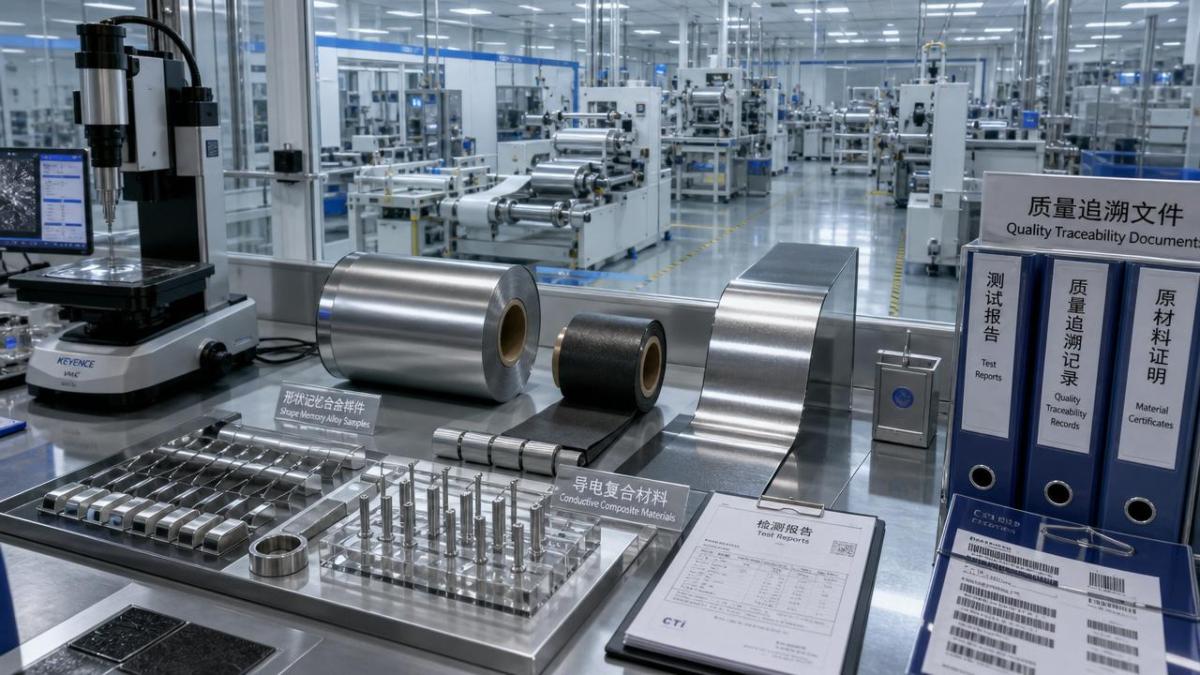
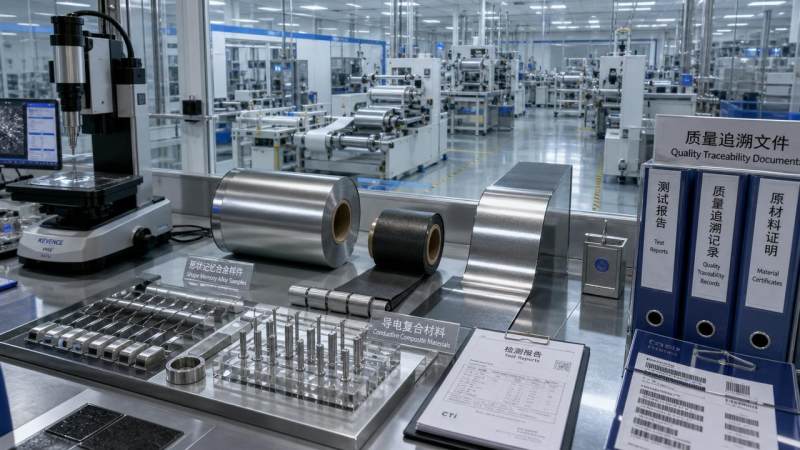
A smart materials manufacturer is not simply a supplier of advanced inputs. In many industrial programs, that manufacturer becomes a technical risk holder, a quality partner, and a delivery node that influences downstream automation, assembly yield, maintenance cycles, and field performance.
For procurement teams, the first screen should focus on whether the supplier can consistently translate material science into repeatable industrial output. This matters across sectors where responsive polymers, shape-memory alloys, conductive composites, piezoelectric materials, self-healing coatings, and adaptive surfaces are integrated into sensors, actuators, electronics, energy systems, and lightweight engineered assemblies.
In practice, a qualified smart materials manufacturer should demonstrate strength in four baseline areas before price discussions go too far.
- Material design capability, including formulation control, property tuning, and application-specific engineering support.
- Manufacturing discipline, including process stability, batch traceability, contamination control, and scale-up readiness.
- Verification systems, including incoming inspection, in-process monitoring, final testing, and documented nonconformance handling.
- Commercial reliability, including lead time transparency, change management, and capacity planning for multi-region demand.
This is where G-AIE adds value for buyers. Because procurement decisions now sit at the intersection of material innovation and intelligent automation, benchmarking a smart materials manufacturer requires more than a standard supplier audit. G-AIE helps industrial buyers compare technical maturity, data readiness, and ecosystem fit using a wider lens than conventional sourcing reviews.
Why the screening criteria are different for smart materials
Traditional raw material suppliers may compete mainly on chemistry, pricing, and logistics. Smart materials suppliers must also prove responsive behavior under real operating conditions. That means the buyer should ask how the material reacts to heat, load, voltage, pressure, moisture, vibration, cycling, and long-term fatigue.
If the manufacturer cannot explain performance windows, failure modes, and process sensitivities in a clear engineering language, the sourcing risk rises quickly. For procurement personnel, that gap often becomes visible only after qualification delays, scrap events, or warranty exposure.
How to compare smart materials manufacturers with a procurement scorecard
A scorecard makes vendor comparison more objective, especially when multiple business units, engineering teams, and quality stakeholders are involved. The table below outlines a practical framework buyers can use when evaluating a smart materials manufacturer for industrial sourcing programs.
This scorecard helps procurement shift the conversation from broad claims to measurable supplier evidence. It also supports internal alignment because engineering, quality, and sourcing can all score against shared criteria instead of reacting to isolated promises or sample-stage impressions.
Questions that reveal supplier maturity
- How do you control lot-to-lot variation for critical material properties?
- What process parameters are monitored in real time during production?
- Can you provide application-specific test protocols, not only general datasheets?
- What is your formal procedure for raw material substitution or process changes?
- What backup plans exist if a critical line, precursor, or utility becomes unavailable?
A capable smart materials manufacturer should answer these questions with process detail, documented controls, and escalation logic. Vague replies are often an early warning sign that the supplier is still operating more like a laboratory than an industrial partner.
Which technical and quality signals matter most before approval?
Procurement teams often receive strong marketing presentations but limited proof of manufacturing rigor. To reduce approval risk, focus on the technical and quality signals that connect directly to qualification success and long-term supply stability.
Core technical evidence to request
- Property ranges, not only nominal values, for conductivity, modulus, recovery rate, actuation response, thermal resistance, or other critical metrics relevant to the application.
- Environmental durability data covering humidity, thermal cycling, UV exposure, corrosion risk, chemical contact, or mechanical fatigue where applicable.
- Test method clarity, including sample preparation, conditioning steps, acceptance criteria, and repeatability limits.
- Pilot-to-production correlation, showing whether the material properties remain stable during scale-up.
If a smart materials manufacturer cannot connect laboratory performance to production performance, the qualification program may look promising early but fail under industrial loading or volume conditions.
Quality system indicators worth checking
General certifications can be useful, but buyers should go deeper into execution. Ask how the supplier handles traceability, retention samples, process deviation approvals, calibration control, complaint closure, and corrective actions. In advanced materials, a documented system matters only if it is tightly linked to actual process discipline.
G-AIE often supports this stage by framing benchmark questions that align material science complexity with industrial quality expectations. That is especially useful when procurement teams source across multiple categories and need a common method to compare highly specialized vendors.
How do standards, compliance, and documentation affect sourcing risk?
Compliance gaps rarely appear in the first sample shipment. They usually surface during customer audits, export reviews, safety assessments, or production transfers. For this reason, documentation readiness is a core part of vetting any smart materials manufacturer.
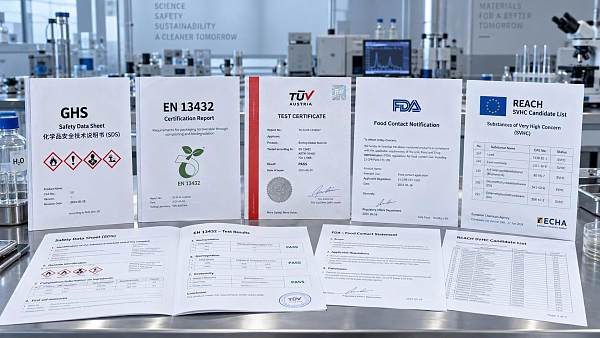
The table below summarizes common documentation areas and why they matter to procurement teams working in complex industrial supply chains.
Not every project needs the same level of paperwork, but every industrial buyer should confirm whether the supplier’s documentation matches the end-market requirement. A smart materials manufacturer serving prototypes only may not be ready for regulated production, multi-site transfer, or top-tier OEM audits.
Common compliance blind spots
- Assuming a general quality certificate covers application-specific validation needs.
- Accepting outdated declarations without confirming current formulation status.
- Overlooking subcontracted operations that may change risk exposure.
- Failing to align supplier change notice timing with the buyer’s qualification cycle.
Can the supplier scale, deliver on time, and support long-term programs?
A strong sample is not enough. Buyers need to know whether the smart materials manufacturer can deliver stable output when demand increases, new regions open, or design revisions occur. Supply continuity becomes even more critical when advanced materials are tied to automation systems, where downtime costs can exceed material cost by a wide margin.
Operational indicators that deserve review
- Capacity structure: dedicated lines, shared assets, planned utilization, and realistic surge capability.
- Critical dependency map: single-source inputs, specialty tooling, utility sensitivity, and packaging constraints.
- Lead time architecture: raw material replenishment, production queue, quality release, export documentation, and transport mode.
- Technical support access: engineering response time, sample iteration speed, and onsite or remote troubleshooting capability.
This is where many procurement teams benefit from a structured ecosystem view rather than a single-factory review. G-AIE’s strength lies in connecting supplier capability with broader industrial resilience signals, including digital readiness, benchmark practices, and the practical demands created by Vertical AI-driven production environments.
Why total procurement value is not the same as unit price
A lower-priced smart material can become more expensive if qualification takes longer, yields fluctuate, or replacement cycles increase. Buyers should estimate total procurement value through a wider cost lens: validation effort, inventory buffer, defect exposure, engineering support demand, and continuity risk.
Suppliers that provide consistent property control, clear documentation, and predictable delivery often reduce hidden cost more effectively than those offering the lowest initial quote.
What mistakes do buyers make when vetting a smart materials manufacturer?
Even experienced sourcing teams can miss important warning signs when the material category is technically complex or still emerging. Most failures come from evaluating the supplier too narrowly or too late in the development cycle.
Frequent procurement mistakes
- Treating advanced materials like standard commodities and relying mainly on quote comparison.
- Approving a supplier on sample performance without validating production repeatability.
- Skipping cross-functional review between procurement, engineering, quality, and operations.
- Ignoring change control until after product launch or customer approval.
- Underestimating the time needed for compliance, testing, and alternate-source qualification.
A disciplined review process reduces these mistakes. In sectors shaped by intelligent automation and sustainability pressure, the supplier must support both physical performance and digital accountability. That combination is increasingly central to sourcing decisions across the broader industrial ecosystem.
FAQ: practical questions buyers ask before selecting a smart materials manufacturer
How do I know whether a smart materials manufacturer is ready for mass production?
Look for evidence beyond pilot samples. Ask for batch consistency data, process control methods, capacity planning assumptions, release criteria, and documented change management. A mass-production-ready supplier should explain how quality is maintained when volume increases, not just how performance was achieved in a controlled trial.
What is more important: material innovation or supply reliability?
For most procurement teams, both matter, but the weighting depends on program stage. Early development may favor innovation and co-engineering speed. Commercial launch and scale-up usually shift priority toward repeatability, documentation, and continuity. The best smart materials manufacturer can support both phases without losing control.
Which documents should I request before adding a supplier to the approved list?
At minimum, request product datasheets, safety information, lot-level quality documentation, change notice procedures, and any relevant regulatory declarations. Depending on the application, you may also need validation data, storage and shelf-life instructions, and records showing how the supplier handles nonconforming material.
How long does qualification usually take?
There is no universal timeline because qualification depends on application risk, testing depth, and end-market compliance demands. However, procurement should assume that advanced materials often require more iterations than standard inputs because response behavior, processing windows, and environmental durability must be verified under realistic conditions.
Why work with G-AIE when evaluating a smart materials manufacturer?
Procurement teams do not just need supplier names. They need a reliable way to judge technical credibility, compare options across industries, and understand how material choices interact with automation, resilience, and long-term industrial strategy. That is the space where G-AIE is built to support decision-makers.
As a multidisciplinary B2B intelligence hub and technical benchmarking repository, G-AIE helps buyers assess a smart materials manufacturer with a broader industrial lens. This includes supplier capability benchmarking, scenario-based evaluation, documentation readiness review, and alignment between advanced materials performance and intelligent production requirements.
What you can contact us about
- Parameter confirmation for target operating conditions, environmental exposure, and lifecycle expectations.
- Supplier shortlisting and comparison for a smart materials manufacturer across capability, quality, and delivery criteria.
- Qualification planning, including sample review, documentation checks, and risk-based evaluation points.
- Lead time and supply continuity assessment for multi-site or high-volume industrial programs.
- Custom solution discussions related to advanced materials integration, technical benchmarking, and procurement decision support.
- Certification and compliance review needs, especially where customer approval or export requirements may affect supplier choice.
- Sample support strategy and quote-stage alignment to reduce rework before formal sourcing commitment.
If your team is reviewing a smart materials manufacturer for a new sourcing program, a redesign project, or a supply-risk mitigation initiative, G-AIE can help structure the evaluation so decisions are faster, clearer, and better aligned with industrial performance goals.
Recommended News
 Sep 19, 2026When can a supply chain LLM reduce time spent finding shipment updates?Supply chain LLMs can cut shipment-update search time by connecting carrier events, ERP data, and documents—giving teams traceable answers and faster exception response.
 Sep 18, 2026How industrial monitoring equipment helps prevent unplanned downtimeIndustrial monitoring equipment helps teams detect early asset issues, prioritize maintenance, and prevent costly unplanned downtime. Explore practical strategies for reliable operations.
 Sep 17, 2026What next-gen harmonic drive research means for robot joint accuracyNext-gen harmonic drive research reveals how backlash, stiffness, thermal drift, and sensing shape robot joint accuracy. Explore smarter validation strategies.
 Sep 16, 2026How Southeast Asian climates affect cylinder seal frictionCylinder seal friction Southeast Asia: learn how humidity, heat, monsoons, and contamination affect motion stability, wear, and seal selection.
 Sep 15, 2026How to size DC gear motors for the required starting torqueGear motors DC sizing made practical: calculate starting torque, account for friction, gravity, inertia and voltage drop, then select a reliable motor with confidence.
 Sep 14, 2026How to verify high purity chemicals compliance before supplier approvalHigh purity chemicals compliance: learn how to verify supplier quality systems, CoAs, traceability, testing, and change control before approval.
 Sep 13, 2026What permits are needed to operate mapping drones in Europe?Mapping drones Europe: discover the permits, EASA categories, airspace approvals, site access, and GDPR checks needed for compliant aerial surveys.
 Sep 12, 2026What lead time should I expect for automatic transmission components? Planetary Gearboxes delivery forecasting for OEM planningWhat lead time should I expect for automatic transmission components? Get dynamic, AI-powered planetary gearbox delivery forecasting—designed for OEMs building next-gen hybrid & commercial powertrains.
 Sep 12, 2026Can polyamide replace metal in load-bearing components? Polymer Pulse structural performance data for 2026 applicationsCan polyamide replace metal in load-bearing components? Discover Polymer Pulse’s 2026 structural data—real-world performance, weight savings, and reliability breakthroughs.
 Sep 12, 2026How to handle a power electronics warranty claim: Harmonic Reducers documentation and escalation pathHow do I handle a power electronics warranty claim? Get a fast, intelligent, evidence-driven resolution for harmonic reducers—no bureaucracy, just precision diagnostics and real-time escalation.
 Sep 12, 2026Which motion control specifications matter most before purchase? Torque Logic selection criteria for automation engineersWhich motion control specifications are most important before purchase? Discover Torque Logic—the 4 non-negotiable, AI-aligned criteria that cut TCO by 27–41% and boost motion system availability to 99.992%.
 Sep 13, 2026Is agentic AI reliable enough for supplier screening? Supply Chain LLM validation framework for procurement teamsIs agentic AI reliable enough for supplier screening? Discover a rigorous LLM validation framework built for procurement teams—grounded in material traceability, regulatory compliance, and real-world operational constraints.
 Sep 14, 2026How to maintain edge AI systems after deployment: Predictive Maint AI operational protocols for field techniciansHow do I maintain edge AI systems after deployment? Discover predictive, physics-aware operational protocols designed for real-world field technicians—sustaining intelligence where silicon meets steel.
 Sep 15, 2026What compliance documents must a bioplastics supplier provide? Bio-Plastics regulatory checklist for procurementWhat compliance documents should a bioplastics supplier provide? Get our actionable regulatory checklist for food, medical & EU-bound applications.
 Sep 16, 2026How to prevent PET film defects during production: Barrier Films process control best practicesHow can I prevent PET film defects during production? Discover physics-driven barrier film process control—thermal precision, dynamic tension management & surface energy optimization.
 Sep 17, 2026Are thermoplastics suitable for long-term outdoor use? Engineering Resins durability assessment in 2026 UV/weather exposureAre thermoplastics suitable for long-term outdoor use? Discover 2026’s engineering resin durability insights — UV/weather resistance ranked, tested & actionable.
 Sep 18, 2026What to do when a servo motor fails during production: A Servo Actuators troubleshooting guide for maintenance teamsWhat should I do if a servo motor fails during production? Get a field-tested, AI-aware troubleshooting guide for maintenance teams—minimize downtime, maximize OEE.
 Sep 12, 2026How to compare wholesale party supplies by minimum order valueCompare wholesale party supplies by minimum order value, freight, SKU flexibility, and stock risk to choose suppliers that protect margins and simplify replenishment.
 Sep 11, 2026How proportional solenoid linearity affects precision motion controlProportional solenoid linearity directly affects precision motion control, valve metering, stability, and calibration. Learn how to evaluate performance for reliable automation.
 Sep 10, 2026When does supplier information platform automation reduce onboarding delays?Supplier information platform automation reduces onboarding delays by streamlining data collection, routing, renewals, and compliance checks—without replacing expert technical review.
 Sep 09, 2026How to size robotic motion systems for AMR payload changesRobotic motion systems for AMR payload changes: learn how to size motors, wheels, gearing, traction, and controls for safer, reliable performance.
 Sep 08, 2026How to perform a cylinder rod buckling calculation for long strokesCylinder rod buckling calculation made practical: learn how to assess effective length, end conditions, rod stiffness, load forces, and safety margins for reliable long-stroke cylinder design.
 Sep 07, 2026How to estimate the cost of industrial mechanical components before orderingIndustrial mechanical components cost: learn how to estimate material, machining, tooling, inspection, logistics, and hidden expenses before ordering. Compare quotes confidently and reduce sourcing risk.
 Sep 07, 2026What Is a Product Standards Database Used For?Product standards database guide: learn how to compare requirements, verify revisions, control specifications, and reduce compliance risks across design, sourcing, and production.