Search News
Industry Portal
Popular Tags
AI in Manufacturing Benefits: Where ROI Shows Up First
Author
Time
Click Count
For enterprise leaders under pressure to raise output, cut waste, and justify every technology investment, AI in manufacturing benefits are no longer theoretical. The earliest returns often appear in predictive maintenance, quality control, production scheduling, and energy optimization—areas where data already exists and operational impact is measurable. Understanding where ROI shows up first helps decision-makers prioritize scalable use cases and reduce adoption risk.
Where do AI in manufacturing benefits appear first in real operations?
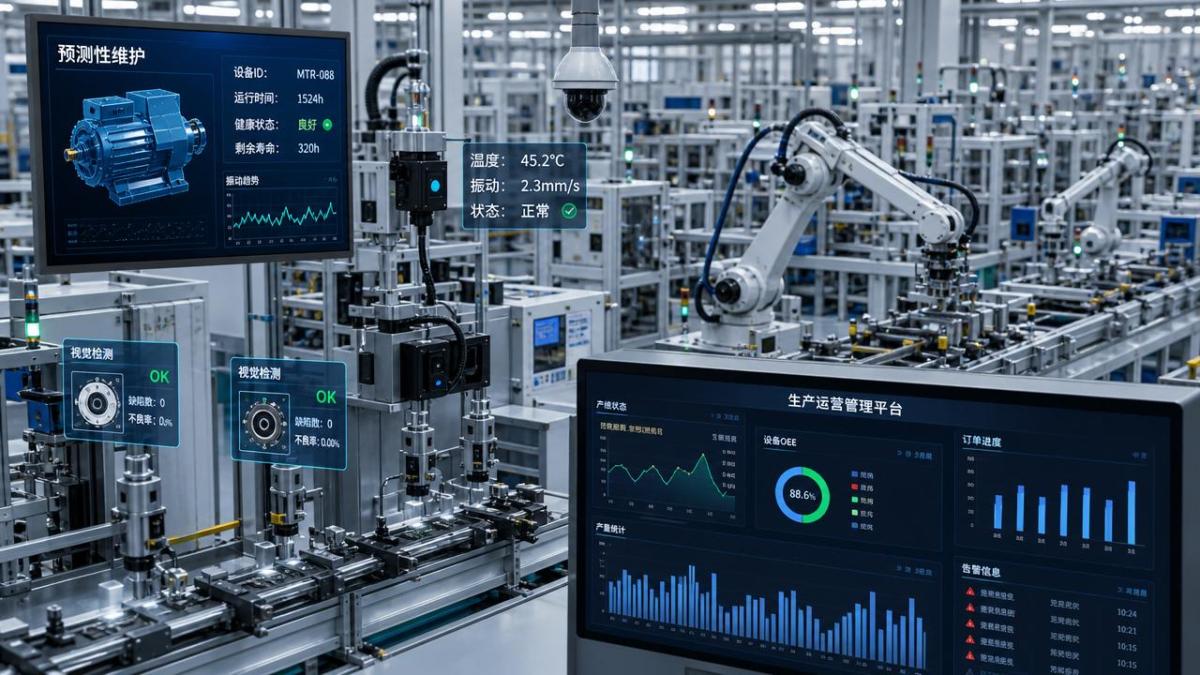
In most industrial environments, early ROI does not begin with fully autonomous factories. It starts where operational data is already captured, failure costs are visible, and workflow decisions happen every shift.
For enterprise decision-makers, that means prioritizing use cases with short feedback loops. Downtime, scrap, schedule disruption, and energy waste can often be measured in weeks rather than years.
This is why AI in manufacturing benefits usually show up first in asset-intensive plants, multi-line production systems, and supply chains with recurring process variation. The technology succeeds when it improves an already important decision.
G-AIE focuses on this practical convergence point between intelligent automation and material performance. For procurement leaders and industrial developers, the question is not whether AI matters, but where it should enter the operating model first.
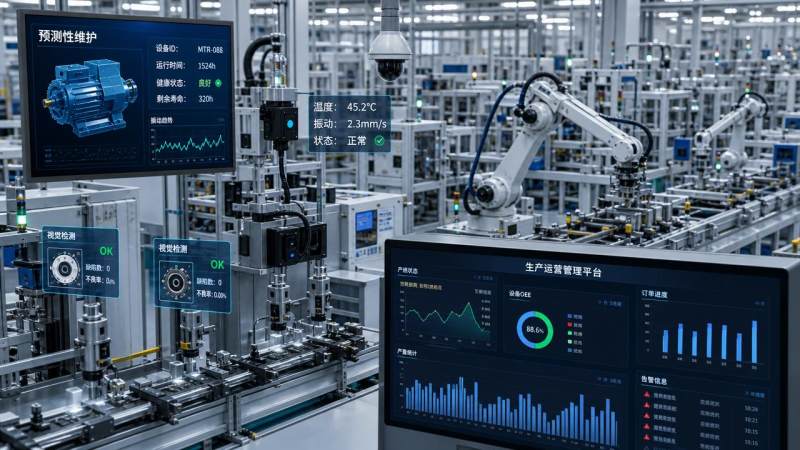
- Predictive maintenance often delivers early value because maintenance logs, sensor trends, and spare parts records already exist in many plants.
- Computer vision for quality control creates measurable gains where defect rates, rework costs, and inspection delays are already tracked.
- Production scheduling AI improves throughput when constraints such as changeovers, labor availability, and material timing are known but hard to optimize manually.
- Energy optimization produces fast savings in facilities with variable loads, compressed air demand, thermal processes, or peak tariff exposure.
Why early ROI matters more than broad experimentation
Many firms lose momentum by launching AI pilots that are technically impressive but commercially weak. Enterprise buyers need provable business outcomes, not isolated models with no path to plant-wide adoption.
A disciplined rollout starts with one operational bottleneck, one accountable owner, and one measurable baseline. That structure makes AI in manufacturing benefits visible to finance, operations, and procurement at the same time.
Which use cases usually generate the fastest measurable ROI?
The table below summarizes where AI in manufacturing benefits commonly appear first, what data is required, and how enterprise teams should judge readiness before purchasing a solution.
For most manufacturers, these four use cases outperform broader experimentation because they connect digital models to existing operational pain. They also create a foundation for later expansion into supply planning, robotics coordination, and material optimization.
How to rank use cases before budget approval
- Estimate the cost of the current problem in financial terms, not just engineering terms. Downtime minutes, scrap volume, and missed delivery penalties should be quantified.
- Check data availability and data quality. A use case with imperfect data but high operational importance may still rank above a cleaner but lower-value problem.
- Assess implementation friction. Integration with PLCs, MES, ERP, or historian systems should be mapped before final vendor selection.
- Confirm ownership. If no plant leader, maintenance manager, or quality head is accountable for results, the pilot will likely stall.
How should enterprise buyers evaluate AI solutions for manufacturing?
Buying decisions should not focus only on algorithms. In industrial settings, value depends on data pipelines, model monitoring, workflow fit, and integration with physical assets.
G-AIE supports this evaluation process by linking intelligent automation choices with material systems, equipment realities, and benchmarking logic relevant to global manufacturing organizations.
The comparison below helps procurement teams separate attractive demonstrations from deployment-ready industrial solutions.
This framework is especially useful for multinational manufacturers that need repeatable procurement criteria. AI in manufacturing benefits scale faster when buying teams use one evaluation language across engineering, finance, and operations.
Procurement questions that should be asked early
- What plant systems must be connected in phase one, and which interfaces are optional?
- How much historical data is needed for a workable first model?
- What human workflow changes are required after alerts or recommendations are generated?
- What service level is available for retraining, model drift monitoring, and cross-site rollout?
What can delay or weaken AI in manufacturing benefits?
The most common barrier is not model accuracy. It is organizational mismatch. Plants often buy software before clarifying operating ownership, maintenance process changes, or plant-level response rules.
Another issue is fragmented industrial data. If equipment tags are inconsistent, maintenance records are unstructured, or defect labels are weak, teams may underestimate the preparation required for dependable outcomes.
Frequent misconceptions in enterprise AI programs
- A large data lake alone does not create ROI. The use case must target a real operating decision with known business consequences.
- A successful pilot on one asset does not guarantee multi-site rollout. Product mix, raw material behavior, and maintenance practices can vary sharply.
- Full automation is not required for value. Decision support systems can generate strong results before closed-loop control is introduced.
- The cheapest vendor is rarely the lowest-cost option if customization, integration, and support are excluded from the initial proposal.
For complex industrial groups, G-AIE’s benchmarking perspective is valuable because it frames AI adoption within material science constraints, line behavior, and supply chain realities. That reduces the risk of buying a generic platform that does not fit production physics.
How should leaders implement AI without slowing operations?
A staged approach usually works best. Enterprise teams need enough structure to govern risk, but enough flexibility to prove value quickly at plant level.
A practical rollout sequence
- Select one use case with visible loss and one site with cooperative operational leadership.
- Define baseline metrics such as downtime hours, scrap rate, inspection cycle time, or energy per unit.
- Validate data quality before model build. Missing tags, time sync issues, and inconsistent labels should be corrected early.
- Deploy in decision-support mode first, allowing operators and engineers to compare recommendations against current practice.
- Measure results over a defined operating period and decide whether the model should scale, be refined, or be stopped.
This phased method helps organizations capture AI in manufacturing benefits without committing to large-scale disruption before operational proof exists. It also gives procurement teams cleaner information for later contract negotiations.
What standards and governance topics should buyers keep in view?
Industrial AI projects touch production systems, data governance, and in some sectors product quality compliance. Even when a project begins as operational optimization, buyers should align it with established internal controls.
Relevant reference areas may include information security management, industrial automation integration practices, equipment safety procedures, and quality management processes commonly used in manufacturing organizations.
- Clarify who owns model outputs, operational overrides, and audit records.
- Ensure data retention rules and access permissions match internal IT and OT governance.
- Review whether any AI recommendation affects product release, process safety, or traceability obligations.
- Document retraining triggers and performance review intervals so the system remains reliable over time.
FAQ: common decision-maker questions about AI in manufacturing benefits
How do we know if our plant is ready for AI?
Readiness is less about having perfect digital maturity and more about having one costly, repetitive decision supported by usable data. If your team can quantify downtime, defects, schedule losses, or energy intensity, you likely have a valid starting point.
Which function usually sees ROI first: maintenance, quality, or planning?
Maintenance and quality often move first because failure events and defect costs are highly visible. Planning can also deliver strong ROI, but it usually depends on broader system integration across orders, inventory, and line constraints.
Do AI in manufacturing benefits require replacing existing equipment?
Not always. Many early projects use existing sensors, machine logs, vision systems, and production databases. The key issue is whether the current signal quality is sufficient for decision support, not whether the plant is fully new.
What should procurement focus on besides software price?
Look at integration effort, support scope, retraining process, cybersecurity alignment, site replication cost, and operational ownership. A lower initial quote may become expensive if deployment services and industrial adaptation are not defined.
Why choose us for industrial AI evaluation and solution benchmarking?
G-AIE brings a specialized view that enterprise manufacturers often struggle to find in generic AI advisory markets. Our strength lies in connecting intelligent automation with material science, production assets, and real procurement criteria.
For decision-makers assessing AI in manufacturing benefits, we help clarify where value is likely to appear first, what technical dependencies matter, and how to compare options without overcommitting capital too early.
- Use-case prioritization support for predictive maintenance, quality inspection, scheduling, and energy optimization.
- Benchmark-based guidance on solution selection across industrial data integration, scalability, and workflow fit.
- Advisory input for parameter confirmation, deployment scope definition, and cross-functional procurement alignment.
- Consultation on implementation sequencing, delivery expectations, customization pathways, and governance requirements.
If your team is evaluating where AI should enter the factory first, contact G-AIE to discuss use-case selection, technical fit, rollout priorities, integration assumptions, certification-related concerns, delivery planning, and budget-oriented solution comparisons.
Recommended News
 Sep 19, 2026When can a supply chain LLM reduce time spent finding shipment updates?Supply chain LLMs can cut shipment-update search time by connecting carrier events, ERP data, and documents—giving teams traceable answers and faster exception response.
 Sep 18, 2026How industrial monitoring equipment helps prevent unplanned downtimeIndustrial monitoring equipment helps teams detect early asset issues, prioritize maintenance, and prevent costly unplanned downtime. Explore practical strategies for reliable operations.
 Sep 17, 2026What next-gen harmonic drive research means for robot joint accuracyNext-gen harmonic drive research reveals how backlash, stiffness, thermal drift, and sensing shape robot joint accuracy. Explore smarter validation strategies.
 Sep 16, 2026How Southeast Asian climates affect cylinder seal frictionCylinder seal friction Southeast Asia: learn how humidity, heat, monsoons, and contamination affect motion stability, wear, and seal selection.
 Sep 15, 2026How to size DC gear motors for the required starting torqueGear motors DC sizing made practical: calculate starting torque, account for friction, gravity, inertia and voltage drop, then select a reliable motor with confidence.
 Sep 14, 2026How to verify high purity chemicals compliance before supplier approvalHigh purity chemicals compliance: learn how to verify supplier quality systems, CoAs, traceability, testing, and change control before approval.
 Sep 13, 2026What permits are needed to operate mapping drones in Europe?Mapping drones Europe: discover the permits, EASA categories, airspace approvals, site access, and GDPR checks needed for compliant aerial surveys.
 Sep 12, 2026What lead time should I expect for automatic transmission components? Planetary Gearboxes delivery forecasting for OEM planningWhat lead time should I expect for automatic transmission components? Get dynamic, AI-powered planetary gearbox delivery forecasting—designed for OEMs building next-gen hybrid & commercial powertrains.
 Sep 12, 2026Can polyamide replace metal in load-bearing components? Polymer Pulse structural performance data for 2026 applicationsCan polyamide replace metal in load-bearing components? Discover Polymer Pulse’s 2026 structural data—real-world performance, weight savings, and reliability breakthroughs.
 Sep 12, 2026How to handle a power electronics warranty claim: Harmonic Reducers documentation and escalation pathHow do I handle a power electronics warranty claim? Get a fast, intelligent, evidence-driven resolution for harmonic reducers—no bureaucracy, just precision diagnostics and real-time escalation.
 Sep 12, 2026Which motion control specifications matter most before purchase? Torque Logic selection criteria for automation engineersWhich motion control specifications are most important before purchase? Discover Torque Logic—the 4 non-negotiable, AI-aligned criteria that cut TCO by 27–41% and boost motion system availability to 99.992%.
 Sep 13, 2026Is agentic AI reliable enough for supplier screening? Supply Chain LLM validation framework for procurement teamsIs agentic AI reliable enough for supplier screening? Discover a rigorous LLM validation framework built for procurement teams—grounded in material traceability, regulatory compliance, and real-world operational constraints.
 Sep 14, 2026How to maintain edge AI systems after deployment: Predictive Maint AI operational protocols for field techniciansHow do I maintain edge AI systems after deployment? Discover predictive, physics-aware operational protocols designed for real-world field technicians—sustaining intelligence where silicon meets steel.
 Sep 15, 2026What compliance documents must a bioplastics supplier provide? Bio-Plastics regulatory checklist for procurementWhat compliance documents should a bioplastics supplier provide? Get our actionable regulatory checklist for food, medical & EU-bound applications.
 Sep 16, 2026How to prevent PET film defects during production: Barrier Films process control best practicesHow can I prevent PET film defects during production? Discover physics-driven barrier film process control—thermal precision, dynamic tension management & surface energy optimization.
 Sep 17, 2026Are thermoplastics suitable for long-term outdoor use? Engineering Resins durability assessment in 2026 UV/weather exposureAre thermoplastics suitable for long-term outdoor use? Discover 2026’s engineering resin durability insights — UV/weather resistance ranked, tested & actionable.
 Sep 18, 2026What to do when a servo motor fails during production: A Servo Actuators troubleshooting guide for maintenance teamsWhat should I do if a servo motor fails during production? Get a field-tested, AI-aware troubleshooting guide for maintenance teams—minimize downtime, maximize OEE.
 Sep 12, 2026How to compare wholesale party supplies by minimum order valueCompare wholesale party supplies by minimum order value, freight, SKU flexibility, and stock risk to choose suppliers that protect margins and simplify replenishment.
 Sep 11, 2026How proportional solenoid linearity affects precision motion controlProportional solenoid linearity directly affects precision motion control, valve metering, stability, and calibration. Learn how to evaluate performance for reliable automation.
 Sep 10, 2026When does supplier information platform automation reduce onboarding delays?Supplier information platform automation reduces onboarding delays by streamlining data collection, routing, renewals, and compliance checks—without replacing expert technical review.
 Sep 09, 2026How to size robotic motion systems for AMR payload changesRobotic motion systems for AMR payload changes: learn how to size motors, wheels, gearing, traction, and controls for safer, reliable performance.
 Sep 08, 2026How to perform a cylinder rod buckling calculation for long strokesCylinder rod buckling calculation made practical: learn how to assess effective length, end conditions, rod stiffness, load forces, and safety margins for reliable long-stroke cylinder design.
 Sep 07, 2026How to estimate the cost of industrial mechanical components before orderingIndustrial mechanical components cost: learn how to estimate material, machining, tooling, inspection, logistics, and hidden expenses before ordering. Compare quotes confidently and reduce sourcing risk.
 Sep 07, 2026What Is a Product Standards Database Used For?Product standards database guide: learn how to compare requirements, verify revisions, control specifications, and reduce compliance risks across design, sourcing, and production.