Search News
Industry Portal
Popular Tags
Smart Materials for Industrial Applications That Cut Downtime
Author
Time
Click Count
For project leaders under pressure to improve uptime, smart materials for industrial applications are becoming a practical advantage, not a future concept. From self-sensing composites to wear-resistant coatings and adaptive polymers, these technologies help reduce failure risks, shorten maintenance cycles, and support more predictable operations. This article explores how advanced material choices can cut downtime while strengthening performance, resilience, and long-term industrial value.
Why a Checklist Matters for Smart Material Decisions
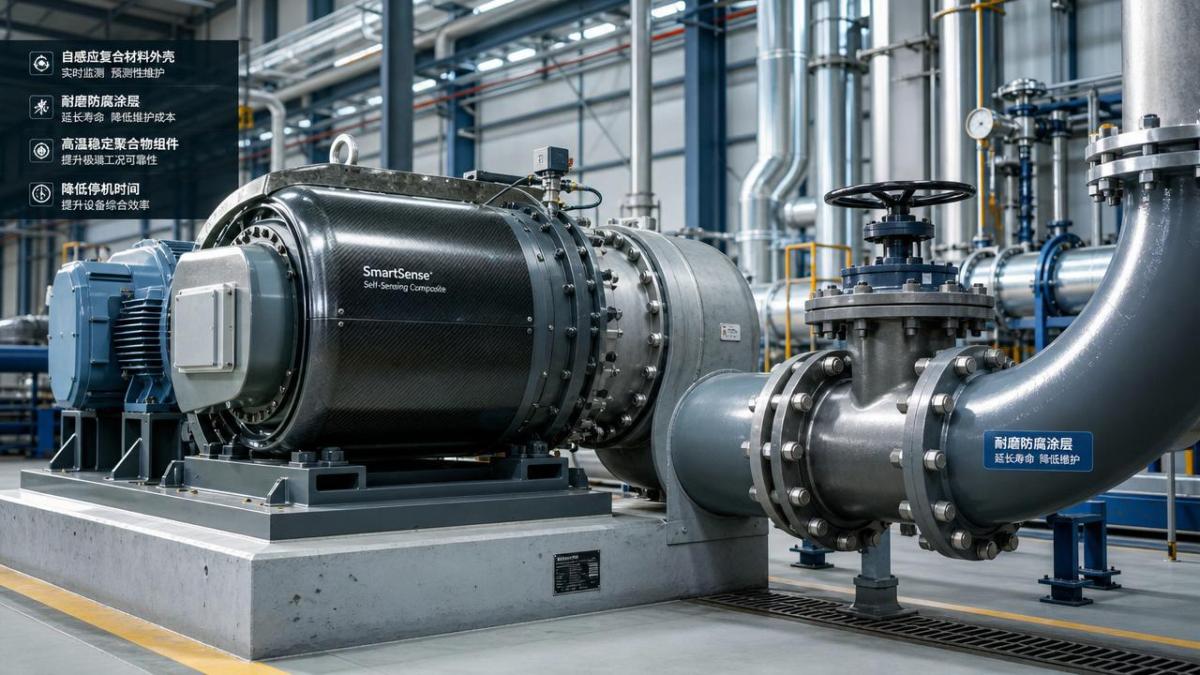
Material upgrades often fail because teams compare datasheets, not operating realities. Downtime reduction depends on matching smart material behavior to load, heat, corrosion, impact, and inspection frequency.
A checklist approach brings discipline to selection. It also helps connect material science, automation, maintenance planning, and lifecycle economics across complex industrial environments.
In broad industrial settings, smart materials for industrial applications should be judged by measurable performance: failure prevention, condition visibility, repair speed, and integration with digital monitoring systems.
Core Checklist for Selecting Smart Materials for Industrial Applications
- Map failure modes first. Identify whether downtime comes from abrasion, fatigue, thermal cycling, corrosion, vibration, sealing loss, or undetected structural damage.
- Match the material to the stress profile. Use self-sensing composites, adaptive polymers, shape-memory alloys, or engineered coatings only where their response solves a defined problem.
- Verify environmental stability. Confirm performance under oils, solvents, humidity, UV exposure, dust loading, washdown conditions, and extreme temperature swings.
- Check sensor compatibility. Smart materials for industrial applications create more value when they connect cleanly with PLC, SCADA, edge analytics, or predictive maintenance platforms.
- Evaluate inspection gains. Prioritize materials that simplify non-destructive testing, reveal strain or wear earlier, or reduce manual inspection intervals.
- Measure repair practicality. Confirm whether field replacement, recoating, bonding, curing, or recalibration can be completed within planned shutdown windows.
- Review lifecycle cost, not unit price. Include scrap reduction, labor savings, spare part inventory, mean time between failures, and energy efficiency effects.
- Test installation constraints. Surface preparation, curing temperature, dimensional tolerance, and joining method often decide whether a smart material succeeds on site.
- Validate standards and traceability. Confirm compliance with relevant ASTM, ISO, IEC, or sector-specific requirements before scaling to critical assets.
- Run a pilot on a downtime-critical asset. Use baseline metrics and post-installation data to confirm actual uplift before wider industrial deployment.
Where Smart Materials Cut Downtime Most Effectively
Rotating Equipment and Power Transmission
Bearings, shafts, couplings, and housings fail early when vibration and heat go unnoticed. Smart materials for industrial applications can add condition visibility without redesigning entire machines.
Self-sensing composites and embedded strain-responsive layers help detect imbalance, fatigue growth, or overload. Wear-resistant coatings also extend service intervals in high-friction zones.
Pipelines, Valves, and Corrosive Process Systems
Corrosion and erosion cause unplanned stoppages long before visible leakage appears. In these systems, adaptive coatings and corrosion-indicating material systems improve inspection timing.
Advanced liners, self-healing polymers, and barrier materials can reduce wall loss and seal degradation. This lowers emergency maintenance and improves shutdown scheduling accuracy.
Automation Cells, Robotics, and Precision Handling
Robotic end effectors, cable protection elements, and lightweight structural parts benefit from materials that respond to fatigue and repeated motion without adding mass.
For these environments, smart materials for industrial applications can improve repeatability and shorten troubleshooting. Lightweight composites with sensing behavior support predictive service before precision drifts.
High-Heat and Thermal Cycling Assemblies
Furnace components, thermal barriers, molds, and heat-exposed fixtures often fail through cracking, distortion, or coating loss. Thermal shock is a major downtime driver.
Shape-memory alloys, ceramic-enhanced coatings, and heat-stable smart polymers help maintain dimensional stability. They also reduce maintenance frequency in cyclic temperature conditions.
Commonly Overlooked Risks
- Ignoring interface failure. Bond lines, surface adhesion, and substrate mismatch often fail before the smart material itself reaches performance limits.
- Overestimating digital readiness. A self-sensing material creates little value if signal capture, calibration, and alarm logic are not engineered properly.
- Skipping maintenance training. New coatings, composites, or adaptive materials may require different cleaning methods, repair tools, and inspection procedures.
- Using lab data as field proof. Smart materials for industrial applications must be validated under real duty cycles, contamination, shock, and operator handling.
- Focusing only on component life. Downtime reduction depends on system behavior, replacement logistics, and recovery time after a fault.
Execution Guidance for Stronger Results
Start with one asset class where downtime cost is already quantified. Good candidates include pump trains, valve clusters, robotic handling units, and heat-exposed mechanical assemblies.
Build a simple comparison table before any rollout. This keeps the material decision tied to uptime metrics rather than general innovation language.
Then define a pilot period with clear thresholds. Track failure alerts, inspection reduction, replacement intervals, and any change in process stability or energy consumption.
Document installation variables carefully. Surface preparation, cure time, torque settings, and environmental exposure can distort results if they are not controlled.
When scaling, standardize approved material stacks and test methods. This makes smart materials for industrial applications easier to benchmark across sites and operating regions.
Conclusion and Next Action
The best smart materials for industrial applications do not just last longer. They reveal problems earlier, reduce intervention time, and align physical assets with smarter maintenance decisions.
Use a checklist, not intuition. Define the failure mode, test the material under real operating conditions, connect the response to data systems, and measure downtime impact directly.
A practical next step is to shortlist one high-cost failure point, compare two or three smart material options, and run a controlled pilot with baseline uptime metrics. That process turns material innovation into operational proof.
Recommended News
 Sep 19, 2026When can a supply chain LLM reduce time spent finding shipment updates?Supply chain LLMs can cut shipment-update search time by connecting carrier events, ERP data, and documents—giving teams traceable answers and faster exception response.
 Sep 18, 2026How industrial monitoring equipment helps prevent unplanned downtimeIndustrial monitoring equipment helps teams detect early asset issues, prioritize maintenance, and prevent costly unplanned downtime. Explore practical strategies for reliable operations.
 Sep 17, 2026What next-gen harmonic drive research means for robot joint accuracyNext-gen harmonic drive research reveals how backlash, stiffness, thermal drift, and sensing shape robot joint accuracy. Explore smarter validation strategies.
 Sep 16, 2026How Southeast Asian climates affect cylinder seal frictionCylinder seal friction Southeast Asia: learn how humidity, heat, monsoons, and contamination affect motion stability, wear, and seal selection.
 Sep 15, 2026How to size DC gear motors for the required starting torqueGear motors DC sizing made practical: calculate starting torque, account for friction, gravity, inertia and voltage drop, then select a reliable motor with confidence.
 Sep 14, 2026How to verify high purity chemicals compliance before supplier approvalHigh purity chemicals compliance: learn how to verify supplier quality systems, CoAs, traceability, testing, and change control before approval.
 Sep 13, 2026What permits are needed to operate mapping drones in Europe?Mapping drones Europe: discover the permits, EASA categories, airspace approvals, site access, and GDPR checks needed for compliant aerial surveys.
 Sep 12, 2026What lead time should I expect for automatic transmission components? Planetary Gearboxes delivery forecasting for OEM planningWhat lead time should I expect for automatic transmission components? Get dynamic, AI-powered planetary gearbox delivery forecasting—designed for OEMs building next-gen hybrid & commercial powertrains.
 Sep 12, 2026Can polyamide replace metal in load-bearing components? Polymer Pulse structural performance data for 2026 applicationsCan polyamide replace metal in load-bearing components? Discover Polymer Pulse’s 2026 structural data—real-world performance, weight savings, and reliability breakthroughs.
 Sep 12, 2026How to handle a power electronics warranty claim: Harmonic Reducers documentation and escalation pathHow do I handle a power electronics warranty claim? Get a fast, intelligent, evidence-driven resolution for harmonic reducers—no bureaucracy, just precision diagnostics and real-time escalation.
 Sep 12, 2026Which motion control specifications matter most before purchase? Torque Logic selection criteria for automation engineersWhich motion control specifications are most important before purchase? Discover Torque Logic—the 4 non-negotiable, AI-aligned criteria that cut TCO by 27–41% and boost motion system availability to 99.992%.
 Sep 13, 2026Is agentic AI reliable enough for supplier screening? Supply Chain LLM validation framework for procurement teamsIs agentic AI reliable enough for supplier screening? Discover a rigorous LLM validation framework built for procurement teams—grounded in material traceability, regulatory compliance, and real-world operational constraints.
 Sep 14, 2026How to maintain edge AI systems after deployment: Predictive Maint AI operational protocols for field techniciansHow do I maintain edge AI systems after deployment? Discover predictive, physics-aware operational protocols designed for real-world field technicians—sustaining intelligence where silicon meets steel.
 Sep 15, 2026What compliance documents must a bioplastics supplier provide? Bio-Plastics regulatory checklist for procurementWhat compliance documents should a bioplastics supplier provide? Get our actionable regulatory checklist for food, medical & EU-bound applications.
 Sep 16, 2026How to prevent PET film defects during production: Barrier Films process control best practicesHow can I prevent PET film defects during production? Discover physics-driven barrier film process control—thermal precision, dynamic tension management & surface energy optimization.
 Sep 17, 2026Are thermoplastics suitable for long-term outdoor use? Engineering Resins durability assessment in 2026 UV/weather exposureAre thermoplastics suitable for long-term outdoor use? Discover 2026’s engineering resin durability insights — UV/weather resistance ranked, tested & actionable.
 Sep 18, 2026What to do when a servo motor fails during production: A Servo Actuators troubleshooting guide for maintenance teamsWhat should I do if a servo motor fails during production? Get a field-tested, AI-aware troubleshooting guide for maintenance teams—minimize downtime, maximize OEE.
 Sep 12, 2026How to compare wholesale party supplies by minimum order valueCompare wholesale party supplies by minimum order value, freight, SKU flexibility, and stock risk to choose suppliers that protect margins and simplify replenishment.
 Sep 11, 2026How proportional solenoid linearity affects precision motion controlProportional solenoid linearity directly affects precision motion control, valve metering, stability, and calibration. Learn how to evaluate performance for reliable automation.
 Sep 10, 2026When does supplier information platform automation reduce onboarding delays?Supplier information platform automation reduces onboarding delays by streamlining data collection, routing, renewals, and compliance checks—without replacing expert technical review.
 Sep 09, 2026How to size robotic motion systems for AMR payload changesRobotic motion systems for AMR payload changes: learn how to size motors, wheels, gearing, traction, and controls for safer, reliable performance.
 Sep 08, 2026How to perform a cylinder rod buckling calculation for long strokesCylinder rod buckling calculation made practical: learn how to assess effective length, end conditions, rod stiffness, load forces, and safety margins for reliable long-stroke cylinder design.
 Sep 07, 2026How to estimate the cost of industrial mechanical components before orderingIndustrial mechanical components cost: learn how to estimate material, machining, tooling, inspection, logistics, and hidden expenses before ordering. Compare quotes confidently and reduce sourcing risk.
 Sep 07, 2026What Is a Product Standards Database Used For?Product standards database guide: learn how to compare requirements, verify revisions, control specifications, and reduce compliance risks across design, sourcing, and production.