Search News
Industry Portal
Popular Tags
U.S. BIS Adds Torque Logic Servo Components to Export Review List
Author
Time
Click Count
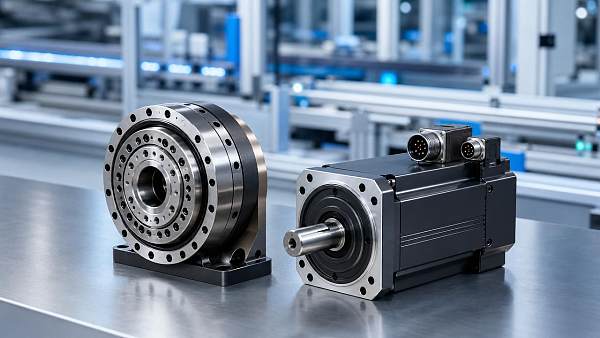
On May 16, 2026, the U.S. Department of Commerce’s Bureau of Industry and Security (BIS) updated the Commerce Control List (CCL), placing specific high-precision Torque Logic–class servo control modules under EAR99 pre-license screening requirements for exports to multiple countries—including Mexico, Vietnam, and the United Arab Emirates. This development directly affects Chinese servo manufacturers supplying overseas OEMs and system integrators, introducing new compliance checkpoints and potential delays in delivery timelines. Companies involved in industrial automation, motion control systems, and cross-border electro-mechanical component trade should monitor this update closely.
Event Overview
On May 16, 2026, the U.S. Bureau of Industry and Security (BIS) formally amended the Commerce Control List (CCL). The amendment designates certain high-precision Torque Logic–class servo control modules as subject to pre-license screening under the EAR99 exception. Exports of these items to Mexico, Vietnam, and the United Arab Emirates now require case-by-case license review prior to shipment. No further technical specifications, effective dates beyond May 16, or additional destination countries were publicly disclosed in the initial update.
Industries Affected by Segment
Direct Trading Enterprises
Companies exporting Torque Logic–class servo modules from China to end users or distributors in Mexico, Vietnam, or the UAE face immediate procedural impact. Because the modules are now subject to EAR99 pre-license screening, each export transaction must undergo individual review—potentially extending lead times and requiring additional documentation coordination with U.S.-based compliance intermediaries or legal counsel.
Manufacturing Enterprises (Servo System Producers)
Chinese manufacturers integrating Torque Logic–class modules into finished servo drives or motion control systems may encounter upstream supply constraints. If their module suppliers rely on U.S.-origin design inputs or software tools governed under EAR, the revised screening could trigger traceability assessments—even for fully assembled products. Impact manifests primarily in procurement planning, bill-of-materials validation, and technical documentation readiness.
System Integrators & OEMs Abroad
OEMs and system integrators in Mexico, Vietnam, and the UAE sourcing servo components from Chinese suppliers may experience delayed project timelines or increased verification burdens. Though not directly regulated by BIS, they may be asked by suppliers to provide end-use statements or incorporation declarations to support license applications—adding administrative overhead to procurement workflows.
Supply Chain & Compliance Service Providers
Firms offering export classification, license application support, or EAR compliance audits may see elevated demand for screening services related to servo control hardware. However, scope remains limited to modules explicitly identified as Torque Logic–class and destined for the three named countries—no broad expansion to other servo categories or jurisdictions has been confirmed.
What Enterprises and Practitioners Should Monitor and Do Now
Track Official Updates and Clarifications
Monitor the Federal Register notices and BIS FAQs for any supplemental guidance on product identification criteria (e.g., part numbering conventions, firmware version thresholds, or performance parameters that define ‘Torque Logic–class’). As of May 16, 2026, no such technical definitions have been published.
Verify Destination-Specific Shipment Protocols
Confirm whether existing or pending shipments to Mexico, Vietnam, or the UAE involve modules falling under the newly reviewed category. Prioritize internal classification reviews using EAR99 logic and consult official CCL Supplement No. 2 if module specifications align with ECCN 3A225 or analogous controls—even if currently listed as EAR99.
Distinguish Policy Signal from Operational Requirement
This update applies only to exports originating from the U.S. or involving U.S.-origin content above de minimis thresholds. For Chinese-made modules with no U.S. design input, software, or components, the direct regulatory obligation is limited—though downstream customers may impose contractual compliance demands regardless.
Prepare Documentation and Internal Alignment
Assemble technical datasheets, bill-of-materials records, and origin declarations for affected modules. Align engineering, procurement, and logistics teams on revised documentation standards—notably end-use assurance language and consignee information formatting required for potential license submissions.
Editorial Perspective / Industry Observation
Observably, this action signals heightened U.S. scrutiny of precision motion control hardware in dual-use contexts—but does not yet constitute a full licensing mandate or country-wide restriction. Analysis shows it functions more as a targeted risk assessment tool than an outright export ban. From an industry perspective, it reflects growing attention to torque-based servo logic architectures in advanced manufacturing and robotics applications, where real-time control fidelity intersects with national security considerations. Current relevance lies less in immediate disruption and more in its role as an early indicator: future updates may expand coverage to adjacent components (e.g., associated field-programmable gate arrays or calibration firmware) or additional destinations.
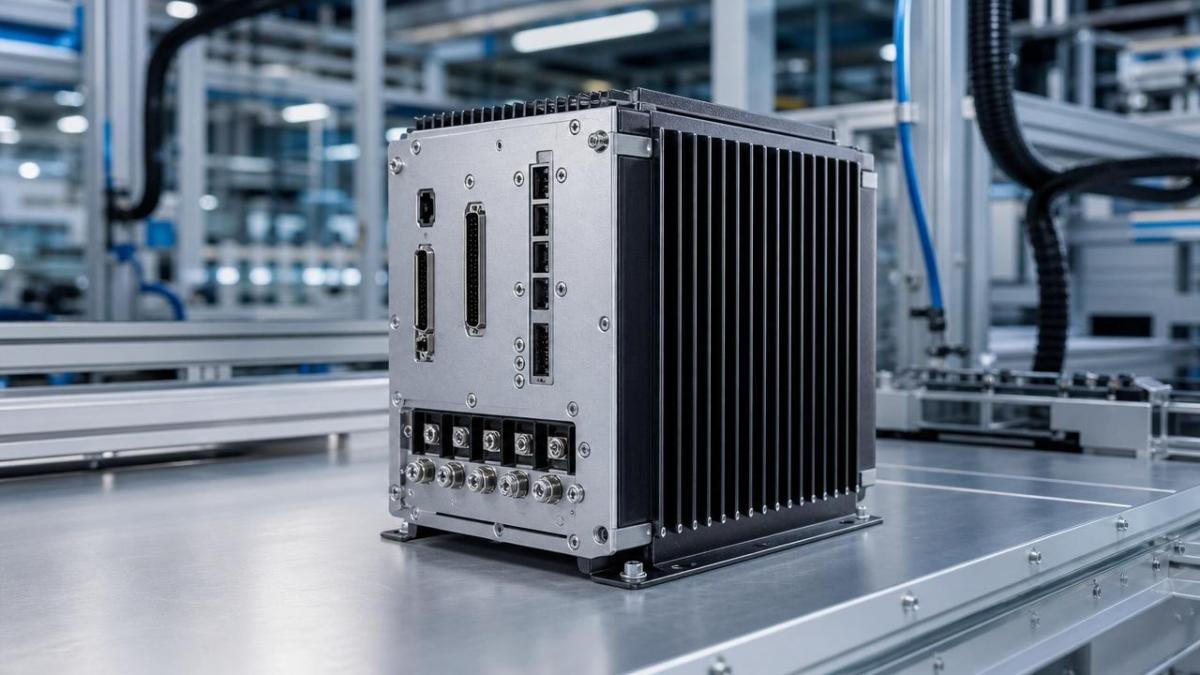
Conclusion: This BIS update introduces a procedural checkpoint—not a blanket restriction—for select servo modules moving between China and three key emerging markets. Its primary significance is operational: it elevates documentation rigor, extends review cycles for certain shipments, and underscores the need for precise EAR classification discipline among exporters and integrators. It is better understood as a calibrated regulatory signal than an enforcement escalation—and warrants ongoing, measured attention rather than reactive restructuring.
Source: U.S. Bureau of Industry and Security (BIS), Commerce Control List (CCL) amendment published May 16, 2026. No additional implementing rules or technical supplements have been released as of publication. Continued observation is advised for Federal Register notices referencing ECCN 3A225, Supplement No. 2 to Part 774, or Torque Logic–class definitions.
Recommended News
 May 21, 2026Piston Pump Volumetric Efficiency Data: What Counts as Acceptable Loss?Piston pump volumetric efficiency data helps you judge whether loss is normal or a warning sign. Learn acceptable ranges, trend signals, and practical maintenance actions.
 May 21, 2026Quick Release Coupling Factory Checklist for Faster Field MaintenanceQuick release coupling factory checklist for faster field maintenance. Compare quality, compatibility, traceability, and support to reduce downtime and source with confidence.
 May 21, 2026Low Noise Hydraulic Pump Wholesale: When Noise Reduction Cuts DowntimeLow noise hydraulic pump wholesale helps cut downtime, improve safety, and boost system reliability. Learn how smarter sourcing reduces maintenance risk and supports stable industrial performance.
 May 21, 2026Hydraulic Steering Unit Factory: Lead Time, Testing, and Warranty GapsHydraulic steering unit factory checklist: compare lead time stability, testing depth, traceability, and hidden warranty gaps before sourcing. Reduce risk and choose with confidence.
 May 21, 2026Hydraulic Cylinder Buckling Load Benchmarks for Safer Design MarginsHydraulic cylinder buckling load benchmarks help evaluators compare rod sizing, end conditions, and safer design margins to reduce risk and improve actuator reliability.
 May 21, 2026How to Compare a Hydraulic Fitting and Adapter Factory on Leak RiskHydraulic fitting and adapter factory comparison starts with leak risk. Learn how to assess tolerances, materials, testing, and traceability to choose a safer, more reliable supplier.
 May 21, 2026Hydraulic Rotary Actuator OEM: Key Checks Before Finalizing SpecsHydraulic rotary actuator OEM selection starts with the right checks. Learn how to verify torque, seals, mounting, and lifecycle fit before finalizing specs.
 May 21, 2026Proportional Valve Hysteresis Metrics That Actually Predict Control DriftProportional valve hysteresis metrics explained for engineers and buyers: learn which indicators truly predict control drift, improve supplier screening, and reduce tuning, scrap, and lifecycle risk.
 May 21, 2026Pneumatic to Hydraulic Booster OEM: What Impacts Cycle Stability?Pneumatic to hydraulic booster OEM selection starts with cycle stability. Learn how air quality, seals, load variation, and controls affect repeatability before you choose.
 May 21, 2026Heavy Duty Hydraulic Cylinder Wholesale: Cost vs Service Life in 2026Heavy duty hydraulic cylinder wholesale in 2026: compare cost, service life, maintenance risk, and supplier support to choose durable cylinders that cut downtime and improve long-term value.
 May 21, 2026Putin’s Upcoming State Visit to China Accelerates Harmonic Reducer & Servo Actuator Sourcing Shift in RussiaHarmonic reducer & servo actuator suppliers: Putin’s China visit triggers Russia’s import substitution push—GOST-R 2023 compliance is now critical for fast-track customs and tenders.
 May 21, 2026IMF Warns Mideast Conflict Raises UK Import Costs for Drive ComponentsIMF warns Mideast conflict raises UK import costs for drive components—5–8% landed cost surge, 7.2-day customs delays, and strategic mitigation tips inside.
 May 21, 2026FDA Authorizes Fruit-Flavored E-Cigarettes; USP<661.2> Migration Testing Now RequiredFDA authorizes fruit-flavored e-cigs — now USP<661.2> migration testing is mandatory for e-liquid contact materials. Act now to avoid U.S. import delays.
 May 21, 2026NDRC Inspects Shanghai AI Lab; DT & PM AI Exporters Gain National Tech Adaptation PathwayNDRC inspects Shanghai AI Lab—DT & PM AI exporters gain national tech adaptation pathway for EU CE/ANSI compliance and industrial AI trustworthiness.
 May 21, 2026JD.com Procurement Live Streams Return to Technical RigorJD.com Procurement Live Streams return to technical rigor — featuring Supply Chain LLM & Digital Twin AI, now driving global B2B demand.
 May 21, 2026UA Breaks 3D Vision Barrier for Dual-Mode Reflective/Non-Reflective Object DetectionUA's breakthrough 3D vision tech enables dual-mode reflective/non-reflective object detection—boosting UAV & anti-drone system performance beyond human acuity.
 May 21, 2026South Korea Extends Fuel Tax Cut to July 31; Auto Lightweighting Procurement OpensSouth Korea extends fuel tax cut to July 31 — unlocking urgent auto lightweighting procurement for engineering resins, low-VOC coatings & IMD/PCM solutions.
 May 21, 2026SpaceX IPO Filing Sets New Benchmark for Low-Altitude Logistics StandardsSpaceX IPO filing sets new low-altitude logistics standards — discover how FAA/EASA now reference Starlink-class latency & sensor fusion for UAV certification.
 May 21, 2026NVIDIA Q1 Data Center Revenue Surpasses ExpectationsNVIDIA Q1 data center revenue surges 98%—unlock AI hardware opportunities, accelerate edge deployment, and navigate global supply chain shifts.
 May 21, 2026Australia's Ultra-Thin Film Breakthrough for High-Temp Fuel CellsAustralia's ultra-thin film breakthrough enables high-temp fuel cells—key for heavy-duty transport & energy storage. Discover how electronic-grade chemicals and barrier films must evolve to meet automotive-grade thermal & purity demands.
 May 20, 2026Solenoid Valve OEM Supplier: Lead Time and Quality Trade-OffsSolenoid valve OEM supplier selection affects lead time, quality, and supply stability. Learn how distributors can reduce risk, protect margins, and choose with confidence.
 May 20, 2026Hydraulic Oil Cooler Wholesale Options for Lower Lifecycle CostHydraulic oil cooler wholesale strategies that cut lifecycle cost, reduce downtime risk, and improve asset efficiency. Explore smarter sourcing, performance checks, and supplier selection.
 May 20, 2026Hydraulic Filtration System OEM: How to Cut Contamination RiskHydraulic filtration system OEM selection starts with the real contamination risk. Learn how to cut downtime, protect components, and choose the right solution for every operating scenario.
 May 20, 2026Telescopic Cylinder Manufacturer Checklist for Field ReliabilityTelescopic cylinder manufacturer checklist for maintenance teams: compare reliability, repairability, seal life, parts support, and field safety to reduce downtime and choose with confidence.