Search News
Industry Portal
Popular Tags
Manufacturing Technology Innovations Worth Tracking This Year

Author
Time
Click Count
From AI-driven process control to advanced materials and smart factory integration, manufacturing technology innovations are reshaping how industrial systems create value. This year, the most relevant shifts are not isolated breakthroughs. They sit at the intersection of production efficiency, supply resilience, energy discipline, and better technical decision-making. For organizations evaluating long-term capability, tracking these developments helps separate durable progress from short-lived hype.
Why a checklist approach matters for manufacturing technology innovations

Industrial change now arrives through software, equipment, materials, and data architecture at the same time. That makes strategic evaluation harder. A checklist approach helps compare technologies using repeatable criteria rather than marketing claims.
It also improves timing. Some manufacturing technology innovations deliver immediate productivity gains. Others matter because they prepare plants, labs, and supply networks for future operating models built on automation, traceability, and low-waste production.
The strongest signals this year come from technologies that connect physical performance with digital intelligence. That alignment is especially important across cross-industry manufacturing, where material quality, machine uptime, and cost volatility influence every downstream decision.
Core checklist: manufacturing technology innovations worth tracking this year
- Prioritize AI-based process control that adjusts machine settings in real time using sensor data, production history, and quality feedback to reduce scrap, drift, and unplanned intervention.
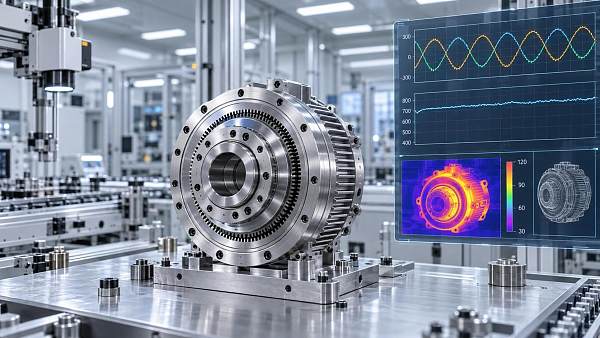
- Assess digital twins that model equipment, lines, or entire facilities, allowing teams to test throughput changes, maintenance strategies, and energy scenarios before physical deployment.
- Track advanced materials development, especially lighter alloys, engineered polymers, coatings, and composites that improve durability, thermal performance, or recyclability without sacrificing manufacturability.
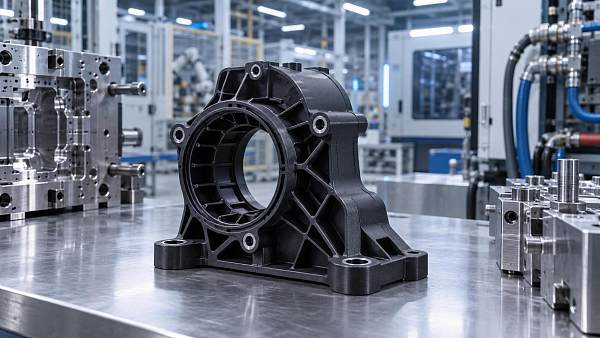
- Review additive manufacturing progress for tooling, spare parts, and low-volume components where lead-time compression, localized production, and design freedom outweigh conventional setup economics.
- Examine machine vision systems that combine edge computing and deep learning to detect defects faster, classify anomalies more accurately, and support closed-loop quality assurance.
- Monitor industrial robotics and collaborative automation that expand beyond repetitive handling into finishing, inspection, micro-assembly, and adaptive tasks with safer human-machine coordination.
- Measure smart factory interoperability, including OPC UA, MQTT, API connectivity, and data normalization that let legacy assets and new platforms share production intelligence reliably.
- Evaluate energy optimization tools that link metering, scheduling, thermal management, and demand forecasting to lower cost exposure while supporting decarbonization requirements.
- Strengthen traceability technologies such as industrial IoT, serialization, and digital product records that improve compliance, warranty analysis, and source-to-output visibility.
- Validate cybersecurity readiness because connected operations increase attack surfaces, and every promising manufacturing technology innovation depends on resilient industrial control protection.
How these manufacturing technology innovations apply across industrial scenarios
High-mix production environments
Facilities handling frequent changeovers benefit most from AI scheduling, digital work instructions, and flexible automation. These tools reduce the penalty of complexity and improve repeatability across short runs.
In this setting, manufacturing technology innovations should be judged by setup reduction, quality consistency, and the ability to move from one product family to another without excessive engineering effort.
Material-intensive operations
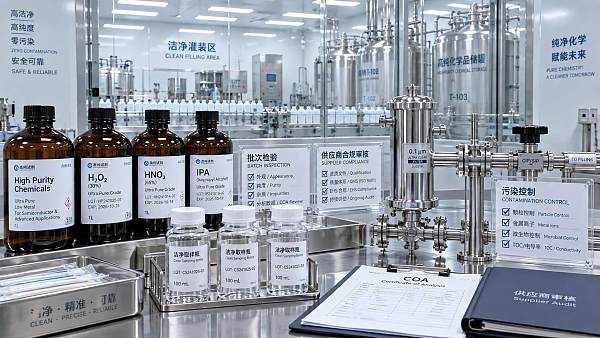
Processes involving metals, ceramics, chemicals, or specialty substrates gain value from better simulation, inline sensing, and advanced materials benchmarking. Small changes in material behavior can create large shifts in output stability.
Here, the most useful manufacturing technology innovations link material science with process windows. The goal is not just better formulation, but predictable scale-up, lower rejection, and stronger lifecycle performance.
Distributed and global supply networks
When production spans multiple regions, visibility becomes a competitive asset. Traceability platforms, digital twins, and remote equipment diagnostics help standardize output across geographically separated sites.
For these networks, manufacturing technology innovations matter when they improve transferability. A process that works in one plant should be reproducible elsewhere without major quality loss or data fragmentation.
Sustainability-driven modernization
Energy analytics, waste tracking, and circular material strategies are no longer separate from productivity. They increasingly determine capital priorities, partner qualification, and long-term cost control.
The best manufacturing technology innovations in this area turn sustainability metrics into operating metrics. They make energy intensity, scrap recovery, and emissions performance visible at the line level.
Commonly overlooked risks when evaluating manufacturing technology innovations
- Ignore data readiness, and even strong AI tools underperform because sensor quality, timestamp accuracy, and context labels are too weak for reliable model training.
- Overlook integration cost, and projects stall when software licenses, middleware, retrofit hardware, and validation effort exceed the apparent equipment price.
- Assume pilot success guarantees scale, even though line variability, operator behavior, and upstream material changes often break early performance assumptions.
- Treat cybersecurity as a later phase, despite the fact that connected manufacturing technology innovations can expose production continuity and intellectual property simultaneously.
- Focus only on labor savings, while missing broader value drivers such as yield improvement, faster qualification, lower inventory buffers, and better asset utilization.
Practical execution steps for this year
Start with a technology map that groups opportunities into four buckets: process control, materials, automation, and digital infrastructure. This creates a clearer basis for comparing near-term wins with strategic platform investments.
Next, define decision metrics before vendor evaluation begins. Use measurable criteria such as cycle-time reduction, defect-rate improvement, energy intensity, deployment complexity, and interoperability with existing systems.
Then run bounded pilots. Choose one line, one product family, or one maintenance problem. Limit the scope, secure baseline data, and require documented proof that the innovation performs under normal operating variation.
Finally, build a scale pathway. The strongest manufacturing technology innovations are those that can move from pilot to multi-site adoption through documented standards, training logic, and governed data structures.
Summary and action guidance
This year’s most important manufacturing technology innovations share one theme: they connect physical production with adaptive intelligence. AI control, digital twins, advanced materials, smart automation, and traceability platforms are becoming mutually reinforcing rather than separate investments.
A useful next step is to rank technologies by operational pain point, implementation maturity, and cross-site relevance. That method reveals which innovations deserve immediate testing and which require foundational upgrades first.
For industrial organizations navigating material complexity and intelligent automation, careful tracking of manufacturing technology innovations is no longer optional. It is a practical way to improve resilience, competitiveness, and technical confidence across the full production ecosystem.
Recommended News
 Sep 19, 2026When can a supply chain LLM reduce time spent finding shipment updates?Supply chain LLMs can cut shipment-update search time by connecting carrier events, ERP data, and documents—giving teams traceable answers and faster exception response.
 Sep 18, 2026How industrial monitoring equipment helps prevent unplanned downtimeIndustrial monitoring equipment helps teams detect early asset issues, prioritize maintenance, and prevent costly unplanned downtime. Explore practical strategies for reliable operations.
 Sep 17, 2026What next-gen harmonic drive research means for robot joint accuracyNext-gen harmonic drive research reveals how backlash, stiffness, thermal drift, and sensing shape robot joint accuracy. Explore smarter validation strategies.
 Sep 16, 2026How Southeast Asian climates affect cylinder seal frictionCylinder seal friction Southeast Asia: learn how humidity, heat, monsoons, and contamination affect motion stability, wear, and seal selection.
 Sep 15, 2026How to size DC gear motors for the required starting torqueGear motors DC sizing made practical: calculate starting torque, account for friction, gravity, inertia and voltage drop, then select a reliable motor with confidence.
 Sep 14, 2026How to verify high purity chemicals compliance before supplier approvalHigh purity chemicals compliance: learn how to verify supplier quality systems, CoAs, traceability, testing, and change control before approval.
 Sep 13, 2026What permits are needed to operate mapping drones in Europe?Mapping drones Europe: discover the permits, EASA categories, airspace approvals, site access, and GDPR checks needed for compliant aerial surveys.
 Sep 12, 2026What lead time should I expect for automatic transmission components? Planetary Gearboxes delivery forecasting for OEM planningWhat lead time should I expect for automatic transmission components? Get dynamic, AI-powered planetary gearbox delivery forecasting—designed for OEMs building next-gen hybrid & commercial powertrains.
 Sep 12, 2026Can polyamide replace metal in load-bearing components? Polymer Pulse structural performance data for 2026 applicationsCan polyamide replace metal in load-bearing components? Discover Polymer Pulse’s 2026 structural data—real-world performance, weight savings, and reliability breakthroughs.
 Sep 12, 2026How to handle a power electronics warranty claim: Harmonic Reducers documentation and escalation pathHow do I handle a power electronics warranty claim? Get a fast, intelligent, evidence-driven resolution for harmonic reducers—no bureaucracy, just precision diagnostics and real-time escalation.
 Sep 12, 2026Which motion control specifications matter most before purchase? Torque Logic selection criteria for automation engineersWhich motion control specifications are most important before purchase? Discover Torque Logic—the 4 non-negotiable, AI-aligned criteria that cut TCO by 27–41% and boost motion system availability to 99.992%.
 Sep 13, 2026Is agentic AI reliable enough for supplier screening? Supply Chain LLM validation framework for procurement teamsIs agentic AI reliable enough for supplier screening? Discover a rigorous LLM validation framework built for procurement teams—grounded in material traceability, regulatory compliance, and real-world operational constraints.
 Sep 14, 2026How to maintain edge AI systems after deployment: Predictive Maint AI operational protocols for field techniciansHow do I maintain edge AI systems after deployment? Discover predictive, physics-aware operational protocols designed for real-world field technicians—sustaining intelligence where silicon meets steel.
 Sep 15, 2026What compliance documents must a bioplastics supplier provide? Bio-Plastics regulatory checklist for procurementWhat compliance documents should a bioplastics supplier provide? Get our actionable regulatory checklist for food, medical & EU-bound applications.
 Sep 16, 2026How to prevent PET film defects during production: Barrier Films process control best practicesHow can I prevent PET film defects during production? Discover physics-driven barrier film process control—thermal precision, dynamic tension management & surface energy optimization.
 Sep 17, 2026Are thermoplastics suitable for long-term outdoor use? Engineering Resins durability assessment in 2026 UV/weather exposureAre thermoplastics suitable for long-term outdoor use? Discover 2026’s engineering resin durability insights — UV/weather resistance ranked, tested & actionable.
 Sep 18, 2026What to do when a servo motor fails during production: A Servo Actuators troubleshooting guide for maintenance teamsWhat should I do if a servo motor fails during production? Get a field-tested, AI-aware troubleshooting guide for maintenance teams—minimize downtime, maximize OEE.
 Sep 12, 2026How to compare wholesale party supplies by minimum order valueCompare wholesale party supplies by minimum order value, freight, SKU flexibility, and stock risk to choose suppliers that protect margins and simplify replenishment.
 Sep 11, 2026How proportional solenoid linearity affects precision motion controlProportional solenoid linearity directly affects precision motion control, valve metering, stability, and calibration. Learn how to evaluate performance for reliable automation.
 Sep 10, 2026When does supplier information platform automation reduce onboarding delays?Supplier information platform automation reduces onboarding delays by streamlining data collection, routing, renewals, and compliance checks—without replacing expert technical review.
 Sep 09, 2026How to size robotic motion systems for AMR payload changesRobotic motion systems for AMR payload changes: learn how to size motors, wheels, gearing, traction, and controls for safer, reliable performance.
 Sep 08, 2026How to perform a cylinder rod buckling calculation for long strokesCylinder rod buckling calculation made practical: learn how to assess effective length, end conditions, rod stiffness, load forces, and safety margins for reliable long-stroke cylinder design.
 Sep 07, 2026How to estimate the cost of industrial mechanical components before orderingIndustrial mechanical components cost: learn how to estimate material, machining, tooling, inspection, logistics, and hidden expenses before ordering. Compare quotes confidently and reduce sourcing risk.
 Sep 07, 2026What Is a Product Standards Database Used For?Product standards database guide: learn how to compare requirements, verify revisions, control specifications, and reduce compliance risks across design, sourcing, and production.