Search News
Industry Portal
Popular Tags
AI in Manufacturing Applications for Downtime
Author
Time
Click Count
AI in manufacturing applications are changing how industrial systems handle downtime risk, maintenance timing, and production continuity.
Across mixed production environments, data-driven monitoring now supports faster decisions, better asset visibility, and stronger operational resilience.
For organizations balancing automation, materials performance, and output targets, AI in manufacturing applications offer practical ways to reduce unplanned stops.
This guide answers common questions about value, use cases, implementation priorities, and pitfalls when applying intelligent systems to downtime reduction.
What does AI in manufacturing applications mean for downtime control?
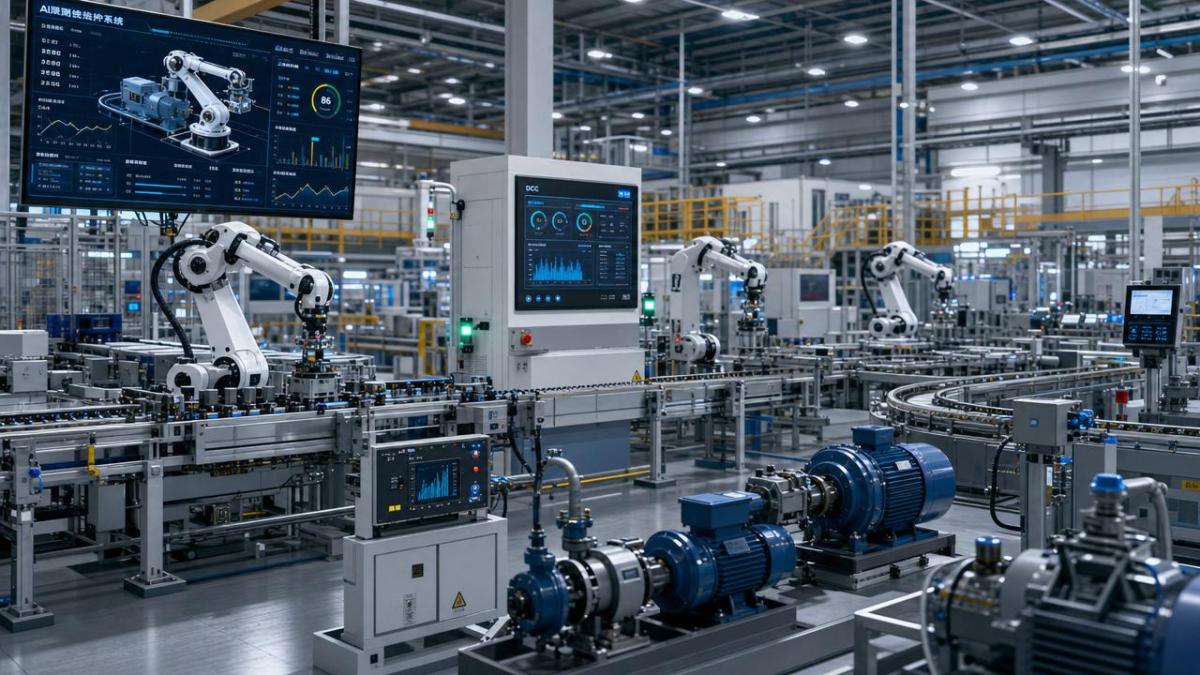
In this context, AI in manufacturing applications refers to software models that learn from machine, process, and maintenance data.
The goal is not only automation.
The main objective is to identify early signals of failure, process drift, or bottlenecks before they create expensive downtime.
Traditional maintenance often depends on fixed schedules or manual inspection.
That approach can miss hidden degradation or trigger unnecessary servicing.
AI in manufacturing applications improve this by combining sensor history, vibration trends, thermal patterns, quality records, and operator logs.
This creates a more dynamic view of equipment condition.
Instead of asking whether a machine is running, teams can ask whether it is healthy, stable, and likely to remain available.
Key downtime-focused capabilities
- Predictive maintenance based on condition signals
- Anomaly detection for hidden process deviations
- Root cause analysis across machine and quality data
- Maintenance scheduling aligned with production windows
- Spare parts planning using asset risk forecasts
These capabilities matter in discrete, process, hybrid, and advanced materials operations.
They are especially useful where one asset failure can halt upstream and downstream flow.
Which AI in manufacturing applications reduce unplanned downtime most effectively?
Not every use case produces equal value.
The best AI in manufacturing applications usually target assets with high criticality, frequent interruptions, or difficult-to-detect failure modes.
1. Predictive maintenance for rotating and thermal assets
Motors, pumps, compressors, conveyors, and ovens often generate usable condition data.
AI models can detect deviation in sound, vibration, current draw, pressure, or temperature before breakdown occurs.
2. Process anomaly detection
Sometimes downtime begins with process instability, not mechanical failure.
AI in manufacturing applications can identify unusual cycle time changes, recipe drift, or abnormal material behavior.
3. Computer vision for line disruption signals
Vision systems can detect jams, leaks, surface defects, misalignment, or accumulation before they escalate into full stoppages.
4. Maintenance intelligence and work order prioritization
By linking CMMS records with real-time condition data, AI can rank jobs by business impact and failure probability.
A strong starting point is usually one asset family, one production bottleneck, or one recurring downtime category.
Focused deployment often outperforms broad but shallow experimentation.
How do you know where AI in manufacturing applications will deliver the highest return?
Return should be judged by avoided downtime, better maintenance timing, labor efficiency, quality stability, and lower emergency intervention.
The strongest opportunities usually share three features.
- Downtime events are expensive or disruptive
- Historical data exists in usable volume
- Operational teams can act on alerts quickly
A useful evaluation method is to map every critical asset against failure frequency, downtime cost, detectability, and data availability.
This prevents investment in impressive dashboards that do not change operating outcomes.
Quick assessment table
When these factors align, AI in manufacturing applications can produce measurable downtime reduction within a practical adoption cycle.
What data, systems, and timeline are needed for successful implementation?
Successful implementation depends less on perfect infrastructure and more on usable operational context.
Even mature AI in manufacturing applications fail when data lacks timestamps, maintenance labels, or equipment hierarchy.
Minimum data foundation
- Sensor streams from PLC, SCADA, historian, or edge devices
- Downtime event logs with reason codes
- Maintenance records from CMMS or EAM platforms
- Production context such as shift, load, recipe, and material batch
- Quality outcomes for correlation analysis
Typical implementation phases
- Define the downtime problem and critical asset scope
- Audit data quality and integration gaps
- Build a pilot model with clear alert logic
- Validate alerts against real operating events
- Embed action rules into maintenance workflows
- Scale by asset class or production area
A pilot can often show value in several weeks if event labels are clean.
Wider scaling usually takes longer because governance, integration, and change adoption become more important than model accuracy alone.
What are the most common mistakes when using AI in manufacturing applications?
Many failures come from process design, not from AI itself.
Avoiding these mistakes greatly improves the impact of AI in manufacturing applications.
Common pitfalls
- Starting with too many assets and no ranked priority
- Ignoring operator and technician knowledge
- Treating alerts as insights without response procedures
- Using poor downtime codes and inconsistent maintenance notes
- Measuring only model accuracy instead of avoided disruption
Another frequent error is assuming every failure can be predicted.
Some events remain random, external, or too rare for dependable modeling.
In those cases, AI still helps through anomaly detection, diagnostic support, and better maintenance prioritization.
Practical risk reminder table
How should industrial organizations compare AI in manufacturing applications with traditional methods?
Traditional preventive maintenance remains useful for compliance, safety, and known wear intervals.
However, it often lacks sensitivity to changing operating conditions.
AI in manufacturing applications add adaptive insight.
They detect patterns across load, environment, material variation, and machine behavior that fixed schedules cannot capture well.
The best strategy is rarely replacement.
It is a layered approach where preventive plans, reliability engineering, and AI-based condition intelligence work together.
When AI-based methods are strongest
- Variable duty cycles affect failure timing
- Materials behavior influences process stability
- Downtime costs exceed pilot investment
- Complex multi-line interactions obscure root causes
For advanced industrial ecosystems, this combined model supports stronger asset resilience and more sustainable use of maintenance resources.
What are the best next steps for adopting AI in manufacturing applications?
Start with one downtime problem that has cost visibility and available data.
Choose a pilot where intervention decisions are realistic, not theoretical.
Then define success using operational metrics such as avoided stoppages, reduced mean time to repair, better schedule adherence, or spare parts optimization.
AI in manufacturing applications create the most value when analytics, maintenance practice, and engineering judgment are tightly connected.
That alignment turns data into action and action into measurable uptime.
A structured assessment of assets, data maturity, and failure economics is the most reliable first move toward scalable downtime reduction.
Recommended News
 Sep 19, 2026When can a supply chain LLM reduce time spent finding shipment updates?Supply chain LLMs can cut shipment-update search time by connecting carrier events, ERP data, and documents—giving teams traceable answers and faster exception response.
 Sep 18, 2026How industrial monitoring equipment helps prevent unplanned downtimeIndustrial monitoring equipment helps teams detect early asset issues, prioritize maintenance, and prevent costly unplanned downtime. Explore practical strategies for reliable operations.
 Sep 17, 2026What next-gen harmonic drive research means for robot joint accuracyNext-gen harmonic drive research reveals how backlash, stiffness, thermal drift, and sensing shape robot joint accuracy. Explore smarter validation strategies.
 Sep 16, 2026How Southeast Asian climates affect cylinder seal frictionCylinder seal friction Southeast Asia: learn how humidity, heat, monsoons, and contamination affect motion stability, wear, and seal selection.
 Sep 15, 2026How to size DC gear motors for the required starting torqueGear motors DC sizing made practical: calculate starting torque, account for friction, gravity, inertia and voltage drop, then select a reliable motor with confidence.
 Sep 14, 2026How to verify high purity chemicals compliance before supplier approvalHigh purity chemicals compliance: learn how to verify supplier quality systems, CoAs, traceability, testing, and change control before approval.
 Sep 13, 2026What permits are needed to operate mapping drones in Europe?Mapping drones Europe: discover the permits, EASA categories, airspace approvals, site access, and GDPR checks needed for compliant aerial surveys.
 Sep 12, 2026What lead time should I expect for automatic transmission components? Planetary Gearboxes delivery forecasting for OEM planningWhat lead time should I expect for automatic transmission components? Get dynamic, AI-powered planetary gearbox delivery forecasting—designed for OEMs building next-gen hybrid & commercial powertrains.
 Sep 12, 2026Can polyamide replace metal in load-bearing components? Polymer Pulse structural performance data for 2026 applicationsCan polyamide replace metal in load-bearing components? Discover Polymer Pulse’s 2026 structural data—real-world performance, weight savings, and reliability breakthroughs.
 Sep 12, 2026How to handle a power electronics warranty claim: Harmonic Reducers documentation and escalation pathHow do I handle a power electronics warranty claim? Get a fast, intelligent, evidence-driven resolution for harmonic reducers—no bureaucracy, just precision diagnostics and real-time escalation.
 Sep 12, 2026Which motion control specifications matter most before purchase? Torque Logic selection criteria for automation engineersWhich motion control specifications are most important before purchase? Discover Torque Logic—the 4 non-negotiable, AI-aligned criteria that cut TCO by 27–41% and boost motion system availability to 99.992%.
 Sep 13, 2026Is agentic AI reliable enough for supplier screening? Supply Chain LLM validation framework for procurement teamsIs agentic AI reliable enough for supplier screening? Discover a rigorous LLM validation framework built for procurement teams—grounded in material traceability, regulatory compliance, and real-world operational constraints.
 Sep 14, 2026How to maintain edge AI systems after deployment: Predictive Maint AI operational protocols for field techniciansHow do I maintain edge AI systems after deployment? Discover predictive, physics-aware operational protocols designed for real-world field technicians—sustaining intelligence where silicon meets steel.
 Sep 15, 2026What compliance documents must a bioplastics supplier provide? Bio-Plastics regulatory checklist for procurementWhat compliance documents should a bioplastics supplier provide? Get our actionable regulatory checklist for food, medical & EU-bound applications.
 Sep 16, 2026How to prevent PET film defects during production: Barrier Films process control best practicesHow can I prevent PET film defects during production? Discover physics-driven barrier film process control—thermal precision, dynamic tension management & surface energy optimization.
 Sep 17, 2026Are thermoplastics suitable for long-term outdoor use? Engineering Resins durability assessment in 2026 UV/weather exposureAre thermoplastics suitable for long-term outdoor use? Discover 2026’s engineering resin durability insights — UV/weather resistance ranked, tested & actionable.
 Sep 18, 2026What to do when a servo motor fails during production: A Servo Actuators troubleshooting guide for maintenance teamsWhat should I do if a servo motor fails during production? Get a field-tested, AI-aware troubleshooting guide for maintenance teams—minimize downtime, maximize OEE.
 Sep 12, 2026How to compare wholesale party supplies by minimum order valueCompare wholesale party supplies by minimum order value, freight, SKU flexibility, and stock risk to choose suppliers that protect margins and simplify replenishment.
 Sep 11, 2026How proportional solenoid linearity affects precision motion controlProportional solenoid linearity directly affects precision motion control, valve metering, stability, and calibration. Learn how to evaluate performance for reliable automation.
 Sep 10, 2026When does supplier information platform automation reduce onboarding delays?Supplier information platform automation reduces onboarding delays by streamlining data collection, routing, renewals, and compliance checks—without replacing expert technical review.
 Sep 09, 2026How to size robotic motion systems for AMR payload changesRobotic motion systems for AMR payload changes: learn how to size motors, wheels, gearing, traction, and controls for safer, reliable performance.
 Sep 08, 2026How to perform a cylinder rod buckling calculation for long strokesCylinder rod buckling calculation made practical: learn how to assess effective length, end conditions, rod stiffness, load forces, and safety margins for reliable long-stroke cylinder design.
 Sep 07, 2026How to estimate the cost of industrial mechanical components before orderingIndustrial mechanical components cost: learn how to estimate material, machining, tooling, inspection, logistics, and hidden expenses before ordering. Compare quotes confidently and reduce sourcing risk.
 Sep 07, 2026What Is a Product Standards Database Used For?Product standards database guide: learn how to compare requirements, verify revisions, control specifications, and reduce compliance risks across design, sourcing, and production.