Search News
Industry Portal
Popular Tags
Industrial Hydraulic Investment Insights: Payback, Risk, and Timing
Author
Time
Click Count
For finance approvers weighing capital allocation, industrial hydraulic investment insights begin with three linked decisions: payback speed, return erosion risk, and investment timing. In complex industrial settings, hydraulic systems are not only mechanical assets. They influence uptime, energy use, maintenance exposure, safety performance, and future automation readiness. A decision based only on purchase price can underestimate lifecycle costs and overlook strategic gains.
Across the broader industrial economy, hydraulic investments remain relevant where high force density, repeatability, and rugged performance are essential. Presses, forming lines, lifting equipment, mobile machinery, marine systems, and heavy automation cells still depend on hydraulic power. That is why industrial hydraulic investment insights increasingly combine engineering benchmarks, digital monitoring, and financial modeling.
Industrial Hydraulic Investment Insights: Core Definition and Decision Frame
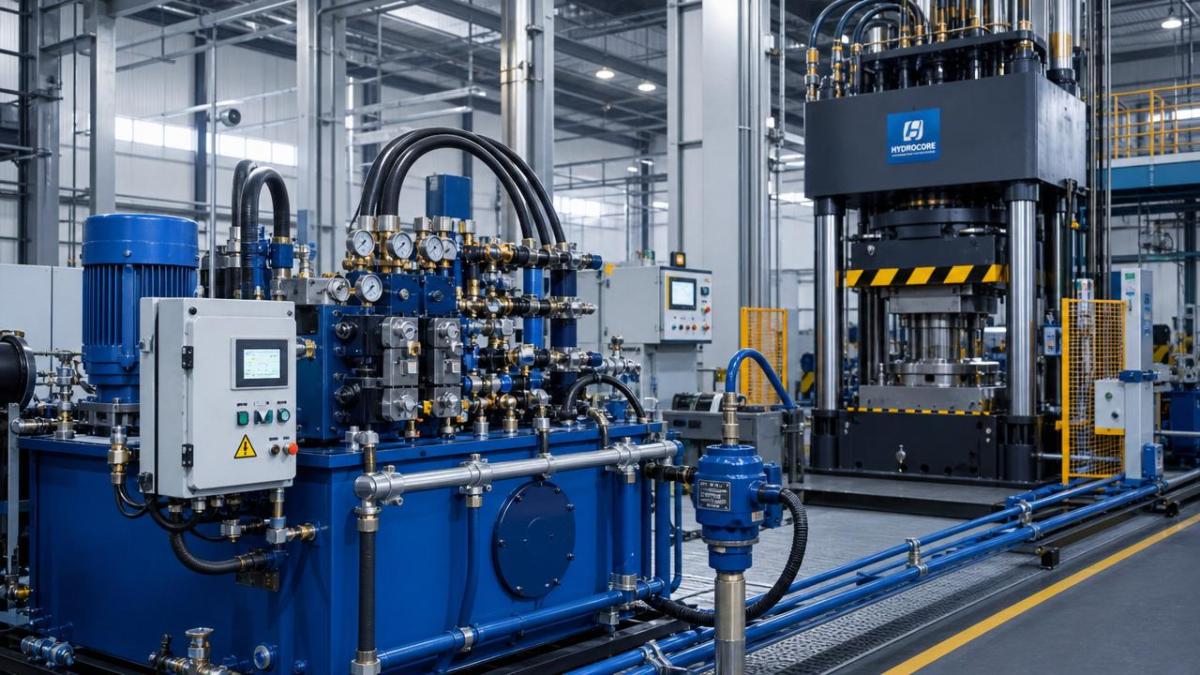
At a practical level, industrial hydraulic investment insights refer to the structured evaluation of hydraulic assets before capital approval. The objective is to measure full economic value, not only acquisition cost. This includes direct and indirect effects over the asset’s operating life.
A complete decision frame usually covers five elements:
- Initial capital cost, installation, integration, and commissioning
- Energy consumption under real production cycles
- Maintenance frequency, spares use, and fluid management
- Downtime risk, safety exposure, and quality losses
- Residual value, upgrade potential, and digital compatibility
This approach matters because industrial hydraulics often operate in mission-critical tasks. A single leak, pressure instability event, or pump failure can affect output, scrap rates, and compliance. Therefore, the most useful industrial hydraulic investment insights connect finance assumptions with technical operating realities.
Market Context and Current Signals Shaping Investment Timing
Timing decisions have become more complex. Input prices, interest rates, energy volatility, and automation pressure all shape hydraulic capital planning. In many industrial segments, replacement is no longer triggered only by failure. It is often triggered by performance gaps.
Several market signals now influence industrial hydraulic investment insights:
These signals show why delaying investment can carry hidden costs. A low-performing system may appear fully depreciated, yet still destroy margin through excess electricity, maintenance labor, and lost throughput. Sound industrial hydraulic investment insights test the cost of waiting against the cost of acting.
Payback Analysis Beyond Equipment Price
Payback is often the first metric reviewed, but it should never stand alone. In hydraulic projects, fast payback may come from several small gains rather than one dramatic saving. Reliable modeling depends on measured operating data, not catalog assumptions.
The main drivers in payback calculations include:
- Reduced energy use through variable speed drives or optimized pressure control
- Lower maintenance cost from better sealing, filtration, and monitoring
- Less unplanned downtime from improved component reliability
- Higher output consistency and fewer quality deviations
- Longer service intervals and lower fluid replacement frequency
A useful benchmark is to compare current-state annual cost with future-state annual cost. The difference becomes the recoverable value stream. Then divide total project cost by annual savings to estimate simple payback. More advanced models also include net present value and scenario ranges.
Well-grounded industrial hydraulic investment insights also separate base savings from conditional savings. Base savings are highly predictable, such as measured energy reduction. Conditional savings depend on operating discipline, maintenance adoption, or production volume stability.
Illustrative payback factors
Risk Dimensions That Can Erode Return
Any investment case can weaken if risk is underestimated. In hydraulic systems, risk does not mean only catastrophic failure. It also includes integration issues, contamination exposure, operator variability, and poor serviceability.
The most relevant risk categories in industrial hydraulic investment insights are often the following:
- Technical risk: mismatch between system design and duty cycle
- Execution risk: delayed installation, commissioning errors, or poor integration
- Operational risk: contamination control failures and inconsistent maintenance routines
- Financial risk: overstated savings assumptions or rising financing costs
- Supply risk: long lead components and limited spare availability
Risk analysis works best when each issue receives a probability, impact estimate, and mitigation plan. This prevents a narrow approval process driven only by optimistic savings figures. It also improves cross-functional alignment around startup readiness.
For example, an upgrade promising excellent energy savings may still disappoint if fluid cleanliness is poorly controlled. Likewise, a lower-cost system may create recurring downtime if service access is weak. Strong industrial hydraulic investment insights always connect design choices with maintainability and real plant conditions.
Typical Investment Scenarios Across Industrial Environments
Hydraulic investment logic changes by operating context. The same payback model will not fit every site or asset class. Scenario-based evaluation is therefore essential.
These scenarios show that timing is rarely universal. Sometimes the best move is immediate modernization. Sometimes the better path is phased retrofit with sensors first, followed by major replacement after performance data confirms the business case.
Practical Evaluation Steps and Common Mistakes
A disciplined review process improves decision quality and reduces approval friction. The following sequence supports actionable industrial hydraulic investment insights in most industrial environments:
- Establish baseline performance using measured energy, downtime, and maintenance data.
- Define the failure modes causing the greatest economic loss.
- Compare repair, retrofit, and replacement options on equal lifecycle terms.
- Model best-case, expected-case, and downside-case returns.
- Confirm spare parts, commissioning support, and contamination control readiness.
- Review timing against outage windows, lead times, and financing conditions.
Common mistakes are also consistent. One is using average load assumptions instead of actual cycle data. Another is treating maintenance labor as fixed, even when improved hydraulic design clearly reduces service events. A third is ignoring startup risk in the first ninety days after installation.
In many cases, the best industrial hydraulic investment insights come from combining asset benchmarking with digital operational evidence. That aligns technical credibility with financial discipline and makes investment timing easier to defend.
Strategic Next Steps for Better Capital Decisions
The strongest hydraulic investment cases are rarely built from a quote alone. They are built from a transparent baseline, realistic savings logic, explicit risk treatment, and timing aligned with operating priorities. This turns industrial hydraulic investment insights into a decision tool rather than a theoretical analysis.
A practical next step is to audit one high-impact hydraulic asset or system family. Capture energy use, maintenance events, downtime cost, and fluid-related issues. Then compare those findings with retrofit and replacement paths. The result is a clearer payback view, stronger risk visibility, and more confident timing.
For organizations operating within a data-rich industrial ecosystem, benchmarking these variables across similar applications can further sharpen returns. When financial analysis, material reliability, and intelligent automation are assessed together, industrial hydraulic investment insights become a durable advantage in capital planning.
Recommended News
 Sep 19, 2026When can a supply chain LLM reduce time spent finding shipment updates?Supply chain LLMs can cut shipment-update search time by connecting carrier events, ERP data, and documents—giving teams traceable answers and faster exception response.
 Sep 18, 2026How industrial monitoring equipment helps prevent unplanned downtimeIndustrial monitoring equipment helps teams detect early asset issues, prioritize maintenance, and prevent costly unplanned downtime. Explore practical strategies for reliable operations.
 Sep 17, 2026What next-gen harmonic drive research means for robot joint accuracyNext-gen harmonic drive research reveals how backlash, stiffness, thermal drift, and sensing shape robot joint accuracy. Explore smarter validation strategies.
 Sep 16, 2026How Southeast Asian climates affect cylinder seal frictionCylinder seal friction Southeast Asia: learn how humidity, heat, monsoons, and contamination affect motion stability, wear, and seal selection.
 Sep 15, 2026How to size DC gear motors for the required starting torqueGear motors DC sizing made practical: calculate starting torque, account for friction, gravity, inertia and voltage drop, then select a reliable motor with confidence.
 Sep 14, 2026How to verify high purity chemicals compliance before supplier approvalHigh purity chemicals compliance: learn how to verify supplier quality systems, CoAs, traceability, testing, and change control before approval.
 Sep 13, 2026What permits are needed to operate mapping drones in Europe?Mapping drones Europe: discover the permits, EASA categories, airspace approvals, site access, and GDPR checks needed for compliant aerial surveys.
 Sep 12, 2026What lead time should I expect for automatic transmission components? Planetary Gearboxes delivery forecasting for OEM planningWhat lead time should I expect for automatic transmission components? Get dynamic, AI-powered planetary gearbox delivery forecasting—designed for OEMs building next-gen hybrid & commercial powertrains.
 Sep 12, 2026Can polyamide replace metal in load-bearing components? Polymer Pulse structural performance data for 2026 applicationsCan polyamide replace metal in load-bearing components? Discover Polymer Pulse’s 2026 structural data—real-world performance, weight savings, and reliability breakthroughs.
 Sep 12, 2026How to handle a power electronics warranty claim: Harmonic Reducers documentation and escalation pathHow do I handle a power electronics warranty claim? Get a fast, intelligent, evidence-driven resolution for harmonic reducers—no bureaucracy, just precision diagnostics and real-time escalation.
 Sep 12, 2026Which motion control specifications matter most before purchase? Torque Logic selection criteria for automation engineersWhich motion control specifications are most important before purchase? Discover Torque Logic—the 4 non-negotiable, AI-aligned criteria that cut TCO by 27–41% and boost motion system availability to 99.992%.
 Sep 13, 2026Is agentic AI reliable enough for supplier screening? Supply Chain LLM validation framework for procurement teamsIs agentic AI reliable enough for supplier screening? Discover a rigorous LLM validation framework built for procurement teams—grounded in material traceability, regulatory compliance, and real-world operational constraints.
 Sep 14, 2026How to maintain edge AI systems after deployment: Predictive Maint AI operational protocols for field techniciansHow do I maintain edge AI systems after deployment? Discover predictive, physics-aware operational protocols designed for real-world field technicians—sustaining intelligence where silicon meets steel.
 Sep 15, 2026What compliance documents must a bioplastics supplier provide? Bio-Plastics regulatory checklist for procurementWhat compliance documents should a bioplastics supplier provide? Get our actionable regulatory checklist for food, medical & EU-bound applications.
 Sep 16, 2026How to prevent PET film defects during production: Barrier Films process control best practicesHow can I prevent PET film defects during production? Discover physics-driven barrier film process control—thermal precision, dynamic tension management & surface energy optimization.
 Sep 17, 2026Are thermoplastics suitable for long-term outdoor use? Engineering Resins durability assessment in 2026 UV/weather exposureAre thermoplastics suitable for long-term outdoor use? Discover 2026’s engineering resin durability insights — UV/weather resistance ranked, tested & actionable.
 Sep 18, 2026What to do when a servo motor fails during production: A Servo Actuators troubleshooting guide for maintenance teamsWhat should I do if a servo motor fails during production? Get a field-tested, AI-aware troubleshooting guide for maintenance teams—minimize downtime, maximize OEE.
 Sep 12, 2026How to compare wholesale party supplies by minimum order valueCompare wholesale party supplies by minimum order value, freight, SKU flexibility, and stock risk to choose suppliers that protect margins and simplify replenishment.
 Sep 11, 2026How proportional solenoid linearity affects precision motion controlProportional solenoid linearity directly affects precision motion control, valve metering, stability, and calibration. Learn how to evaluate performance for reliable automation.
 Sep 10, 2026When does supplier information platform automation reduce onboarding delays?Supplier information platform automation reduces onboarding delays by streamlining data collection, routing, renewals, and compliance checks—without replacing expert technical review.
 Sep 09, 2026How to size robotic motion systems for AMR payload changesRobotic motion systems for AMR payload changes: learn how to size motors, wheels, gearing, traction, and controls for safer, reliable performance.
 Sep 08, 2026How to perform a cylinder rod buckling calculation for long strokesCylinder rod buckling calculation made practical: learn how to assess effective length, end conditions, rod stiffness, load forces, and safety margins for reliable long-stroke cylinder design.
 Sep 07, 2026How to estimate the cost of industrial mechanical components before orderingIndustrial mechanical components cost: learn how to estimate material, machining, tooling, inspection, logistics, and hidden expenses before ordering. Compare quotes confidently and reduce sourcing risk.
 Sep 07, 2026What Is a Product Standards Database Used For?Product standards database guide: learn how to compare requirements, verify revisions, control specifications, and reduce compliance risks across design, sourcing, and production.