Search News
Industry Portal
Popular Tags
Resilient Manufacturing Strategies for Hydraulic Supply Stability
Author
Time
Click Count
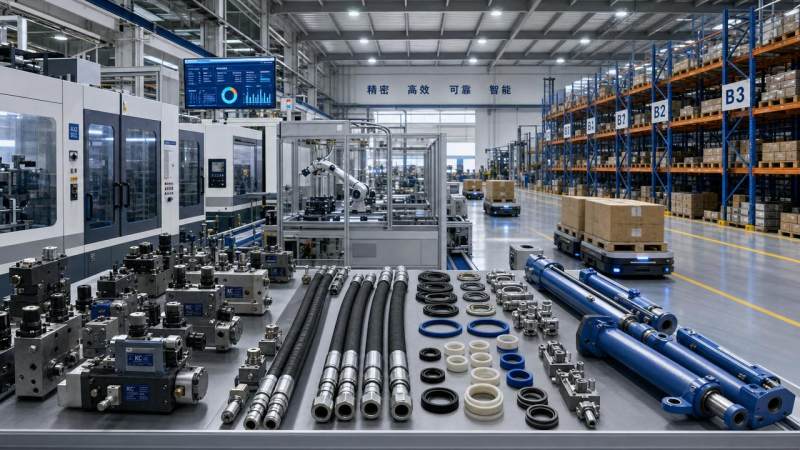
In a volatile industrial landscape, resilient manufacturing is no longer optional for hydraulic supply stability. Material shocks, freight delays, compliance changes, and equipment failures can quickly disrupt delivery performance.
For hydraulic systems, disruption carries wider consequences. It affects uptime, maintenance cycles, safety margins, and downstream project schedules. That is why resilient manufacturing must connect sourcing, engineering, inventory, and digital visibility.
A stronger operating model does more than prevent shortages. It improves cost discipline, protects quality consistency, and creates faster response paths when markets, materials, or technical specifications change unexpectedly.
When hydraulic supply risk changes by scenario, resilient manufacturing must change with it
Hydraulic supply stability does not fail for one reason. It breaks under different conditions, and each condition requires a different resilient manufacturing response.
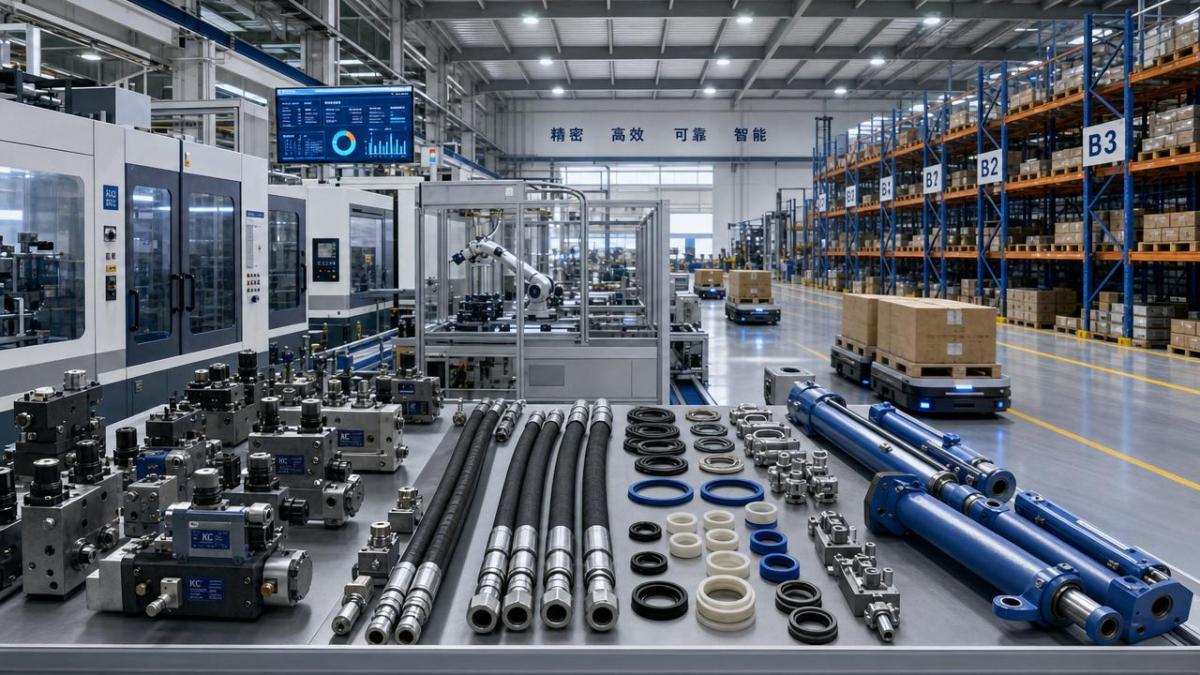
A plant expanding capacity faces different pressures than a service network supporting legacy machinery. A cross-border project sees customs and logistics risks, while a high-specification application faces qualification and traceability risks.
This is why scenario-based planning matters. It helps align supply architecture with actual exposure instead of relying on generic continuity plans.
Scenario signals that require closer review
- Single-source dependence for seals, valves, hoses, cylinders, or precision-machined parts
- Demand volatility tied to capital projects, shutdowns, or aftermarket surges
- Long qualification cycles for materials, pressure ratings, or certification standards
- Limited visibility across tiers of metal, elastomer, and electronics suppliers
- High downtime cost when one hydraulic component becomes unavailable
In expansion and ramp-up scenarios, resilient manufacturing depends on supply elasticity
Capacity ramp-ups often expose hidden weakness. Forecasts rise faster than approved suppliers can increase output, and hydraulic component lead times stretch beyond installation windows.
Here, resilient manufacturing should focus on elasticity. That means flexible sourcing, prequalified alternates, and engineering rules that reduce part variation without reducing performance.
Core judgment points for ramp-up environments
Review whether demand growth is concentrated in a few critical SKUs. Pressure-tested planning should identify which hydraulic assemblies cannot tolerate substitution and which can.
Also examine tooling, machining, and test-bench bottlenecks. In many cases, the constraint is not raw material. It is validation capacity or final inspection throughput.
Recommended actions
- Create approved second-source pathways before the demand spike begins
- Standardize fittings, interfaces, and sealing formats where engineering allows
- Use digital forecasting with weekly exception alerts for long-lead hydraulic items
- Reserve test capacity for high-priority assemblies during ramp windows
In cross-border sourcing scenarios, resilient manufacturing depends on regional balance
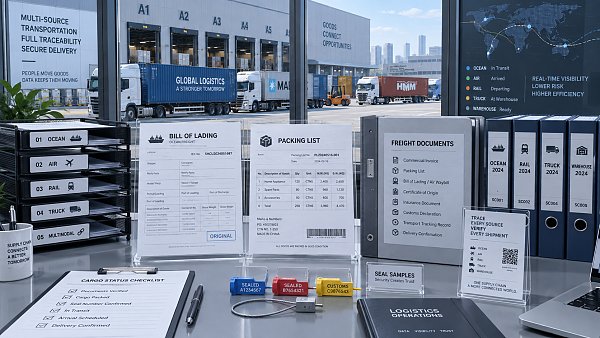
Global sourcing can lower cost, yet it often adds fragility. Hydraulic supply becomes vulnerable when freight lanes, trade rules, or port congestion affect a concentrated supplier base.
In this scenario, resilient manufacturing means regional balance rather than simple geographic spread. Suppliers should be positioned to protect both continuity and technical equivalence.
Core judgment points for global supply exposure
Check whether critical hydraulic components rely on one customs corridor or one shipping mode. Airfreight contingency may work briefly, but not as a standing resilience strategy.
Assess tier-two concentration as well. Steel grades, forged blanks, sensors, and specialty elastomers often carry more risk than the visible first-tier assembly source.
Recommended actions
- Map supplier tiers for critical hydraulic categories and identify chokepoints
- Split volume across regions with equivalent technical controls
- Build buffer policies for items exposed to regulatory or transport volatility
- Use technical benchmarking to compare alternate sources beyond quoted price
In high-specification environments, resilient manufacturing depends on qualification discipline
Some hydraulic applications cannot shift suppliers easily. Pressure tolerance, contamination control, material compatibility, and certification requirements make replacement decisions more complex.
For these environments, resilient manufacturing must be built on qualification discipline. Speed matters, but unverified substitution can create warranty, safety, and lifecycle risks.
Core judgment points for critical-performance applications
Determine which specifications are functional and which are inherited legacy requirements. Over-specified components can restrict sourcing without delivering practical value.
At the same time, validate traceability depth. For hydraulic stability, lot history, material certificates, and testing records are often as important as dimensional compliance.
Recommended actions
- Create fast-track qualification workflows for approved alternate materials and sources
- Separate must-have performance criteria from legacy preferences
- Digitize test records, certificates, and deviation approvals for faster decisions
- Apply failure mode review before substituting any critical hydraulic part
Different scenarios create different resilient manufacturing requirements
The table below shows how hydraulic supply priorities change by scenario. This helps translate resilient manufacturing from a broad objective into a practical decision framework.
How to adapt resilient manufacturing strategies to hydraulic supply realities
Effective adaptation starts with visibility. Teams need a clean view of demand volatility, supplier concentration, technical constraints, and recovery time by component family.
From there, resilient manufacturing should be translated into targeted operating rules rather than broad slogans. The most reliable systems combine process discipline with timely data.
Practical adaptation checklist
- Rank hydraulic items by downtime impact, not only by spend
- Set different stock policies for standard, critical, and obsolete components
- Use predictive maintenance data to improve replacement forecasting
- Benchmark suppliers on quality stability, responsiveness, and technical documentation
- Review engineering change effects on sourcing flexibility before approval
Common misjudgments that weaken resilient manufacturing in hydraulic supply
One common mistake is treating all hydraulic parts the same. In reality, a low-cost fitting may carry higher operational risk than a more expensive but easily replaceable assembly.
Another misjudgment is overvaluing supplier count without checking technical interchangeability. Multiple sources do not create resilient manufacturing if only one source truly meets application requirements.
Organizations also underestimate data latency. If lead-time changes, scrap trends, or test failures surface too late, response options shrink and premium freight becomes the default reaction.
Finally, many continuity plans ignore material science signals. Elastomer degradation, fluid compatibility, corrosion exposure, and contamination sensitivity can silently undermine supply decisions.
Next-step actions to build resilient manufacturing for hydraulic supply stability
A practical starting point is a ninety-day review of the hydraulic portfolio. Focus first on critical components with long lead times, limited alternates, and high downtime impact.
Then align sourcing, engineering, quality, and operations around shared thresholds. Define when to dual-source, when to redesign, when to increase stock, and when to requalify suppliers.
G-AIE supports this process through technical benchmarking, industrial intelligence, and structured visibility across material performance and automation readiness. That combination helps turn resilient manufacturing into a measurable operating capability.
In hydraulic supply stability, resilience is not a single project. It is a repeatable system of scenario judgment, risk prioritization, and disciplined execution. The enterprises that act early will protect continuity and strengthen long-term competitiveness.
Recommended News
 Sep 19, 2026When can a supply chain LLM reduce time spent finding shipment updates?Supply chain LLMs can cut shipment-update search time by connecting carrier events, ERP data, and documents—giving teams traceable answers and faster exception response.
 Sep 18, 2026How industrial monitoring equipment helps prevent unplanned downtimeIndustrial monitoring equipment helps teams detect early asset issues, prioritize maintenance, and prevent costly unplanned downtime. Explore practical strategies for reliable operations.
 Sep 17, 2026What next-gen harmonic drive research means for robot joint accuracyNext-gen harmonic drive research reveals how backlash, stiffness, thermal drift, and sensing shape robot joint accuracy. Explore smarter validation strategies.
 Sep 16, 2026How Southeast Asian climates affect cylinder seal frictionCylinder seal friction Southeast Asia: learn how humidity, heat, monsoons, and contamination affect motion stability, wear, and seal selection.
 Sep 15, 2026How to size DC gear motors for the required starting torqueGear motors DC sizing made practical: calculate starting torque, account for friction, gravity, inertia and voltage drop, then select a reliable motor with confidence.
 Sep 14, 2026How to verify high purity chemicals compliance before supplier approvalHigh purity chemicals compliance: learn how to verify supplier quality systems, CoAs, traceability, testing, and change control before approval.
 Sep 13, 2026What permits are needed to operate mapping drones in Europe?Mapping drones Europe: discover the permits, EASA categories, airspace approvals, site access, and GDPR checks needed for compliant aerial surveys.
 Sep 12, 2026What lead time should I expect for automatic transmission components? Planetary Gearboxes delivery forecasting for OEM planningWhat lead time should I expect for automatic transmission components? Get dynamic, AI-powered planetary gearbox delivery forecasting—designed for OEMs building next-gen hybrid & commercial powertrains.
 Sep 12, 2026Can polyamide replace metal in load-bearing components? Polymer Pulse structural performance data for 2026 applicationsCan polyamide replace metal in load-bearing components? Discover Polymer Pulse’s 2026 structural data—real-world performance, weight savings, and reliability breakthroughs.
 Sep 12, 2026How to handle a power electronics warranty claim: Harmonic Reducers documentation and escalation pathHow do I handle a power electronics warranty claim? Get a fast, intelligent, evidence-driven resolution for harmonic reducers—no bureaucracy, just precision diagnostics and real-time escalation.
 Sep 12, 2026Which motion control specifications matter most before purchase? Torque Logic selection criteria for automation engineersWhich motion control specifications are most important before purchase? Discover Torque Logic—the 4 non-negotiable, AI-aligned criteria that cut TCO by 27–41% and boost motion system availability to 99.992%.
 Sep 13, 2026Is agentic AI reliable enough for supplier screening? Supply Chain LLM validation framework for procurement teamsIs agentic AI reliable enough for supplier screening? Discover a rigorous LLM validation framework built for procurement teams—grounded in material traceability, regulatory compliance, and real-world operational constraints.
 Sep 14, 2026How to maintain edge AI systems after deployment: Predictive Maint AI operational protocols for field techniciansHow do I maintain edge AI systems after deployment? Discover predictive, physics-aware operational protocols designed for real-world field technicians—sustaining intelligence where silicon meets steel.
 Sep 15, 2026What compliance documents must a bioplastics supplier provide? Bio-Plastics regulatory checklist for procurementWhat compliance documents should a bioplastics supplier provide? Get our actionable regulatory checklist for food, medical & EU-bound applications.
 Sep 16, 2026How to prevent PET film defects during production: Barrier Films process control best practicesHow can I prevent PET film defects during production? Discover physics-driven barrier film process control—thermal precision, dynamic tension management & surface energy optimization.
 Sep 17, 2026Are thermoplastics suitable for long-term outdoor use? Engineering Resins durability assessment in 2026 UV/weather exposureAre thermoplastics suitable for long-term outdoor use? Discover 2026’s engineering resin durability insights — UV/weather resistance ranked, tested & actionable.
 Sep 18, 2026What to do when a servo motor fails during production: A Servo Actuators troubleshooting guide for maintenance teamsWhat should I do if a servo motor fails during production? Get a field-tested, AI-aware troubleshooting guide for maintenance teams—minimize downtime, maximize OEE.
 Sep 12, 2026How to compare wholesale party supplies by minimum order valueCompare wholesale party supplies by minimum order value, freight, SKU flexibility, and stock risk to choose suppliers that protect margins and simplify replenishment.
 Sep 11, 2026How proportional solenoid linearity affects precision motion controlProportional solenoid linearity directly affects precision motion control, valve metering, stability, and calibration. Learn how to evaluate performance for reliable automation.
 Sep 10, 2026When does supplier information platform automation reduce onboarding delays?Supplier information platform automation reduces onboarding delays by streamlining data collection, routing, renewals, and compliance checks—without replacing expert technical review.
 Sep 09, 2026How to size robotic motion systems for AMR payload changesRobotic motion systems for AMR payload changes: learn how to size motors, wheels, gearing, traction, and controls for safer, reliable performance.
 Sep 08, 2026How to perform a cylinder rod buckling calculation for long strokesCylinder rod buckling calculation made practical: learn how to assess effective length, end conditions, rod stiffness, load forces, and safety margins for reliable long-stroke cylinder design.
 Sep 07, 2026How to estimate the cost of industrial mechanical components before orderingIndustrial mechanical components cost: learn how to estimate material, machining, tooling, inspection, logistics, and hidden expenses before ordering. Compare quotes confidently and reduce sourcing risk.
 Sep 07, 2026What Is a Product Standards Database Used For?Product standards database guide: learn how to compare requirements, verify revisions, control specifications, and reduce compliance risks across design, sourcing, and production.