Search News
Industry Portal
Popular Tags
High Pressure Hydraulic Market Growth in 2026: Demand or Hype?
Author
Time
Click Count
As industrial buyers reassess capital spending, high pressure hydraulic market growth in 2026 stands at the center of a critical debate: real demand or temporary hype? For business evaluators, the answer depends on how automation trends, material performance requirements, and global supply chain resilience reshape investment priorities. This article examines the signals behind market momentum and what they mean for long-term industrial value.
Why is high pressure hydraulic market growth gaining attention in 2026?
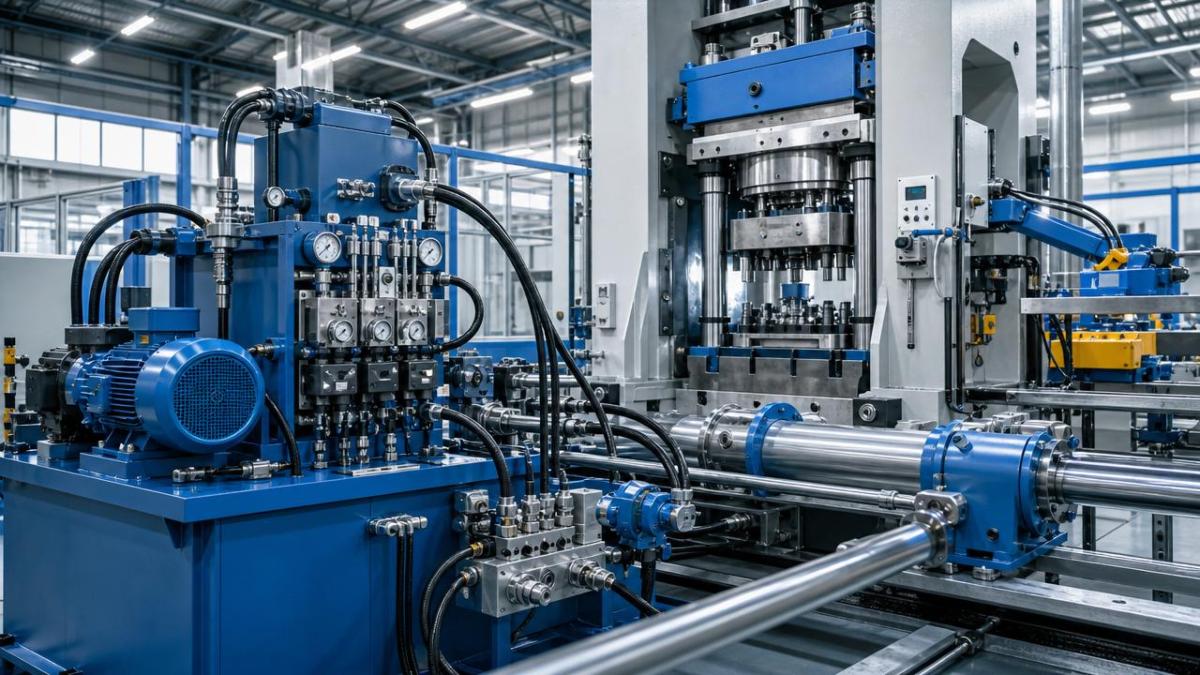
High pressure hydraulic market growth is attracting scrutiny because it sits at the intersection of heavy-duty mechanical performance, digitalized plant operations, and procurement risk control. In the broader industrial landscape, hydraulics remain essential where electric actuation alone cannot deliver the required force density, shock tolerance, or duty-cycle stability.
For business evaluators, the issue is not whether hydraulics still matter. The real question is where high pressure systems continue to create measurable value, and where market enthusiasm may be overstating short-term demand. This distinction matters when capital budgets are under pressure and payback expectations are tighter.
Across manufacturing, energy, mobile equipment, metals, marine, and process industries, high pressure hydraulic systems support clamping, forming, lifting, pressing, steering, braking, and synchronized motion control. These functions are especially relevant in environments that require compact power transmission under harsh loads.
G-AIE analyzes this topic from both the material science side and the intelligent automation side. That matters because market growth is rarely explained by one variable. Seal chemistry, hose endurance, valve response, fluid cleanliness, and AI-assisted maintenance all influence the commercial case behind high pressure hydraulic market growth.
What is driving actual demand?
- Industrial automation projects still require high-force linear and rotary motion in presses, machine tools, forging lines, and automated handling stations.
- Infrastructure, mining, and mobile equipment modernization continue to depend on hydraulic power because of load capacity and field reliability.
- Retrofit programs are extending the life of installed assets by upgrading pumps, manifolds, sensors, and filtration rather than replacing entire systems.
- Supply chain uncertainty is encouraging buyers to prioritize durable, serviceable, globally supportable technologies over niche solutions with limited spare-part ecosystems.
Where does hype enter the discussion?
Hype appears when every automation trend is interpreted as direct evidence of high pressure hydraulic market growth. In reality, some applications are shifting to electromechanical systems, especially where precision, low leakage, and simplified maintenance matter more than peak force. The strongest market forecasts are therefore not universal; they are segment-specific.
Which sectors are creating the strongest demand signals?
For procurement and business assessment teams, sector-level demand mapping is more useful than broad market optimism. The table below highlights where high pressure hydraulic market growth is more likely to be supported by application logic rather than by speculation alone.
This view suggests that high pressure hydraulic market growth is most credible in force-intensive and retrofit-heavy sectors. It is less convincing in applications where electric alternatives now meet performance requirements with lower maintenance complexity.
How should business evaluators read these signals?
A good assessment starts with installed-base logic. If a sector already has a large hydraulic footprint, growth can come from modernization, spare parts, fluid management, and digital controls. New-build demand is only one part of the market. Lifecycle revenue often makes the stronger business case.
High pressure hydraulics vs alternative actuation: where is the real advantage?
Many investment debates now compare high pressure hydraulics with electromechanical or pneumatic alternatives. For decision-makers, the right question is not which technology is fashionable. The right question is which solution delivers the required force, reliability, maintainability, and total cost profile in the target operating environment.
The comparison table below supports high pressure hydraulic market growth analysis by showing where hydraulics remain commercially defensible and where substitution pressure is growing.
The takeaway is practical. High pressure hydraulic market growth is not undermined by alternatives everywhere. Instead, the market is being refined. Hydraulics keep their edge where force density, ruggedness, and integrated power transmission matter more than ultra-clean precision positioning.
What technical and material factors should buyers assess first?
Business evaluators often receive supplier claims focused on nominal pressure ratings alone. That is not enough. The commercial performance of a high pressure hydraulic system depends on how components behave under real duty cycles, contamination exposure, thermal variation, and maintenance constraints.
Core technical checkpoints
- Pressure range and peak tolerance: assess continuous operating pressure separately from transient peak events.
- Flow stability and response time: critical for synchronized motion, forming consistency, and cycle-time control.
- Seal and hose material compatibility: especially important under aggressive fluids, elevated heat, and abrasive duty.
- Filtration and contamination tolerance: poor fluid cleanliness can destroy the economic case faster than any pricing issue.
- Sensor readiness: pressure, temperature, vibration, and flow monitoring improve predictive maintenance and asset utilization.
Why material science matters to market growth
G-AIE places unusual emphasis on material science because many procurement failures begin there. Elastomer selection, corrosion resistance, wear surfaces, and fluid compatibility directly affect leakage rates, maintenance frequency, and unplanned downtime. In other words, high pressure hydraulic market growth is partly a materials story, not just an automation story.
This is especially relevant as buyers seek more sustainable asset strategies. Longer service intervals, rebuildable assemblies, and lower fluid-loss exposure can improve both operating economics and environmental performance without forcing a complete technology switch.
How should procurement teams evaluate suppliers and system options?
When high pressure hydraulic market growth becomes a boardroom topic, sourcing teams need a repeatable evaluation framework. Price remains important, but a narrow bid comparison often misses lifecycle costs, integration risk, and service limitations. The table below can support structured procurement review.
A disciplined framework helps separate healthy high pressure hydraulic market growth from supplier-led hype. It also aligns technical review with financial accountability, which is exactly where business evaluators create value.
A practical selection workflow
- Define the operating scenario, including load, duty cycle, environment, and uptime target.
- Compare hydraulic and alternative actuation against total cost and technical risk, not initial purchase price alone.
- Review component materials, sealing strategy, and contamination-control requirements.
- Check service footprint, delivery capability, and digital monitoring compatibility.
- Model the business case across installation, maintenance, downtime, and expected asset life.
What cost risks and compliance issues are often underestimated?
The strongest challenge in evaluating high pressure hydraulic market growth is that visible equipment cost is only part of the picture. Fluid management, hose replacement, filtration discipline, installation quality, and safety controls can materially affect the long-term return on investment.
Business evaluators should also check whether the intended system must align with common industrial expectations for pressure safety, machinery integration, and maintenance documentation. Depending on the region and application, buyers may need to review applicable machinery safety frameworks, pressure-related documentation, and plant-specific reliability protocols.
- Leakage risk can generate cleanup cost, safety concerns, and production interruptions beyond the direct repair expense.
- Poor contamination control can shorten pump and valve life, increasing replacement frequency and planned shutdown time.
- Imported components with unstable lead times may weaken the business case even if nominal pricing looks attractive.
- Insufficient documentation can delay commissioning, especially in regulated or audit-sensitive facilities.
This is where G-AIE’s benchmarking model becomes useful. By comparing material durability, integration readiness, and supply resilience together, evaluators gain a more realistic picture of whether projected high pressure hydraulic market growth supports a sound procurement decision.
FAQ: what do business evaluators most often ask?
Is high pressure hydraulic market growth mainly driven by new installations?
Not necessarily. In many sectors, retrofit demand, spare parts support, filtration upgrades, and sensor integration are as important as new system sales. A large installed base can sustain market growth even when greenfield capital spending is uneven.
Which applications are least likely to justify high pressure hydraulics?
Applications with moderate loads, clean environments, high positioning precision, and strong pressure to minimize fluid-related maintenance may lean toward electromechanical systems. The decision depends on force profile, available space, maintenance skills, and control expectations.
What procurement mistake is most common?
The most common mistake is evaluating price before operating conditions. Buyers sometimes compare components by pressure rating alone, without checking duty cycle, contamination exposure, service access, and spare-part support. That approach can distort the total cost picture.
How can digitalization improve the value case?
Pressure, temperature, and vibration monitoring can help predict seal wear, fluid degradation, and pump stress before failure occurs. In practical terms, this improves maintenance planning, reduces unplanned shutdowns, and supports more accurate lifecycle budgeting.
Why choose us for high pressure hydraulic market growth evaluation?
G-AIE supports business evaluators who need more than generic market commentary. Our strength lies in connecting industrial demand signals with technical benchmarking, material science insight, and intelligent automation context. That combination helps procurement and strategy teams judge whether high pressure hydraulic market growth in 2026 reflects durable industrial value or short-lived market noise.
You can consult us for application-specific parameter review, hydraulic versus alternative actuation comparison, supplier screening criteria, delivery-cycle risk mapping, compliance documentation expectations, and digital integration considerations. We also support early-stage selection logic for retrofit programs, custom industrial scenarios, and cross-border sourcing evaluations.
If your team is reviewing capital allocation, preparing a sourcing shortlist, or validating the commercial reality behind high pressure hydraulic market growth, contact G-AIE with your operating requirements, target pressure range, environmental conditions, expected service life, certification concerns, and quotation timeline. That allows a faster and more decision-ready evaluation path.
Recommended News
 May 19, 2026Material Innovation Technologies in Engineering ResinsMaterial innovation technologies are transforming engineering resins with better heat resistance, dimensional stability, and sustainability. Discover practical applications, comparison tips, and adoption strategies.
 May 19, 2026Industrial Sustainability Strategies That Lower Compliance RiskIndustrial sustainability strategies help manufacturers cut compliance risk, improve traceability, and stay audit-ready with stronger supplier, process, and data controls.
 May 19, 2026Supply Chain Intelligence Solutions for Demand SwingsSupply chain intelligence solutions help enterprises predict demand swings, reduce sourcing risk, and improve planning resilience. Discover smarter, data-driven strategies for faster decisions.
 May 19, 2026Supply Chain Orchestration Software Implementation RisksSupply chain orchestration software implementation risks can derail ROI fast. Learn the top data, integration, governance, and adoption pitfalls—and how to avoid costly rollout failures.
 May 19, 2026When a Supply Chain Orchestration Platform Pays OffSupply chain orchestration platform ROI becomes real when disruption costs, inventory pressure, and slow decisions erode margins. See the checklist finance leaders can use to approve with confidence.
 May 19, 2026Material Innovation Research Shaping Next CoatingsMaterial innovation research is driving next-generation coatings with smarter performance, sustainability, and automation fit. Discover how advanced formulations improve durability, efficiency, and lifecycle value.
 May 19, 2026High-Tech Industrial Development Trends to WatchHigh-tech industrial development trends are reshaping AI, materials, automation, and supply chains. Discover what enterprise leaders should prioritize now to improve resilience, margins, and growth.
 May 19, 2026How to Vet a Gear Pump Wholesale Supplier FastGear pump wholesale supplier vetting made faster: learn a 48-hour framework to verify technical fit, pricing transparency, and delivery reliability before you buy.
 May 19, 2026How Industrial Benchmarking Tools Expose Cost GapsIndustrial benchmarking tools uncover hidden cost gaps across processes, materials, automation, and sourcing—helping evaluators spot inefficiencies faster and act with confidence.
 May 19, 2026Industrial Sustainability Practices That Cut Energy WasteIndustrial sustainability practices help enterprises cut energy waste, lower operating costs, improve resilience, and support ESG goals with scalable, data-driven efficiency strategies.
 May 19, 2026U.S. BIS Adds AI Spectrum-Sensing Modules to EAR Appendix 7AI-driven spectrum sensing modules now controlled under U.S. EAR Appendix 7 — urgent compliance & license action required by Aug 31, 2026.
 May 19, 2026EU Updates E-Grade Chem Compliance: Full REACH-SVHC Declaration MandatoryEU mandates full REACH-SVHC declaration for e-grade chemicals by Nov 2026—secure ECHA pre-registration now to avoid EU market suspension.
 May 19, 2026Japan’s New JIS Barrier Films Standard Takes Effect August 2026Japan’s new JIS K 7129:2026 barrier films standard takes effect August 2026—aligning with ISO 15106-3:2025. Act now to avoid shipment delays!
 May 19, 2026Vietnam Tightens TEM Agglomeration Reporting for Functional Coatings ImportsVietnam tightens TEM agglomeration reporting for functional coatings imports — mandatory original TEM images & third-party reports required from June 1, 2026. Act now to avoid delays!
 May 19, 2026KFDA Tightens Import Rules for Industrial CatalystsKFDA (MFDS) tightens industrial catalyst import rules: reactor-level aging curve reports now mandatory for South Korea entry—act now to avoid delays.
 May 19, 2026SABIC Engineering Resins GCC Certification Adopts Blockchain DatabaseSABIC Engineering Resins GCC Certification now uses blockchain — TraceChain ensures immutable rheology data & mandatory hash certificates for GCC market access.
 May 19, 2026PSA Launches Supply Chain LLM Customs Engine; Chinese ERPs Must Adopt API v4.1PSA Launches Supply Chain LLM Customs Engine — Chinese ERPs must adopt API v4.1 by 1 July 2026 to avoid clearance delays & demurrage. Act now!
 May 19, 2026FDA Adds Microplastic Migration Simulation Validation for Bio-PlasticsFDA mandates microplastic migration simulation validation for bio-plastics—key for U.S. market access. Act now to comply before Oct 1, 2026.
 May 19, 2026IMO Approves Cargo Drone Shipboard Landing StandardIMO Approves Cargo Drone Shipboard Landing Standard — enabling certified cargo drones to land/take off from vessels. Key for maritime logistics, offshore supply & drone integration.
 May 19, 2026TÜV Rheinland Updates Servo Actuator Certification with Digital Twin Fault InjectionTÜV Rheinland now mandates digital twin fault injection for servo actuator certification—key for EU, ME & SEA market access. Act now to ensure compliance & avoid order delays.
 May 18, 2026Intelligent Automation Solutions: Best Use Cases for Quality ControlIntelligent automation solutions improve quality control with AI vision, predictive monitoring, and traceability—discover the best use cases to cut defects, boost safety, and improve compliance.
 May 18, 2026Vertical AI Supplier Checklist for Industrial Software SelectionVertical AI supplier checklist for industrial software buyers: compare integration, data governance, implementation fit, and long-term value to shortlist with confidence.
 May 18, 2026Automation Technology for Smart Manufacturing: Integration Mistakes to AvoidAutomation technology for smart manufacturing: learn the top integration mistakes to avoid, protect ROI, improve data quality, and build scalable, resilient production systems.
 May 18, 2026Manufacturing Technology for Automation: How to Compare Payback PeriodsManufacturing technology for automation decisions start with smarter payback comparisons. Learn how to evaluate costs, savings, risks, and ROI with confidence.