Search News
Industry Portal
Popular Tags
How to Vet a Gear Pump Wholesale Supplier Fast
Author
Time
Click Count
Choosing a reliable gear pump wholesale supplier quickly is critical for procurement teams facing tight deadlines, quality risks, and cost pressure. This guide outlines the fastest way to evaluate supplier credibility, technical capability, pricing transparency, and delivery performance, helping buyers reduce sourcing errors and build a more dependable industrial supply chain.
For procurement professionals in manufacturing, automation, fluid handling, and industrial maintenance, speed matters only when it does not weaken due diligence. A fast supplier screen should identify whether a source can meet viscosity requirements, pressure ranges, material compatibility, and delivery commitments within 24–72 hours of first contact.
At a practical level, vetting a gear pump wholesale supplier is less about marketing claims and more about structured verification. Buyers need a repeatable process that compares documents, engineering depth, lead time control, after-sales support, and total procurement risk before issuing RFQs, sample orders, or annual framework agreements.
Build a 48-Hour Supplier Screening Framework
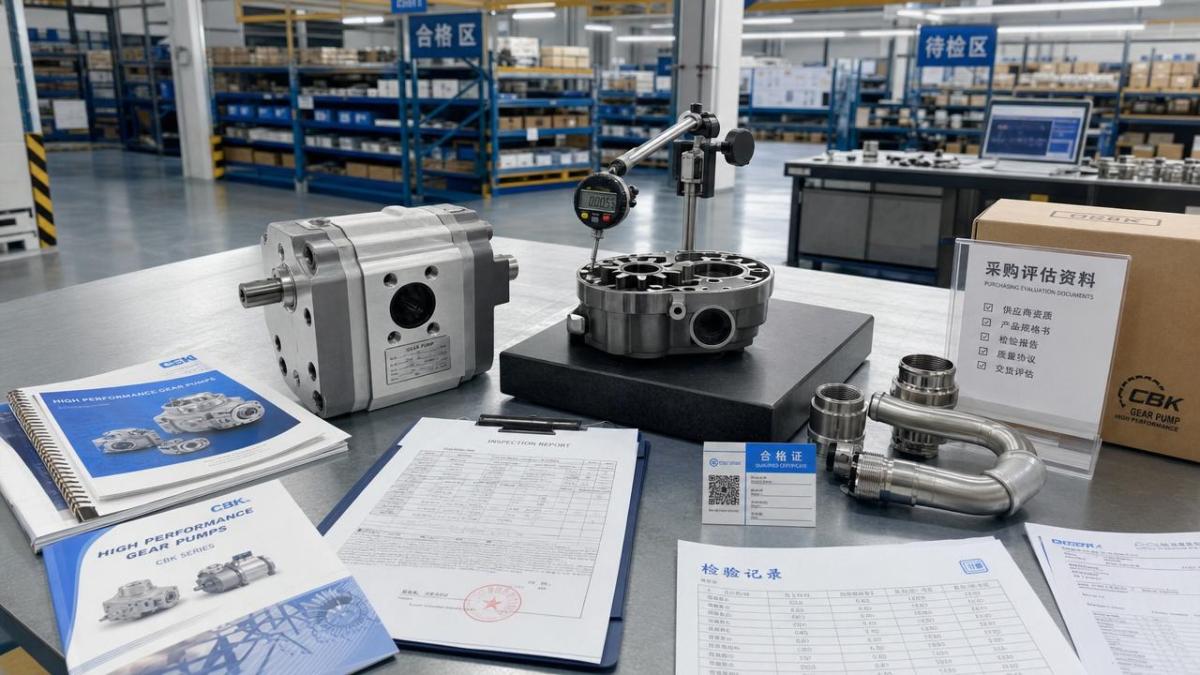
The fastest way to assess a gear pump wholesale supplier is to divide the first review into 4 checkpoints: company legitimacy, product fit, commercial clarity, and delivery capability. This method helps procurement teams narrow a long list to 2–5 viable suppliers without waiting weeks for a full technical audit.
In most industrial sourcing cycles, the first screening can be completed in 1 to 2 business days if the buyer requests the right evidence. That evidence should include a product catalog, material options, pressure and flow range data, basic testing process information, export experience, and a recent lead time estimate.
What procurement teams should verify first
Do not start with price alone. For a gear pump wholesale supplier, the first priority is application fit. Confirm whether the supplier can support common industrial use cases such as lubrication systems, chemical transfer, fuel handling, hydraulic support circuits, or metering of medium- to high-viscosity fluids.
Ask for 6 core data points immediately: flow range, pressure range, operating temperature range, wetted materials, seal options, and motor or drive compatibility. If a supplier cannot provide these within the first exchange, it often signals weak technical support or poor internal product documentation.
Minimum document pack for quick evaluation
- Business registration and export identity details
- Product datasheet with flow, pressure, speed, and media limits
- Material list for housing, gears, shaft, and seals
- Testing or inspection outline before shipment
- Typical MOQ, sample policy, and standard lead time
- Warranty scope and after-sales response window
The table below helps buyers compare early-stage supplier readiness using measurable checks rather than generic claims. It is useful when reviewing 3 to 8 candidates in parallel during a compressed sourcing cycle.
A supplier that clears these 4 areas with specific answers is usually worth moving to RFQ or sample stage. A supplier that stays vague after 2 follow-ups should be downgraded, even if the initial unit price looks attractive.
Use response speed as a procurement signal
Response quality within the first 24 hours often predicts execution quality later. A capable gear pump wholesale supplier usually replies with clarifying questions about viscosity, duty cycle, inlet conditions, and system pressure rather than sending a generic catalog immediately.
If the supplier asks about fluid type, temperature band, expected service life, and installation layout, that is a positive sign. It shows engineering engagement. If the reply only asks for quantity and target price, the supplier may be treating the product as a commodity when your application is not.
Check Technical Fit Before Commercial Negotiation
A gear pump wholesale supplier should be evaluated first on whether the pump will work in the actual system, not whether the quote is 5% lower. Procurement teams often lose more money from mismatch, leakage, premature wear, and downtime than from moderate unit price differences.
For industrial buyers, the most common mismatch areas are fluid viscosity, seal material, shaft speed, and pressure demand. Even a well-machined pump will underperform if internal clearances, gear material, or seal configuration do not match the medium and operating cycle.
Key technical questions to ask
- What viscosity range is supported, and at what speed?
- What is the continuous pressure range versus peak pressure tolerance?
- Which materials are available for corrosive, abrasive, or food-adjacent fluids?
- Which seal options are standard, and which are custom?
- What testing is performed before shipment: leakage, pressure hold, flow verification, or noise check?
Many procurement teams use a simple acceptance matrix during technical review. This prevents suppliers from winning on broad statements while failing on details that matter in production, maintenance, or OEM integration.
This comparison format quickly shows whether a supplier understands application engineering. A qualified gear pump wholesale supplier should explain how performance changes with viscosity, speed, and pressure, not just list a nominal specification.
Common buyer mistake
One frequent error is treating all external gear pumps as interchangeable. In reality, shaft support design, machining tolerance, bearing selection, and seal arrangement can vary enough to change service life from a few months to several years under the same duty condition.
Evaluate Price Transparency and Total Cost, Not Just the Quote
A low quote from a gear pump wholesale supplier can hide costs in tooling, custom flange changes, testing fees, export packaging, or spare parts availability. Procurement teams should compare total landed and operating cost over 12–24 months, especially for repeat-use or OEM programs.
Ask suppliers to break out at least 5 commercial items: pump body price, motor or drive price if included, seal upgrade cost, packaging cost, and freight basis. When the quote structure is clear, it becomes easier to compare suppliers across different regions and manufacturing models.
What transparent pricing looks like
- Defined Incoterms and quotation validity, often 15–30 days
- MOQ and price breaks, such as 10 units, 50 units, and 100 units
- Separate cost for custom shafts, ports, or material changes
- Lead time difference between stocked and made-to-order items
- Warranty limits and exclusions for wear parts or misuse
If a supplier avoids detailing these items, cost variance will usually appear later in the purchase cycle. That can delay internal approval, change landed cost calculations, and weaken supplier scorecards used by central procurement or cross-plant sourcing teams.
Look beyond unit price
For high-usage industrial environments, even a 2% leakage rate, one extra maintenance stop per quarter, or a 10-day delay on replacement units can outweigh an 8% purchase price advantage. Buyers should include uptime impact, spare part access, and service responsiveness in their financial comparison.
Audit Delivery Reliability and Supply Chain Discipline
Delivery performance is where many supplier evaluations fail. A technically acceptable gear pump wholesale supplier can still become a weak partner if lead times drift from 2 weeks to 6 weeks, shipment documents are inconsistent, or packaging quality is poor for export handling.
Procurement teams should confirm whether lead time is based on stock, semi-finished inventory, or full production scheduling. These are very different supply positions. A supplier with standard components in stock can often support urgent requirements faster than one building every order from raw material.
Questions that reveal delivery discipline
- What is the normal lead time for standard models and for customized builds?
- How often are orders shipped each week or month?
- What packaging is used for corrosion protection and impact control?
- Can the supplier support safety stock, call-off orders, or blanket PO schedules?
- What happens if a shipment misses the committed date?
Reliable suppliers usually define a standard lead time window such as 7–15 days for regular items and 3–5 weeks for customized versions. They also explain what changes that timeline: machining load, motor sourcing, special seals, or pressure testing requirements.
Red flags in logistics and order execution
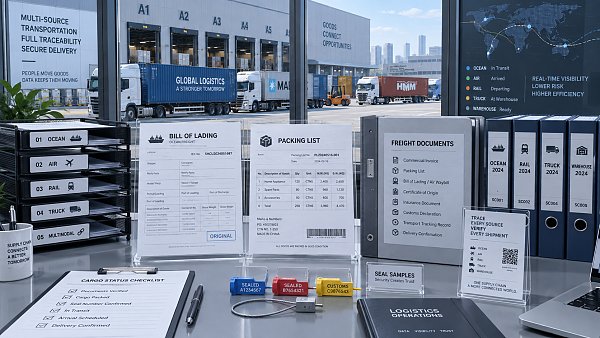
Watch for inconsistent packing lists, vague responses about export preparation, or no explanation of replacement handling for transit damage. These are not minor administrative gaps. In industrial procurement, documentation errors can block customs clearance, receiving inspection, or payment release.
Turn Vetting Into a Repeatable Procurement Process
The best way to move fast is to standardize the review. A procurement template allows teams across plants, regions, or categories to evaluate each gear pump wholesale supplier against the same scorecard, improving both sourcing speed and decision consistency.
A practical scorecard can use 4 weighted sections: 30% technical fit, 25% delivery reliability, 25% commercial clarity, and 20% service support. If needed, supplier quality or ESG requirements can be added as a fifth category for larger enterprise procurement systems.
Suggested 5-step vetting workflow
- Send a structured inquiry with application details and required document list
- Screen replies within 24–48 hours for completeness and relevance
- Shortlist 2–3 suppliers for technical clarification and quote alignment
- Request sample, inspection data, or video verification where needed
- Approve supplier for pilot order, frame agreement, or approved vendor list
How G-AIE-oriented buyers can sharpen decisions
In advanced industrial ecosystems where material performance and intelligent automation converge, supplier selection should connect physical product capability with data discipline. Buyers should prefer suppliers able to provide structured specifications, traceable revisions, and consistent communication suitable for multi-site procurement governance.
This approach is especially useful for procurement directors and supply chain teams managing cross-border sourcing, plant maintenance continuity, and digital vendor benchmarking. A supplier that supports clean technical data and predictable replenishment is easier to integrate into resilient sourcing strategies.
FAQ for fast buyer review
How many suppliers should be compared first?
For urgent sourcing, 3 to 5 suppliers is usually enough to identify the realistic market range in price, lead time, and capability. More than that may slow down decisions without improving quality if the inquiry format is already standardized.
Is a sample order always necessary?
Not always. For standard replacement procurement with proven specifications, document review and reference dimensions may be enough. For new media, new duty cycles, or OEM integration, a sample or pre-shipment inspection is often the safer path.
What is the fastest disqualifier?
The fastest disqualifier is inconsistent technical and commercial communication. If a supplier cannot match model details, quote assumptions, and lead time statements within the first 2 exchanges, execution risk is usually too high for industrial procurement.
Fast vetting does not mean shallow vetting. The most effective procurement teams use a clear 48-hour screening method, verify technical fit before negotiating price, and test delivery discipline before awarding volume. That is how a gear pump wholesale supplier becomes a dependable sourcing partner instead of a recurring operational risk.
If you are building a stronger industrial sourcing pipeline, now is the right time to review your supplier checklist, compare technical data more rigorously, and align commercial terms with real operating needs. Contact us to discuss your application, request a tailored evaluation framework, or explore more sourcing solutions for gear pump procurement.
Recommended News
 Sep 19, 2026When can a supply chain LLM reduce time spent finding shipment updates?Supply chain LLMs can cut shipment-update search time by connecting carrier events, ERP data, and documents—giving teams traceable answers and faster exception response.
 Sep 18, 2026How industrial monitoring equipment helps prevent unplanned downtimeIndustrial monitoring equipment helps teams detect early asset issues, prioritize maintenance, and prevent costly unplanned downtime. Explore practical strategies for reliable operations.
 Sep 17, 2026What next-gen harmonic drive research means for robot joint accuracyNext-gen harmonic drive research reveals how backlash, stiffness, thermal drift, and sensing shape robot joint accuracy. Explore smarter validation strategies.
 Sep 16, 2026How Southeast Asian climates affect cylinder seal frictionCylinder seal friction Southeast Asia: learn how humidity, heat, monsoons, and contamination affect motion stability, wear, and seal selection.
 Sep 15, 2026How to size DC gear motors for the required starting torqueGear motors DC sizing made practical: calculate starting torque, account for friction, gravity, inertia and voltage drop, then select a reliable motor with confidence.
 Sep 14, 2026How to verify high purity chemicals compliance before supplier approvalHigh purity chemicals compliance: learn how to verify supplier quality systems, CoAs, traceability, testing, and change control before approval.
 Sep 13, 2026What permits are needed to operate mapping drones in Europe?Mapping drones Europe: discover the permits, EASA categories, airspace approvals, site access, and GDPR checks needed for compliant aerial surveys.
 Sep 12, 2026What lead time should I expect for automatic transmission components? Planetary Gearboxes delivery forecasting for OEM planningWhat lead time should I expect for automatic transmission components? Get dynamic, AI-powered planetary gearbox delivery forecasting—designed for OEMs building next-gen hybrid & commercial powertrains.
 Sep 12, 2026Can polyamide replace metal in load-bearing components? Polymer Pulse structural performance data for 2026 applicationsCan polyamide replace metal in load-bearing components? Discover Polymer Pulse’s 2026 structural data—real-world performance, weight savings, and reliability breakthroughs.
 Sep 12, 2026How to handle a power electronics warranty claim: Harmonic Reducers documentation and escalation pathHow do I handle a power electronics warranty claim? Get a fast, intelligent, evidence-driven resolution for harmonic reducers—no bureaucracy, just precision diagnostics and real-time escalation.
 Sep 12, 2026Which motion control specifications matter most before purchase? Torque Logic selection criteria for automation engineersWhich motion control specifications are most important before purchase? Discover Torque Logic—the 4 non-negotiable, AI-aligned criteria that cut TCO by 27–41% and boost motion system availability to 99.992%.
 Sep 13, 2026Is agentic AI reliable enough for supplier screening? Supply Chain LLM validation framework for procurement teamsIs agentic AI reliable enough for supplier screening? Discover a rigorous LLM validation framework built for procurement teams—grounded in material traceability, regulatory compliance, and real-world operational constraints.
 Sep 14, 2026How to maintain edge AI systems after deployment: Predictive Maint AI operational protocols for field techniciansHow do I maintain edge AI systems after deployment? Discover predictive, physics-aware operational protocols designed for real-world field technicians—sustaining intelligence where silicon meets steel.
 Sep 15, 2026What compliance documents must a bioplastics supplier provide? Bio-Plastics regulatory checklist for procurementWhat compliance documents should a bioplastics supplier provide? Get our actionable regulatory checklist for food, medical & EU-bound applications.
 Sep 16, 2026How to prevent PET film defects during production: Barrier Films process control best practicesHow can I prevent PET film defects during production? Discover physics-driven barrier film process control—thermal precision, dynamic tension management & surface energy optimization.
 Sep 17, 2026Are thermoplastics suitable for long-term outdoor use? Engineering Resins durability assessment in 2026 UV/weather exposureAre thermoplastics suitable for long-term outdoor use? Discover 2026’s engineering resin durability insights — UV/weather resistance ranked, tested & actionable.
 Sep 18, 2026What to do when a servo motor fails during production: A Servo Actuators troubleshooting guide for maintenance teamsWhat should I do if a servo motor fails during production? Get a field-tested, AI-aware troubleshooting guide for maintenance teams—minimize downtime, maximize OEE.
 Sep 12, 2026How to compare wholesale party supplies by minimum order valueCompare wholesale party supplies by minimum order value, freight, SKU flexibility, and stock risk to choose suppliers that protect margins and simplify replenishment.
 Sep 11, 2026How proportional solenoid linearity affects precision motion controlProportional solenoid linearity directly affects precision motion control, valve metering, stability, and calibration. Learn how to evaluate performance for reliable automation.
 Sep 10, 2026When does supplier information platform automation reduce onboarding delays?Supplier information platform automation reduces onboarding delays by streamlining data collection, routing, renewals, and compliance checks—without replacing expert technical review.
 Sep 09, 2026How to size robotic motion systems for AMR payload changesRobotic motion systems for AMR payload changes: learn how to size motors, wheels, gearing, traction, and controls for safer, reliable performance.
 Sep 08, 2026How to perform a cylinder rod buckling calculation for long strokesCylinder rod buckling calculation made practical: learn how to assess effective length, end conditions, rod stiffness, load forces, and safety margins for reliable long-stroke cylinder design.
 Sep 07, 2026How to estimate the cost of industrial mechanical components before orderingIndustrial mechanical components cost: learn how to estimate material, machining, tooling, inspection, logistics, and hidden expenses before ordering. Compare quotes confidently and reduce sourcing risk.
 Sep 07, 2026What Is a Product Standards Database Used For?Product standards database guide: learn how to compare requirements, verify revisions, control specifications, and reduce compliance risks across design, sourcing, and production.