Search News
Industry Portal
Popular Tags
Industrial Sustainability Practices That Cut Energy Waste

Author
Time
Click Count
For enterprise leaders under pressure to reduce costs, strengthen resilience, and meet ESG goals, industrial sustainability practices are no longer optional. From energy-intensive production lines to digitally managed facilities, cutting energy waste has become a strategic priority across modern industry. This article explores how data-driven efficiency, smarter material use, and intelligent automation can help organizations lower consumption, improve operational performance, and build a more sustainable industrial future.
The core search intent behind industrial sustainability practices is practical, not theoretical. Decision-makers want proven ways to reduce energy waste, improve margins, and support compliance without disrupting output.
They are typically asking three business questions at once: where energy is being lost, which interventions produce measurable returns, and how to scale improvements across sites and supply chains.
For enterprise readers, the value is in clear prioritization. They need to distinguish between low-risk efficiency upgrades, medium-term digital investments, and strategic transformation initiatives tied to resilience and competitiveness.
That means the most useful discussion is not a broad overview of sustainability concepts. It is a focused evaluation of operational levers, ROI logic, implementation risks, and governance models.
Why industrial sustainability practices now sit at the center of enterprise strategy

Industrial sustainability practices have shifted from a compliance topic to a strategic operating discipline. Rising energy prices, volatile supply conditions, and investor scrutiny have made waste reduction a board-level concern.
In energy-intensive industries, waste often hides in plain sight. Compressed air losses, inefficient motors, poorly tuned thermal systems, idle equipment, and fragmented controls silently raise operating costs every day.
For large enterprises, the problem is magnified by scale. Small inefficiencies repeated across multiple plants, shifts, and asset classes can translate into millions in avoidable annual spend.
At the same time, regulation and customer expectations are changing. Procurement teams increasingly assess suppliers on emissions, traceability, and operational efficiency, not only on price and delivery performance.
This is why cutting energy waste should be treated as a business system issue. It affects profitability, uptime, resilience, decarbonization progress, and the credibility of ESG commitments.
What enterprise decision-makers care about most before approving investment
Senior leaders rarely need another reminder that sustainability matters. What they need is confidence that a proposed initiative will reduce costs, fit operations, and produce measurable business value.
The first concern is economic return. Executives want to know expected savings, capital requirements, payback periods, and whether results depend on optimistic assumptions or stable market conditions.
The second concern is execution risk. A technically sound project can still fail if it disrupts production, overwhelms plant teams, or depends on data quality that does not yet exist.
The third concern is scalability. One successful pilot is useful, but enterprise buyers need to know whether the same model can be standardized across sites, suppliers, and equipment generations.
The fourth concern is governance. Without clear ownership, energy initiatives often stall between facilities, engineering, procurement, finance, and sustainability teams, leaving savings unrealized.
Effective industrial sustainability practices answer all four concerns. They combine operational diagnostics, financial discipline, digital visibility, and leadership accountability into one practical framework.
Where energy waste usually hides inside modern industrial operations
Before investing in new technologies, leaders should understand the common sources of waste. In most facilities, major losses come from a limited number of recurring operational patterns.
Motor-driven systems are a leading issue. Pumps, fans, conveyors, and compressors often run continuously at suboptimal loads, using far more electricity than actual process demand requires.
Thermal processes are another major source. Furnaces, boilers, dryers, and steam systems can lose significant energy through poor insulation, heat leakage, weak recovery design, and inconsistent controls.
Compressed air is frequently one of the most expensive hidden problems. Leaks, inappropriate pressure settings, and misuse for cooling or cleaning can make systems far less efficient than expected.
Idle time also matters more than many managers realize. Machines running between batches, oversized HVAC schedules, and underutilized support systems create constant background consumption with little productive output.
Finally, organizational fragmentation drives waste. When energy data sits in separate platforms and plant teams lack shared benchmarks, inefficiencies remain local problems instead of enterprise improvement opportunities.
Which industrial sustainability practices deliver the fastest results
Not every initiative requires major capital expenditure. Many of the fastest returns come from operational discipline, controls optimization, and targeted upgrades that reduce waste without changing core processes.
Start with energy visibility. Submetering, equipment-level monitoring, and unified dashboards make it possible to identify abnormal consumption patterns and prioritize action based on real site data.
Next, optimize controls. Variable frequency drives, smarter sequencing, occupancy-based scheduling, and load balancing can cut electricity use significantly in motor systems and utilities infrastructure.
Preventive and predictive maintenance also play an important role. Dirty filters, worn bearings, misalignment, and steam leaks all increase energy demand while raising failure risk and maintenance cost.
Heat recovery often offers strong returns in thermal operations. Capturing waste heat from exhaust streams, cooling loops, or hot surfaces can reduce fuel demand elsewhere in the process.
Material efficiency is another overlooked lever. Scrap reduction, tighter process tolerances, and better yield management lower both embodied energy and direct energy use across production stages.
For many companies, these measures provide the best first wave of industrial sustainability practices because they deliver visible savings, build credibility, and create a stronger baseline for larger investments.
How digital intelligence and automation make energy efficiency scalable
Digitalization becomes critical when companies move beyond isolated fixes. To scale efficiency, enterprises need systems that continuously detect waste, compare performance, and support rapid operational decisions.
Industrial IoT platforms can aggregate data from meters, machines, and building systems into a common layer. This makes cross-site benchmarking and exception management far more practical.
AI and advanced analytics add another layer of value. They can identify hidden correlations between throughput, energy intensity, downtime, and environmental conditions that manual analysis may miss.
For example, an intelligent system may detect that a specific production line consumes excess energy only during certain shift patterns, raw material mixes, or maintenance intervals.
Automation also helps convert insight into action. Closed-loop controls can adjust airflow, temperature, pressure, or motor speed in near real time to reduce waste while protecting quality targets.
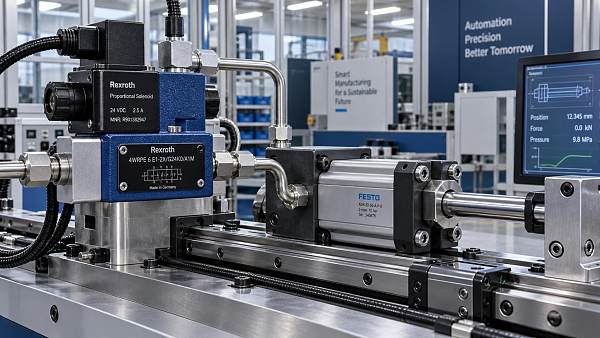
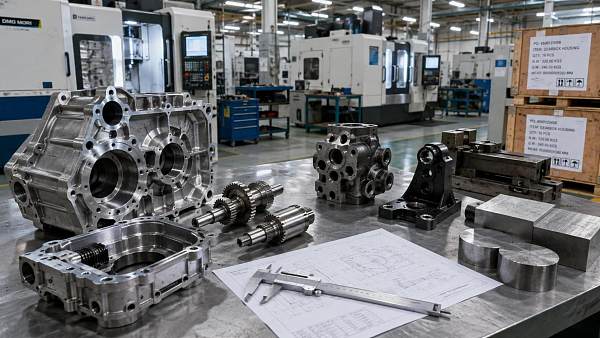
This is particularly relevant in complex industrial ecosystems, where the convergence of material science and intelligent automation shapes both energy performance and asset productivity.
For enterprise leaders, the strategic advantage is not simply lower consumption. It is the ability to institutionalize learning, standardize best practices, and improve performance continuously across the operating network.
How to evaluate ROI without underestimating strategic value
One reason energy programs lose momentum is that companies evaluate them too narrowly. If the business case only counts utility savings, leadership may overlook broader operating and financial benefits.
A stronger ROI model should include direct energy reduction, maintenance savings, lower downtime risk, improved asset life, and avoided costs linked to compliance or carbon exposure.
It should also account for production stability. Better controls and predictive maintenance often improve process consistency, which can reduce scrap, rework, and quality deviations.
In capital planning, it helps to categorize opportunities by time horizon. Quick wins may pay back in less than eighteen months, while digital infrastructure may support multi-year gains across many sites.
Decision-makers should also consider resilience value. Facilities with better energy management are generally better positioned to handle price volatility, grid constraints, and operational disruptions.
In procurement-heavy sectors, sustainability performance may influence customer retention and market access. That can make industrial sustainability practices commercially relevant beyond internal cost reduction.
What implementation mistakes commonly weaken results
Many organizations do not fail because the idea is wrong. They fail because they treat energy efficiency as a side initiative instead of integrating it into mainstream operating management.
The first mistake is weak baseline measurement. If energy use is not normalized for production volume, product mix, and weather conditions, teams may misread results and lose credibility.
The second mistake is isolated ownership. Sustainability teams may set goals, but plant leaders, engineers, and finance teams need shared accountability for project selection and execution.
The third mistake is focusing only on hardware. New equipment can help, but without operator training, maintenance discipline, and control logic optimization, savings often erode over time.
The fourth mistake is poor replication. A pilot may perform well in one facility, yet fail elsewhere because standards, data definitions, and change-management processes were never formalized.
Finally, some companies pursue too many initiatives at once. A staged roadmap generally works better than a broad program that strains capital, talent, and operational attention.
A practical roadmap for enterprise leaders
For most organizations, the best starting point is an energy waste assessment tied directly to business priorities. Focus first on cost concentration, operational criticality, and implementation feasibility.
Step one is to establish a credible baseline. Map major energy consumers, identify waste hotspots, and normalize performance data so site comparisons are fair and useful.
Step two is to build a ranked opportunity portfolio. Separate no-regret actions, moderate-capex upgrades, and strategic digital initiatives, then assign expected savings and ownership.
Step three is to launch a limited set of high-confidence pilots. Choose sites with strong operational leadership, available data, and enough scale to prove meaningful business impact.
Step four is to define enterprise standards. Document technical specifications, KPI logic, approval workflows, and training requirements so successful interventions can be repeated consistently.
Step five is to embed governance. Link plant targets, budget decisions, and executive reviews to measurable energy performance so improvement becomes part of routine management.
This roadmap helps leaders move from fragmented sustainability efforts to a disciplined operating model. It also ensures industrial sustainability practices support both short-term performance and long-term transformation.
Conclusion: cutting energy waste is now a competitiveness decision
Industrial sustainability practices matter because they solve immediate business problems. They reduce operating cost, improve resilience, strengthen ESG performance, and create better visibility into how assets actually perform.
For enterprise decision-makers, the key is to prioritize actions that are measurable, scalable, and operationally realistic. The goal is not sustainability messaging. The goal is stronger industrial performance.
Companies that cut energy waste systematically will be better positioned to compete in a market defined by tighter margins, higher expectations, and more complex global industrial demands.
That makes the next step clear: identify where waste is occurring, build the business case with full operational context, and scale the practices that deliver durable value.
Recommended News
 Sep 19, 2026When can a supply chain LLM reduce time spent finding shipment updates?Supply chain LLMs can cut shipment-update search time by connecting carrier events, ERP data, and documents—giving teams traceable answers and faster exception response.
 Sep 18, 2026How industrial monitoring equipment helps prevent unplanned downtimeIndustrial monitoring equipment helps teams detect early asset issues, prioritize maintenance, and prevent costly unplanned downtime. Explore practical strategies for reliable operations.
 Sep 17, 2026What next-gen harmonic drive research means for robot joint accuracyNext-gen harmonic drive research reveals how backlash, stiffness, thermal drift, and sensing shape robot joint accuracy. Explore smarter validation strategies.
 Sep 16, 2026How Southeast Asian climates affect cylinder seal frictionCylinder seal friction Southeast Asia: learn how humidity, heat, monsoons, and contamination affect motion stability, wear, and seal selection.
 Sep 15, 2026How to size DC gear motors for the required starting torqueGear motors DC sizing made practical: calculate starting torque, account for friction, gravity, inertia and voltage drop, then select a reliable motor with confidence.
 Sep 14, 2026How to verify high purity chemicals compliance before supplier approvalHigh purity chemicals compliance: learn how to verify supplier quality systems, CoAs, traceability, testing, and change control before approval.
 Sep 13, 2026What permits are needed to operate mapping drones in Europe?Mapping drones Europe: discover the permits, EASA categories, airspace approvals, site access, and GDPR checks needed for compliant aerial surveys.
 Sep 12, 2026What lead time should I expect for automatic transmission components? Planetary Gearboxes delivery forecasting for OEM planningWhat lead time should I expect for automatic transmission components? Get dynamic, AI-powered planetary gearbox delivery forecasting—designed for OEMs building next-gen hybrid & commercial powertrains.
 Sep 12, 2026Can polyamide replace metal in load-bearing components? Polymer Pulse structural performance data for 2026 applicationsCan polyamide replace metal in load-bearing components? Discover Polymer Pulse’s 2026 structural data—real-world performance, weight savings, and reliability breakthroughs.
 Sep 12, 2026How to handle a power electronics warranty claim: Harmonic Reducers documentation and escalation pathHow do I handle a power electronics warranty claim? Get a fast, intelligent, evidence-driven resolution for harmonic reducers—no bureaucracy, just precision diagnostics and real-time escalation.
 Sep 12, 2026Which motion control specifications matter most before purchase? Torque Logic selection criteria for automation engineersWhich motion control specifications are most important before purchase? Discover Torque Logic—the 4 non-negotiable, AI-aligned criteria that cut TCO by 27–41% and boost motion system availability to 99.992%.
 Sep 13, 2026Is agentic AI reliable enough for supplier screening? Supply Chain LLM validation framework for procurement teamsIs agentic AI reliable enough for supplier screening? Discover a rigorous LLM validation framework built for procurement teams—grounded in material traceability, regulatory compliance, and real-world operational constraints.
 Sep 14, 2026How to maintain edge AI systems after deployment: Predictive Maint AI operational protocols for field techniciansHow do I maintain edge AI systems after deployment? Discover predictive, physics-aware operational protocols designed for real-world field technicians—sustaining intelligence where silicon meets steel.
 Sep 15, 2026What compliance documents must a bioplastics supplier provide? Bio-Plastics regulatory checklist for procurementWhat compliance documents should a bioplastics supplier provide? Get our actionable regulatory checklist for food, medical & EU-bound applications.
 Sep 16, 2026How to prevent PET film defects during production: Barrier Films process control best practicesHow can I prevent PET film defects during production? Discover physics-driven barrier film process control—thermal precision, dynamic tension management & surface energy optimization.
 Sep 17, 2026Are thermoplastics suitable for long-term outdoor use? Engineering Resins durability assessment in 2026 UV/weather exposureAre thermoplastics suitable for long-term outdoor use? Discover 2026’s engineering resin durability insights — UV/weather resistance ranked, tested & actionable.
 Sep 18, 2026What to do when a servo motor fails during production: A Servo Actuators troubleshooting guide for maintenance teamsWhat should I do if a servo motor fails during production? Get a field-tested, AI-aware troubleshooting guide for maintenance teams—minimize downtime, maximize OEE.
 Sep 12, 2026How to compare wholesale party supplies by minimum order valueCompare wholesale party supplies by minimum order value, freight, SKU flexibility, and stock risk to choose suppliers that protect margins and simplify replenishment.
 Sep 11, 2026How proportional solenoid linearity affects precision motion controlProportional solenoid linearity directly affects precision motion control, valve metering, stability, and calibration. Learn how to evaluate performance for reliable automation.
 Sep 10, 2026When does supplier information platform automation reduce onboarding delays?Supplier information platform automation reduces onboarding delays by streamlining data collection, routing, renewals, and compliance checks—without replacing expert technical review.
 Sep 09, 2026How to size robotic motion systems for AMR payload changesRobotic motion systems for AMR payload changes: learn how to size motors, wheels, gearing, traction, and controls for safer, reliable performance.
 Sep 08, 2026How to perform a cylinder rod buckling calculation for long strokesCylinder rod buckling calculation made practical: learn how to assess effective length, end conditions, rod stiffness, load forces, and safety margins for reliable long-stroke cylinder design.
 Sep 07, 2026How to estimate the cost of industrial mechanical components before orderingIndustrial mechanical components cost: learn how to estimate material, machining, tooling, inspection, logistics, and hidden expenses before ordering. Compare quotes confidently and reduce sourcing risk.
 Sep 07, 2026What Is a Product Standards Database Used For?Product standards database guide: learn how to compare requirements, verify revisions, control specifications, and reduce compliance risks across design, sourcing, and production.