Search News
Industry Portal
Popular Tags
Material Innovation Technologies in Engineering Resins
Author
Time
Click Count
Material innovation technologies are redefining engineering resins for demanding industrial systems. They improve stiffness, heat resistance, dimensional control, automation compatibility, and sustainability in one development path.
In complex manufacturing ecosystems, resin selection is no longer a simple material choice. It now connects product reliability, digital production efficiency, lifecycle risk, and global sourcing stability.
This article explains how material innovation technologies work, where they deliver value, how to compare options, and what implementation factors matter most in advanced industrial environments.
What do material innovation technologies mean in engineering resins?
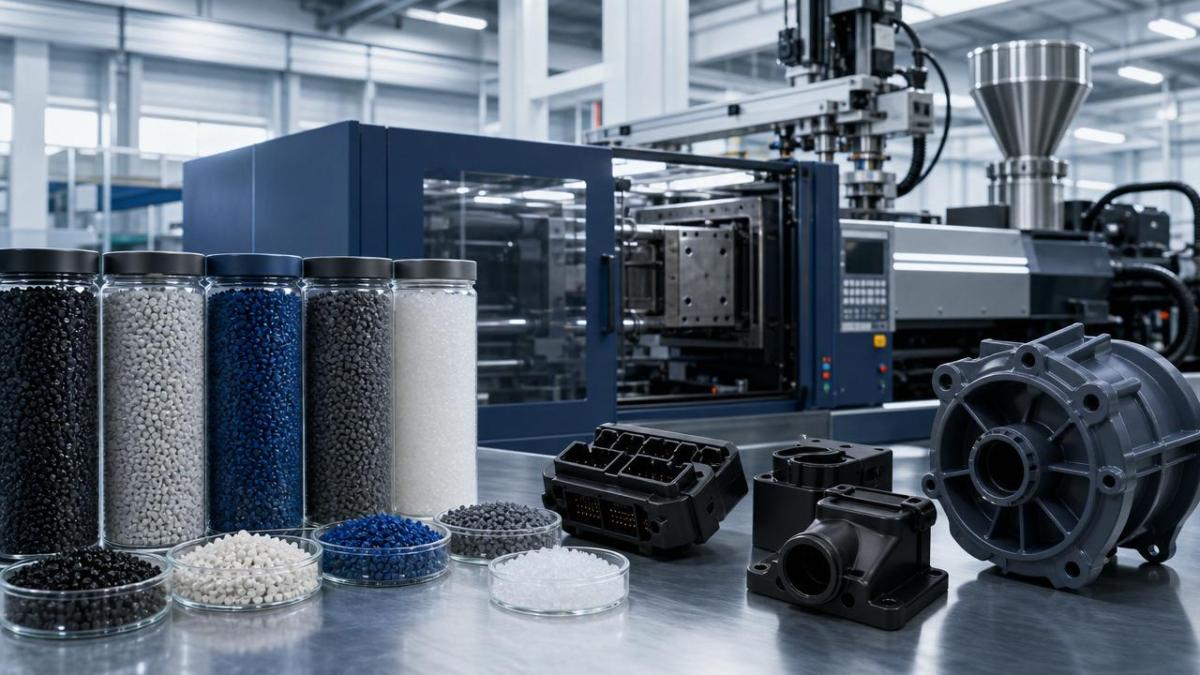
Material innovation technologies refer to new formulation, compounding, reinforcement, recycling, and processing methods used to upgrade resin performance beyond conventional polymer limits.
In engineering resins, these technologies often target a specific performance gap. Common targets include thermal distortion, wear, flame resistance, chemical stability, and lower cycle-time variability.
The most important point is integration. Material innovation technologies do not act alone. They combine polymer chemistry, additives, fillers, digital simulation, and automated processing control.
Typical examples include long-fiber reinforcement, nano-scale fillers, bio-based feedstocks, recycled-content stabilization, low-warpage compounds, and smart additives for conductivity or sensor response.
For industrial benchmarking, the value lies in measurable outputs. Engineers usually assess tensile strength, impact performance, creep resistance, moldability, moisture sensitivity, and total cost consistency.
Which applications benefit most from material innovation technologies?
Material innovation technologies create the strongest impact where engineering resins replace metals, reduce system weight, or support high-throughput automated assembly.
Across the comprehensive industrial sector, high-value use cases appear in electronics housings, connectors, fluid systems, robotics modules, transport components, industrial tools, and precision machine parts.
High-temperature electrical systems
Resins used near power density hotspots need stable dielectric behavior and thermal endurance. Advanced polyamides, PBT blends, PPS, and modified PEEK families often fit these conditions.
Automated mechanical assemblies
In fast assembly lines, processability matters as much as strength. Material innovation technologies support lower shrink variation, cleaner molding windows, and better dimensional repeatability.
Chemical and fluid-contact parts
Pumps, valves, seals, and manifolds require resistance to oils, coolants, solvents, and cleaning agents. New compounds improve barrier performance while keeping acceptable weight and cost.
Sustainable product redesign
When circularity goals rise, material innovation technologies help introduce recycled or bio-based content without sacrificing reliability. That balance is now a major design consideration.
- Parts exposed to heat, vibration, and dimensional stress
- Components requiring stable automated molding behavior
- Assemblies seeking lightweight substitution for metal
- Programs needing traceable sustainability gains
How should engineering teams compare resin innovation options?
The most effective comparison starts with application failure modes, not generic datasheets. A resin that looks strong in lab results may still fail under humidity, fatigue, or tolerance drift.
Material innovation technologies should be screened through five linked dimensions: performance, manufacturability, regulatory fit, supply resilience, and long-term economics.
1. Performance under real service conditions
Check heat aging, creep, wear, impact retention, and chemical exposure. Also evaluate performance variation after sterilization, humidity cycling, or UV exposure when relevant.
2. Processing compatibility
A resin may meet technical targets but create unstable molding. Review melt flow, drying sensitivity, cycle time, gate behavior, weld line strength, and regrind tolerance.
3. Automation and digital control readiness
Advanced factories need material consistency for machine learning models and closed-loop quality systems. Unstable compounds can weaken predictive control and increase inspection burdens.
4. Supply chain continuity
Material innovation technologies are only useful when feedstocks, additives, and certification paths remain available. Single-source dependence raises commercial and operational exposure.
5. Total cost of ownership
Compare scrap, machine downtime, qualification time, warranty risk, and end-of-life value. Unit resin price alone rarely reflects the true cost profile.
How do new resin technologies differ from traditional engineering materials?
Traditional engineering resins often focused on one core property. Newer material innovation technologies aim for multi-property optimization across product design, factory performance, and environmental targets.
For example, legacy glass-filled grades improve stiffness, but may increase warpage or tool wear. New hybrid reinforcement strategies seek stiffness while managing surface quality and dimensional precision.
Conventional compounds can also struggle with data-driven manufacturing. Batch variation, moisture uptake, or narrow processing windows reduce the value of automated quality systems.
Modern material innovation technologies increasingly support simulation-led design. Better rheological predictability helps mold flow analysis, digital twins, and process optimization become more reliable.
- Traditional grades: property-specific improvement
- Innovative grades: system-level performance balancing
- Traditional selection: datasheet-driven decisions
- Innovative selection: benchmark and lifecycle-driven decisions
What risks and misconceptions appear during implementation?
A frequent mistake is assuming every advanced resin is automatically better. Material innovation technologies solve targeted problems, but may introduce trade-offs in tooling, drying, cost, or recyclability.
Another misconception involves sustainability claims. Recycled or bio-based content can be valuable, but performance consistency and traceability must still be verified under real industrial conditions.
Qualification timelines are also underestimated. Switching to a new resin may require tooling adjustments, process retuning, regulatory updates, and extended validation cycles.
Material innovation technologies can also fail when cross-functional data is missing. Resin decisions should connect design, molding, testing, maintenance, and supply intelligence from the start.
Common warning signs
- Selection based only on brochure performance
- No accelerated aging or chemical resistance testing
- Ignoring moisture control during storage and molding
- No backup source or formulation equivalency plan
- Sustainability targets prioritized without durability checks
What is the best practical roadmap for adopting material innovation technologies?
A practical roadmap starts with a narrow application challenge. Define the dominant stress factors, acceptable tolerances, and the specific result needed from material innovation technologies.
Next, build a short list of candidate resins using benchmark data, processing records, and supply visibility. This creates a stronger foundation than relying on marketing claims.
Then move through staged validation. Begin with lab screening, continue with prototype molding, and finish with line-level trials under realistic automation and inspection conditions.
Finally, document a control plan. Include drying parameters, molding windows, traceability rules, and source-approval criteria. This turns material innovation technologies into repeatable operational value.
Material innovation technologies are most valuable when evaluated as part of a full industrial system. The right resin improves product function, process stability, and resilience at the same time.
For stronger outcomes, compare candidate materials against actual service loads, automation demands, and supply continuity. That approach reduces surprises and supports scalable adoption.
If the next step involves benchmarking engineering resins, begin with a structured requirement map and pilot validation plan. That turns material innovation technologies into measurable industrial advantage.
Recommended News
 Sep 19, 2026When can a supply chain LLM reduce time spent finding shipment updates?Supply chain LLMs can cut shipment-update search time by connecting carrier events, ERP data, and documents—giving teams traceable answers and faster exception response.
 Sep 18, 2026How industrial monitoring equipment helps prevent unplanned downtimeIndustrial monitoring equipment helps teams detect early asset issues, prioritize maintenance, and prevent costly unplanned downtime. Explore practical strategies for reliable operations.
 Sep 17, 2026What next-gen harmonic drive research means for robot joint accuracyNext-gen harmonic drive research reveals how backlash, stiffness, thermal drift, and sensing shape robot joint accuracy. Explore smarter validation strategies.
 Sep 16, 2026How Southeast Asian climates affect cylinder seal frictionCylinder seal friction Southeast Asia: learn how humidity, heat, monsoons, and contamination affect motion stability, wear, and seal selection.
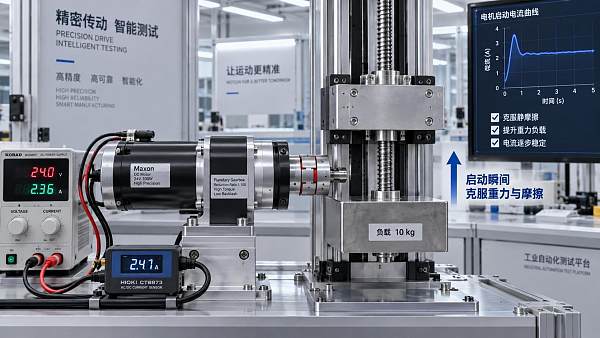
 Sep 15, 2026How to size DC gear motors for the required starting torqueGear motors DC sizing made practical: calculate starting torque, account for friction, gravity, inertia and voltage drop, then select a reliable motor with confidence.
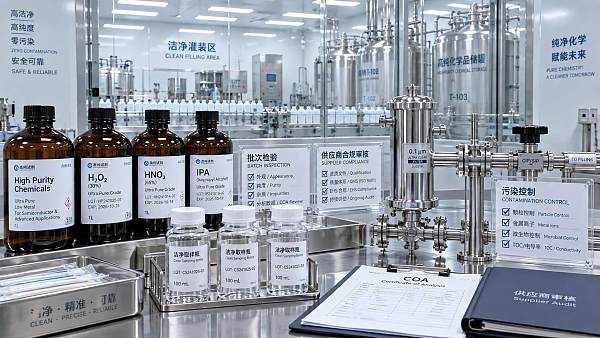
 Sep 14, 2026How to verify high purity chemicals compliance before supplier approvalHigh purity chemicals compliance: learn how to verify supplier quality systems, CoAs, traceability, testing, and change control before approval.
 Sep 13, 2026What permits are needed to operate mapping drones in Europe?Mapping drones Europe: discover the permits, EASA categories, airspace approvals, site access, and GDPR checks needed for compliant aerial surveys.
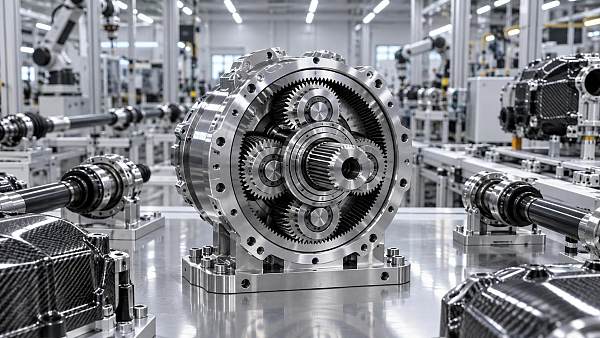
 Sep 12, 2026What lead time should I expect for automatic transmission components? Planetary Gearboxes delivery forecasting for OEM planningWhat lead time should I expect for automatic transmission components? Get dynamic, AI-powered planetary gearbox delivery forecasting—designed for OEMs building next-gen hybrid & commercial powertrains.
 Sep 12, 2026Can polyamide replace metal in load-bearing components? Polymer Pulse structural performance data for 2026 applicationsCan polyamide replace metal in load-bearing components? Discover Polymer Pulse’s 2026 structural data—real-world performance, weight savings, and reliability breakthroughs.
 Sep 12, 2026How to handle a power electronics warranty claim: Harmonic Reducers documentation and escalation pathHow do I handle a power electronics warranty claim? Get a fast, intelligent, evidence-driven resolution for harmonic reducers—no bureaucracy, just precision diagnostics and real-time escalation.
 Sep 12, 2026Which motion control specifications matter most before purchase? Torque Logic selection criteria for automation engineersWhich motion control specifications are most important before purchase? Discover Torque Logic—the 4 non-negotiable, AI-aligned criteria that cut TCO by 27–41% and boost motion system availability to 99.992%.
 Sep 13, 2026Is agentic AI reliable enough for supplier screening? Supply Chain LLM validation framework for procurement teamsIs agentic AI reliable enough for supplier screening? Discover a rigorous LLM validation framework built for procurement teams—grounded in material traceability, regulatory compliance, and real-world operational constraints.
 Sep 14, 2026How to maintain edge AI systems after deployment: Predictive Maint AI operational protocols for field techniciansHow do I maintain edge AI systems after deployment? Discover predictive, physics-aware operational protocols designed for real-world field technicians—sustaining intelligence where silicon meets steel.
 Sep 15, 2026What compliance documents must a bioplastics supplier provide? Bio-Plastics regulatory checklist for procurementWhat compliance documents should a bioplastics supplier provide? Get our actionable regulatory checklist for food, medical & EU-bound applications.
 Sep 16, 2026How to prevent PET film defects during production: Barrier Films process control best practicesHow can I prevent PET film defects during production? Discover physics-driven barrier film process control—thermal precision, dynamic tension management & surface energy optimization.
 Sep 17, 2026Are thermoplastics suitable for long-term outdoor use? Engineering Resins durability assessment in 2026 UV/weather exposureAre thermoplastics suitable for long-term outdoor use? Discover 2026’s engineering resin durability insights — UV/weather resistance ranked, tested & actionable.
 Sep 18, 2026What to do when a servo motor fails during production: A Servo Actuators troubleshooting guide for maintenance teamsWhat should I do if a servo motor fails during production? Get a field-tested, AI-aware troubleshooting guide for maintenance teams—minimize downtime, maximize OEE.
 Sep 12, 2026How to compare wholesale party supplies by minimum order valueCompare wholesale party supplies by minimum order value, freight, SKU flexibility, and stock risk to choose suppliers that protect margins and simplify replenishment.
 Sep 11, 2026How proportional solenoid linearity affects precision motion controlProportional solenoid linearity directly affects precision motion control, valve metering, stability, and calibration. Learn how to evaluate performance for reliable automation.
 Sep 10, 2026When does supplier information platform automation reduce onboarding delays?Supplier information platform automation reduces onboarding delays by streamlining data collection, routing, renewals, and compliance checks—without replacing expert technical review.
 Sep 09, 2026How to size robotic motion systems for AMR payload changesRobotic motion systems for AMR payload changes: learn how to size motors, wheels, gearing, traction, and controls for safer, reliable performance.
 Sep 08, 2026How to perform a cylinder rod buckling calculation for long strokesCylinder rod buckling calculation made practical: learn how to assess effective length, end conditions, rod stiffness, load forces, and safety margins for reliable long-stroke cylinder design.
 Sep 07, 2026How to estimate the cost of industrial mechanical components before orderingIndustrial mechanical components cost: learn how to estimate material, machining, tooling, inspection, logistics, and hidden expenses before ordering. Compare quotes confidently and reduce sourcing risk.
 Sep 07, 2026What Is a Product Standards Database Used For?Product standards database guide: learn how to compare requirements, verify revisions, control specifications, and reduce compliance risks across design, sourcing, and production.