Search News
Industry Portal
Popular Tags
Industrial Sustainability Strategies That Lower Compliance Risk

Author
Time
Click Count
For quality control and safety leaders, industrial sustainability strategies are no longer just about meeting environmental goals—they are essential for reducing compliance risk, improving traceability, and strengthening operational resilience.
In complex industrial environments, the right approach helps align material performance, process safety, and regulatory readiness.
That shift matters across sectors, from advanced materials and electronics to heavy equipment, packaging, chemicals, and automated production systems.
Today, industrial sustainability strategies increasingly serve as a risk-control framework.
They connect environmental performance with data integrity, supplier verification, safer process design, and faster response to audits or disruptions.
Compliance risk is being reshaped by broader sustainability expectations

A major trend is clear: compliance is no longer limited to emissions permits or waste paperwork.
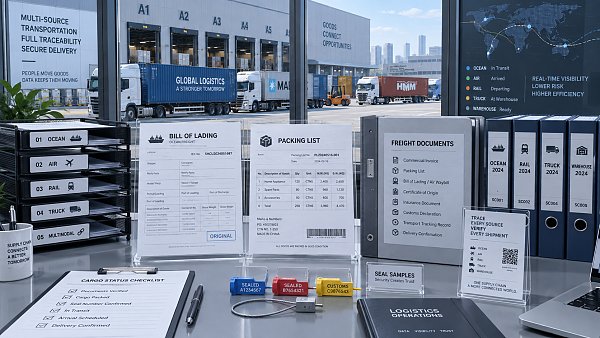
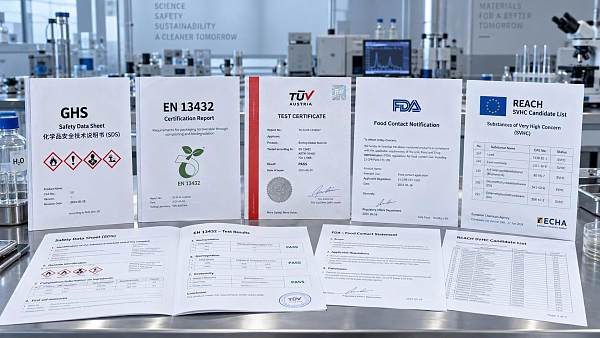
Regulatory exposure now extends into raw material origin, hazardous substance disclosure, energy intensity, worker safety, and digital traceability.
This change affects mixed industrial ecosystems where multiple standards overlap.
A single nonconforming input can trigger quality failures, delayed shipments, reporting gaps, and reputational damage.
As a result, industrial sustainability strategies are moving from separate ESG programs into core operating systems.
The strongest organizations treat sustainability data like quality data: measurable, auditable, version-controlled, and linked to decisions.
Several signals show why industrial sustainability strategies now influence risk outcomes
The pressure comes from regulation, customer expectations, insurance scrutiny, and operational volatility.
Together, these drivers are making industrial sustainability strategies a practical requirement rather than a branding exercise.
Why the trend is accelerating
- Global standards increasingly require auditable environmental and product information.
- Industrial buyers expect documented proof, not marketing claims.
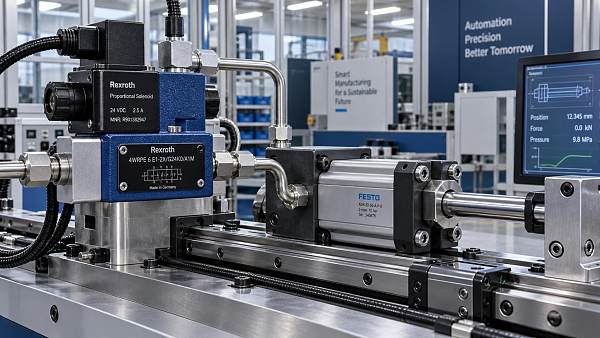
- Automation platforms make real-time monitoring more feasible.
- Disruptions expose weak supplier controls and poor data governance.
- Insurance and legal review now examine operational sustainability practices more closely.
The biggest impact appears where materials, processes, and records intersect
In the past, sustainability teams could work separately from quality, engineering, and EHS functions.
That model is becoming ineffective.
Compliance failures often emerge where technical specifications, shop-floor execution, and supplier declarations do not match.
Industrial sustainability strategies help close those gaps by creating one operating logic across product lifecycle stages.
Effects across core business links
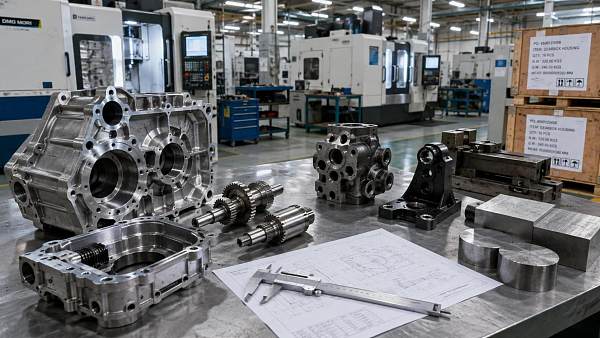
- Material selection: Lower-impact inputs must still meet mechanical, thermal, and chemical performance requirements.
- Supplier approval: Qualification now depends on disclosure quality, process controls, and response speed during verification.
- Production control: Energy, scrap, water use, and emissions increasingly signal process instability.
- Product documentation: Digital records must support declarations, certifications, and customer questionnaires.
- Incident response: Better traceability shortens root-cause analysis and limits the spread of corrective actions.
This is why mature industrial sustainability strategies create value beyond environmental reporting.
They reduce ambiguity, improve evidence quality, and strengthen cross-functional accountability.
Industrial sustainability strategies work best when built around verifiable controls
Many organizations still focus on goals before controls.
A lower-risk approach starts with what can be checked, traced, and improved consistently.
Priority areas worth close attention
- Create a single source of truth for sustainability, quality, and safety records.
- Map regulated substances, recycled content, and critical material dependencies by part and supplier.
- Validate substitution decisions through testing, not assumptions.
- Link process efficiency metrics to deviation management and CAPA workflows.
- Standardize evidence packages for customer, auditor, and regulator requests.
- Review data lineage from source entry to final declaration.
- Use benchmarking to compare site performance, not only annual totals.
These actions make industrial sustainability strategies more defensible during audits.
They also support stronger forecasting when rules, supply availability, or customer standards shift.
A practical response framework helps convert sustainability pressure into lower compliance risk
The next step is not to launch more disconnected initiatives.
It is to build a staged response that integrates technical evidence, operational metrics, and governance.
This framework supports industrial sustainability strategies that are operational, measurable, and adaptable.
It also prevents sustainability work from becoming detached from daily plant realities.
The most resilient industrial systems will treat sustainability intelligence as decision infrastructure
Looking ahead, industrial sustainability strategies will become more predictive.
Organizations will rely more on technical benchmarking, digital traceability, and material-performance insight to anticipate compliance stress before it becomes a violation.
That is especially important in global industrial ecosystems where materials, automation, and regulations evolve at different speeds.
Well-designed industrial sustainability strategies make those moving parts easier to manage.
They support stronger evidence, cleaner handoffs, and better trade-off decisions between cost, performance, and risk.
For industrial operations seeking durable compliance performance, the immediate priority is clear.
Review where sustainability data enters critical workflows, identify weak control points, and strengthen verification at the material, process, and supplier level.
A focused assessment of current industrial sustainability strategies can reveal fast improvements in traceability, audit readiness, and long-term resilience.
Recommended News
 Sep 19, 2026When can a supply chain LLM reduce time spent finding shipment updates?Supply chain LLMs can cut shipment-update search time by connecting carrier events, ERP data, and documents—giving teams traceable answers and faster exception response.
 Sep 18, 2026How industrial monitoring equipment helps prevent unplanned downtimeIndustrial monitoring equipment helps teams detect early asset issues, prioritize maintenance, and prevent costly unplanned downtime. Explore practical strategies for reliable operations.
 Sep 17, 2026What next-gen harmonic drive research means for robot joint accuracyNext-gen harmonic drive research reveals how backlash, stiffness, thermal drift, and sensing shape robot joint accuracy. Explore smarter validation strategies.
 Sep 16, 2026How Southeast Asian climates affect cylinder seal frictionCylinder seal friction Southeast Asia: learn how humidity, heat, monsoons, and contamination affect motion stability, wear, and seal selection.
 Sep 15, 2026How to size DC gear motors for the required starting torqueGear motors DC sizing made practical: calculate starting torque, account for friction, gravity, inertia and voltage drop, then select a reliable motor with confidence.
 Sep 14, 2026How to verify high purity chemicals compliance before supplier approvalHigh purity chemicals compliance: learn how to verify supplier quality systems, CoAs, traceability, testing, and change control before approval.
 Sep 13, 2026What permits are needed to operate mapping drones in Europe?Mapping drones Europe: discover the permits, EASA categories, airspace approvals, site access, and GDPR checks needed for compliant aerial surveys.
 Sep 12, 2026What lead time should I expect for automatic transmission components? Planetary Gearboxes delivery forecasting for OEM planningWhat lead time should I expect for automatic transmission components? Get dynamic, AI-powered planetary gearbox delivery forecasting—designed for OEMs building next-gen hybrid & commercial powertrains.
 Sep 12, 2026Can polyamide replace metal in load-bearing components? Polymer Pulse structural performance data for 2026 applicationsCan polyamide replace metal in load-bearing components? Discover Polymer Pulse’s 2026 structural data—real-world performance, weight savings, and reliability breakthroughs.
 Sep 12, 2026How to handle a power electronics warranty claim: Harmonic Reducers documentation and escalation pathHow do I handle a power electronics warranty claim? Get a fast, intelligent, evidence-driven resolution for harmonic reducers—no bureaucracy, just precision diagnostics and real-time escalation.
 Sep 12, 2026Which motion control specifications matter most before purchase? Torque Logic selection criteria for automation engineersWhich motion control specifications are most important before purchase? Discover Torque Logic—the 4 non-negotiable, AI-aligned criteria that cut TCO by 27–41% and boost motion system availability to 99.992%.
 Sep 13, 2026Is agentic AI reliable enough for supplier screening? Supply Chain LLM validation framework for procurement teamsIs agentic AI reliable enough for supplier screening? Discover a rigorous LLM validation framework built for procurement teams—grounded in material traceability, regulatory compliance, and real-world operational constraints.
 Sep 14, 2026How to maintain edge AI systems after deployment: Predictive Maint AI operational protocols for field techniciansHow do I maintain edge AI systems after deployment? Discover predictive, physics-aware operational protocols designed for real-world field technicians—sustaining intelligence where silicon meets steel.
 Sep 15, 2026What compliance documents must a bioplastics supplier provide? Bio-Plastics regulatory checklist for procurementWhat compliance documents should a bioplastics supplier provide? Get our actionable regulatory checklist for food, medical & EU-bound applications.
 Sep 16, 2026How to prevent PET film defects during production: Barrier Films process control best practicesHow can I prevent PET film defects during production? Discover physics-driven barrier film process control—thermal precision, dynamic tension management & surface energy optimization.
 Sep 17, 2026Are thermoplastics suitable for long-term outdoor use? Engineering Resins durability assessment in 2026 UV/weather exposureAre thermoplastics suitable for long-term outdoor use? Discover 2026’s engineering resin durability insights — UV/weather resistance ranked, tested & actionable.
 Sep 18, 2026What to do when a servo motor fails during production: A Servo Actuators troubleshooting guide for maintenance teamsWhat should I do if a servo motor fails during production? Get a field-tested, AI-aware troubleshooting guide for maintenance teams—minimize downtime, maximize OEE.
 Sep 12, 2026How to compare wholesale party supplies by minimum order valueCompare wholesale party supplies by minimum order value, freight, SKU flexibility, and stock risk to choose suppliers that protect margins and simplify replenishment.
 Sep 11, 2026How proportional solenoid linearity affects precision motion controlProportional solenoid linearity directly affects precision motion control, valve metering, stability, and calibration. Learn how to evaluate performance for reliable automation.
 Sep 10, 2026When does supplier information platform automation reduce onboarding delays?Supplier information platform automation reduces onboarding delays by streamlining data collection, routing, renewals, and compliance checks—without replacing expert technical review.
 Sep 09, 2026How to size robotic motion systems for AMR payload changesRobotic motion systems for AMR payload changes: learn how to size motors, wheels, gearing, traction, and controls for safer, reliable performance.
 Sep 08, 2026How to perform a cylinder rod buckling calculation for long strokesCylinder rod buckling calculation made practical: learn how to assess effective length, end conditions, rod stiffness, load forces, and safety margins for reliable long-stroke cylinder design.
 Sep 07, 2026How to estimate the cost of industrial mechanical components before orderingIndustrial mechanical components cost: learn how to estimate material, machining, tooling, inspection, logistics, and hidden expenses before ordering. Compare quotes confidently and reduce sourcing risk.
 Sep 07, 2026What Is a Product Standards Database Used For?Product standards database guide: learn how to compare requirements, verify revisions, control specifications, and reduce compliance risks across design, sourcing, and production.