Search News
Industry Portal
Popular Tags
High-Tech Industrial Development Trends to Watch
Author
Time
Click Count
High-tech industrial development is entering a new phase shaped by vertical AI, sustainable material innovation, and resilient global supply networks. For enterprise decision-makers, the priority is no longer simply tracking innovation headlines. It is identifying which shifts will improve competitiveness, protect margins, strengthen procurement decisions, and reduce long-term operational risk. The most important trends are those that connect advanced materials, intelligent automation, and supply chain resilience into measurable business value.
For leaders evaluating strategic investments, the central question is clear: which technologies are becoming operationally relevant now, and how should they influence capital allocation, sourcing, plant modernization, and partnership strategy? The answer is that high-tech industrial development is moving from experimentation to selective industrial scaling. Companies that build decision frameworks early will be better positioned than those waiting for full market maturity.
Which high-tech industrial development trends matter most to enterprise decision-makers?
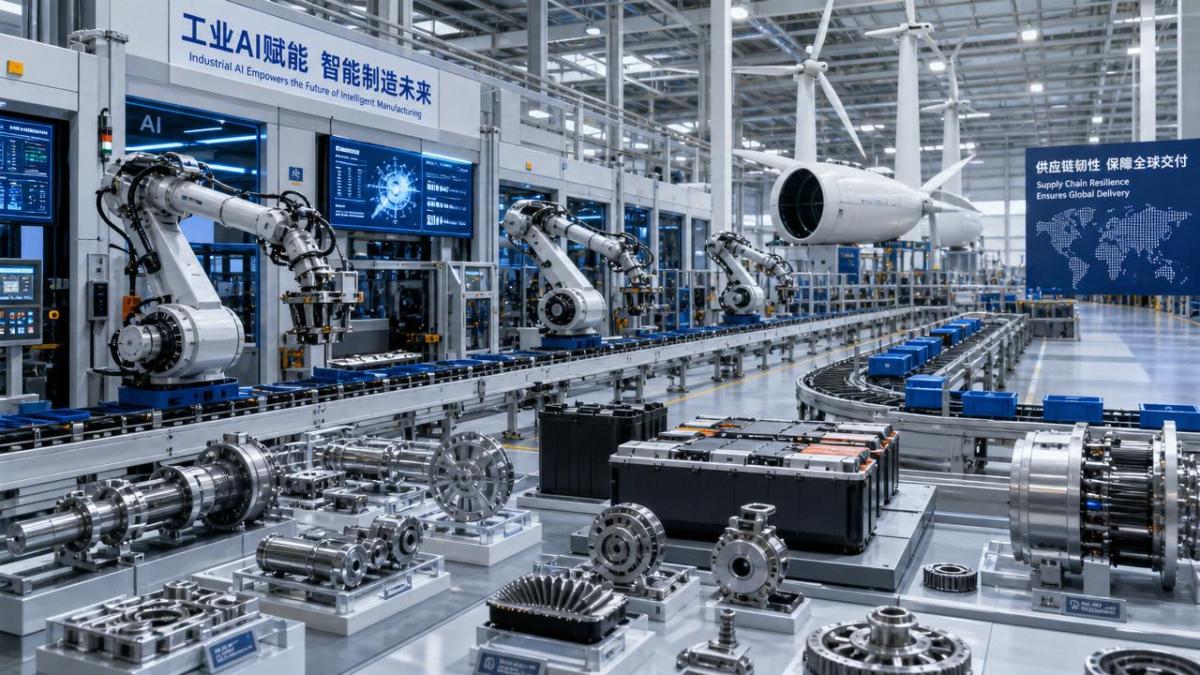
The most relevant trends are not the most discussed trends. Decision-makers should focus on technologies and operating models that change cost structures, supply resilience, speed to market, quality consistency, and compliance performance. In that sense, high-tech industrial development is being defined by industrial AI, advanced materials engineering, digital-physical integration, distributed manufacturing intelligence, and strategic decarbonization.
These trends matter because they influence enterprise fundamentals. They affect how manufacturers qualify suppliers, how procurement teams compare technical alternatives, how operations leaders increase throughput, and how boards assess future readiness. The strategic value lies in convergence. A breakthrough material alone is not enough. An AI platform alone is not enough. The durable advantage comes when physical innovation and digital intelligence reinforce each other.
For senior leaders, this means technology scanning should move beyond isolated categories. Instead of asking whether AI, robotics, or new materials are important in abstract terms, a better question is where combined adoption can create defensible value in a specific industrial context. That is the practical lens through which current development trends should be evaluated.
Vertical AI is becoming an industrial decision engine, not just a software layer
One of the strongest trends to watch is the rise of vertical AI designed for industrial use cases. Unlike general-purpose AI, vertical AI is trained and structured around domain-specific workflows such as predictive maintenance, quality assurance, process optimization, procurement intelligence, and supply risk monitoring. This is especially relevant in complex manufacturing environments where accuracy, traceability, and integration matter more than novelty.
For enterprise decision-makers, the value of vertical AI comes from its ability to improve decisions across the asset lifecycle. In procurement, it can compare suppliers using technical and commercial variables that human teams often review too slowly. In operations, it can detect process drift before defects escalate. In planning, it can help teams model capacity, downtime, and materials exposure with greater confidence.
The key shift is that AI is moving closer to core industrial judgment. It is no longer only automating routine office tasks. It is increasingly supporting choices that affect yield, supplier qualification, maintenance intervals, and energy consumption. That makes governance critical. Companies will need clear rules for data quality, model validation, human oversight, and cybersecurity before scaling these systems across plants or supply networks.
Leaders should also distinguish between pilot-friendly AI and enterprise-grade AI. The former can demonstrate promise in a narrow environment. The latter must integrate with operational technology, ERP systems, MES platforms, engineering workflows, and compliance requirements. In high-tech industrial development, the winners will be organizations that connect AI deployment to measurable operational and sourcing outcomes.
Advanced materials are reshaping competitiveness through performance and sustainability
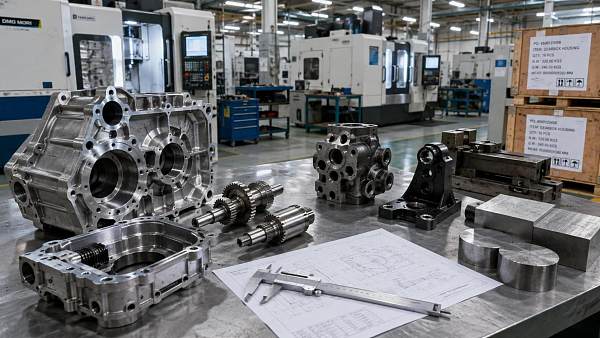
Another major force is the acceleration of advanced materials innovation. High-performance composites, engineered ceramics, specialty alloys, smart coatings, lightweight structures, and recyclable material platforms are increasingly central to industrial competitiveness. These materials are not just technical upgrades. They can change product reliability, maintenance cycles, weight efficiency, energy consumption, and regulatory positioning.
For decision-makers, advanced materials matter most when they solve multiple business challenges at once. A new material may reduce component weight while improving durability. Another may enable higher thermal resistance and lower failure rates. A recyclable alternative may support sustainability targets while reducing exposure to future regulatory costs. The business case strengthens when one materials decision improves performance, compliance, and total lifecycle economics together.
This is where the economy of atoms becomes strategically important. As industrial sectors face pressure to reduce waste, emissions, and resource intensity, material selection becomes a board-level issue rather than a purely engineering choice. Procurement directors and product leaders must increasingly assess raw material criticality, substitution risk, recyclability, embodied carbon, and long-term availability alongside technical specifications.
Companies that build stronger material intelligence capabilities will have an advantage. That means maintaining access to benchmarking data, qualification frameworks, supplier transparency, and cross-functional review between R&D, sourcing, operations, and sustainability teams. In the next phase of high-tech industrial development, advanced materials will often be the hidden source of cost control and differentiation.
Intelligent automation is shifting from labor substitution to system resilience
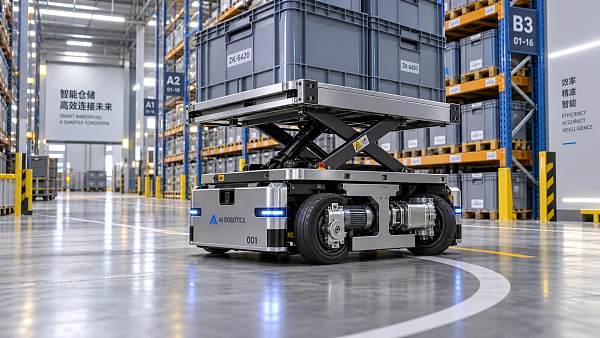
Automation remains central, but the strategic narrative is changing. The next wave of intelligent automation is not only about reducing manual labor. It is about making industrial systems more adaptive, consistent, and resilient under conditions of volatility. Robotics, machine vision, autonomous handling, adaptive control systems, and AI-assisted inspection are now being evaluated as tools for stability as much as productivity.
For enterprise leaders, this reframes investment logic. A traditional automation case may focus on labor savings and cycle time. A modern case should also include quality predictability, safety improvement, workforce flexibility, reduced rework, and continuity during labor shortages or supplier disruptions. In uncertain environments, resilience has measurable economic value.
Intelligent automation is also becoming more modular. Smaller-scale deployments can target bottlenecks without requiring full plant redesign. This lowers adoption barriers for companies that want practical wins before major transformation. It also supports phased modernization strategies, where leaders can prioritize lines or facilities with the strongest return potential.
The challenge is avoiding fragmented automation. When robotics, sensors, software, and analytics are procured in isolation, companies often create islands of efficiency rather than enterprise-level capability. Decision-makers should therefore assess automation vendors and solutions based on interoperability, maintainability, workforce training needs, and compatibility with future digital infrastructure.
Supply chain resilience is becoming a technology-enabled competitive capability
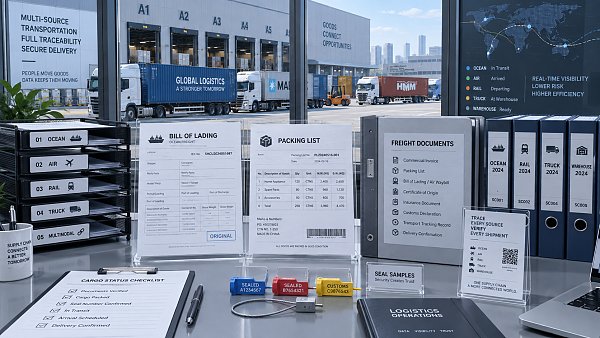
Recent disruptions have changed how industrial leaders define supply chain strength. Cost efficiency alone is no longer sufficient. High-tech industrial development increasingly depends on resilient sourcing models supported by data visibility, scenario planning, and supplier intelligence. The companies best positioned for the future will be those that can detect vulnerability early and respond without severe operational disruption.
This trend has direct implications for procurement strategy. Leaders need better visibility into multi-tier suppliers, materials concentration risk, logistics dependencies, geopolitical exposure, and technical substitutability. Technology platforms can help, but resilience still depends on disciplined governance. Critical questions include whether alternative suppliers are prequalified, whether strategic components have validated substitutions, and whether contractual structures support agility during market shocks.
Digital twins and supply network simulations are becoming more useful in this context. When properly deployed, they allow teams to test scenarios before disruption occurs. For example, a company can model the effect of a specialty material shortage, a regional shutdown, or a transport bottleneck and identify where inventory, sourcing, or process changes would have the highest impact.
For enterprise decision-makers, the strategic lesson is simple: resilience should be designed, not improvised. High-tech industrial development now rewards organizations that combine technical supplier benchmarking with digital monitoring and contingency planning. This is particularly important in sectors where advanced inputs have long qualification cycles or limited global supply.
Industrial decarbonization is moving from compliance pressure to investment criterion
Sustainability is no longer a peripheral theme in industrial strategy. It is becoming a filter through which customers, regulators, investors, and procurement teams evaluate industrial capabilities. As a result, industrial decarbonization is emerging as a core trend within high-tech industrial development, especially where energy-intensive production, material innovation, and global sourcing intersect.
For business leaders, the practical issue is not whether decarbonization matters, but how it affects competitiveness. Lower-carbon processes can improve customer access in regulated markets. Cleaner materials can support premium positioning. Better energy efficiency can protect margins against cost volatility. More transparent environmental data can strengthen supplier credibility in complex procurement cycles.
The strongest opportunities often come from targeted initiatives rather than broad declarations. Examples include process electrification, waste heat recovery, material substitution, closed-loop recycling, and AI-assisted energy optimization. These measures differ by sector, but the investment logic is similar: reduce resource intensity while preserving or improving industrial performance.
Decision-makers should avoid treating sustainability claims as standalone signals of value. What matters is operational proof. The most credible industrial partners will be those able to show how environmental improvement aligns with throughput, reliability, cost discipline, and product performance. In the coming years, decarbonization maturity will increasingly influence supplier selection and strategic partnerships.
How should leaders evaluate where to invest first?
The volume of innovation can make prioritization difficult, especially for diversified enterprises. A useful approach is to evaluate each trend against five criteria: strategic relevance, operational feasibility, time to value, integration complexity, and resilience impact. This helps distinguish high-potential initiatives from technologies that are interesting but premature for a given organization.
Strategic relevance asks whether the technology supports a core business objective such as quality leadership, cost reduction, supply assurance, sustainability compliance, or faster commercialization. Operational feasibility tests whether the organization has the data, talent, supplier support, and infrastructure required to implement it. Time to value helps leaders sequence initiatives rather than overloading the organization with parallel transformation efforts.
Integration complexity is especially important in industrial environments. A promising solution may create more disruption than benefit if it cannot connect with plant systems, engineering processes, or sourcing workflows. Resilience impact, meanwhile, ensures leaders account for downside protection as well as upside potential. Some investments may not deliver the fastest payback but can significantly reduce strategic vulnerability.
In practice, the most effective portfolio often includes a mix of quick wins and foundational capabilities. A company might begin with AI-based quality analytics in one plant, supplier risk intelligence in procurement, and material benchmarking for a critical product line. These initiatives can create near-term value while building the data discipline and cross-functional coordination needed for larger industrial transformation.
What separates companies that benefit from these trends from those that fall behind?
The difference is rarely awareness alone. Most industrial leaders already understand that AI, automation, advanced materials, and sustainability are important. The gap emerges in execution quality. Companies that benefit most are those that translate trend awareness into structured decision processes, technical benchmarking, disciplined vendor evaluation, and cross-functional operating models.
They also treat industrial modernization as a capability-building effort rather than a sequence of isolated purchases. That means aligning procurement, engineering, operations, digital teams, and executive leadership around shared priorities. It means defining success metrics in business terms, not just technical milestones. And it means building governance so that innovation scales safely and consistently across sites and product lines.
Another differentiator is ecosystem access. In high-tech industrial development, few organizations can maintain deep expertise across every material, platform, supplier, and automation architecture internally. Companies gain advantage when they tap intelligence networks, benchmarking repositories, and expert partners that reduce uncertainty and improve decision speed.
Ultimately, leaders should focus less on predicting a single winning technology and more on building the organizational ability to evaluate, adopt, and adapt. Industrial advantage increasingly belongs to enterprises that can connect physical innovation with digital intelligence in a disciplined, commercially relevant way.
Conclusion: the next phase of high-tech industrial development will reward selective, integrated action
High-tech industrial development is not defined by technology hype. It is defined by the growing convergence of vertical AI, advanced materials, intelligent automation, resilient supply networks, and industrial decarbonization. For enterprise decision-makers, the opportunity lies in understanding how these trends affect real outcomes: cost, quality, resilience, compliance, and long-term competitiveness.
The most effective response is neither passive observation nor indiscriminate investment. It is selective, integrated action based on technical evidence, operational readiness, and business value. Leaders who build stronger evaluation frameworks now will be better prepared to allocate capital wisely, modernize with confidence, and create durable advantage in a more complex industrial landscape.
As the market evolves, the key question will not be whether high-tech transformation is coming. It is already underway. The real question is which organizations will turn these industrial development trends into a repeatable strategic edge.
Recommended News
 Sep 19, 2026When can a supply chain LLM reduce time spent finding shipment updates?Supply chain LLMs can cut shipment-update search time by connecting carrier events, ERP data, and documents—giving teams traceable answers and faster exception response.
 Sep 18, 2026How industrial monitoring equipment helps prevent unplanned downtimeIndustrial monitoring equipment helps teams detect early asset issues, prioritize maintenance, and prevent costly unplanned downtime. Explore practical strategies for reliable operations.
 Sep 17, 2026What next-gen harmonic drive research means for robot joint accuracyNext-gen harmonic drive research reveals how backlash, stiffness, thermal drift, and sensing shape robot joint accuracy. Explore smarter validation strategies.
 Sep 16, 2026How Southeast Asian climates affect cylinder seal frictionCylinder seal friction Southeast Asia: learn how humidity, heat, monsoons, and contamination affect motion stability, wear, and seal selection.
 Sep 15, 2026How to size DC gear motors for the required starting torqueGear motors DC sizing made practical: calculate starting torque, account for friction, gravity, inertia and voltage drop, then select a reliable motor with confidence.
 Sep 14, 2026How to verify high purity chemicals compliance before supplier approvalHigh purity chemicals compliance: learn how to verify supplier quality systems, CoAs, traceability, testing, and change control before approval.
 Sep 13, 2026What permits are needed to operate mapping drones in Europe?Mapping drones Europe: discover the permits, EASA categories, airspace approvals, site access, and GDPR checks needed for compliant aerial surveys.
 Sep 12, 2026What lead time should I expect for automatic transmission components? Planetary Gearboxes delivery forecasting for OEM planningWhat lead time should I expect for automatic transmission components? Get dynamic, AI-powered planetary gearbox delivery forecasting—designed for OEMs building next-gen hybrid & commercial powertrains.
 Sep 12, 2026Can polyamide replace metal in load-bearing components? Polymer Pulse structural performance data for 2026 applicationsCan polyamide replace metal in load-bearing components? Discover Polymer Pulse’s 2026 structural data—real-world performance, weight savings, and reliability breakthroughs.
 Sep 12, 2026How to handle a power electronics warranty claim: Harmonic Reducers documentation and escalation pathHow do I handle a power electronics warranty claim? Get a fast, intelligent, evidence-driven resolution for harmonic reducers—no bureaucracy, just precision diagnostics and real-time escalation.
 Sep 12, 2026Which motion control specifications matter most before purchase? Torque Logic selection criteria for automation engineersWhich motion control specifications are most important before purchase? Discover Torque Logic—the 4 non-negotiable, AI-aligned criteria that cut TCO by 27–41% and boost motion system availability to 99.992%.
 Sep 13, 2026Is agentic AI reliable enough for supplier screening? Supply Chain LLM validation framework for procurement teamsIs agentic AI reliable enough for supplier screening? Discover a rigorous LLM validation framework built for procurement teams—grounded in material traceability, regulatory compliance, and real-world operational constraints.
 Sep 14, 2026How to maintain edge AI systems after deployment: Predictive Maint AI operational protocols for field techniciansHow do I maintain edge AI systems after deployment? Discover predictive, physics-aware operational protocols designed for real-world field technicians—sustaining intelligence where silicon meets steel.
 Sep 15, 2026What compliance documents must a bioplastics supplier provide? Bio-Plastics regulatory checklist for procurementWhat compliance documents should a bioplastics supplier provide? Get our actionable regulatory checklist for food, medical & EU-bound applications.
 Sep 16, 2026How to prevent PET film defects during production: Barrier Films process control best practicesHow can I prevent PET film defects during production? Discover physics-driven barrier film process control—thermal precision, dynamic tension management & surface energy optimization.
 Sep 17, 2026Are thermoplastics suitable for long-term outdoor use? Engineering Resins durability assessment in 2026 UV/weather exposureAre thermoplastics suitable for long-term outdoor use? Discover 2026’s engineering resin durability insights — UV/weather resistance ranked, tested & actionable.
 Sep 18, 2026What to do when a servo motor fails during production: A Servo Actuators troubleshooting guide for maintenance teamsWhat should I do if a servo motor fails during production? Get a field-tested, AI-aware troubleshooting guide for maintenance teams—minimize downtime, maximize OEE.
 Sep 12, 2026How to compare wholesale party supplies by minimum order valueCompare wholesale party supplies by minimum order value, freight, SKU flexibility, and stock risk to choose suppliers that protect margins and simplify replenishment.
 Sep 11, 2026How proportional solenoid linearity affects precision motion controlProportional solenoid linearity directly affects precision motion control, valve metering, stability, and calibration. Learn how to evaluate performance for reliable automation.
 Sep 10, 2026When does supplier information platform automation reduce onboarding delays?Supplier information platform automation reduces onboarding delays by streamlining data collection, routing, renewals, and compliance checks—without replacing expert technical review.
 Sep 09, 2026How to size robotic motion systems for AMR payload changesRobotic motion systems for AMR payload changes: learn how to size motors, wheels, gearing, traction, and controls for safer, reliable performance.
 Sep 08, 2026How to perform a cylinder rod buckling calculation for long strokesCylinder rod buckling calculation made practical: learn how to assess effective length, end conditions, rod stiffness, load forces, and safety margins for reliable long-stroke cylinder design.
 Sep 07, 2026How to estimate the cost of industrial mechanical components before orderingIndustrial mechanical components cost: learn how to estimate material, machining, tooling, inspection, logistics, and hidden expenses before ordering. Compare quotes confidently and reduce sourcing risk.
 Sep 07, 2026What Is a Product Standards Database Used For?Product standards database guide: learn how to compare requirements, verify revisions, control specifications, and reduce compliance risks across design, sourcing, and production.