Search News
Industry Portal
Popular Tags
What smart materials change in maintenance planning

Author
Time
Click Count
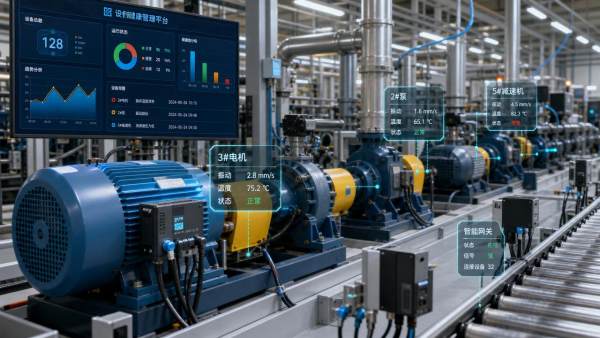
Smart materials are changing maintenance planning in a practical way: they make assets easier to monitor, easier to predict, and often cheaper to maintain over the full lifecycle. Instead of treating maintenance as a schedule-based routine or a reaction to failure, teams can use smart materials to detect stress, temperature shifts, corrosion, fatigue, or deformation in real time. For information researchers and operators, the main value is clear: better maintenance timing, fewer unplanned stoppages, stronger safety control, and more reliable decisions about asset life, spare parts, and operational risk.
That matters even more in modern manufacturing, where AI-driven manufacturing, automation technology, and industrial sustainability are tightly connected. When materials themselves can sense, respond, or report condition, maintenance planning becomes more predictive and more aligned with digital supply chain visibility and supply chain intelligence. The key question is no longer just “What are smart materials?” but “What do they change in the day-to-day maintenance process, and where is the payoff real?”
What smart materials actually change in maintenance planning

Traditional maintenance planning is usually built around three models: fixed schedules, operator inspection, and failure response. Smart materials change all three.
They allow maintenance teams to move from calendar-based assumptions to condition-aware planning. In practical terms, this means:
- Maintenance intervals can be adjusted based on actual asset behavior rather than generic service windows
- Early signs of wear or instability can be captured before visible failure appears
- Maintenance resources can be prioritized toward assets with the highest operational risk
- Inspection effort can be reduced in areas where material-level feedback is reliable
- Lifecycle planning becomes more accurate because degradation is measured, not guessed
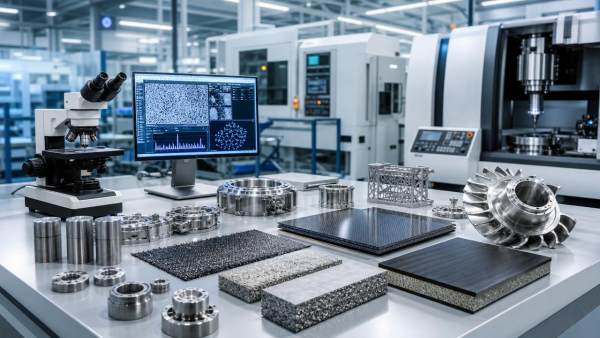
For example, self-sensing composites, piezoelectric materials, shape memory alloys, and coatings with embedded response functions can provide data about strain, vibration, crack formation, thermal stress, or chemical exposure. That data improves maintenance planning because it shortens the gap between asset condition and maintenance action.
In other words, smart materials do not just improve the asset. They improve the planning logic around the asset.
Why this matters to operators and technical decision-makers
For operators, the biggest concern is usually simple: will this reduce disruption without making the job more complex? For technical researchers and industrial evaluators, the concern is broader: is this a meaningful maintenance advantage or just another advanced-materials claim?
The answer depends on application fit, but the maintenance value is strongest in environments where any of the following are true:
- Equipment failure is expensive or safety-critical
- Assets operate under variable loads, heat, pressure, or corrosion
- Inspection access is difficult, slow, or hazardous
- Downtime affects multiple upstream and downstream processes
- Maintenance planning currently relies too heavily on manual checks
In these cases, smart materials can help teams answer questions that standard maintenance systems often struggle with:
- Is the component aging normally or abnormally?
- Should this asset be serviced now, later, or monitored more closely?
- Is the material condition matching the expected duty cycle?
- Can we extend service life safely?
- Which failures are becoming predictable enough to prevent?
This is especially important in high-value industrial environments where procurement, maintenance, operations, and engineering need a shared view of risk. Smart materials support that shared view by producing more direct evidence about asset condition.
Which smart material capabilities have the strongest maintenance impact
Not all smart materials affect maintenance planning in the same way. The most useful categories are the ones that create measurable maintenance signals or reduce intervention demand.
Self-sensing materials
These materials can detect internal changes such as strain, stress, cracking, or fatigue. Their maintenance impact is significant because they help reveal structural issues before conventional inspection would catch them.
Self-healing materials
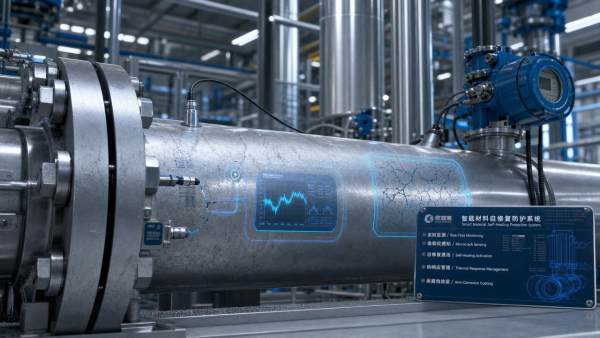
These materials can repair minor damage, such as microcracks or coating defects, either autonomously or under a trigger. In maintenance planning, this does not eliminate maintenance, but it can slow degradation, reduce urgent interventions, and extend inspection windows.
Adaptive or responsive materials
Materials that react to temperature, pressure, electricity, or magnetic fields can help systems maintain performance under changing conditions. Their maintenance value often comes from reducing mechanical stress or improving component stability.
Smart coatings and corrosion-indicating materials
These are particularly valuable in sectors where corrosion drives cost and risk. If a coating can indicate chemical attack, barrier failure, or environmental exposure early, maintenance planning becomes more targeted and less dependent on broad preventive replacement.
For most industrial users, the strongest maintenance case is not “smartness” alone. It is the ability of a material to generate usable signals, reduce uncertainty, and support better intervention timing.
How smart materials improve predictive maintenance and AI-driven manufacturing
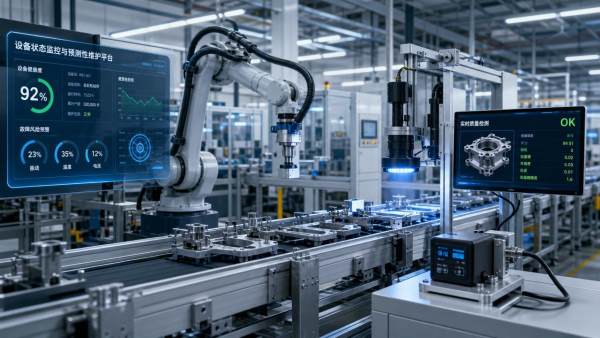
Predictive maintenance depends on data quality. Smart materials improve that quality because they create condition signals closer to the source of degradation. That gives AI models and monitoring systems a better input layer.
In AI-driven manufacturing, this creates several advantages:
- Earlier detection of performance drift
- Better anomaly recognition at the component level
- More accurate remaining useful life estimates
- Faster root-cause analysis when performance changes
- Reduced noise compared with indirect monitoring alone
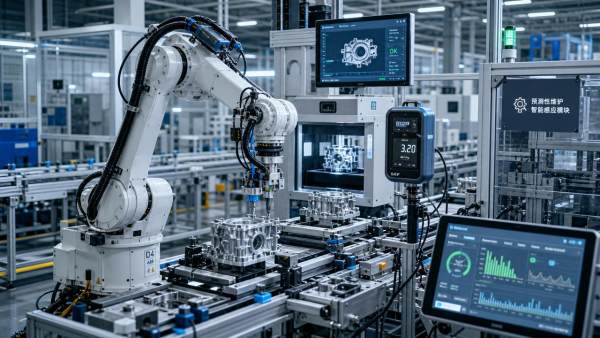
For example, a standard maintenance system may infer bearing or structural issues from vibration trends after degradation has progressed. A smart material architecture may reveal stress concentration or micro-damage earlier, allowing maintenance teams to intervene before the failure pattern becomes severe.
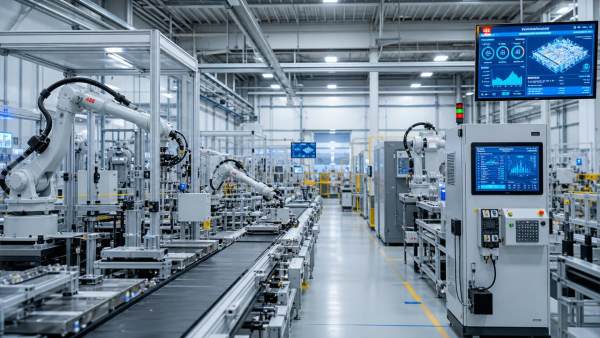
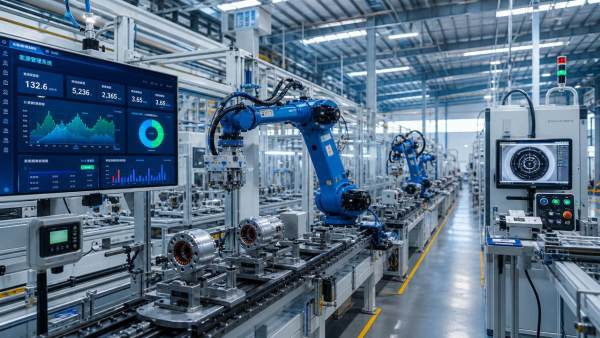
This also supports smarter automation technology. Automated systems perform best when physical assets are not treated as black boxes. Smart materials make the physical layer more transparent, which improves machine decision-making, line stability, and maintenance scheduling.
What changes in workflows, staffing, and maintenance decisions
The shift is not only technical. Maintenance planning workflows also change.
Teams using smart materials often need to adapt in four ways:
- Inspection becomes more selective. Instead of applying the same inspection logic to all assets, teams can focus on exceptions, thresholds, and high-risk signals.
- Maintenance scheduling becomes dynamic. Work orders can be triggered by condition changes, not just by elapsed time.
- Data interpretation becomes a core skill. Operators and planners need clear thresholds, dashboards, and escalation rules.
- Cross-functional coordination becomes more important. Engineering, operations, maintenance, and procurement must agree on response standards, replacement criteria, and material performance expectations.
For operators, this means the best implementations are usually the ones that simplify decisions rather than flood teams with raw data. If smart materials generate signals but no practical maintenance rule, the result is confusion instead of efficiency.
That is why the maintenance benefit depends not just on the material, but on the response framework around it.
How smart materials affect lifecycle cost, risk, and sustainability
Many readers evaluating smart materials want to know whether the maintenance benefit translates into business value. In many cases, it does, but not always through direct labor savings alone.
The biggest value drivers are usually:
- Reduced unplanned downtime
- Lower secondary damage from late detection
- Longer asset or component service life
- Better spare parts planning
- Safer operation in harsh or remote environments
- Less waste from premature replacement
This last point matters for industrial sustainability. In the economy of atoms, material efficiency matters as much as digital efficiency. If a smart material helps a component last longer, heal minor damage, or avoid unnecessary replacement, it supports sustainability goals in a very operational sense.
There is also a supply chain benefit. Better condition visibility improves forecasting for replacement cycles, maintenance shutdowns, and critical parts demand. That strengthens digital supply chain visibility and supply chain intelligence, especially in globally distributed industrial systems where procurement timing and maintenance timing need to align.
Where companies should be cautious before adopting smart materials for maintenance
Smart materials are not automatically the best answer for every maintenance challenge. There are several common adoption risks.
- Signal usefulness may be overestimated. Data is only valuable if it leads to a clearer action.
- Integration can be harder than expected. Material-level sensing must connect with monitoring platforms, maintenance systems, and operator workflows.
- Durability under real industrial conditions must be validated. Lab performance does not always match long-cycle field exposure.
- Cost justification may be weak for low-criticality assets. Not every component needs advanced material intelligence.
- Teams may lack interpretation standards. If thresholds, failure modes, and response rules are unclear, planning quality will not improve.
For this reason, the strongest adoption approach is usually selective rather than broad. Start with assets where failure cost, inspection burden, or environmental stress is high enough to justify smarter material performance.
How to evaluate whether smart materials are worth using in your maintenance strategy
A practical evaluation framework should focus on operational relevance, not hype. Ask the following:
- Which assets create the highest maintenance cost or operational risk?
- What failure modes are currently hard to detect early?
- Would material-level sensing or self-response solve a real planning problem?
- Can the signal be translated into a maintenance decision rule?
- Will the material improve uptime, safety, lifecycle cost, or sustainability enough to justify adoption?
For information researchers, this framework helps separate strategic opportunities from generic innovation language. For operators, it clarifies where smart materials can realistically reduce uncertainty and unnecessary intervention.
The best candidates are usually systems where maintenance timing is difficult, failure consequences are high, and better material intelligence can directly improve action quality.
Conclusion: smart materials change maintenance by improving timing, visibility, and confidence
Smart materials change maintenance planning most where uncertainty is expensive. Their real impact is not simply that materials become more advanced, but that maintenance becomes more evidence-based. Teams can detect problems earlier, schedule work more accurately, reduce avoidable downtime, and make stronger decisions about asset life and replacement.
For industrial organizations moving toward AI-driven manufacturing and more resilient automation technology, smart materials add intelligence at the physical layer. That strengthens predictive maintenance, supports industrial sustainability, and improves the link between asset health and supply chain planning.
The clearest takeaway is this: smart materials are most valuable when they help maintenance teams act earlier, act more precisely, and act with greater confidence. When that happens, maintenance planning shifts from reactive control to strategic performance management.
Recommended News
 May 02, 2026Choosing a Sustainable Materials Supplier for Stable Quality and Lead TimesSustainable materials supplier selection starts with quality and lead-time control. Learn a practical checklist to reduce risk, protect margins, and build a reliable supply network.
 May 02, 2026AI in Manufacturing Applications That Reduce Downtime in Daily OperationsAI in manufacturing applications help maintenance teams detect faults earlier, cut unplanned downtime, improve service response, and keep daily operations running with greater reliability.
 May 02, 2026Material Science Research Trends Shaping Better Industrial MaterialsMaterial science research is transforming industrial materials with smarter, lighter, and more sustainable solutions. Discover key trends driving performance, resilience, and competitive advantage.
 May 02, 2026Automation Technology for Factories: Key Features to Evaluate Before You InvestAutomation technology for factories: compare integration, scalability, flexibility, and lifecycle value before you invest. Learn how to reduce risk and choose the right-fit solution.
 May 02, 2026Manufacturing Technology Innovations Worth Piloting Before Full-Scale RolloutManufacturing technology innovations worth piloting first: discover practical ways to validate ROI, reduce rollout risk, and choose scalable solutions that improve quality, uptime, and efficiency.
 May 02, 2026Smart Materials Applications: Where They Solve Real Reliability ProblemsSmart materials applications help detect fatigue, vibration, heat, and corrosion earlier—learn where they solve real reliability problems and improve industrial safety.
 May 02, 2026AI in Manufacturing Benefits That Matter Most on the Factory FloorAI in manufacturing benefits include less downtime, faster troubleshooting, and stronger quality control. See how factory teams improve output, safety, and daily decision-making.
 May 02, 2026How to Compare Sustainable Materials for Construction Without Costly MistakesSustainable materials for construction: learn how to compare carbon impact, performance, supply resilience, and lifecycle cost to avoid costly mistakes and make smarter procurement decisions.
 May 02, 2026Smart Manufacturing Technology: What Actually Delivers ROI in 2026Smart manufacturing technology in 2026 is all about proven ROI. Discover which use cases boost uptime, quality, resilience, and sustainability across enterprise operations.
 May 02, 2026How Advanced Materials for Industrial Automation Improve Precision and UptimeAdvanced materials for industrial automation improve precision, reduce wear, and boost uptime. Discover how smarter material choices cut maintenance and strengthen reliable, high-output operations.
 May 02, 20262026 Global Trade & Investment Summit in Beijing: AI+Manufacturing FocusAI+Manufacturing takes center stage at the 2026 Global Trade & Investment Summit in Beijing — discover cross-border AI supply chain solutions, LLM white papers & POC matchmaking for global buyers.
 May 02, 2026Global Engineering Resins Index Up 8.2% in April; China Delivery Stability Gains FocusEngineering resins prices surge 8.2% in April—discover how rising costs and China’s 98.3% on-time delivery rate reshape global procurement strategies.
 May 02, 2026FDA Updates Bio-Plastics Food Contact Guidance: Migration Testing Deadline Nov 1, 2026FDA bio-plastics food contact guidance updated: migration testing deadline is Nov 1, 2026. Ensure compliance now to avoid U.S. market access delays.
 May 02, 20262026 China Bike Expo Focuses on Engineering Resins LightweightingEngineering resins take center stage at 2026 China Bike Expo—discover how PA66-GF30 and PPA-LCP are driving lightweighting, cost savings & export efficiency for bicycle OEMs and suppliers.
 May 02, 2026EU REACH SVHC List Adds 247 Substances Effective May 2026EU REACH SVHC List adds 247 substances effective May 2026 — critical for electronic-grade chemical exporters, SDS updates & supply chain compliance.
 May 02, 2026Vietnam Mandates Vietnamese SDS & QR Code for Industrial Catalysts from Oct 2026Vietnam SDS & QR code mandate for industrial catalysts starts Oct 2026 — ensure Vietnamese-language SDS and GS1-compliant origin labels now to avoid customs delays and supply chain disruption.
 May 02, 20262026 World Intelligent Industry Expo: Cargo Drones & Inspection UAVs in TianjinCargo drones & inspection UAVs take center stage at the 2026 World Intelligent Industry Expo in Tianjin — discover export-ready solutions, low-altitude economy innovations, and global procurement opportunities.
 May 02, 2026SABIC Mandates GCC Certification for Functional Coatings in Saudi Arabia from Q3 2026GCC certification mandatory for functional coatings in Saudi Arabia from Q3 2026 — essential for exporters, manufacturers & suppliers. Act now to ensure market access.
") May 02, 2026TÜV Rheinland Updates PV Backsheet Barrier Films Standard (V2.1)TÜV Rheinland PV Backsheet Barrier Films V2.1 now mandates UV-10000h & PID-1500V testing—key for EU, ME & LATAM solar exports. Act now to avoid project rejections.
May 02, 2026TÜV Rheinland Updates PV Backsheet Barrier Films Standard (V2.1)TÜV Rheinland PV Backsheet Barrier Films V2.1 now mandates UV-10000h & PID-1500V testing—key for EU, ME & LATAM solar exports. Act now to avoid project rejections. May 02, 2026US BIS Proposes Export Controls on Harmonic Reducers, Servo ActuatorsUS BIS proposes export controls on harmonic reducers and servo actuators—critical for robotics & embodied AI. Learn impacts, compliance steps, and strategic responses now.
 May 01, 2026AI in Manufacturing: The First Use Cases Worth TestingAI in manufacturing starts with practical pilots like visual inspection, predictive maintenance, and scheduling support. Discover the first use cases worth testing to cut risk, improve throughput, and unlock measurable ROI.
 May 01, 2026Industrial Automation Solutions That Reduce Downtime on Busy Production LinesIndustrial automation solutions reduce downtime on busy production lines with better machine visibility, faster fault response, and smarter operator support for safer, more stable output.
 May 01, 2026Choosing a Smart Materials Manufacturer Without Overlooking Scale-Up RisksSmart materials manufacturer selection goes beyond lab results. Learn how to spot scale-up risks, verify manufacturing maturity, and choose suppliers built for reliable growth.
 May 01, 2026High-Tech Industrial Projects: Where Delays Usually StartHigh-tech industrial projects often face delays long before construction begins. Discover the hidden risks in specs, interfaces, and procurement—and how to protect schedule and performance.