Search News
Industry Portal
Popular Tags
High-Tech Industrial Projects: Where Delays Usually Start
Author
Time
Click Count
In high-tech industrial projects, delays rarely begin on the factory floor—they usually start much earlier, in fragmented specifications, weak cross-functional alignment, and underestimated technical dependencies. For project managers and engineering leads, identifying these hidden triggers early is essential to protecting schedules, budgets, and long-term operational performance.
That reality is becoming more visible across the broader high-tech industrial landscape. Projects are no longer delayed mainly by obvious construction issues or late equipment arrival. Instead, the first signs of trouble increasingly appear during concept design, procurement strategy, digital integration planning, compliance review, and supplier coordination. As manufacturing systems become more automated, more data-driven, and more dependent on advanced materials and precision equipment, the starting point of delay has moved upstream.
For project managers and engineering leaders, this shift matters because it changes how risk should be read. A schedule that looks healthy at the Gantt-chart level may already be exposed if utility assumptions are incomplete, if interface ownership is unclear, or if process requirements have not been translated into procurement-grade technical documents. In a high-tech industrial environment, small early ambiguities often become major downstream disruptions.
Why delays in high-tech industrial projects are starting earlier than before
Several industry changes are pushing delay risk toward the earliest project phases. First, facilities are more interconnected than they used to be. Mechanical systems, process systems, software layers, environmental controls, safety logic, and material handling are now tightly coupled. A change in one area can trigger redesign across multiple disciplines. Second, owners expect faster time-to-production, leaving less margin for iterative clarification. Third, global sourcing has widened supplier options but also increased interface complexity, documentation mismatch, and lead-time uncertainty.
This means a high-tech industrial project can appear to be on schedule while hidden dependencies remain unresolved. Teams may have approved capital budgets, selected major vendors, and launched detailed engineering, yet still lack alignment on cleanroom classes, vibration tolerances, automation protocols, material compatibility, maintenance access, cybersecurity architecture, or validation requirements. These are not minor technical notes. They are schedule-defining conditions.
Another trend is the growing overlap between physical infrastructure and digital performance expectations. In many high-tech industrial developments, stakeholders do not simply want a building that works. They want traceability, energy visibility, predictive maintenance readiness, process stability, and future scalability. When these expectations are discussed late, project teams are forced into redesign, re-quotation, re-coordination, and new approval cycles.
The strongest delay signals now appear in preconstruction and specification stages
The most important trend signal is that delay origins are moving from execution problems to definition problems. In practical terms, this means project risk starts building when requirements are still vague, when user teams and engineering teams use different success criteria, or when procurement packages are released before technical interfaces are fully frozen.
For a high-tech industrial program, this trend suggests that schedule confidence should no longer be judged only by procurement milestones or construction progress. It should also be judged by requirement maturity, interface clarity, digital readiness, and decision traceability.
What is driving this change in the project risk profile
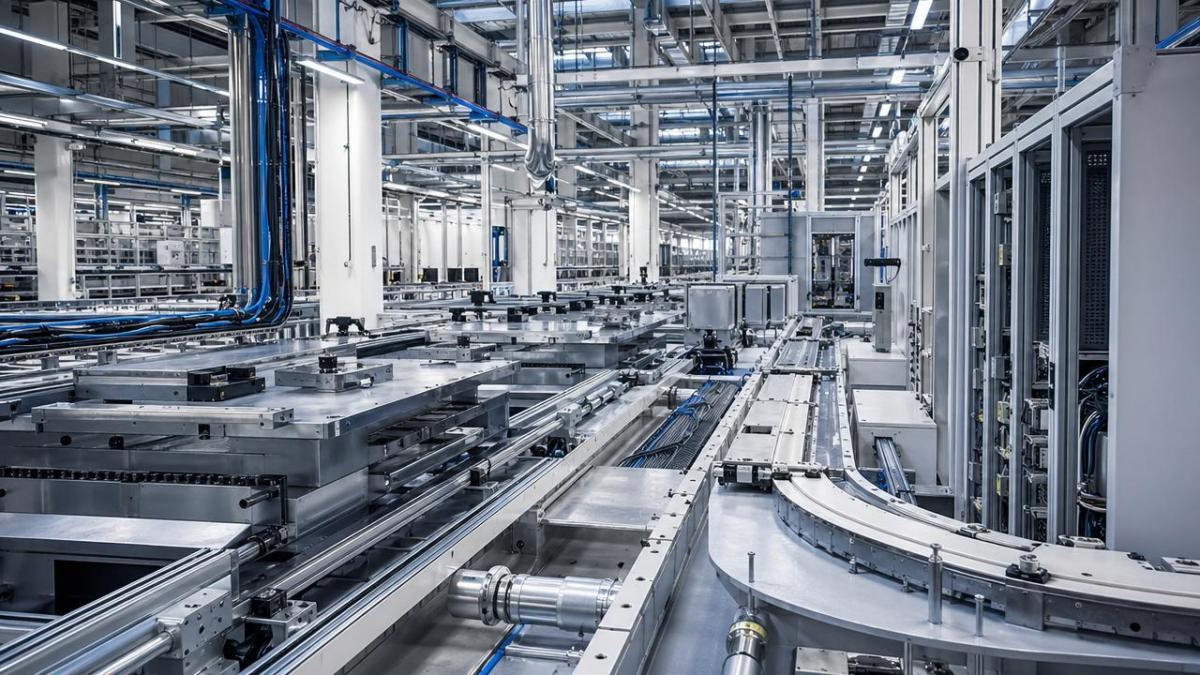
One driver is technology convergence. In advanced plants and industrial campuses, process equipment, robotics, MES layers, utilities, environmental systems, and quality controls are expected to work as a single operating system. That creates more points where assumptions can fail. If one discipline defines performance differently from another, the mismatch may not surface until FAT, SAT, or commissioning.
A second driver is higher regulatory and customer scrutiny. Many high-tech industrial sectors now face stronger expectations around traceability, energy efficiency, emissions, worker safety, cybersecurity, and material performance. These requirements affect design choices early. If they are treated as compliance checks rather than design inputs, teams often discover too late that selected systems do not fully support the needed operating model.
A third driver is supplier ecosystem fragmentation. The global market offers highly specialized vendors, but specialization can also produce scope gaps. One supplier may optimize throughput, another controls integration, another focuses on utility quality, and another owns software interoperability. Without strong owner-side coordination, no single vendor sees the whole system risk. That leaves project managers exposed to integration delays that begin long before installation.
Finally, capital efficiency pressure is changing project behavior. Teams are being asked to accelerate schedules, standardize packages, and lock budgets sooner. These are reasonable goals, but they can encourage premature release of work scopes. In high-tech industrial settings, speed without definition often creates the opposite outcome: slower delivery through repeated correction.
Where project managers should look first for early delay triggers
The first area is specification quality. In many delayed projects, documents are technically complete in appearance but operationally incomplete in substance. They may define equipment capacity but not control philosophy, state utility demand but not tolerance bands, or describe clean conditions but not contamination sources during maintenance. In a high-tech industrial project, that kind of ambiguity invites supplier assumptions, and supplier assumptions rarely align perfectly across the full system.
The second area is cross-functional alignment. Manufacturing, EHS, maintenance, IT, quality, procurement, and engineering may all approve a package for different reasons. But unless they align on critical performance outcomes, approvals can be misleading. A technically accepted solution may still create startup friction if maintainability, data architecture, validation sequencing, or spare strategy were not part of the early discussion.
The third area is interface ownership. One of the most common hidden causes of high-tech industrial delays is the assumption that “someone else” owns the boundary. Typical examples include utility tie-ins, controls handshakes, alarm logic, data mapping, interlock authority, and startup responsibilities between OEMs and system integrators. If interfaces are not named, they are usually neglected until they become urgent.
Who is affected most by this upstream shift in delay risk
The impact is broad, but it is not evenly distributed. Some roles and business functions feel the consequences earlier and more intensely than others.
For organizations operating in the high-tech industrial space, this is also a governance issue. Delays that start early often pass through several departments before they become visible at the executive level. By then, the recovery path is usually expensive.
The market signals worth watching over the next project cycle
A useful trend signal is whether owners are changing how they define readiness. More sophisticated teams are no longer asking only whether design is complete or whether equipment has been ordered. They are asking whether requirements are decision-ready, whether interfaces are owned, whether supplier assumptions are documented, and whether digital and operational expectations are embedded before tendering.
Another signal is the rise of technical benchmarking in procurement and design reviews. In high-tech industrial programs, benchmark data is increasingly used to compare not only price and lead time, but also maintainability, utility sensitivity, control architecture compatibility, contamination risks, and upgrade pathways. This reflects a broader shift from buying assets to engineering long-term operating resilience.
A third signal is tighter collaboration between engineering intelligence, supply chain strategy, and project delivery. As project complexity rises, decision quality depends less on isolated expertise and more on integrated visibility. Teams that can connect material science requirements, automation architecture, supplier capability, and lifecycle performance are generally better positioned to prevent schedule erosion before it starts.
What practical actions make sense now
The first recommendation is to treat early assumptions as controlled project objects. Every major high-tech industrial assumption—utilities, environmental performance, controls integration, quality constraints, maintenance philosophy, and expansion logic—should have an owner, a validation point, and a consequence if wrong. This is far more effective than waiting for issues to surface through general coordination meetings.
Second, align procurement timing with requirement maturity. Fast procurement is valuable only when the scope is mature enough to produce compatible bids and workable execution. If critical interfaces remain open, early release often moves uncertainty from planning into claims, variation orders, and startup delay.
Third, use cross-functional review gates that focus on operational reality, not just document status. A package may be “issued” yet still be weak in serviceability, validation sequence, spare parts logic, or digital connectivity. In a high-tech industrial project, these factors strongly influence ramp-up speed and production stability.
Fourth, strengthen interface mapping across suppliers. Every handoff should be explicit: who provides data points, who validates utilities, who owns alarm responses, who confirms installation tolerances, and who signs off on integrated performance. Many delays begin where accountability ends.
A decision framework for judging whether a project is truly at risk
Before assuming that a high-tech industrial project is on track, project leaders should test a few questions. Are the most important technical dependencies visible across teams? Are procurement packages based on stable operating requirements? Have digital and physical systems been reviewed together rather than separately? Are suppliers aligned on boundaries and acceptance criteria? Can operations explain how the asset will perform in normal, upset, and maintenance conditions?
If the answer to several of these questions is unclear, the project may already be carrying hidden delay risk even if the visible schedule still looks acceptable. That is the central shift in today’s high-tech industrial environment: the first delay often begins as a definition gap, not an execution failure.
What to confirm next if your organization wants better schedule resilience
For companies planning or managing high-tech industrial developments, the next step is not simply to push vendors harder or compress construction timelines further. It is to confirm whether the project is being shaped by complete technical intelligence from the start. That includes requirement maturity, supplier fit, interface transparency, operational realism, and lifecycle performance expectations.
If an organization wants to judge how these trends affect its own portfolio, it should focus on a small set of questions: Which assumptions are still unverified? Which interfaces are still ownerless? Which specifications could still be interpreted in multiple ways? Which digital and material performance requirements have not yet been translated into procurement language? In high-tech industrial projects, answering those questions early is often the difference between a controlled launch and a delayed one.
Recommended News
 May 02, 2026Choosing a Sustainable Materials Supplier for Stable Quality and Lead TimesSustainable materials supplier selection starts with quality and lead-time control. Learn a practical checklist to reduce risk, protect margins, and build a reliable supply network.
 May 02, 2026AI in Manufacturing Applications That Reduce Downtime in Daily OperationsAI in manufacturing applications help maintenance teams detect faults earlier, cut unplanned downtime, improve service response, and keep daily operations running with greater reliability.
 May 02, 2026Material Science Research Trends Shaping Better Industrial MaterialsMaterial science research is transforming industrial materials with smarter, lighter, and more sustainable solutions. Discover key trends driving performance, resilience, and competitive advantage.
 May 02, 2026Automation Technology for Factories: Key Features to Evaluate Before You InvestAutomation technology for factories: compare integration, scalability, flexibility, and lifecycle value before you invest. Learn how to reduce risk and choose the right-fit solution.
 May 02, 2026Manufacturing Technology Innovations Worth Piloting Before Full-Scale RolloutManufacturing technology innovations worth piloting first: discover practical ways to validate ROI, reduce rollout risk, and choose scalable solutions that improve quality, uptime, and efficiency.
 May 02, 2026Smart Materials Applications: Where They Solve Real Reliability ProblemsSmart materials applications help detect fatigue, vibration, heat, and corrosion earlier—learn where they solve real reliability problems and improve industrial safety.
 May 02, 2026AI in Manufacturing Benefits That Matter Most on the Factory FloorAI in manufacturing benefits include less downtime, faster troubleshooting, and stronger quality control. See how factory teams improve output, safety, and daily decision-making.
 May 02, 2026How to Compare Sustainable Materials for Construction Without Costly MistakesSustainable materials for construction: learn how to compare carbon impact, performance, supply resilience, and lifecycle cost to avoid costly mistakes and make smarter procurement decisions.
 May 02, 2026Smart Manufacturing Technology: What Actually Delivers ROI in 2026Smart manufacturing technology in 2026 is all about proven ROI. Discover which use cases boost uptime, quality, resilience, and sustainability across enterprise operations.
 May 02, 2026How Advanced Materials for Industrial Automation Improve Precision and UptimeAdvanced materials for industrial automation improve precision, reduce wear, and boost uptime. Discover how smarter material choices cut maintenance and strengthen reliable, high-output operations.
 May 02, 20262026 Global Trade & Investment Summit in Beijing: AI+Manufacturing FocusAI+Manufacturing takes center stage at the 2026 Global Trade & Investment Summit in Beijing — discover cross-border AI supply chain solutions, LLM white papers & POC matchmaking for global buyers.
 May 02, 2026Global Engineering Resins Index Up 8.2% in April; China Delivery Stability Gains FocusEngineering resins prices surge 8.2% in April—discover how rising costs and China’s 98.3% on-time delivery rate reshape global procurement strategies.
 May 02, 2026FDA Updates Bio-Plastics Food Contact Guidance: Migration Testing Deadline Nov 1, 2026FDA bio-plastics food contact guidance updated: migration testing deadline is Nov 1, 2026. Ensure compliance now to avoid U.S. market access delays.
 May 02, 20262026 China Bike Expo Focuses on Engineering Resins LightweightingEngineering resins take center stage at 2026 China Bike Expo—discover how PA66-GF30 and PPA-LCP are driving lightweighting, cost savings & export efficiency for bicycle OEMs and suppliers.
 May 02, 2026EU REACH SVHC List Adds 247 Substances Effective May 2026EU REACH SVHC List adds 247 substances effective May 2026 — critical for electronic-grade chemical exporters, SDS updates & supply chain compliance.
 May 02, 2026Vietnam Mandates Vietnamese SDS & QR Code for Industrial Catalysts from Oct 2026Vietnam SDS & QR code mandate for industrial catalysts starts Oct 2026 — ensure Vietnamese-language SDS and GS1-compliant origin labels now to avoid customs delays and supply chain disruption.
 May 02, 20262026 World Intelligent Industry Expo: Cargo Drones & Inspection UAVs in TianjinCargo drones & inspection UAVs take center stage at the 2026 World Intelligent Industry Expo in Tianjin — discover export-ready solutions, low-altitude economy innovations, and global procurement opportunities.
 May 02, 2026SABIC Mandates GCC Certification for Functional Coatings in Saudi Arabia from Q3 2026GCC certification mandatory for functional coatings in Saudi Arabia from Q3 2026 — essential for exporters, manufacturers & suppliers. Act now to ensure market access.
") May 02, 2026TÜV Rheinland Updates PV Backsheet Barrier Films Standard (V2.1)TÜV Rheinland PV Backsheet Barrier Films V2.1 now mandates UV-10000h & PID-1500V testing—key for EU, ME & LATAM solar exports. Act now to avoid project rejections.
May 02, 2026TÜV Rheinland Updates PV Backsheet Barrier Films Standard (V2.1)TÜV Rheinland PV Backsheet Barrier Films V2.1 now mandates UV-10000h & PID-1500V testing—key for EU, ME & LATAM solar exports. Act now to avoid project rejections. May 02, 2026US BIS Proposes Export Controls on Harmonic Reducers, Servo ActuatorsUS BIS proposes export controls on harmonic reducers and servo actuators—critical for robotics & embodied AI. Learn impacts, compliance steps, and strategic responses now.
 May 01, 2026AI in Manufacturing: The First Use Cases Worth TestingAI in manufacturing starts with practical pilots like visual inspection, predictive maintenance, and scheduling support. Discover the first use cases worth testing to cut risk, improve throughput, and unlock measurable ROI.
 May 01, 2026Industrial Automation Solutions That Reduce Downtime on Busy Production LinesIndustrial automation solutions reduce downtime on busy production lines with better machine visibility, faster fault response, and smarter operator support for safer, more stable output.
 May 01, 2026Choosing a Smart Materials Manufacturer Without Overlooking Scale-Up RisksSmart materials manufacturer selection goes beyond lab results. Learn how to spot scale-up risks, verify manufacturing maturity, and choose suppliers built for reliable growth.
 May 01, 2026High-Tech Industrial Projects: Where Delays Usually StartHigh-tech industrial projects often face delays long before construction begins. Discover the hidden risks in specs, interfaces, and procurement—and how to protect schedule and performance.