Search News
Industry Portal
Popular Tags
Smart Materials Applications: Where They Solve Real Reliability Problems
Author
Time
Click Count
For quality control and safety teams, reliability failures rarely begin as dramatic breakdowns—they start as small material weaknesses that standard systems miss. Smart materials applications are changing that by enabling structures, components, and surfaces to sense stress, adapt to harsh conditions, and reduce risk before defects escalate. This article explores where these materials deliver measurable reliability gains in real industrial environments.
What Smart Materials Applications Mean in an Industrial Reliability Context
In broad terms, smart materials are engineered substances that respond predictably to external stimuli such as heat, pressure, vibration, moisture, electric fields, or chemical exposure. In industrial use, the value is not novelty alone. The practical importance of smart materials applications lies in their ability to improve condition awareness, extend service life, and reduce failure uncertainty in assets that operate under variable loads and difficult environments.
For quality control personnel, this means materials can become part of the inspection system rather than remaining passive parts of a product. For safety managers, it means earlier signals of degradation and more resilient behavior when operational conditions drift outside normal limits. In sectors tied to advanced manufacturing, logistics equipment, energy systems, industrial automation, and high-performance infrastructure, this shift is increasingly relevant because traditional pass/fail inspection methods often detect problems only after damage has already accumulated.
At G-AIE, where material science and intelligent automation converge, smart materials applications are best understood as a bridge between physical performance and actionable industrial intelligence. They support a more resilient operating model by helping organizations monitor, adapt, and verify material behavior under real use conditions instead of relying only on static specifications.
Why Industry Is Paying Closer Attention
Several industrial trends explain the rising interest. First, equipment uptime expectations are increasing while tolerance for unplanned shutdowns is falling. Second, many facilities now run mixed-age assets, where legacy hardware must perform alongside digitally managed systems. Third, environmental exposure is becoming more severe, whether through temperature cycling, humidity variation, corrosive chemicals, fatigue loading, or electrostatic sensitivity. Finally, compliance pressure is growing in areas such as worker safety, product integrity, and traceable quality assurance.
These pressures make conventional materials selection less sufficient on its own. A component may meet strength requirements at installation yet still fail through microcracking, thermal distortion, coating breakdown, or hidden fatigue. Smart materials applications matter because they address these reliability gaps at the material level. Instead of only designing stronger parts, engineers can design parts that reveal stress, recover shape, damp vibration, resist contamination, or regulate heat more effectively.
This is especially important for quality and safety teams because many incident pathways begin long before failure becomes visible. Material-enabled early warning, self-adjustment, or environmental resistance can turn a reactive maintenance model into a preventive one.
A Practical Overview of Major Smart Material Categories
Not all smart materials serve the same reliability function. Some primarily sense change, some respond mechanically, and some protect surfaces or stabilize operating conditions. The table below helps frame the most common industrial categories.
Where Smart Materials Applications Solve Real Reliability Problems
The strongest case for smart materials applications appears where recurring failures are difficult to detect early, expensive to repair, or capable of creating safety exposure. The following scenarios are among the most practical and measurable.
1. Fatigue and Microcrack Detection in Structural Components
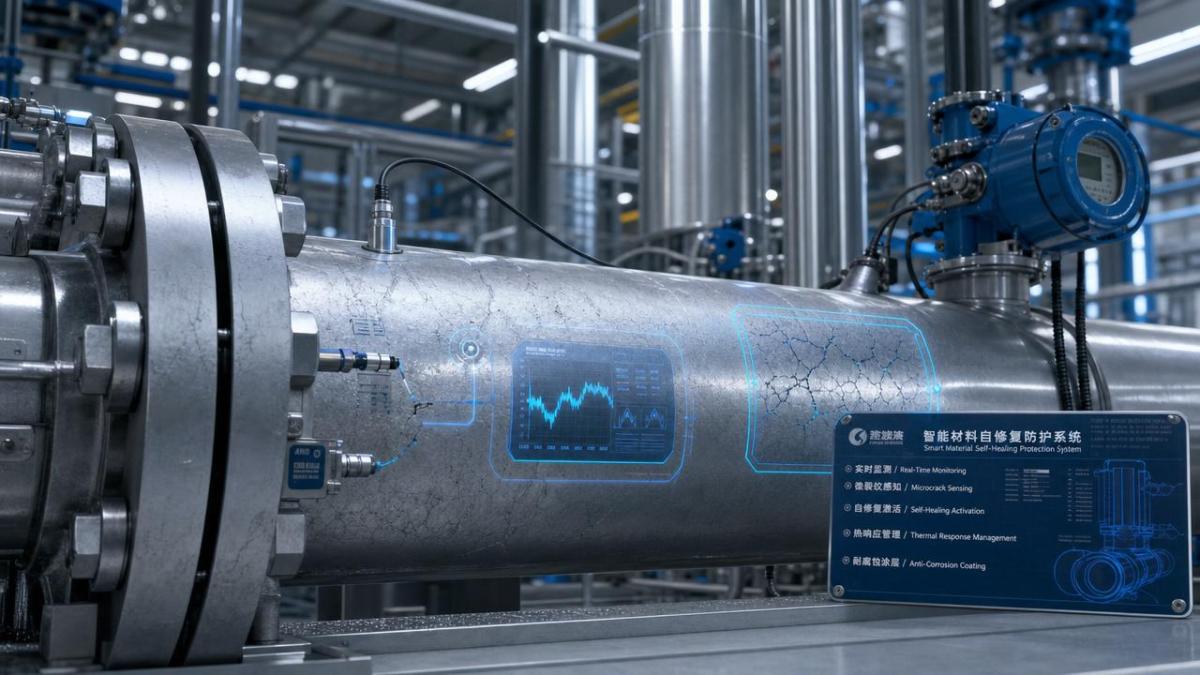
In machine frames, pressure-retaining structures, transportation hardware, and repetitive-motion assemblies, fatigue often starts below visual inspection thresholds. Piezoelectric layers, embedded sensing materials, or stress-indicating coatings can help identify abnormal strain patterns before cracks propagate. For quality teams, this improves root-cause analysis. For safety teams, it reduces the chance that a hidden defect survives until catastrophic failure.
2. Thermal Instability in High-Load or Variable-Temperature Systems
Thermal expansion mismatch is a common cause of seal failure, misalignment, electronic degradation, and bond-line stress. Shape memory materials and thermal-response composites can compensate for dimensional changes, while thermally adaptive interfaces improve stability. In practical terms, smart materials applications here support more consistent tolerances across startup, shutdown, and peak-load cycles.
3. Vibration-Driven Wear in Rotating and Automated Equipment
Excess vibration accelerates bearing damage, fastener loosening, alignment drift, and sensor inaccuracy. Adaptive damping materials can reduce amplitude under changing loads, while piezoelectric sensing elements provide high-resolution feedback for condition monitoring. In automated production lines, this supports both product quality and operator safety because process drift often begins with mechanical instability.
4. Surface Degradation and Corrosion in Harsh Environments
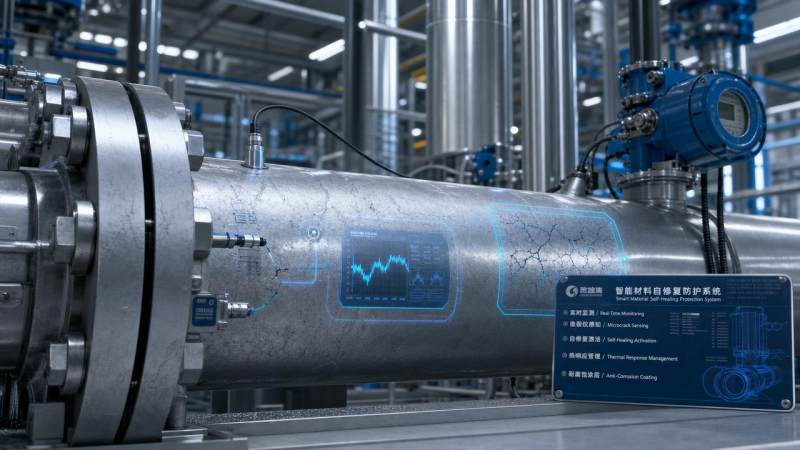
Protective coatings frequently fail in stages: first a minor breach, then moisture ingress, then corrosion spread. Self-healing coatings and barrier systems can delay that sequence by restoring micro-level protection after scratches or stress events. These smart materials applications are particularly valuable where routine manual inspection is difficult, such as enclosed systems, offshore assets, chemical processing equipment, or high-cycle industrial enclosures.
5. Seal Integrity and Leak Prevention
Leak-related reliability issues are often treated as maintenance nuisances until they become contamination, safety, or compliance events. Shape memory alloys, responsive elastomers, and adaptive sealing interfaces can maintain better contact under thermal or pressure fluctuation. This is highly relevant in fluid handling, clean manufacturing, and sensitive process environments where minor leakage can lead to batch rejection or operator exposure.
6. Rapid Visual Verification for Inspection Teams
Not every facility can deploy advanced digital monitoring at every asset point. Stress-sensitive or temperature-sensitive materials offer a useful intermediate step. If a coating, label, or component visibly changes after overload or overheating, inspectors can identify risk faster without complex instrumentation. This is one of the most accessible smart materials applications for broad industrial deployment because it supports frontline decision-making with low interpretation barriers.
Operational Value for Quality Control and Safety Management
For quality control teams, the main value is earlier evidence. Smart materials applications can reveal stress accumulation, heat excursions, vibration abnormalities, or surface damage before these issues become customer defects. This improves incoming material validation, process capability analysis, and field failure investigation. It also supports stronger traceability because failure modes can be tied more directly to actual service conditions.
For safety managers, the value lies in exposure reduction. Materials that self-report, self-adjust, or preserve integrity under variable conditions help lower the chance of leaks, structural compromise, overheating, or uncontrolled vibration. In environments where a single defect can threaten personnel, product safety, or environmental compliance, material intelligence is not simply a design enhancement; it becomes part of risk control strategy.
Across both functions, smart materials applications also help align physical reliability with digital operations. When integrated with industrial data systems, they can enrich maintenance planning, alarm logic, and quality analytics. That fits the larger movement toward vertical AI and asset-informed decision models emphasized in advanced industrial ecosystems.
How to Evaluate Suitability Before Adoption
Despite the benefits, smart materials applications should not be adopted as trend-driven upgrades. Their value depends on whether they address a defined reliability mechanism. A disciplined evaluation usually starts with failure history: what degrades, how it degrades, and where existing controls fail to detect or prevent that degradation in time.
From there, teams should assess several practical factors:
- Environmental fit: temperature range, chemical exposure, humidity, UV, abrasion, and electrical conditions
- Response stability: whether the material reacts consistently over repeated cycles and long service intervals
- Inspection compatibility: whether frontline teams can easily interpret changes or signals
- Integration path: whether outputs can connect to existing monitoring, maintenance, or quality systems
- Lifecycle economics: whether lower failure rates, less downtime, or reduced safety risk justify implementation cost
It is also important to distinguish laboratory promise from field reliability. Some smart materials perform well in controlled testing but face durability limits in industrial contamination, mechanical shock, or long-duration cycling. Pilot programs should therefore focus on assets with clear baseline metrics such as mean time between failure, defect frequency, leak rate, rework cost, or safety incident exposure.
Implementation Priorities for Industrial Teams
A practical rollout often begins with one of three targets: recurring failure points, hard-to-inspect assets, or safety-critical interfaces. These areas provide the clearest evidence of whether smart materials applications create measurable performance improvement. Cross-functional involvement is essential. Engineering may understand material behavior, but quality teams define inspection relevance, and safety teams define consequence severity.
Organizations should document decision criteria in the same disciplined way they evaluate other critical materials: trigger condition, expected response, acceptable tolerance drift, inspection method, replacement threshold, and data interpretation rules. When this structure is missing, even high-potential smart materials can be underused because the organization cannot translate material behavior into operational action.
A Measured Path Forward
Smart materials applications are not a universal substitute for robust design, preventive maintenance, or process control. Their strongest role is targeted: solving reliability problems that passive materials and standard inspections struggle to address early enough. For quality control and safety leaders, that makes them especially valuable where minor material changes can trigger major operational consequences.
The most effective next step is to map current failure modes against material-level opportunities. If your operation faces hidden fatigue, thermal distortion, coating degradation, leakage risk, or vibration-driven drift, smart materials applications may provide both better visibility and better protection. In an industrial landscape where resilience depends on connecting physical assets with intelligent insight, material choice is becoming a strategic reliability decision rather than a static specification item.
Recommended News
 May 02, 2026Choosing a Sustainable Materials Supplier for Stable Quality and Lead TimesSustainable materials supplier selection starts with quality and lead-time control. Learn a practical checklist to reduce risk, protect margins, and build a reliable supply network.
 May 02, 2026AI in Manufacturing Applications That Reduce Downtime in Daily OperationsAI in manufacturing applications help maintenance teams detect faults earlier, cut unplanned downtime, improve service response, and keep daily operations running with greater reliability.
 May 02, 2026Material Science Research Trends Shaping Better Industrial MaterialsMaterial science research is transforming industrial materials with smarter, lighter, and more sustainable solutions. Discover key trends driving performance, resilience, and competitive advantage.
 May 02, 2026Automation Technology for Factories: Key Features to Evaluate Before You InvestAutomation technology for factories: compare integration, scalability, flexibility, and lifecycle value before you invest. Learn how to reduce risk and choose the right-fit solution.
 May 02, 2026Manufacturing Technology Innovations Worth Piloting Before Full-Scale RolloutManufacturing technology innovations worth piloting first: discover practical ways to validate ROI, reduce rollout risk, and choose scalable solutions that improve quality, uptime, and efficiency.
 May 02, 2026Smart Materials Applications: Where They Solve Real Reliability ProblemsSmart materials applications help detect fatigue, vibration, heat, and corrosion earlier—learn where they solve real reliability problems and improve industrial safety.
 May 02, 2026AI in Manufacturing Benefits That Matter Most on the Factory FloorAI in manufacturing benefits include less downtime, faster troubleshooting, and stronger quality control. See how factory teams improve output, safety, and daily decision-making.
 May 02, 2026How to Compare Sustainable Materials for Construction Without Costly MistakesSustainable materials for construction: learn how to compare carbon impact, performance, supply resilience, and lifecycle cost to avoid costly mistakes and make smarter procurement decisions.
 May 02, 2026Smart Manufacturing Technology: What Actually Delivers ROI in 2026Smart manufacturing technology in 2026 is all about proven ROI. Discover which use cases boost uptime, quality, resilience, and sustainability across enterprise operations.
 May 02, 2026How Advanced Materials for Industrial Automation Improve Precision and UptimeAdvanced materials for industrial automation improve precision, reduce wear, and boost uptime. Discover how smarter material choices cut maintenance and strengthen reliable, high-output operations.
 May 02, 20262026 Global Trade & Investment Summit in Beijing: AI+Manufacturing FocusAI+Manufacturing takes center stage at the 2026 Global Trade & Investment Summit in Beijing — discover cross-border AI supply chain solutions, LLM white papers & POC matchmaking for global buyers.
 May 02, 2026Global Engineering Resins Index Up 8.2% in April; China Delivery Stability Gains FocusEngineering resins prices surge 8.2% in April—discover how rising costs and China’s 98.3% on-time delivery rate reshape global procurement strategies.
 May 02, 2026FDA Updates Bio-Plastics Food Contact Guidance: Migration Testing Deadline Nov 1, 2026FDA bio-plastics food contact guidance updated: migration testing deadline is Nov 1, 2026. Ensure compliance now to avoid U.S. market access delays.
 May 02, 20262026 China Bike Expo Focuses on Engineering Resins LightweightingEngineering resins take center stage at 2026 China Bike Expo—discover how PA66-GF30 and PPA-LCP are driving lightweighting, cost savings & export efficiency for bicycle OEMs and suppliers.
 May 02, 2026EU REACH SVHC List Adds 247 Substances Effective May 2026EU REACH SVHC List adds 247 substances effective May 2026 — critical for electronic-grade chemical exporters, SDS updates & supply chain compliance.
 May 02, 2026Vietnam Mandates Vietnamese SDS & QR Code for Industrial Catalysts from Oct 2026Vietnam SDS & QR code mandate for industrial catalysts starts Oct 2026 — ensure Vietnamese-language SDS and GS1-compliant origin labels now to avoid customs delays and supply chain disruption.
 May 02, 20262026 World Intelligent Industry Expo: Cargo Drones & Inspection UAVs in TianjinCargo drones & inspection UAVs take center stage at the 2026 World Intelligent Industry Expo in Tianjin — discover export-ready solutions, low-altitude economy innovations, and global procurement opportunities.
 May 02, 2026SABIC Mandates GCC Certification for Functional Coatings in Saudi Arabia from Q3 2026GCC certification mandatory for functional coatings in Saudi Arabia from Q3 2026 — essential for exporters, manufacturers & suppliers. Act now to ensure market access.
") May 02, 2026TÜV Rheinland Updates PV Backsheet Barrier Films Standard (V2.1)TÜV Rheinland PV Backsheet Barrier Films V2.1 now mandates UV-10000h & PID-1500V testing—key for EU, ME & LATAM solar exports. Act now to avoid project rejections.
May 02, 2026TÜV Rheinland Updates PV Backsheet Barrier Films Standard (V2.1)TÜV Rheinland PV Backsheet Barrier Films V2.1 now mandates UV-10000h & PID-1500V testing—key for EU, ME & LATAM solar exports. Act now to avoid project rejections. May 02, 2026US BIS Proposes Export Controls on Harmonic Reducers, Servo ActuatorsUS BIS proposes export controls on harmonic reducers and servo actuators—critical for robotics & embodied AI. Learn impacts, compliance steps, and strategic responses now.
 May 01, 2026AI in Manufacturing: The First Use Cases Worth TestingAI in manufacturing starts with practical pilots like visual inspection, predictive maintenance, and scheduling support. Discover the first use cases worth testing to cut risk, improve throughput, and unlock measurable ROI.
 May 01, 2026Industrial Automation Solutions That Reduce Downtime on Busy Production LinesIndustrial automation solutions reduce downtime on busy production lines with better machine visibility, faster fault response, and smarter operator support for safer, more stable output.
 May 01, 2026Choosing a Smart Materials Manufacturer Without Overlooking Scale-Up RisksSmart materials manufacturer selection goes beyond lab results. Learn how to spot scale-up risks, verify manufacturing maturity, and choose suppliers built for reliable growth.
 May 01, 2026High-Tech Industrial Projects: Where Delays Usually StartHigh-tech industrial projects often face delays long before construction begins. Discover the hidden risks in specs, interfaces, and procurement—and how to protect schedule and performance.