Search News
Industry Portal
Popular Tags
Smart Manufacturing Technology: What Actually Delivers ROI in 2026
Author
Time
Click Count
In 2026, investing in smart manufacturing technology is no longer about chasing trends—it is about proving measurable ROI across productivity, resilience, and sustainability. For enterprise decision-makers, the real challenge is identifying which technologies deliver operational value at scale and which only add complexity. This article examines the strategies, systems, and benchmarks that are helping global manufacturers turn digital transformation into competitive advantage.
What smart manufacturing technology means in practical terms
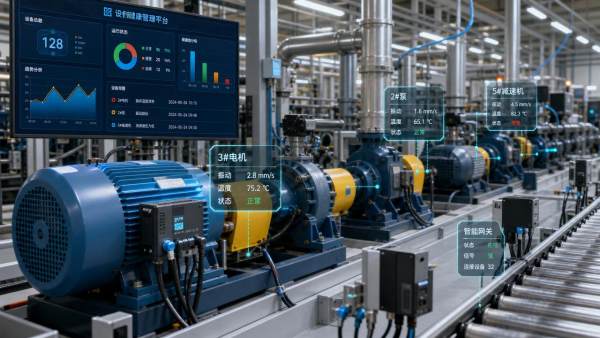
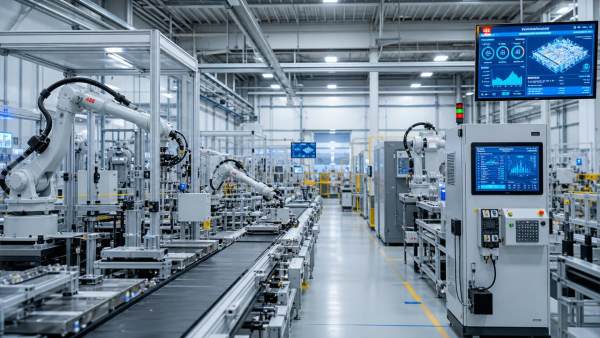
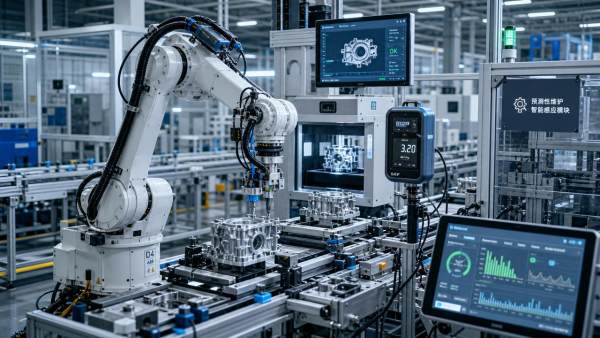
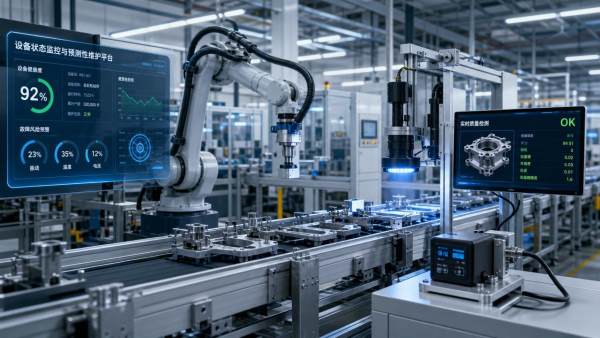
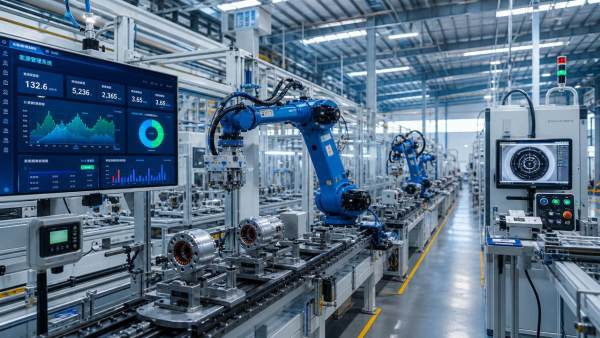
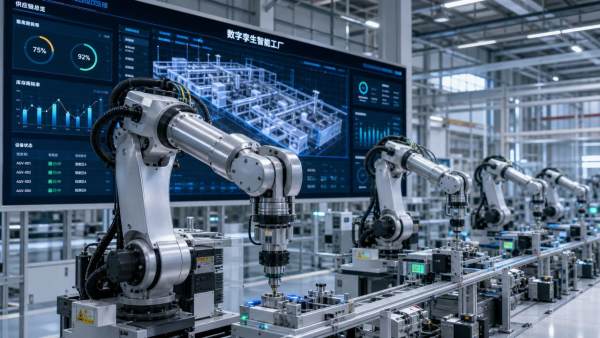
For business leaders, smart manufacturing technology should be understood less as a single product category and more as an operating model. It connects physical production assets with software, industrial data, analytics, automation, and decision intelligence. In practice, this includes machine connectivity, industrial IoT, AI-enabled quality control, predictive maintenance, digital twins, robotics, advanced planning, and energy monitoring. The objective is not digitization for its own sake. The objective is better throughput, lower waste, faster response to disruption, and clearer visibility across materials, machines, labor, and logistics.
This distinction matters because many transformation programs underperform when they treat smart manufacturing technology as a collection of disconnected tools. High ROI usually comes from coordinated systems that support measurable business priorities: higher OEE, lower scrap, reduced downtime, shorter lead times, improved compliance, and stronger supply continuity. In other words, value emerges when digital intelligence is linked directly to production economics.
Why the market is focused on ROI in 2026
The manufacturing environment in 2026 is shaped by persistent volatility. Input costs remain exposed to geopolitical shifts, material constraints, freight variability, and tighter sustainability expectations. At the same time, executive teams are under pressure to modernize plants without expanding risk. This is why smart manufacturing technology is being evaluated with greater financial discipline than in earlier waves of industrial digitization.
Another reason is maturity. The conversation has moved beyond experimentation. Enterprise buyers now expect deployment models, data governance, cybersecurity alignment, and reference benchmarks. For procurement directors, supply chain orchestrators, and industrial developers, the strategic question is no longer whether to invest. It is which use cases create the fastest and most repeatable returns across multi-site operations.
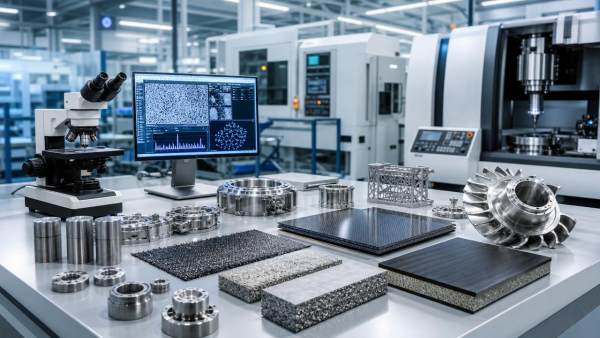
Within advanced industrial ecosystems such as those tracked by G-AIE, the strongest performers are those that align material science, production engineering, and intelligent automation. This reflects a broader industrial reality: the “Economy of Atoms” and “Vertical AI” are converging. Competitive plants are increasingly defined by how well they optimize both physical materials and digital decision loops.
Where smart manufacturing technology is delivering the clearest returns
Not every investment category delivers equal value. In 2026, the most reliable ROI often comes from a focused set of operational applications rather than broad platform spending alone. Leaders are prioritizing technologies that improve core plant economics in visible ways.
These use cases work because they are close to operational pain points. They do not depend on abstract future value. Instead, they address existing losses that manufacturers can already quantify. For enterprise decision-makers, that makes business cases easier to approve and scale.
The business value beyond efficiency
While efficiency remains the most visible benefit, smart manufacturing technology also strengthens resilience and strategic agility. Plants with real-time visibility into machine health, material availability, process variability, and energy conditions can respond faster to shocks. This has become especially important in globally distributed supply networks where disruptions often begin outside the factory but quickly affect production commitments.
A second layer of value comes from decision quality. When manufacturers combine sensor data, MES records, supplier inputs, and quality signals, they create a richer basis for planning and continuous improvement. That helps leaders move from reactive management to scenario-based control. Instead of asking why a line failed yesterday, they can ask which combination of scheduling, maintenance, and material substitution will protect margin next week.
A third value dimension is sustainability. Increasingly, smart manufacturing technology supports energy optimization, waste reduction, circular material strategies, and auditable emissions reporting. In many sectors, sustainability is no longer separate from ROI. Lower energy intensity and better material efficiency are direct financial levers, especially in asset-heavy industrial operations.
Which enterprise functions benefit most
Although the production floor is the most obvious focus, the impact of smart manufacturing technology extends across multiple business functions. Understanding this cross-functional value is essential when building internal support for investment.
This broader value map is one reason enterprise-scale adoption is accelerating. The technologies that win budget approval are usually those that solve more than one executive problem at once.
Common implementation patterns that outperform
Successful programs tend to follow a disciplined pattern. First, they start with a narrow, high-value use case where data quality is sufficient and operational ownership is clear. Second, they define baseline metrics before launch, such as downtime hours, first-pass yield, energy consumption per unit, or schedule adherence. Third, they design for replication across assets and sites, rather than creating isolated pilots with custom logic that cannot scale.
Another winning pattern is pairing digital capability with process redesign. Smart manufacturing technology alone cannot fix poor maintenance routines, inconsistent work instructions, or fragmented supplier coordination. Returns improve when new tools are embedded into standard operating procedures, escalation paths, and management reviews. This is where many transformations either mature or stall.
Leaders should also pay attention to technical architecture. In 2026, interoperability remains a major determinant of ROI. The best-performing environments typically allow shop-floor systems, ERP, MES, PLM, and analytics platforms to exchange trusted data without excessive manual intervention. Clean integration reduces reporting delays, duplicate work, and user resistance.
What usually limits ROI
The most common failure point is not the technology itself but misalignment between ambition and execution. Some organizations buy enterprise platforms before identifying the decisions they need to improve. Others deploy AI models without stable process data, creating false confidence rather than actionable insight. In both cases, the result is added complexity and weak adoption.
Cybersecurity is another critical concern. As connectivity expands, so does exposure. Decision-makers should treat industrial cybersecurity as part of value protection, not as a separate IT topic. A smart manufacturing technology roadmap that ignores access control, network segmentation, patch discipline, and supplier security can undermine operational gains very quickly.
There is also a governance challenge. Multi-site manufacturers need consistent definitions for downtime, defect classification, maintenance events, and sustainability metrics. Without standard benchmarks, it becomes difficult to compare sites or scale best practices. This is precisely why technical benchmarking repositories and industrial intelligence hubs have become more important for enterprise transformation planning.
How enterprise decision-makers should evaluate opportunities
A practical evaluation framework begins with three questions. First, which operational losses are largest and most measurable today? Second, what data already exists to address them? Third, can the solution be expanded across lines, plants, or regions with manageable change effort? This approach keeps smart manufacturing technology tied to business fundamentals rather than innovation theater.
Decision-makers should also test each initiative against five criteria:
- Financial clarity: Is the value linked to labor, yield, uptime, inventory, energy, or risk reduction?
- Operational ownership: Who will use the system and act on its outputs daily?
- Data readiness: Are sources reliable, accessible, and governed?
- Scalability: Can the model be repeated across the industrial network?
- Strategic fit: Does it strengthen resilience, compliance, or sustainability in addition to efficiency?
When these criteria are used consistently, smart manufacturing technology becomes easier to prioritize, benchmark, and defend at board level.
A practical direction for 2026 and beyond
The manufacturers generating the strongest returns in 2026 are not necessarily those with the most tools. They are the ones building connected industrial systems around the economics of real production. They focus on use cases that improve uptime, quality, material efficiency, and response speed. They treat data architecture and governance as strategic assets. And they recognize that smart manufacturing technology creates lasting ROI when physical operations and digital intelligence are designed to reinforce each other.
For enterprise leaders navigating complex global operations, the next step is to move from broad digital ambition to benchmarked industrial execution. That means identifying high-value use cases, validating technical feasibility, measuring business outcomes, and scaling what works. Organizations that take this structured path will be better positioned to turn smart manufacturing technology into a durable advantage across cost, resilience, and sustainable growth.
Recommended News
 May 02, 2026Choosing a Sustainable Materials Supplier for Stable Quality and Lead TimesSustainable materials supplier selection starts with quality and lead-time control. Learn a practical checklist to reduce risk, protect margins, and build a reliable supply network.
 May 02, 2026AI in Manufacturing Applications That Reduce Downtime in Daily OperationsAI in manufacturing applications help maintenance teams detect faults earlier, cut unplanned downtime, improve service response, and keep daily operations running with greater reliability.
 May 02, 2026Material Science Research Trends Shaping Better Industrial MaterialsMaterial science research is transforming industrial materials with smarter, lighter, and more sustainable solutions. Discover key trends driving performance, resilience, and competitive advantage.
 May 02, 2026Automation Technology for Factories: Key Features to Evaluate Before You InvestAutomation technology for factories: compare integration, scalability, flexibility, and lifecycle value before you invest. Learn how to reduce risk and choose the right-fit solution.
 May 02, 2026Manufacturing Technology Innovations Worth Piloting Before Full-Scale RolloutManufacturing technology innovations worth piloting first: discover practical ways to validate ROI, reduce rollout risk, and choose scalable solutions that improve quality, uptime, and efficiency.
 May 02, 2026Smart Materials Applications: Where They Solve Real Reliability ProblemsSmart materials applications help detect fatigue, vibration, heat, and corrosion earlier—learn where they solve real reliability problems and improve industrial safety.
 May 02, 2026AI in Manufacturing Benefits That Matter Most on the Factory FloorAI in manufacturing benefits include less downtime, faster troubleshooting, and stronger quality control. See how factory teams improve output, safety, and daily decision-making.
 May 02, 2026How to Compare Sustainable Materials for Construction Without Costly MistakesSustainable materials for construction: learn how to compare carbon impact, performance, supply resilience, and lifecycle cost to avoid costly mistakes and make smarter procurement decisions.
 May 02, 2026Smart Manufacturing Technology: What Actually Delivers ROI in 2026Smart manufacturing technology in 2026 is all about proven ROI. Discover which use cases boost uptime, quality, resilience, and sustainability across enterprise operations.
 May 02, 2026How Advanced Materials for Industrial Automation Improve Precision and UptimeAdvanced materials for industrial automation improve precision, reduce wear, and boost uptime. Discover how smarter material choices cut maintenance and strengthen reliable, high-output operations.
 May 02, 20262026 Global Trade & Investment Summit in Beijing: AI+Manufacturing FocusAI+Manufacturing takes center stage at the 2026 Global Trade & Investment Summit in Beijing — discover cross-border AI supply chain solutions, LLM white papers & POC matchmaking for global buyers.
 May 02, 2026Global Engineering Resins Index Up 8.2% in April; China Delivery Stability Gains FocusEngineering resins prices surge 8.2% in April—discover how rising costs and China’s 98.3% on-time delivery rate reshape global procurement strategies.
 May 02, 2026FDA Updates Bio-Plastics Food Contact Guidance: Migration Testing Deadline Nov 1, 2026FDA bio-plastics food contact guidance updated: migration testing deadline is Nov 1, 2026. Ensure compliance now to avoid U.S. market access delays.
 May 02, 20262026 China Bike Expo Focuses on Engineering Resins LightweightingEngineering resins take center stage at 2026 China Bike Expo—discover how PA66-GF30 and PPA-LCP are driving lightweighting, cost savings & export efficiency for bicycle OEMs and suppliers.
 May 02, 2026EU REACH SVHC List Adds 247 Substances Effective May 2026EU REACH SVHC List adds 247 substances effective May 2026 — critical for electronic-grade chemical exporters, SDS updates & supply chain compliance.
 May 02, 2026Vietnam Mandates Vietnamese SDS & QR Code for Industrial Catalysts from Oct 2026Vietnam SDS & QR code mandate for industrial catalysts starts Oct 2026 — ensure Vietnamese-language SDS and GS1-compliant origin labels now to avoid customs delays and supply chain disruption.
 May 02, 20262026 World Intelligent Industry Expo: Cargo Drones & Inspection UAVs in TianjinCargo drones & inspection UAVs take center stage at the 2026 World Intelligent Industry Expo in Tianjin — discover export-ready solutions, low-altitude economy innovations, and global procurement opportunities.
 May 02, 2026SABIC Mandates GCC Certification for Functional Coatings in Saudi Arabia from Q3 2026GCC certification mandatory for functional coatings in Saudi Arabia from Q3 2026 — essential for exporters, manufacturers & suppliers. Act now to ensure market access.
") May 02, 2026TÜV Rheinland Updates PV Backsheet Barrier Films Standard (V2.1)TÜV Rheinland PV Backsheet Barrier Films V2.1 now mandates UV-10000h & PID-1500V testing—key for EU, ME & LATAM solar exports. Act now to avoid project rejections.
May 02, 2026TÜV Rheinland Updates PV Backsheet Barrier Films Standard (V2.1)TÜV Rheinland PV Backsheet Barrier Films V2.1 now mandates UV-10000h & PID-1500V testing—key for EU, ME & LATAM solar exports. Act now to avoid project rejections. May 02, 2026US BIS Proposes Export Controls on Harmonic Reducers, Servo ActuatorsUS BIS proposes export controls on harmonic reducers and servo actuators—critical for robotics & embodied AI. Learn impacts, compliance steps, and strategic responses now.
 May 01, 2026AI in Manufacturing: The First Use Cases Worth TestingAI in manufacturing starts with practical pilots like visual inspection, predictive maintenance, and scheduling support. Discover the first use cases worth testing to cut risk, improve throughput, and unlock measurable ROI.
 May 01, 2026Industrial Automation Solutions That Reduce Downtime on Busy Production LinesIndustrial automation solutions reduce downtime on busy production lines with better machine visibility, faster fault response, and smarter operator support for safer, more stable output.
 May 01, 2026Choosing a Smart Materials Manufacturer Without Overlooking Scale-Up RisksSmart materials manufacturer selection goes beyond lab results. Learn how to spot scale-up risks, verify manufacturing maturity, and choose suppliers built for reliable growth.
 May 01, 2026High-Tech Industrial Projects: Where Delays Usually StartHigh-tech industrial projects often face delays long before construction begins. Discover the hidden risks in specs, interfaces, and procurement—and how to protect schedule and performance.