Search News
Industry Portal
Popular Tags
Material Science Research Trends Shaping Better Industrial Materials
Author
Time
Click Count
Material science research is redefining how industries build stronger, smarter, and more sustainable materials for modern manufacturing. For decision-makers navigating performance, cost, and supply chain resilience, understanding these emerging trends is essential. This article explores the forces shaping next-generation industrial materials and why they matter for companies seeking competitive advantage in an increasingly intelligent and resource-conscious global market.
For most information researchers, the real question is not whether material innovation matters, but which research trends are mature enough to influence sourcing, design, and industrial strategy today. The short answer is clear: the most important developments in material science research are now moving beyond the lab and into qualification pipelines, supplier ecosystems, and digital manufacturing systems.
That shift matters because industrial materials are no longer judged only by strength, heat resistance, or unit price. They are increasingly evaluated by lifecycle performance, traceability, process compatibility, carbon intensity, recyclability, and resilience under uncertain global supply conditions. Companies that understand these trends early are better positioned to reduce technical risk and make smarter long-term procurement and product decisions.
Why material science research now has direct business relevance
Material science research used to be treated as a long-horizon technical field, somewhat removed from day-to-day operational decisions. That is no longer the case. In many sectors, from advanced manufacturing to electronics, energy systems, transportation, and industrial equipment, materials are becoming a decisive lever for cost control, product differentiation, and compliance readiness.
Three pressures are driving this change. First, performance expectations are rising. Industrial buyers want materials that last longer, tolerate harsher conditions, and support lighter, more efficient system designs. Second, supply chains have become less predictable, forcing companies to rethink dependency on scarce, geopolitically exposed, or high-volatility inputs. Third, sustainability goals and regulatory scrutiny are reshaping what counts as a viable material choice.
For procurement leaders and technical evaluators, this means material science research is no longer just a source of future possibilities. It is increasingly a practical intelligence function. The most useful research now helps organizations answer operational questions such as: Which materials can reduce maintenance frequency? Which alternatives can offset supply concentration risk? Which innovations can be integrated without expensive process changes?
What trends are shaping better industrial materials
The strongest research trends are not random breakthroughs. They reflect a broader industrial need for materials that combine high performance with manufacturability, sustainability, and digital compatibility. Several areas stand out as especially important for companies tracking the future of industrial materials.
1. High-performance lightweight materials. Research into advanced alloys, fiber-reinforced composites, and engineered polymers continues to accelerate because reducing weight often improves energy efficiency, handling, and system output. In transportation, robotics, and aerospace-adjacent manufacturing, even incremental mass reduction can create meaningful downstream savings. The business challenge is balancing these benefits against repair complexity, joining limitations, and cost at scale.
2. Materials for extreme environments. Industrial systems increasingly operate under higher temperatures, corrosive chemicals, rapid cycling, or abrasive wear. This is pushing research toward ceramics, high-entropy alloys, protective coatings, and surface engineering techniques that extend service life. For buyers, the value is not only better performance but also lower downtime, fewer replacements, and more predictable maintenance planning.
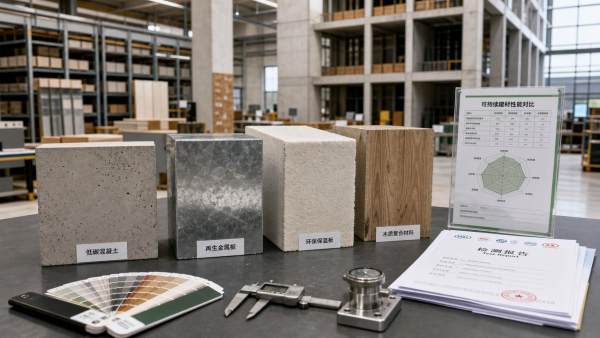
3. Sustainable and circular materials. One of the biggest shifts in material science research is the move from “high performance at any cost” to “high performance with responsible resource use.” This includes bio-based polymers, low-carbon cement alternatives, recycled-content metals, solvent-free chemistries, and materials designed for disassembly or recovery. The key issue for industry is whether these solutions can meet qualification standards while supporting ESG targets and future compliance needs.
4. Functional and smart materials. Materials are increasingly expected to do more than provide structure. Research into self-healing materials, conductive polymers, phase-change materials, and responsive surfaces is expanding the role materials can play in sensing, thermal management, and durability. These applications are especially relevant to intelligent automation systems where materials may support embedded functionality, predictive maintenance, or energy optimization.
5. Additive manufacturing-compatible materials. Material innovation and advanced manufacturing are now deeply connected. New powder metals, photopolymers, and composite feedstocks are being developed specifically for additive processes. This trend matters because a material is only valuable if it performs reliably within real manufacturing constraints. Research is therefore focusing not just on chemistry, but on printability, repeatability, post-processing behavior, and qualification standards.
How digital tools are accelerating material discovery and qualification
One of the most important developments is the growing integration of material science research with data science, simulation, and AI-assisted modeling. This changes the speed and logic of innovation. Instead of relying only on slow trial-and-error experimentation, researchers can now use predictive models to identify promising material combinations, estimate properties, and narrow down testing pathways much faster.
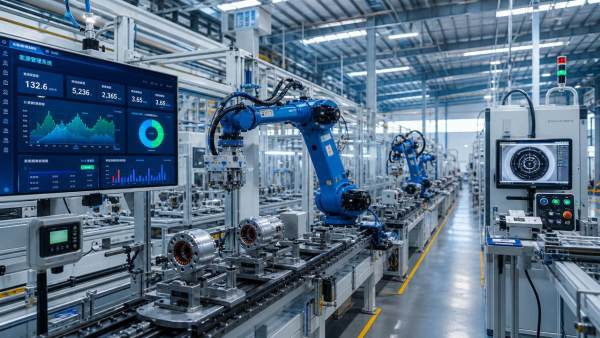
For industrial decision-makers, the significance lies in time compression and better visibility. Machine learning models can help screen candidate materials for targeted performance traits. Digital twins and simulation platforms can estimate in-service behavior before full deployment. Informatics tools can also connect material properties with manufacturing variables, enabling faster qualification decisions.
However, this trend should be evaluated carefully. Digital acceleration is powerful, but it does not eliminate the need for physical validation. Companies should treat AI-supported material discovery as a way to improve prioritization, reduce development cycles, and strengthen benchmarking, not as a replacement for application-specific testing. The strongest competitive advantage comes from linking digital prediction with domain expertise, supplier data, and real production feedback.
Which questions matter most when evaluating new industrial materials
Information researchers and strategy teams often face a common problem: there is plenty of excitement around new materials, but limited clarity on what makes an innovation commercially useful. A practical evaluation framework is therefore more valuable than a list of scientific headlines.
The first question is application fit. A material may show excellent lab performance yet fail under actual load patterns, environmental conditions, or production tolerances. Buyers should look beyond headline metrics and ask whether the research reflects real-use conditions, including fatigue, corrosion, thermal cycling, or contamination exposure.
The second question is process compatibility. A better material on paper may require new tooling, retraining, bonding methods, curing cycles, or inspection protocols. If implementation friction is high, the economic advantage may disappear. This is why scalable materials often outperform technically superior but operationally disruptive alternatives.
The third question is supply security. Material science research increasingly intersects with geopolitics and resource economics. New materials that depend on rare elements, regionally concentrated refining capacity, or immature supplier networks may create hidden risk. Decision-makers should examine raw material availability, processing ecosystems, and substitution options before making strategic commitments.
The fourth question is total lifecycle value. Initial purchase price matters, but so do durability, failure rates, maintenance intervals, waste generation, recycling costs, and compliance exposure. In many industrial environments, the best material is not the cheapest unit option but the one that improves asset uptime and reduces lifetime operating cost.
The fifth question is qualification readiness. Some material categories are scientifically exciting but far from industrial standardization. Others are already progressing through certifications, sector benchmarks, and customer approval processes. Understanding that difference helps companies separate long-term monitoring opportunities from near-term deployment candidates.
Where the biggest industrial opportunities are emerging
Not every sector will experience the same benefits from current material science research. The highest near-term impact is likely in industries where performance demands, energy intensity, and maintenance costs are already high. These are environments where material improvements can create visible economic returns rather than abstract technical gains.
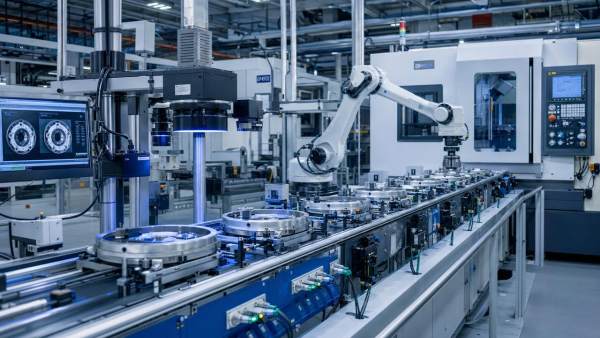
In advanced manufacturing equipment, wear-resistant surfaces, thermal management materials, and lightweight structural components can improve machine efficiency and service life. In automation systems, materials that support precision, vibration control, heat dissipation, or integrated sensing can improve operational stability. In energy and electrification applications, better materials can extend battery performance, protect components from harsh conditions, and lower losses.
Infrastructure and heavy industry also remain important. Corrosion-resistant materials, lower-carbon construction inputs, advanced coatings, and more durable composites can reduce maintenance cycles and improve long-term asset resilience. For global industrial ecosystems, these benefits are especially important where downtime, replacement logistics, and environmental compliance create major cost exposure.
Another major opportunity lies in material substitution. In uncertain supply environments, research into alternatives for critical minerals, high-emission feedstocks, and difficult-to-source specialty inputs can create strategic flexibility. The organizations that benefit most are not always the ones inventing new materials, but the ones that identify when substitution is technically credible and commercially well-timed.
What risks companies should not ignore
Enthusiasm around material innovation can obscure practical risk. One common issue is overreliance on laboratory data. A material that performs exceptionally in controlled testing may behave very differently in scaled manufacturing or field operation. This gap is especially relevant for composites, coatings, and multifunctional materials where interfaces and process variables strongly affect outcomes.
Another risk is fragmented decision-making. Material choices often sit at the intersection of engineering, procurement, operations, quality, and sustainability. If these functions evaluate materials separately, companies may optimize for one metric while increasing cost or risk elsewhere. A stronger approach is cross-functional assessment tied to shared decision criteria.
There is also the risk of innovation theater. Some materials attract attention because they sound transformative, yet their route to adoption is unclear. For information researchers, the key is to distinguish between research intensity and commercial relevance. Useful signals include pilot deployments, qualification partnerships, supplier investment, standards development, and compatibility with existing industrial workflows.
Finally, sustainability claims require scrutiny. A material marketed as greener may carry hidden burdens in extraction, processing energy, recyclability, or end-of-life handling. Better decisions come from lifecycle-based assessment rather than isolated claims about renewable content or reduced weight.
How decision-makers can use material science research more effectively
For organizations that do not conduct deep in-house materials R&D, the best approach is not to chase every new development. It is to build a disciplined monitoring and evaluation process. This begins with identifying which material properties have the greatest commercial impact for your products, assets, or operations. Once those priorities are clear, research trends become easier to interpret.
Next, map material innovation against business use cases. For example, are you trying to reduce failure in corrosive environments, lower component mass, improve thermal control, or de-risk supply exposure? A use-case lens helps narrow the field and prevents technical novelty from distracting from operational value.
Companies should also benchmark suppliers on more than specification sheets. Ask how material performance was validated, whether process windows are stable, how recycling or recovery is handled, and what contingency plans exist for raw material disruptions. Strong supplier intelligence is often the bridge between promising material science research and reliable industrial adoption.
It is equally important to maintain a portfolio view. Some materials deserve near-term pilot evaluation, others belong on a watchlist, and some should be treated as strategic horizon topics. This layered approach allows companies to capture value without overcommitting to immature technologies.
Conclusion: better industrial materials will come from smarter evaluation, not just faster innovation
The most important lesson from today’s material science research is that better industrial materials are no longer defined by performance alone. The winning materials are those that combine technical capability with manufacturability, lifecycle efficiency, sustainability, and supply resilience. That is why the field now matters so directly to procurement strategy, product development, and industrial competitiveness.
For information researchers, the goal is not simply to track what is new. It is to understand which research directions are becoming actionable, which ones reduce real business risk, and which ones align with the future of intelligent, resource-conscious industry. When evaluated through that lens, material science research becomes far more than a scientific topic. It becomes a strategic tool for building stronger, smarter, and more resilient industrial systems.
Recommended News
 May 02, 2026Choosing a Sustainable Materials Supplier for Stable Quality and Lead TimesSustainable materials supplier selection starts with quality and lead-time control. Learn a practical checklist to reduce risk, protect margins, and build a reliable supply network.
 May 02, 2026AI in Manufacturing Applications That Reduce Downtime in Daily OperationsAI in manufacturing applications help maintenance teams detect faults earlier, cut unplanned downtime, improve service response, and keep daily operations running with greater reliability.
 May 02, 2026Material Science Research Trends Shaping Better Industrial MaterialsMaterial science research is transforming industrial materials with smarter, lighter, and more sustainable solutions. Discover key trends driving performance, resilience, and competitive advantage.
 May 02, 2026Automation Technology for Factories: Key Features to Evaluate Before You InvestAutomation technology for factories: compare integration, scalability, flexibility, and lifecycle value before you invest. Learn how to reduce risk and choose the right-fit solution.
 May 02, 2026Manufacturing Technology Innovations Worth Piloting Before Full-Scale RolloutManufacturing technology innovations worth piloting first: discover practical ways to validate ROI, reduce rollout risk, and choose scalable solutions that improve quality, uptime, and efficiency.
 May 02, 2026Smart Materials Applications: Where They Solve Real Reliability ProblemsSmart materials applications help detect fatigue, vibration, heat, and corrosion earlier—learn where they solve real reliability problems and improve industrial safety.
 May 02, 2026AI in Manufacturing Benefits That Matter Most on the Factory FloorAI in manufacturing benefits include less downtime, faster troubleshooting, and stronger quality control. See how factory teams improve output, safety, and daily decision-making.
 May 02, 2026How to Compare Sustainable Materials for Construction Without Costly MistakesSustainable materials for construction: learn how to compare carbon impact, performance, supply resilience, and lifecycle cost to avoid costly mistakes and make smarter procurement decisions.
 May 02, 2026Smart Manufacturing Technology: What Actually Delivers ROI in 2026Smart manufacturing technology in 2026 is all about proven ROI. Discover which use cases boost uptime, quality, resilience, and sustainability across enterprise operations.
 May 02, 2026How Advanced Materials for Industrial Automation Improve Precision and UptimeAdvanced materials for industrial automation improve precision, reduce wear, and boost uptime. Discover how smarter material choices cut maintenance and strengthen reliable, high-output operations.
 May 02, 20262026 Global Trade & Investment Summit in Beijing: AI+Manufacturing FocusAI+Manufacturing takes center stage at the 2026 Global Trade & Investment Summit in Beijing — discover cross-border AI supply chain solutions, LLM white papers & POC matchmaking for global buyers.
 May 02, 2026Global Engineering Resins Index Up 8.2% in April; China Delivery Stability Gains FocusEngineering resins prices surge 8.2% in April—discover how rising costs and China’s 98.3% on-time delivery rate reshape global procurement strategies.
 May 02, 2026FDA Updates Bio-Plastics Food Contact Guidance: Migration Testing Deadline Nov 1, 2026FDA bio-plastics food contact guidance updated: migration testing deadline is Nov 1, 2026. Ensure compliance now to avoid U.S. market access delays.
 May 02, 20262026 China Bike Expo Focuses on Engineering Resins LightweightingEngineering resins take center stage at 2026 China Bike Expo—discover how PA66-GF30 and PPA-LCP are driving lightweighting, cost savings & export efficiency for bicycle OEMs and suppliers.
 May 02, 2026EU REACH SVHC List Adds 247 Substances Effective May 2026EU REACH SVHC List adds 247 substances effective May 2026 — critical for electronic-grade chemical exporters, SDS updates & supply chain compliance.
 May 02, 2026Vietnam Mandates Vietnamese SDS & QR Code for Industrial Catalysts from Oct 2026Vietnam SDS & QR code mandate for industrial catalysts starts Oct 2026 — ensure Vietnamese-language SDS and GS1-compliant origin labels now to avoid customs delays and supply chain disruption.
 May 02, 20262026 World Intelligent Industry Expo: Cargo Drones & Inspection UAVs in TianjinCargo drones & inspection UAVs take center stage at the 2026 World Intelligent Industry Expo in Tianjin — discover export-ready solutions, low-altitude economy innovations, and global procurement opportunities.
 May 02, 2026SABIC Mandates GCC Certification for Functional Coatings in Saudi Arabia from Q3 2026GCC certification mandatory for functional coatings in Saudi Arabia from Q3 2026 — essential for exporters, manufacturers & suppliers. Act now to ensure market access.
") May 02, 2026TÜV Rheinland Updates PV Backsheet Barrier Films Standard (V2.1)TÜV Rheinland PV Backsheet Barrier Films V2.1 now mandates UV-10000h & PID-1500V testing—key for EU, ME & LATAM solar exports. Act now to avoid project rejections.
May 02, 2026TÜV Rheinland Updates PV Backsheet Barrier Films Standard (V2.1)TÜV Rheinland PV Backsheet Barrier Films V2.1 now mandates UV-10000h & PID-1500V testing—key for EU, ME & LATAM solar exports. Act now to avoid project rejections. May 02, 2026US BIS Proposes Export Controls on Harmonic Reducers, Servo ActuatorsUS BIS proposes export controls on harmonic reducers and servo actuators—critical for robotics & embodied AI. Learn impacts, compliance steps, and strategic responses now.
 May 01, 2026AI in Manufacturing: The First Use Cases Worth TestingAI in manufacturing starts with practical pilots like visual inspection, predictive maintenance, and scheduling support. Discover the first use cases worth testing to cut risk, improve throughput, and unlock measurable ROI.
 May 01, 2026Industrial Automation Solutions That Reduce Downtime on Busy Production LinesIndustrial automation solutions reduce downtime on busy production lines with better machine visibility, faster fault response, and smarter operator support for safer, more stable output.
 May 01, 2026Choosing a Smart Materials Manufacturer Without Overlooking Scale-Up RisksSmart materials manufacturer selection goes beyond lab results. Learn how to spot scale-up risks, verify manufacturing maturity, and choose suppliers built for reliable growth.
 May 01, 2026High-Tech Industrial Projects: Where Delays Usually StartHigh-tech industrial projects often face delays long before construction begins. Discover the hidden risks in specs, interfaces, and procurement—and how to protect schedule and performance.