Search News
Industry Portal
Popular Tags
Resilient Manufacturing Strategies for Supply Chain Disruption

Author
Time
Click Count
In today’s volatile industrial landscape, resilient manufacturing has become a strategic priority for engineering and operations teams facing repeated supply chain disruption. Material shortages, freight instability, geopolitical constraints, and uneven supplier performance can quickly derail production plans. Long-term success depends on combining technical discipline with agile sourcing, data visibility, and coordinated execution across planning, quality, logistics, and production.
For complex industrial environments, resilient manufacturing is not a single contingency plan. It is a repeatable operating model that helps protect continuity, reduce downtime, stabilize cost exposure, and improve responsiveness when conditions change without warning.
Why resilient manufacturing needs a checklist-based approach
Supply chain disruption rarely appears as one isolated event. It usually spreads across materials, tooling, transport, labor, compliance, and scheduling. A checklist-based approach converts broad risk awareness into executable controls that can be reviewed before disruption becomes a production loss.

In cross-functional industrial programs, structured review points improve consistency. They reduce decision latency, clarify ownership, and create a shared language for escalation. This makes resilient manufacturing more measurable and easier to strengthen over time.
Core checklist for resilient manufacturing execution
- Map critical materials by risk tier, lead time volatility, single-source exposure, qualification status, and substitution limits before finalizing production commitments.
- Validate supplier capacity with current utilization data, not historical assumptions, and confirm surge capability for constrained components and engineered parts.
- Build dual-source or regional backup options for high-impact items, including approved specifications, tooling readiness, and quality release requirements.
- Standardize component platforms where possible to reduce part proliferation and increase flexibility across product families, plants, and contract manufacturing partners.
- Use demand sensing and scenario planning models to test how forecast shifts affect inventory buffers, production cadence, and replenishment timing.
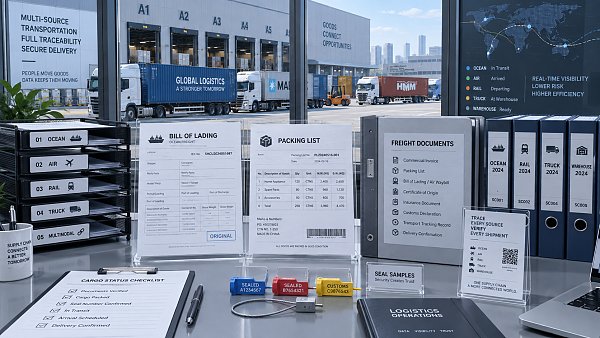
- Monitor in-transit visibility, customs exposure, and route dependency to identify logistics bottlenecks before they interrupt line-side material availability.
- Align engineering change control with sourcing decisions so alternate materials or redesigned parts do not create hidden compliance or validation delays.
- Segment inventory by operational criticality, not only cost, and protect strategic safety stock for revenue-sensitive or shutdown-prone assemblies.
- Digitize supplier performance tracking with metrics for delivery reliability, lot quality, responsiveness, recovery speed, and corrective action closure.
- Rehearse disruption response protocols across planning, procurement, operations, and quality teams to shorten escalation cycles during live events.
How these strategies apply across industrial scenarios
High-mix, low-volume production
In high-mix environments, resilient manufacturing depends on design discipline and configuration control. Excessive component variation increases sourcing complexity, qualification workload, and planning uncertainty during disruption.
The most effective response is modularization. Standard connectors, common fasteners, interchangeable subassemblies, and shared material specifications create more sourcing flexibility without sacrificing technical performance.
Capital equipment and engineered systems
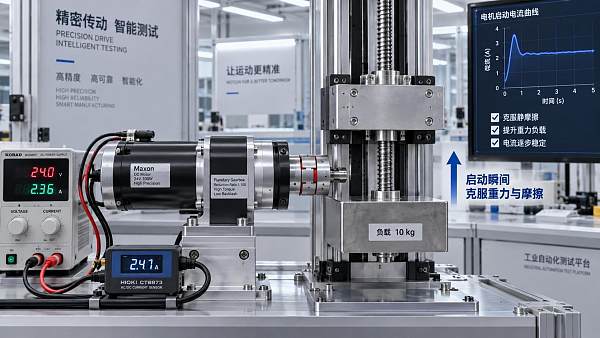
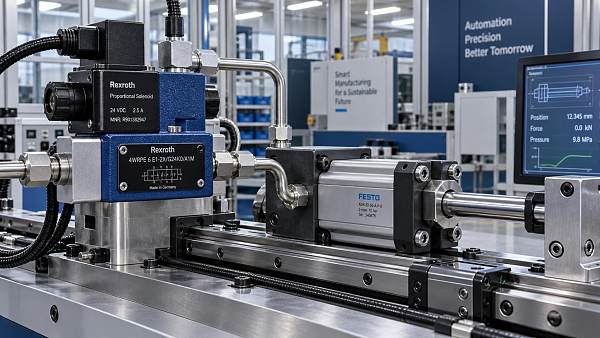
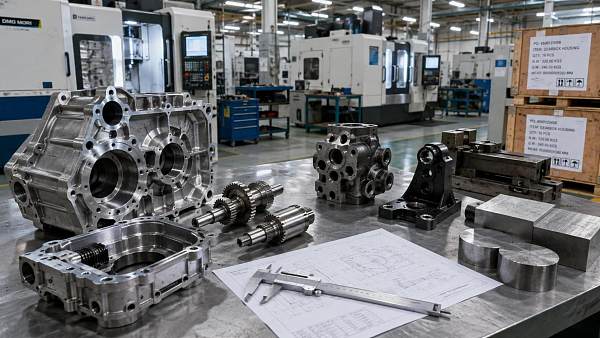
For capital equipment, one delayed actuator, alloy casting, or control module can stop the entire build. Here, resilient manufacturing must begin at the bill-of-material level with long-lead review and supplier readiness validation.
Progressive release planning helps. Freeze critical-path components early, secure technical documentation, and separate procurement timing for bespoke parts from standard commercial items.
Process industries and material-intensive operations
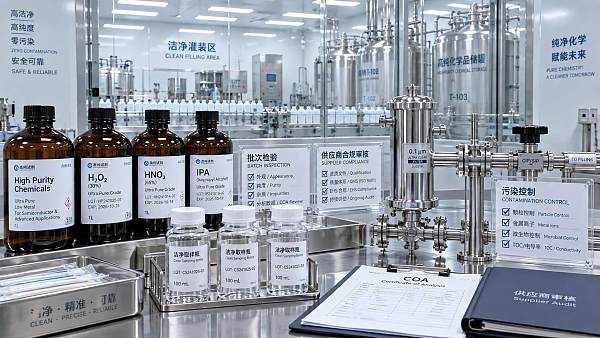
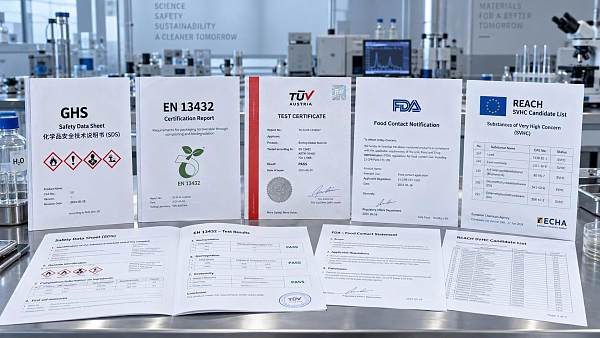
Material science constraints matter more in process industries. Substitution is rarely simple because performance can depend on chemistry, purity, moisture content, thermal behavior, or regulatory acceptance.
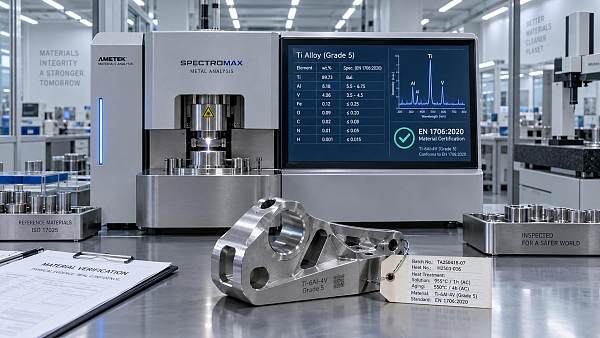
A stronger resilient manufacturing model uses prequalified alternates, tighter incoming inspection criteria, and digital traceability linking supplier lots to process performance and final output stability.
Commonly overlooked risks in supply chain disruption
Ignoring second-tier supplier dependency
A direct supplier may appear stable while relying on a fragile sub-tier source for chips, forgings, resins, or specialty coatings. Hidden dependency reduces true resilience and delays response visibility.
Treating inventory as the only resilience lever
Extra stock can absorb short disruptions, but it cannot fix poor forecasts, weak supplier qualification, or engineering rigidity. Inventory without governance often shifts risk rather than reducing it.
Separating engineering from sourcing decisions
When design teams specify narrow tolerances or uncommon materials without supply review, alternate sourcing becomes difficult. Resilient manufacturing improves when design-for-supply principles are built into release gates.
Underestimating data latency
Late updates on order status, transit delays, or quality holds can trigger avoidable downtime. Timely operational data is essential for resilient manufacturing because response speed depends on trusted signals.
Practical execution recommendations
Start with a focused resilience audit of critical products, constrained materials, and vulnerable suppliers. Rank exposure by revenue impact, replacement difficulty, qualification time, and operational recovery speed.
- Create a heat map linking each critical part to source count, average lead time, logistics route, and approved substitute status.
- Set decision thresholds for escalation, such as lead time deviation, supplier delivery slippage, or inventory days below protected levels.
- Review design specifications for overengineered features that limit source flexibility without improving field performance.
- Run quarterly disruption simulations to test planning assumptions, communication flow, and recovery actions under realistic constraints.
- Invest in digital dashboards that connect procurement, production scheduling, quality alerts, and shipment tracking into one operational view.
Organizations building advanced industrial ecosystems often gain the most value by integrating technical benchmarking with operational intelligence. That combination helps compare material options, automation readiness, sourcing pathways, and recovery strategies using evidence rather than assumptions.
Conclusion and next-step action guide
Resilient manufacturing is now a foundational capability for industrial stability. It strengthens continuity by combining supplier diversification, inventory logic, design flexibility, logistics visibility, and disciplined execution across the value chain.
The next step is practical: identify the top ten parts or materials with the highest disruption impact, assess current controls against the checklist above, and close the largest gaps first. A resilient manufacturing strategy becomes effective when it is operationalized, measured, and continuously refined under real supply conditions.
Recommended News
 Sep 19, 2026When can a supply chain LLM reduce time spent finding shipment updates?Supply chain LLMs can cut shipment-update search time by connecting carrier events, ERP data, and documents—giving teams traceable answers and faster exception response.
 Sep 18, 2026How industrial monitoring equipment helps prevent unplanned downtimeIndustrial monitoring equipment helps teams detect early asset issues, prioritize maintenance, and prevent costly unplanned downtime. Explore practical strategies for reliable operations.
 Sep 17, 2026What next-gen harmonic drive research means for robot joint accuracyNext-gen harmonic drive research reveals how backlash, stiffness, thermal drift, and sensing shape robot joint accuracy. Explore smarter validation strategies.
 Sep 16, 2026How Southeast Asian climates affect cylinder seal frictionCylinder seal friction Southeast Asia: learn how humidity, heat, monsoons, and contamination affect motion stability, wear, and seal selection.
 Sep 15, 2026How to size DC gear motors for the required starting torqueGear motors DC sizing made practical: calculate starting torque, account for friction, gravity, inertia and voltage drop, then select a reliable motor with confidence.
 Sep 14, 2026How to verify high purity chemicals compliance before supplier approvalHigh purity chemicals compliance: learn how to verify supplier quality systems, CoAs, traceability, testing, and change control before approval.
 Sep 13, 2026What permits are needed to operate mapping drones in Europe?Mapping drones Europe: discover the permits, EASA categories, airspace approvals, site access, and GDPR checks needed for compliant aerial surveys.
 Sep 12, 2026What lead time should I expect for automatic transmission components? Planetary Gearboxes delivery forecasting for OEM planningWhat lead time should I expect for automatic transmission components? Get dynamic, AI-powered planetary gearbox delivery forecasting—designed for OEMs building next-gen hybrid & commercial powertrains.
 Sep 12, 2026Can polyamide replace metal in load-bearing components? Polymer Pulse structural performance data for 2026 applicationsCan polyamide replace metal in load-bearing components? Discover Polymer Pulse’s 2026 structural data—real-world performance, weight savings, and reliability breakthroughs.
 Sep 12, 2026How to handle a power electronics warranty claim: Harmonic Reducers documentation and escalation pathHow do I handle a power electronics warranty claim? Get a fast, intelligent, evidence-driven resolution for harmonic reducers—no bureaucracy, just precision diagnostics and real-time escalation.
 Sep 12, 2026Which motion control specifications matter most before purchase? Torque Logic selection criteria for automation engineersWhich motion control specifications are most important before purchase? Discover Torque Logic—the 4 non-negotiable, AI-aligned criteria that cut TCO by 27–41% and boost motion system availability to 99.992%.
 Sep 13, 2026Is agentic AI reliable enough for supplier screening? Supply Chain LLM validation framework for procurement teamsIs agentic AI reliable enough for supplier screening? Discover a rigorous LLM validation framework built for procurement teams—grounded in material traceability, regulatory compliance, and real-world operational constraints.
 Sep 14, 2026How to maintain edge AI systems after deployment: Predictive Maint AI operational protocols for field techniciansHow do I maintain edge AI systems after deployment? Discover predictive, physics-aware operational protocols designed for real-world field technicians—sustaining intelligence where silicon meets steel.
 Sep 15, 2026What compliance documents must a bioplastics supplier provide? Bio-Plastics regulatory checklist for procurementWhat compliance documents should a bioplastics supplier provide? Get our actionable regulatory checklist for food, medical & EU-bound applications.
 Sep 16, 2026How to prevent PET film defects during production: Barrier Films process control best practicesHow can I prevent PET film defects during production? Discover physics-driven barrier film process control—thermal precision, dynamic tension management & surface energy optimization.
 Sep 17, 2026Are thermoplastics suitable for long-term outdoor use? Engineering Resins durability assessment in 2026 UV/weather exposureAre thermoplastics suitable for long-term outdoor use? Discover 2026’s engineering resin durability insights — UV/weather resistance ranked, tested & actionable.
 Sep 18, 2026What to do when a servo motor fails during production: A Servo Actuators troubleshooting guide for maintenance teamsWhat should I do if a servo motor fails during production? Get a field-tested, AI-aware troubleshooting guide for maintenance teams—minimize downtime, maximize OEE.
 Sep 12, 2026How to compare wholesale party supplies by minimum order valueCompare wholesale party supplies by minimum order value, freight, SKU flexibility, and stock risk to choose suppliers that protect margins and simplify replenishment.
 Sep 11, 2026How proportional solenoid linearity affects precision motion controlProportional solenoid linearity directly affects precision motion control, valve metering, stability, and calibration. Learn how to evaluate performance for reliable automation.
 Sep 10, 2026When does supplier information platform automation reduce onboarding delays?Supplier information platform automation reduces onboarding delays by streamlining data collection, routing, renewals, and compliance checks—without replacing expert technical review.
 Sep 09, 2026How to size robotic motion systems for AMR payload changesRobotic motion systems for AMR payload changes: learn how to size motors, wheels, gearing, traction, and controls for safer, reliable performance.
 Sep 08, 2026How to perform a cylinder rod buckling calculation for long strokesCylinder rod buckling calculation made practical: learn how to assess effective length, end conditions, rod stiffness, load forces, and safety margins for reliable long-stroke cylinder design.
 Sep 07, 2026How to estimate the cost of industrial mechanical components before orderingIndustrial mechanical components cost: learn how to estimate material, machining, tooling, inspection, logistics, and hidden expenses before ordering. Compare quotes confidently and reduce sourcing risk.
 Sep 07, 2026What Is a Product Standards Database Used For?Product standards database guide: learn how to compare requirements, verify revisions, control specifications, and reduce compliance risks across design, sourcing, and production.