Search News
Industry Portal
Popular Tags
Industrial Automation Solutions: Cut Downtime Without a Full Retrofit
Author
Time
Click Count
For enterprise decision-makers facing rising maintenance costs, labor constraints, and unplanned outages, industrial automation solutions offer a practical path to higher uptime without the disruption of a full retrofit. By integrating intelligent controls, data visibility, and targeted system upgrades into existing operations, manufacturers can improve resilience, accelerate ROI, and strengthen competitiveness in an increasingly complex industrial landscape.
Why decision-makers are looking for industrial automation solutions now
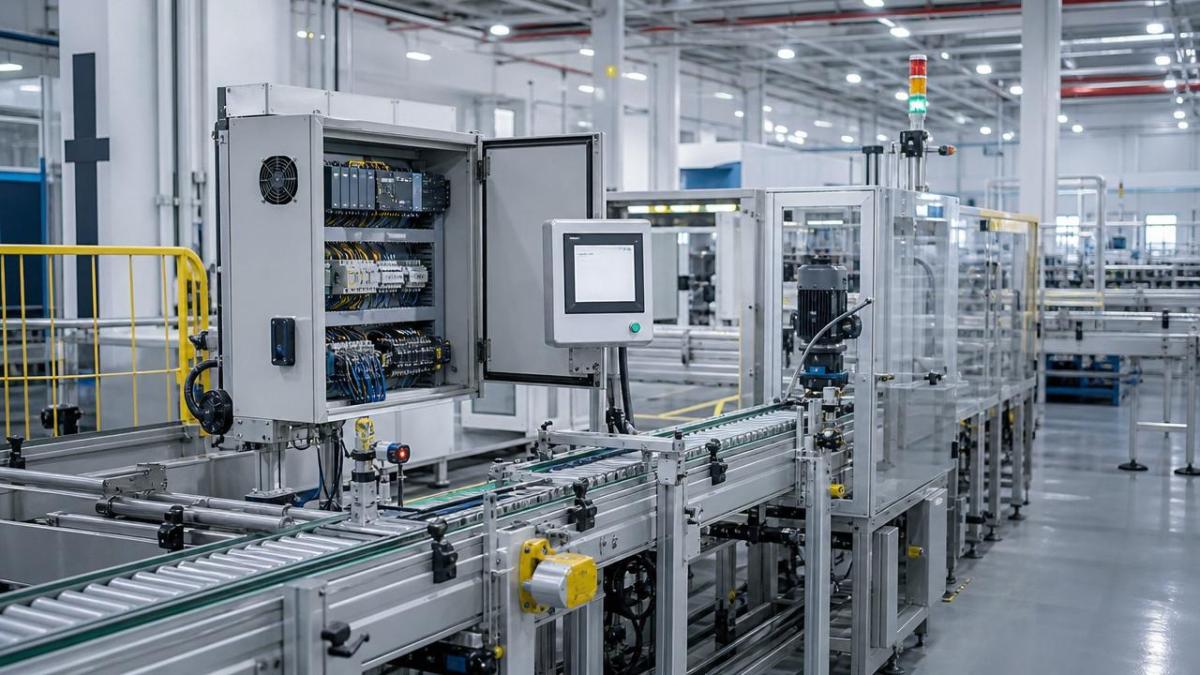
Most leaders searching for industrial automation solutions are not asking whether automation matters. They are asking how to reduce downtime, labor pressure, and maintenance risk without shutting down production for a major rebuild.
That distinction matters. In many facilities, the business case is no longer about pursuing a fully digital factory vision in one step. It is about protecting throughput, extending asset life, and improving responsiveness with controlled investment.
For enterprise teams, unplanned downtime now carries broader consequences than lost output alone. It disrupts customer commitments, inflates maintenance spend, weakens energy efficiency, and exposes operational fragility across the supply chain.
The good news is that meaningful improvement does not always require replacing entire lines. In many cases, targeted automation upgrades can deliver measurable uptime gains by addressing the real sources of disruption inside existing systems.
What enterprise buyers really need to evaluate before they invest
Senior decision-makers typically care less about automation features in isolation and more about business outcomes. They want to know where downtime originates, which interventions create the fastest payoff, and how implementation risk can be contained.
That means the most valuable evaluation framework is not technology-first. It starts with operational questions: Which assets fail most often, where are response delays happening, what information is missing, and how quickly can teams act on new insights?
In practical terms, buyers should assess five factors. First, the cost of current downtime. Second, the age and integration limits of installed equipment. Third, the quality of available production and maintenance data.
Fourth, the internal capability to manage change across operations, engineering, and IT. Fifth, the payback horizon the business expects. These factors determine whether a selective upgrade strategy will outperform a larger capital project.
Industrial automation solutions create value when they are mapped to operational bottlenecks, not when they are chosen because they sound advanced. Better visibility, faster diagnostics, and more stable control loops often outperform broader but slower transformations.
How to cut downtime without a full retrofit
The most effective approach is usually phased modernization. Instead of replacing complete systems, manufacturers upgrade the control, monitoring, and communication layers around critical assets that still have useful mechanical life.
Examples include adding smart sensors to legacy equipment, modernizing PLC or HMI interfaces, connecting isolated machines to supervisory platforms, and introducing condition-based alerts for components with recurring failures.
This model works because many downtime problems are not caused by total asset obsolescence. They come from delayed fault detection, inconsistent operator response, limited root-cause visibility, and control architectures that cannot support timely intervention.
When those constraints are removed, legacy equipment often performs better than expected. A plant may not need a new production line to improve uptime. It may need faster signal capture, clearer alarms, and more reliable process coordination.
For decision-makers, this is where industrial automation solutions become strategically attractive. They can reduce outage frequency and duration while preserving prior capital investment and avoiding the long implementation window of a full retrofit.
High-impact use cases that justify targeted automation spending
Not every application deserves equal priority. The best candidates are assets or process areas where downtime is expensive, recurring, and diagnosable. These usually include bottleneck machines, utility systems, material handling, packaging, and quality-critical process steps.
One strong use case is predictive maintenance on failure-prone equipment. By monitoring vibration, temperature, pressure, or cycle behavior, plants can identify deterioration earlier and intervene before faults escalate into extended outages.
Another is alarm rationalization and operator guidance. In many facilities, operators face too many alerts with too little context. Smarter automation can help teams distinguish urgent faults from minor deviations and respond with greater consistency.
A third use case is automated changeover and recipe management. When product variation is high, manual transitions often create downtime, quality loss, or startup waste. Better sequencing and digital parameter control improve repeatability and reduce interruption risk.
Energy-intensive operations also benefit. Industrial automation solutions can coordinate equipment loading, utility usage, and process timing more precisely, reducing both consumption and the mechanical stress that contributes to unexpected failure.
Where the ROI usually comes from
Enterprise buyers often underestimate how many cost categories are tied to downtime. Lost production is obvious, but the full impact includes overtime labor, expedited parts, scrap, delayed shipments, quality escapes, and managerial firefighting.
As a result, the ROI of automation should be calculated across both direct and indirect gains. Uptime improvement is the headline metric, but labor efficiency, maintenance productivity, inventory reduction, and customer service reliability often matter just as much.
In many projects, the fastest returns come from shorter fault isolation and recovery time rather than lower failure frequency alone. If teams can detect issues earlier and resolve them faster, overall disruption declines even before deeper optimization begins.
Decision-makers should also consider capital avoidance. Extending the usable life of existing equipment through selective modernization can postpone major replacement spending and improve the return on already-deployed physical assets.
For large manufacturers, this matters at portfolio scale. If targeted automation prevents repeated line replacement or reduces disruption across multiple sites, the cumulative financial effect can significantly exceed the value of a single isolated upgrade.
What can go wrong, and how to reduce implementation risk
Many automation projects disappoint not because the technology fails, but because the scope is poorly defined. Organizations buy tools before aligning on operational priorities, governance, cybersecurity requirements, or ownership across functions.
Another common mistake is trying to automate everything at once. Large, simultaneous changes increase commissioning risk, complicate training, and make it harder to prove value quickly. A phased roadmap usually produces better operational and financial outcomes.
Cybersecurity is another board-level concern. Connecting legacy assets without proper segmentation, access control, and monitoring can introduce unacceptable exposure. Any industrial automation solution must align with plant network architecture and security policy.
Integration complexity should also be assessed early. Some older systems can be connected and upgraded cost-effectively, while others have proprietary limitations that reduce value. A realistic site assessment prevents overpromising and protects business credibility.
Finally, workforce adoption cannot be treated as an afterthought. Operators and maintenance teams need systems that improve their work, not dashboards that add complexity. The best projects combine technical upgrades with practical usability and training.
How to build a decision framework that management can trust
Executives need a clear way to compare options. A useful framework begins by ranking downtime sources by business impact, recurrence, and recoverability. This reveals where automation can create measurable gains without excessive implementation burden.
Next, classify assets into three groups: keep as is, selectively modernize, or replace entirely. This avoids blanket decisions and supports a smarter allocation of capital across aging but still-productive equipment.
Then define success metrics before approval. These may include mean time between failures, mean time to repair, schedule adherence, scrap rate, maintenance overtime, and energy intensity. Measurable targets strengthen alignment and post-project accountability.
It is also wise to require an architecture view, not just a device list. Decision-makers should understand how data will move, how systems will interoperate, and where future scaling is possible across sites, assets, or product lines.
For multinational or multi-plant enterprises, standardization matters. Industrial automation solutions should not solve one local problem while creating fragmented platforms, unsupported integrations, or inconsistent operating practices across the broader organization.
Why selective automation is becoming a strategic industrial model
Across modern manufacturing, resilience is now as important as efficiency. Companies need operations that can absorb labor volatility, supply disruption, and market shifts without recurring breakdowns or constant emergency intervention.
That is why selective automation has moved from a maintenance tactic to a strategic operating model. It allows organizations to improve reliability and visibility step by step, while preserving optionality for future digital transformation.
For sectors balancing material intensity, sustainability pressure, and global competition, this model is especially relevant. It links physical asset performance with intelligent decision support instead of forcing all value to wait for large-scale replacement cycles.
In that sense, industrial automation solutions are not just technical upgrades. They are a way to make existing operations more adaptive, data-aware, and financially resilient in a period where both capital discipline and uptime performance are under pressure.
Conclusion: the best automation investment is often the one that solves the right problem first
For enterprise decision-makers, the central question is not whether to automate. It is where automation will reduce downtime, protect throughput, and create defensible returns with the least disruption to current operations.
A full retrofit may be justified in some cases, but it is not the default answer. Many manufacturers can achieve substantial gains through targeted modernization of controls, sensing, connectivity, and decision support around existing assets.
The strongest industrial automation solutions are therefore practical, phased, and outcome-driven. They help organizations stabilize production, use maintenance resources more intelligently, and extend the value of installed equipment while preparing for a more connected future.
When guided by a clear business case, realistic technical assessment, and disciplined rollout plan, selective automation becomes more than a cost-saving initiative. It becomes a scalable strategy for uptime, resilience, and long-term industrial competitiveness.
Recommended News
 Sep 19, 2026When can a supply chain LLM reduce time spent finding shipment updates?Supply chain LLMs can cut shipment-update search time by connecting carrier events, ERP data, and documents—giving teams traceable answers and faster exception response.
 Sep 18, 2026How industrial monitoring equipment helps prevent unplanned downtimeIndustrial monitoring equipment helps teams detect early asset issues, prioritize maintenance, and prevent costly unplanned downtime. Explore practical strategies for reliable operations.
 Sep 17, 2026What next-gen harmonic drive research means for robot joint accuracyNext-gen harmonic drive research reveals how backlash, stiffness, thermal drift, and sensing shape robot joint accuracy. Explore smarter validation strategies.
 Sep 16, 2026How Southeast Asian climates affect cylinder seal frictionCylinder seal friction Southeast Asia: learn how humidity, heat, monsoons, and contamination affect motion stability, wear, and seal selection.
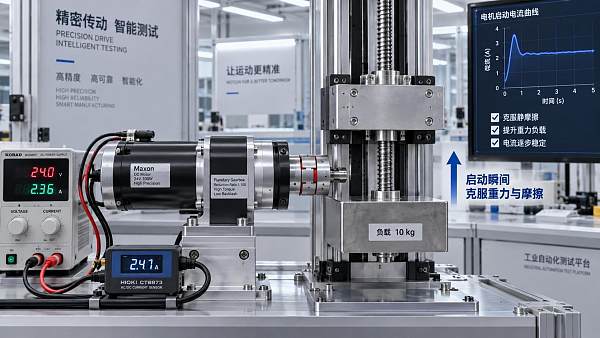
 Sep 15, 2026How to size DC gear motors for the required starting torqueGear motors DC sizing made practical: calculate starting torque, account for friction, gravity, inertia and voltage drop, then select a reliable motor with confidence.
 Sep 14, 2026How to verify high purity chemicals compliance before supplier approvalHigh purity chemicals compliance: learn how to verify supplier quality systems, CoAs, traceability, testing, and change control before approval.
 Sep 13, 2026What permits are needed to operate mapping drones in Europe?Mapping drones Europe: discover the permits, EASA categories, airspace approvals, site access, and GDPR checks needed for compliant aerial surveys.
 Sep 12, 2026What lead time should I expect for automatic transmission components? Planetary Gearboxes delivery forecasting for OEM planningWhat lead time should I expect for automatic transmission components? Get dynamic, AI-powered planetary gearbox delivery forecasting—designed for OEMs building next-gen hybrid & commercial powertrains.
 Sep 12, 2026Can polyamide replace metal in load-bearing components? Polymer Pulse structural performance data for 2026 applicationsCan polyamide replace metal in load-bearing components? Discover Polymer Pulse’s 2026 structural data—real-world performance, weight savings, and reliability breakthroughs.
 Sep 12, 2026How to handle a power electronics warranty claim: Harmonic Reducers documentation and escalation pathHow do I handle a power electronics warranty claim? Get a fast, intelligent, evidence-driven resolution for harmonic reducers—no bureaucracy, just precision diagnostics and real-time escalation.
 Sep 12, 2026Which motion control specifications matter most before purchase? Torque Logic selection criteria for automation engineersWhich motion control specifications are most important before purchase? Discover Torque Logic—the 4 non-negotiable, AI-aligned criteria that cut TCO by 27–41% and boost motion system availability to 99.992%.
 Sep 13, 2026Is agentic AI reliable enough for supplier screening? Supply Chain LLM validation framework for procurement teamsIs agentic AI reliable enough for supplier screening? Discover a rigorous LLM validation framework built for procurement teams—grounded in material traceability, regulatory compliance, and real-world operational constraints.
 Sep 14, 2026How to maintain edge AI systems after deployment: Predictive Maint AI operational protocols for field techniciansHow do I maintain edge AI systems after deployment? Discover predictive, physics-aware operational protocols designed for real-world field technicians—sustaining intelligence where silicon meets steel.
 Sep 15, 2026What compliance documents must a bioplastics supplier provide? Bio-Plastics regulatory checklist for procurementWhat compliance documents should a bioplastics supplier provide? Get our actionable regulatory checklist for food, medical & EU-bound applications.
 Sep 16, 2026How to prevent PET film defects during production: Barrier Films process control best practicesHow can I prevent PET film defects during production? Discover physics-driven barrier film process control—thermal precision, dynamic tension management & surface energy optimization.
 Sep 17, 2026Are thermoplastics suitable for long-term outdoor use? Engineering Resins durability assessment in 2026 UV/weather exposureAre thermoplastics suitable for long-term outdoor use? Discover 2026’s engineering resin durability insights — UV/weather resistance ranked, tested & actionable.
 Sep 18, 2026What to do when a servo motor fails during production: A Servo Actuators troubleshooting guide for maintenance teamsWhat should I do if a servo motor fails during production? Get a field-tested, AI-aware troubleshooting guide for maintenance teams—minimize downtime, maximize OEE.
 Sep 12, 2026How to compare wholesale party supplies by minimum order valueCompare wholesale party supplies by minimum order value, freight, SKU flexibility, and stock risk to choose suppliers that protect margins and simplify replenishment.
 Sep 11, 2026How proportional solenoid linearity affects precision motion controlProportional solenoid linearity directly affects precision motion control, valve metering, stability, and calibration. Learn how to evaluate performance for reliable automation.
 Sep 10, 2026When does supplier information platform automation reduce onboarding delays?Supplier information platform automation reduces onboarding delays by streamlining data collection, routing, renewals, and compliance checks—without replacing expert technical review.
 Sep 09, 2026How to size robotic motion systems for AMR payload changesRobotic motion systems for AMR payload changes: learn how to size motors, wheels, gearing, traction, and controls for safer, reliable performance.
 Sep 08, 2026How to perform a cylinder rod buckling calculation for long strokesCylinder rod buckling calculation made practical: learn how to assess effective length, end conditions, rod stiffness, load forces, and safety margins for reliable long-stroke cylinder design.
 Sep 07, 2026How to estimate the cost of industrial mechanical components before orderingIndustrial mechanical components cost: learn how to estimate material, machining, tooling, inspection, logistics, and hidden expenses before ordering. Compare quotes confidently and reduce sourcing risk.
 Sep 07, 2026What Is a Product Standards Database Used For?Product standards database guide: learn how to compare requirements, verify revisions, control specifications, and reduce compliance risks across design, sourcing, and production.