Search News
Industry Portal
Popular Tags
Material Science for Smart Manufacturing: Key Use Cases
Author
Time
Click Count
Material science for smart manufacturing is no longer a niche R&D topic. For technical evaluators, it is a practical framework for judging whether a production system can deliver measurable gains in uptime, precision, efficiency, and lifecycle resilience.
The core question is not simply which material is stronger or lighter. It is how material behavior interacts with automation, sensing, data models, process control, and maintenance requirements across real industrial environments.
When procurement teams and engineering reviewers benchmark smart factory technologies, material decisions often determine whether digital intelligence translates into repeatable physical performance. This is where material science for smart manufacturing creates its strongest business and technical value.
Why technical evaluators are prioritizing material science in smart manufacturing decisions
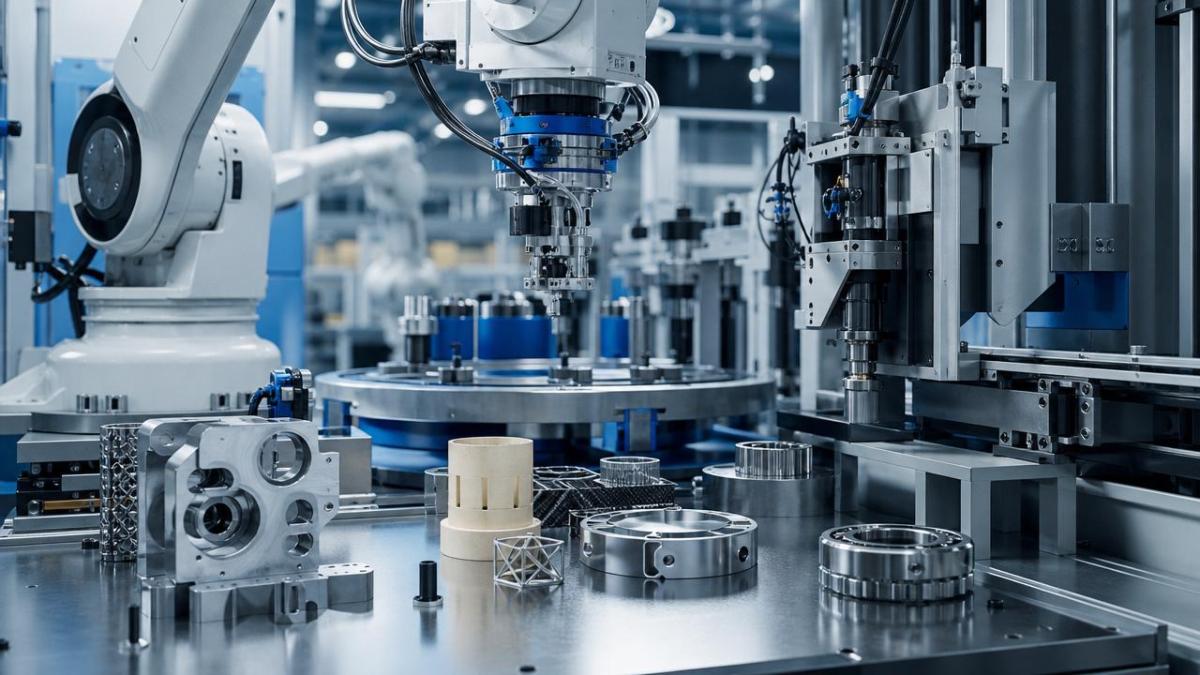
Technical evaluators usually search this topic with a practical intent. They want to identify use cases, compare investment value, and understand which material innovations improve smart manufacturing outcomes without creating hidden integration or reliability risks.
In most industrial settings, advanced automation only performs as well as the materials embedded in machines, tooling, electronics, sensors, enclosures, and finished components. If materials degrade early, drift thermally, corrode, fatigue, or contaminate output, software optimization cannot fully compensate.
That is why the most useful evaluation lens combines three dimensions: material performance, process compatibility, and digital controllability. A promising solution must work not only in the lab, but also at scale, under variable loads, with stable data feedback and manageable supply risk.
For technical assessment teams, the priority is usually to answer a short list of critical questions. Will the material improve throughput or quality? Can it support predictive maintenance? Does it lower energy use? Is it compatible with existing equipment and supplier standards?
These concerns matter more than broad claims about innovation. In smart manufacturing, the winning material is not always the most advanced one. It is the one that creates dependable performance within the realities of cost, production stability, and lifecycle management.
What material science contributes to a smart manufacturing architecture
Material science contributes at several layers of the manufacturing stack. At the physical level, it improves wear resistance, thermal stability, conductivity, surface behavior, and structural strength. At the process level, it enables tighter tolerances and more stable operating windows.
At the system level, materials influence how well machines can be instrumented, monitored, and optimized through intelligent control. For example, materials with predictable degradation profiles generate cleaner maintenance signals than those that fail suddenly or inconsistently.
This is especially relevant in factories built around machine vision, edge analytics, robotics, digital twins, and closed-loop control. Smart systems require components whose physical properties remain stable enough for algorithms to make trustworthy decisions over time.
Material science also supports sustainability targets. Lightweight alloys, advanced polymers, engineered ceramics, and recyclable composites can reduce energy intensity, extend replacement intervals, and improve resource utilization, provided they are selected with process and end-of-life considerations in mind.
For evaluators, the implication is clear: materials should not be reviewed as isolated procurement items. They should be treated as enablers of operational intelligence, maintenance strategy, product consistency, and long-term asset economics.
Use case 1: Extending equipment life and reducing unplanned downtime
One of the most immediate use cases for material science for smart manufacturing is equipment durability. Production assets operate under friction, vibration, heat cycling, chemical exposure, and repetitive mechanical loading. Material upgrades can directly reduce these failure drivers.
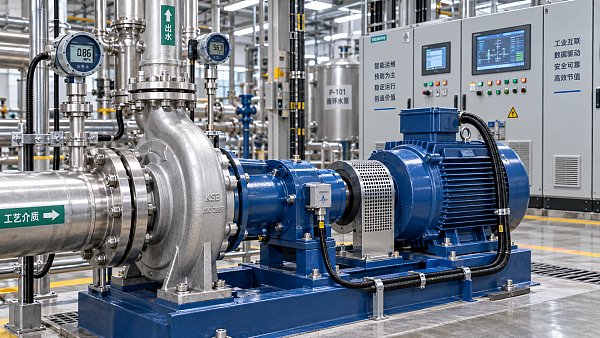
Examples include wear-resistant coatings for cutting tools, corrosion-resistant alloys for harsh process environments, and engineered polymers for low-friction moving assemblies. These choices often increase mean time between failures while reducing the frequency of service intervention.
For technical evaluators, the deeper value lies in predictability. Smarter materials and surface treatments tend to degrade more gradually and consistently, which improves the quality of sensor data used in condition monitoring and predictive maintenance models.
If a component’s wear signature can be measured with high confidence, maintenance teams can move away from rigid replacement schedules and toward actual health-based servicing. That lowers spare inventory pressure, reduces unnecessary shutdowns, and improves asset utilization.
When benchmarking vendors, assess not only headline durability data but also fatigue curves, thermal aging behavior, contamination resistance, and field performance under realistic duty cycles. Those indicators are often more useful than generic claims about toughness or premium quality.
Use case 2: Improving precision, repeatability, and process stability
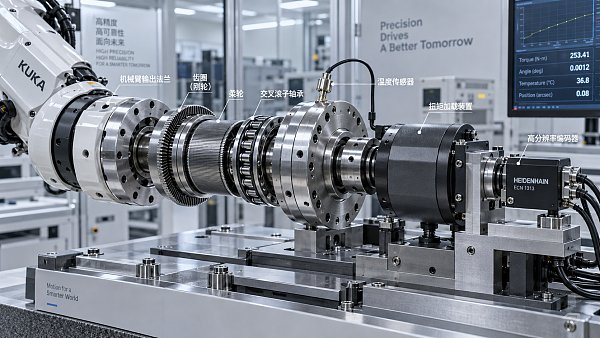
Precision manufacturing depends on materials that behave consistently across temperature changes, pressure variations, and repeated actuation cycles. In automated environments, even small material deviations can produce cumulative errors that affect quality yield and calibration stability.
Low-expansion materials, dimensionally stable composites, advanced ceramics, and high-purity specialty metals can improve the repeatability of fixtures, tooling, actuators, optical assemblies, and metrology systems. This matters in electronics, medical devices, semiconductors, and aerospace production.
Material selection also affects sensor performance. Housings, substrates, and interface materials influence signal integrity, thermal noise, and long-term drift. If sensors are embedded in unstable material systems, the entire smart manufacturing control loop becomes less reliable.
For evaluators, this use case should be linked to process capability metrics. Ask how the proposed material influences Cp, Cpk, scrap rate, recalibration frequency, and first-pass yield. These measures connect material science decisions directly to production quality outcomes.
It is also important to verify manufacturability. A highly stable material may still create problems if it is difficult to machine, bond, print, form, or inspect at volume. Precision gains are valuable only when they can be sustained in routine industrial execution.
Use case 3: Enabling lightweight, energy-efficient, and high-speed systems
As smart manufacturing systems become faster and more automated, mass and energy efficiency become strategic constraints. Material science helps solve both by enabling lighter structures, lower inertial loads, and more efficient thermal and electrical behavior.
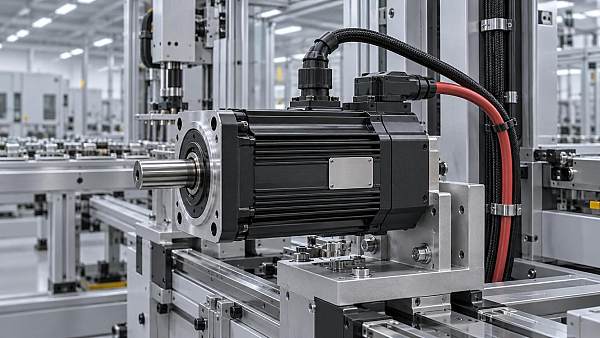
In robotics and automated handling, lightweight materials can improve acceleration, reduce motor load, and lower energy consumption without sacrificing structural performance. In rotating equipment, optimized materials can reduce vibration, improve balance, and extend component life.
Thermally conductive materials also improve heat dissipation in drives, power electronics, and high-density control hardware. Better thermal management often translates into higher reliability and more stable machine performance, especially in compact, digitally intensive production cells.
Technical evaluators should quantify these gains across the full system. A lighter arm or enclosure may reduce energy use, but it may also affect stiffness, damping, repairability, or shielding. Strong evaluation compares net system performance rather than isolated material attributes.
This is where lifecycle modeling is useful. Instead of focusing only on upfront material cost, review energy consumption, maintenance intervals, operating speed, and replacement frequency. In many cases, a more advanced material pays back through sustained efficiency and throughput.
Use case 4: Supporting additive manufacturing and design freedom
Additive manufacturing has expanded the practical relevance of material science in industrial production. The performance of printed metals, polymers, and composite feedstocks now determines whether complex parts can move from prototyping into repeatable, qualified manufacturing workflows.
Smart manufacturing benefits because additive processes generate rich digital traceability. Build parameters, thermal histories, powder conditions, and post-processing data can be linked to material outcomes, creating a stronger feedback loop between design, production, and quality assurance.
Key use cases include lightweight lattice structures, consolidated assemblies, customized tooling, spare parts on demand, and functionally optimized geometries that are difficult or impossible to create using conventional processes. These designs can reduce assembly complexity and material waste.
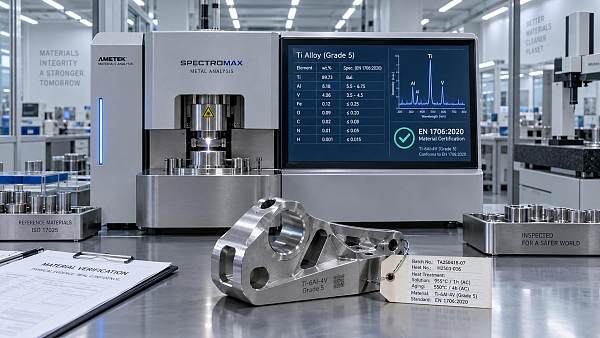
However, technical evaluators should examine process-material interaction carefully. Printed material properties may vary by orientation, batch condition, machine settings, and heat treatment. Qualification requires more than tensile strength data from ideal test coupons.
The best assessment approach looks at repeatability, post-processing burden, inspection requirements, and standards compliance. In other words, evaluate whether the material-platform combination can produce stable industrial output, not just geometrical novelty.
Use case 5: Building smarter and more resilient supply chains
Material science also affects supply chain resilience, which has become a central concern in smart manufacturing strategy. A material may offer excellent performance, yet still be a weak choice if it depends on fragile sourcing, volatile pricing, or limited regional processing capacity.
Technical evaluators increasingly need dual visibility: performance benchmarking and sourcing feasibility. This includes understanding substitution options, recycled content availability, certification pathways, and whether the material can be supported across multiple production geographies.
Advanced material platforms can improve resilience by enabling local production, reduced part counts, longer service intervals, or more repairable component designs. In some cases, digital manufacturing paired with qualified feedstocks can shorten replenishment cycles significantly.
At the same time, some highly specialized materials create concentration risk. If only a few suppliers can meet purity, tolerance, or processing requirements, the procurement advantage of a technically superior material may erode quickly under market disruption.
For smart manufacturing programs, resilient material choices are those that balance technical fit with supply continuity, compliance readiness, and lifecycle traceability. This broader perspective is essential for enterprise-scale deployment decisions.
How to evaluate material opportunities without overestimating innovation claims
Because the market is crowded with performance claims, evaluators need a disciplined framework. Start by defining the target failure mode or operational constraint. Material changes should solve a specific production problem, not serve as a generic innovation signal.
Next, test the material against relevant industrial conditions. Lab data is useful, but field-equivalent performance matters more. Include thermal cycling, contamination, impact, vibration, humidity, electrical load, and maintenance handling where applicable.
Then review integration complexity. A material that improves one metric but forces tooling changes, new joining methods, additional inspection steps, or difficult recycling pathways may not be the best operational choice despite strong technical properties.
It is also important to assess data compatibility. In smart manufacturing, materials should support sensing, traceability, and model-based optimization where possible. Components that are easier to monitor and diagnose often provide more value than those that are simply stronger on paper.
Finally, compare total lifecycle value. Include cost of downtime, quality loss, energy use, replacement frequency, qualification effort, and supply risk. This approach helps technical evaluators identify where material science for smart manufacturing creates real enterprise advantage.
Conclusion: the most valuable use cases connect material performance to system intelligence
The strongest use cases for material science for smart manufacturing are not abstract or purely scientific. They are operational. They help factories run longer, more precisely, more efficiently, and with greater resilience under real commercial constraints.
For technical evaluators, the key is to judge materials as part of an integrated smart manufacturing system. Durability, precision, thermal behavior, sensing compatibility, manufacturability, and sourcing resilience all shape whether intelligent automation can perform reliably at scale.
In practice, the best material decisions are those that improve both physical asset behavior and digital decision quality. When those two dimensions align, manufacturers gain not just better components, but smarter and more dependable production capability.
That is why material science for smart manufacturing deserves a central place in technology benchmarking. It provides a concrete path to evaluate lifecycle value, reduce risk, and identify which innovations can truly support the next generation of industrial performance.
Recommended News
 Sep 19, 2026When can a supply chain LLM reduce time spent finding shipment updates?Supply chain LLMs can cut shipment-update search time by connecting carrier events, ERP data, and documents—giving teams traceable answers and faster exception response.
 Sep 18, 2026How industrial monitoring equipment helps prevent unplanned downtimeIndustrial monitoring equipment helps teams detect early asset issues, prioritize maintenance, and prevent costly unplanned downtime. Explore practical strategies for reliable operations.
 Sep 17, 2026What next-gen harmonic drive research means for robot joint accuracyNext-gen harmonic drive research reveals how backlash, stiffness, thermal drift, and sensing shape robot joint accuracy. Explore smarter validation strategies.
 Sep 16, 2026How Southeast Asian climates affect cylinder seal frictionCylinder seal friction Southeast Asia: learn how humidity, heat, monsoons, and contamination affect motion stability, wear, and seal selection.
 Sep 15, 2026How to size DC gear motors for the required starting torqueGear motors DC sizing made practical: calculate starting torque, account for friction, gravity, inertia and voltage drop, then select a reliable motor with confidence.
 Sep 14, 2026How to verify high purity chemicals compliance before supplier approvalHigh purity chemicals compliance: learn how to verify supplier quality systems, CoAs, traceability, testing, and change control before approval.
 Sep 13, 2026What permits are needed to operate mapping drones in Europe?Mapping drones Europe: discover the permits, EASA categories, airspace approvals, site access, and GDPR checks needed for compliant aerial surveys.
 Sep 12, 2026What lead time should I expect for automatic transmission components? Planetary Gearboxes delivery forecasting for OEM planningWhat lead time should I expect for automatic transmission components? Get dynamic, AI-powered planetary gearbox delivery forecasting—designed for OEMs building next-gen hybrid & commercial powertrains.
 Sep 12, 2026Can polyamide replace metal in load-bearing components? Polymer Pulse structural performance data for 2026 applicationsCan polyamide replace metal in load-bearing components? Discover Polymer Pulse’s 2026 structural data—real-world performance, weight savings, and reliability breakthroughs.
 Sep 12, 2026How to handle a power electronics warranty claim: Harmonic Reducers documentation and escalation pathHow do I handle a power electronics warranty claim? Get a fast, intelligent, evidence-driven resolution for harmonic reducers—no bureaucracy, just precision diagnostics and real-time escalation.
 Sep 12, 2026Which motion control specifications matter most before purchase? Torque Logic selection criteria for automation engineersWhich motion control specifications are most important before purchase? Discover Torque Logic—the 4 non-negotiable, AI-aligned criteria that cut TCO by 27–41% and boost motion system availability to 99.992%.
 Sep 13, 2026Is agentic AI reliable enough for supplier screening? Supply Chain LLM validation framework for procurement teamsIs agentic AI reliable enough for supplier screening? Discover a rigorous LLM validation framework built for procurement teams—grounded in material traceability, regulatory compliance, and real-world operational constraints.
 Sep 14, 2026How to maintain edge AI systems after deployment: Predictive Maint AI operational protocols for field techniciansHow do I maintain edge AI systems after deployment? Discover predictive, physics-aware operational protocols designed for real-world field technicians—sustaining intelligence where silicon meets steel.
 Sep 15, 2026What compliance documents must a bioplastics supplier provide? Bio-Plastics regulatory checklist for procurementWhat compliance documents should a bioplastics supplier provide? Get our actionable regulatory checklist for food, medical & EU-bound applications.
 Sep 16, 2026How to prevent PET film defects during production: Barrier Films process control best practicesHow can I prevent PET film defects during production? Discover physics-driven barrier film process control—thermal precision, dynamic tension management & surface energy optimization.
 Sep 17, 2026Are thermoplastics suitable for long-term outdoor use? Engineering Resins durability assessment in 2026 UV/weather exposureAre thermoplastics suitable for long-term outdoor use? Discover 2026’s engineering resin durability insights — UV/weather resistance ranked, tested & actionable.
 Sep 18, 2026What to do when a servo motor fails during production: A Servo Actuators troubleshooting guide for maintenance teamsWhat should I do if a servo motor fails during production? Get a field-tested, AI-aware troubleshooting guide for maintenance teams—minimize downtime, maximize OEE.
 Sep 12, 2026How to compare wholesale party supplies by minimum order valueCompare wholesale party supplies by minimum order value, freight, SKU flexibility, and stock risk to choose suppliers that protect margins and simplify replenishment.
 Sep 11, 2026How proportional solenoid linearity affects precision motion controlProportional solenoid linearity directly affects precision motion control, valve metering, stability, and calibration. Learn how to evaluate performance for reliable automation.
 Sep 10, 2026When does supplier information platform automation reduce onboarding delays?Supplier information platform automation reduces onboarding delays by streamlining data collection, routing, renewals, and compliance checks—without replacing expert technical review.
 Sep 09, 2026How to size robotic motion systems for AMR payload changesRobotic motion systems for AMR payload changes: learn how to size motors, wheels, gearing, traction, and controls for safer, reliable performance.
 Sep 08, 2026How to perform a cylinder rod buckling calculation for long strokesCylinder rod buckling calculation made practical: learn how to assess effective length, end conditions, rod stiffness, load forces, and safety margins for reliable long-stroke cylinder design.
 Sep 07, 2026How to estimate the cost of industrial mechanical components before orderingIndustrial mechanical components cost: learn how to estimate material, machining, tooling, inspection, logistics, and hidden expenses before ordering. Compare quotes confidently and reduce sourcing risk.
 Sep 07, 2026What Is a Product Standards Database Used For?Product standards database guide: learn how to compare requirements, verify revisions, control specifications, and reduce compliance risks across design, sourcing, and production.