Search News
Industry Portal
Popular Tags
Where digital supply chain projects lose visibility first
Author
Time
Click Count
Digital supply chain projects rarely lose visibility everywhere at once. The first breakdown usually happens at the handoff points: where supplier data enters internal systems, where physical material status no longer matches digital records, or where planning decisions outpace verified operational reality. For manufacturers working across sustainability targets, AI-driven production, and advanced materials, this is more than a reporting issue. It is an execution risk that affects procurement, production continuity, quality, compliance, and cost.
For research-driven readers and operational users, the key question is not whether visibility matters. It is where it fails first, how to detect that failure early, and what kind of supply chain intelligence is actually useful in an industrial environment. In most cases, visibility is lost before the dashboard turns red—at the point where systems, suppliers, and shop-floor conditions stop describing the same truth.
Where visibility usually breaks first in digital supply chain projects
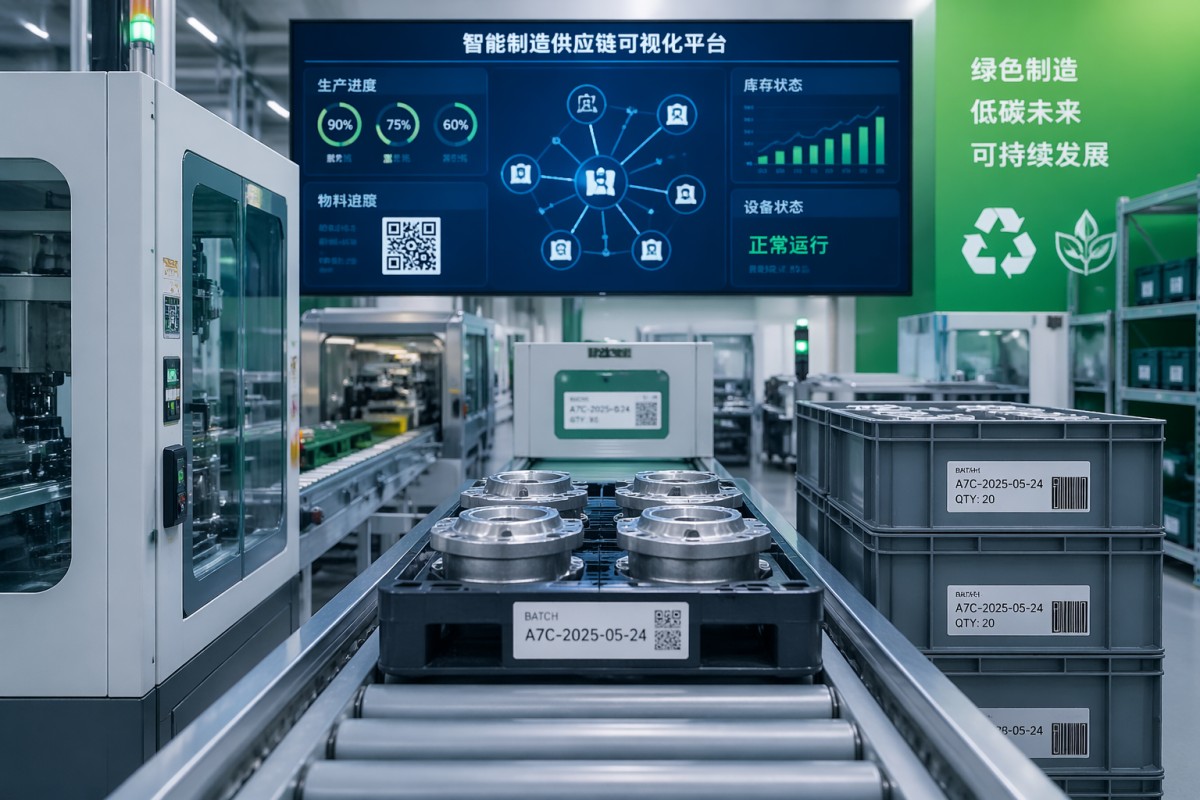
The earliest loss of visibility in a digital supply chain project is typically not in the analytics layer. It happens upstream, in the operational seams between data capture, material movement, and decision-making. These seams are especially fragile in complex manufacturing ecosystems where multiple suppliers, legacy systems, sustainability requirements, and variable lead times intersect.
There are four recurring failure points:
- Supplier data onboarding: external data arrives late, incomplete, or in incompatible formats
- Material state tracking: the digital record says one thing, while the actual inventory, batch condition, or in-transit status says another
- Cross-functional handoffs: procurement, planning, engineering, and operations use different assumptions and update cycles
- Decision synchronization: teams act on forecasts or rules that are no longer aligned with real-world supply conditions
In other words, visibility is usually lost first where the supply chain shifts from one source of truth to another. That could be supplier to ERP, warehouse to MES, planning system to production floor, or sustainability reporting layer to actual material provenance records.
Why dashboards often show the problem too late
Many digital supply chain initiatives focus heavily on visualization. Dashboards are useful, but they are downstream tools. If the underlying data architecture, process discipline, and event timing are weak, the dashboard can only display polished uncertainty.
This is why teams often feel they have visibility until disruption exposes the opposite. A dashboard may show inventory available, but not reflect quality hold status. A supplier portal may show shipment confirmed, but not indicate packaging deviation, customs delay, or material substitution. A planning system may optimize around lead-time assumptions that no longer hold under current demand or energy constraints.
For industrial organizations, this gap is especially damaging because physical production depends on high-integrity signals. In environments involving smart materials, high-performance components, or regulated manufacturing, delayed or distorted visibility can trigger:
- production stoppages
- expedite costs
- quality escapes
- compliance risk
- incorrect procurement decisions
- poor benchmarking conclusions
By the time a KPI deteriorates, the original loss of visibility may have occurred days or weeks earlier.
What target readers usually care about most
Readers researching this topic typically want practical answers to three questions:
- How do we know whether our visibility is real or only cosmetic?
- Which operational points deserve attention first?
- What improvements produce measurable value without rebuilding the entire stack?
For operators and implementation-focused users, visibility is valuable only if it supports action. They need to know whether a late signal will affect production scheduling, whether supplier data can be trusted, and whether material traceability is detailed enough for both performance and sustainability requirements.
For information researchers supporting strategic decisions, the concern is slightly broader. They need reliable ways to compare digital maturity, benchmark supply chain resilience, and identify where intelligent automation or industrial data integration can create tangible returns.
How to identify the first true blind spot in your supply chain
If an organization wants to improve digital supply chain visibility, it should not start with more dashboards. It should start by locating the earliest point at which digital records diverge from operational reality.
A useful diagnostic approach includes the following checks:
- Event latency: how long does it take for a real-world supply event to appear in the system?
- Data completeness: are batch, lot, condition, certification, and supplier update fields consistently populated?
- Process alignment: do procurement, planning, logistics, and production interpret the same status codes the same way?
- Exception traceability: when a disruption occurs, can teams trace exactly where signal quality failed?
- Material-to-data linkage: can the organization connect physical material identity to digital process records across its lifecycle?
In advanced manufacturing, these checks matter more than broad claims of end-to-end visibility. A company may have many integrated systems and still lack trustworthy visibility at the exact point where a production-critical resin, alloy, component, or subassembly changes status.
Why this matters more in sustainable and AI-enabled manufacturing
Industrial convergence increases both the value of visibility and the cost of losing it. When manufacturing systems depend on AI models, predictive planning, automated replenishment, or sustainability tracking, poor visibility does not stay isolated. It propagates.
For example, if material provenance data is weak, sustainability reporting becomes unreliable. If sensor and transaction data are not synchronized, AI-based planning models learn from distorted inputs. If advanced material performance data is disconnected from supplier and process records, quality teams struggle to isolate root causes.
This is why digital supply chain visibility should be treated as infrastructure, not just reporting. In the context of intelligent automation and the economy of atoms, visibility is what allows organizations to connect high-performance physical assets with trustworthy digital intelligence.
For companies seeking stronger resilience, the objective is not maximum data volume. It is decision-grade visibility: data that is timely, contextual, and operationally usable.
What better visibility looks like in practice
High-value supply chain visibility has several practical characteristics:
- It starts at critical nodes, not everywhere at once. Focus on the suppliers, materials, and production stages with the highest operational or strategic impact.
- It connects physical and digital states. Inventory location alone is not enough; teams need batch condition, compliance status, substitution risk, and readiness for use.
- It supports exception handling. Good visibility helps users respond to deviations quickly instead of just observing them.
- It is benchmarkable. Organizations can compare signal quality, update speed, and material traceability across sites, suppliers, or business units.
- It improves decisions, not just reporting aesthetics. Better visibility should reduce avoidable shortages, improve planning confidence, and strengthen supplier coordination.
For industrial ecosystems, this often means combining supplier intelligence, material data discipline, process interoperability, and technical benchmarking rather than relying on a single software layer to solve everything.
A practical prioritization framework for teams
Teams that want to reduce blind spots should prioritize in this order:
- Map critical handoff points between suppliers, internal systems, warehouses, planning functions, and production operations.
- Rank by business consequence, not by system ownership. The most important blind spot is the one that can stop production or distort strategic decisions.
- Validate digital records against physical reality through targeted audits of inventory, batch traceability, lead times, and exception history.
- Improve signal quality at the source before expanding analytics complexity.
- Measure outcomes such as schedule adherence, response time to exceptions, inventory confidence, and supplier coordination quality.
This approach helps both operational users and decision-makers avoid a common mistake: trying to create full visibility before creating reliable visibility.
Conclusion
Digital supply chain projects usually lose visibility first at the interfaces where data, materials, and decisions stop matching each other. That failure often begins in supplier onboarding, material status tracking, cross-functional handoffs, or outdated planning assumptions—not in the dashboard itself.
For manufacturers and industrial stakeholders, the most useful response is to identify where operational truth first separates from digital representation, then strengthen that point with better data discipline, process alignment, and benchmarkable intelligence. In a manufacturing environment shaped by sustainability requirements, advanced materials, and intelligent automation, real visibility is not about seeing more. It is about seeing the right thing early enough to act.
Organizations that understand this distinction are better positioned to build resilient, high-performance supply chains that support both technical execution and strategic industrial growth.
Recommended News
 May 02, 2026Choosing a Sustainable Materials Supplier for Stable Quality and Lead TimesSustainable materials supplier selection starts with quality and lead-time control. Learn a practical checklist to reduce risk, protect margins, and build a reliable supply network.
 May 02, 2026AI in Manufacturing Applications That Reduce Downtime in Daily OperationsAI in manufacturing applications help maintenance teams detect faults earlier, cut unplanned downtime, improve service response, and keep daily operations running with greater reliability.
 May 02, 2026Material Science Research Trends Shaping Better Industrial MaterialsMaterial science research is transforming industrial materials with smarter, lighter, and more sustainable solutions. Discover key trends driving performance, resilience, and competitive advantage.
 May 02, 2026Automation Technology for Factories: Key Features to Evaluate Before You InvestAutomation technology for factories: compare integration, scalability, flexibility, and lifecycle value before you invest. Learn how to reduce risk and choose the right-fit solution.
 May 02, 2026Manufacturing Technology Innovations Worth Piloting Before Full-Scale RolloutManufacturing technology innovations worth piloting first: discover practical ways to validate ROI, reduce rollout risk, and choose scalable solutions that improve quality, uptime, and efficiency.
 May 02, 2026Smart Materials Applications: Where They Solve Real Reliability ProblemsSmart materials applications help detect fatigue, vibration, heat, and corrosion earlier—learn where they solve real reliability problems and improve industrial safety.
 May 02, 2026AI in Manufacturing Benefits That Matter Most on the Factory FloorAI in manufacturing benefits include less downtime, faster troubleshooting, and stronger quality control. See how factory teams improve output, safety, and daily decision-making.
 May 02, 2026How to Compare Sustainable Materials for Construction Without Costly MistakesSustainable materials for construction: learn how to compare carbon impact, performance, supply resilience, and lifecycle cost to avoid costly mistakes and make smarter procurement decisions.
 May 02, 2026Smart Manufacturing Technology: What Actually Delivers ROI in 2026Smart manufacturing technology in 2026 is all about proven ROI. Discover which use cases boost uptime, quality, resilience, and sustainability across enterprise operations.
 May 02, 2026How Advanced Materials for Industrial Automation Improve Precision and UptimeAdvanced materials for industrial automation improve precision, reduce wear, and boost uptime. Discover how smarter material choices cut maintenance and strengthen reliable, high-output operations.
 May 02, 20262026 Global Trade & Investment Summit in Beijing: AI+Manufacturing FocusAI+Manufacturing takes center stage at the 2026 Global Trade & Investment Summit in Beijing — discover cross-border AI supply chain solutions, LLM white papers & POC matchmaking for global buyers.
 May 02, 2026Global Engineering Resins Index Up 8.2% in April; China Delivery Stability Gains FocusEngineering resins prices surge 8.2% in April—discover how rising costs and China’s 98.3% on-time delivery rate reshape global procurement strategies.
 May 02, 2026FDA Updates Bio-Plastics Food Contact Guidance: Migration Testing Deadline Nov 1, 2026FDA bio-plastics food contact guidance updated: migration testing deadline is Nov 1, 2026. Ensure compliance now to avoid U.S. market access delays.
 May 02, 20262026 China Bike Expo Focuses on Engineering Resins LightweightingEngineering resins take center stage at 2026 China Bike Expo—discover how PA66-GF30 and PPA-LCP are driving lightweighting, cost savings & export efficiency for bicycle OEMs and suppliers.
 May 02, 2026EU REACH SVHC List Adds 247 Substances Effective May 2026EU REACH SVHC List adds 247 substances effective May 2026 — critical for electronic-grade chemical exporters, SDS updates & supply chain compliance.
 May 02, 2026Vietnam Mandates Vietnamese SDS & QR Code for Industrial Catalysts from Oct 2026Vietnam SDS & QR code mandate for industrial catalysts starts Oct 2026 — ensure Vietnamese-language SDS and GS1-compliant origin labels now to avoid customs delays and supply chain disruption.
 May 02, 20262026 World Intelligent Industry Expo: Cargo Drones & Inspection UAVs in TianjinCargo drones & inspection UAVs take center stage at the 2026 World Intelligent Industry Expo in Tianjin — discover export-ready solutions, low-altitude economy innovations, and global procurement opportunities.
 May 02, 2026SABIC Mandates GCC Certification for Functional Coatings in Saudi Arabia from Q3 2026GCC certification mandatory for functional coatings in Saudi Arabia from Q3 2026 — essential for exporters, manufacturers & suppliers. Act now to ensure market access.
") May 02, 2026TÜV Rheinland Updates PV Backsheet Barrier Films Standard (V2.1)TÜV Rheinland PV Backsheet Barrier Films V2.1 now mandates UV-10000h & PID-1500V testing—key for EU, ME & LATAM solar exports. Act now to avoid project rejections.
May 02, 2026TÜV Rheinland Updates PV Backsheet Barrier Films Standard (V2.1)TÜV Rheinland PV Backsheet Barrier Films V2.1 now mandates UV-10000h & PID-1500V testing—key for EU, ME & LATAM solar exports. Act now to avoid project rejections. May 02, 2026US BIS Proposes Export Controls on Harmonic Reducers, Servo ActuatorsUS BIS proposes export controls on harmonic reducers and servo actuators—critical for robotics & embodied AI. Learn impacts, compliance steps, and strategic responses now.
 May 01, 2026AI in Manufacturing: The First Use Cases Worth TestingAI in manufacturing starts with practical pilots like visual inspection, predictive maintenance, and scheduling support. Discover the first use cases worth testing to cut risk, improve throughput, and unlock measurable ROI.
 May 01, 2026Industrial Automation Solutions That Reduce Downtime on Busy Production LinesIndustrial automation solutions reduce downtime on busy production lines with better machine visibility, faster fault response, and smarter operator support for safer, more stable output.
 May 01, 2026Choosing a Smart Materials Manufacturer Without Overlooking Scale-Up RisksSmart materials manufacturer selection goes beyond lab results. Learn how to spot scale-up risks, verify manufacturing maturity, and choose suppliers built for reliable growth.
 May 01, 2026High-Tech Industrial Projects: Where Delays Usually StartHigh-tech industrial projects often face delays long before construction begins. Discover the hidden risks in specs, interfaces, and procurement—and how to protect schedule and performance.