
Search News
Industry Portal
Popular Tags
Industrial benchmarking breaks down when plants measure output differently
Author
Time
Click Count
Industrial benchmarking only works when plants are measuring the same thing in the same way. If one site reports “output” as gross units produced, another uses saleable units, and a third includes rework or outsourced finishing, the comparison is not intelligence—it is noise. For researchers and plant operators working across digital supply chains, AI-enabled manufacturing systems, and sustainability reporting, inconsistent output definitions can distort capacity planning, cost analysis, OEE interpretation, carbon intensity calculations, and supplier decisions. The practical takeaway is clear: before comparing performance across plants, companies need a shared measurement model, a governed data dictionary, and traceable rules for how production is counted.
That matters even more in complex industrial environments where materials, automation layers, and reporting systems intersect. In modern manufacturing technology stacks, benchmarking is no longer just a finance or operations exercise. It is a foundation for industrial intelligence, procurement strategy, supply chain visibility, and digital transformation. When the metric logic is inconsistent, every downstream decision becomes less reliable.
Why industrial benchmarking fails when “output” means different things
The core search intent behind this topic is practical: readers want to understand why benchmarking across plants often produces misleading results, how inconsistent output measurement causes that failure, and what to do about it. For information researchers, the concern is data credibility. For operators and plant users, the concern is whether targets, comparisons, and improvement mandates are fair and actionable.
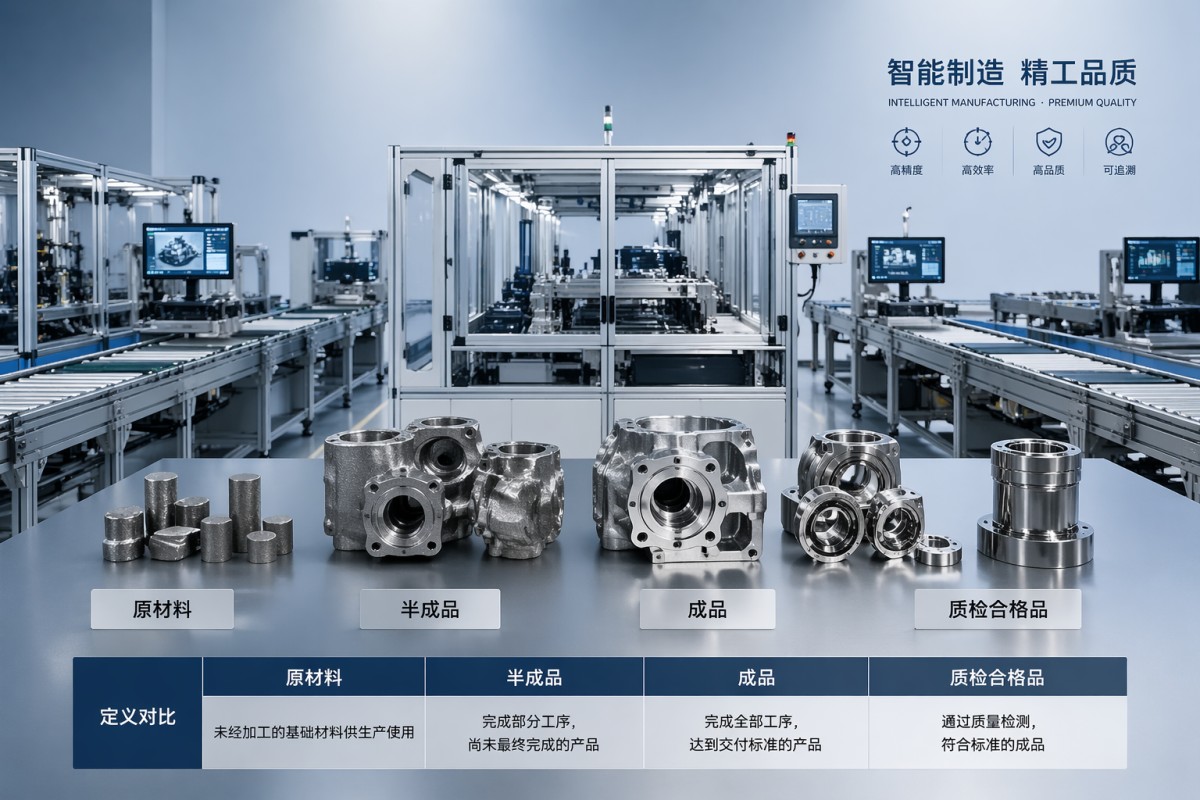
In many industrial organizations, output looks simple until teams inspect how each site actually calculates it. One plant may report total pieces produced at the end of a line. Another may exclude scrap. A third may count only inspected and accepted units. A process manufacturer may report by tonnage, while a downstream site reports by packaged units. A highly automated facility may capture machine output directly from PLC or MES signals, while a legacy site depends on shift logs or ERP postings. All of these can be internally valid, but they are not automatically comparable.
Once those differences are rolled into industrial benchmarking dashboards, several problems emerge:
- False productivity gaps: One plant appears more efficient simply because it counts output earlier in the process or includes rework.
- Misleading cost per unit: If the denominator changes from gross output to net saleable output, cost comparisons lose meaning.
- Distorted OEE and capacity analysis: Performance rates may look better or worse depending on which production events are recognized as valid output.
- Weak supply chain intelligence: Planning teams may overestimate available capacity or underestimate yield-related constraints.
- Inaccurate sustainability metrics: Energy intensity, waste intensity, and carbon per unit become unreliable when unit definitions differ.
In short, industrial convergence depends on metric convergence. Without standardized output logic, advanced analytics and AI models inherit bad assumptions from the source data.
What researchers and operators actually need before trusting benchmark data
Target readers in this scenario usually do not want abstract commentary about “better alignment.” They want a way to judge whether benchmark figures are trustworthy enough for operational or strategic use. The most useful content, therefore, is not a generic list of KPI ideas but a practical framework for validating comparability.
Researchers and operational users typically care about five questions:
- What exactly is being counted as output? Is it gross production, good units, saleable units, equivalent units, weight, volume, batches, or completed orders?
- At which process step is output recognized? At machine discharge, after quality inspection, after packaging, after curing, or after warehouse receipt?
- How are scrap, rework, co-products, and by-products treated? These decisions strongly affect comparability in real manufacturing environments.
- Which systems provide the number? MES, SCADA, ERP, manual log sheets, historian data, or blended reporting logic?
- Can the metric be audited consistently across sites? If local teams cannot explain how the value is constructed, benchmarking quality is already compromised.
For benchmarking to support decision-making, the answer to these questions must be documented, repeatable, and accepted across all participating plants. Otherwise, the benchmark should be treated as directional at best, not as a basis for target setting, capital allocation, or supplier qualification.
How inconsistent output definitions damage AI-driven manufacturing and supply chain decisions
This issue has become more serious because industrial organizations increasingly connect benchmarking data to AI models, digital twins, predictive planning tools, and procurement workflows. In the past, inconsistent output data might only weaken a monthly performance review. Today, it can undermine automated decision logic across the enterprise.
Consider a few common examples:
- AI-based demand and capacity planning: If historical plant output includes different counting rules by site, the model learns from inconsistent production realities and produces weaker forecasts.
- Supplier and network allocation: A supply chain orchestrator may route demand to a plant believed to be more productive, when the apparent advantage is caused by different reporting logic rather than real capability.
- Benchmark-driven capital investment: Leaders may fund replication of a “high-performing” process that was measured on a more favorable denominator.
- Sustainability programs: Carbon per unit, energy per unit, and water per unit all depend on a stable definition of output. Inconsistent units can create false improvement stories or hide real inefficiencies.
- Operator performance reviews: Local teams may be asked to close benchmark gaps that are methodological, not operational.
For organizations pursuing resilient global manufacturing, this is not a minor reporting issue. It is a data governance issue with direct implications for operational efficiency, benchmarking integrity, and industrial strategy.
A practical framework to standardize output metrics across plants
The strongest response is to build a standard measurement architecture that can work across diverse assets, products, and geographies. That does not always mean every plant must use an identical physical unit. It means the enterprise needs agreed conversion logic and transparent definitions so like-for-like comparisons become possible.
A useful framework usually includes the following elements:
1. Define the primary benchmark unit
Select the output basis that best matches the decision context. In discrete manufacturing, this may be good units or saleable units. In process industries, it may be mass, volume, standardized batch equivalents, or functional output adjusted for grade. The key is choosing a unit that supports business decisions, not just local reporting convenience.
2. Separate gross, good, and saleable output
Do not force one number to serve every purpose. Gross output is useful for equipment analysis. Good output supports yield review. Saleable output is often best for cost, service, and customer-facing capacity analysis. Keeping these distinct reduces confusion and preserves analytical value.
3. Establish the recognition point
Document the exact stage where output is counted. For example: “Output is recognized after final quality release and before warehouse transfer.” This is one of the most important standardization decisions because it affects every plant comparison.
4. Create rules for exceptions
Define how to handle rework, partial lots, campaign changeovers, off-spec material, co-products, subcontracted finishing, and production used internally. Without exception rules, local interpretation will quickly reintroduce inconsistency.
5. Map metric lineage to systems
Every benchmark value should have a traceable path from source system to dashboard. That means users can see whether the number came from machine data, MES transactions, ERP postings, or manual entries. Data lineage is essential for trust.
6. Build a shared industrial data dictionary
A cross-plant data dictionary should include the metric name, business definition, formula, source fields, exclusions, frequency, owner, and audit notes. This is where industrial intelligence becomes operationally usable rather than conceptually aspirational.
7. Validate with pilot comparisons
Before enterprise rollout, compare a small number of plants using the new definitions. Reconcile differences manually, identify edge cases, and refine the rules. Pilot testing often reveals hidden local practices that formal governance missed.
How to tell whether a benchmark is decision-grade or only directional
Not every benchmark dataset needs perfect standardization, but users should know the difference between high-confidence and low-confidence comparisons. A simple decision filter can help.
A benchmark is closer to decision-grade when:
- Output definitions are documented across sites.
- The counting point in the process is standardized.
- Quality, scrap, and rework treatment are explicit.
- Source systems and data lineage are visible.
- Periodic audits confirm rule compliance.
- Equivalent-unit conversions are approved and stable.
A benchmark is only directional when:
- Plants use locally defined output logic.
- Manual adjustments are common but poorly documented.
- Mixed units are compared without normalization.
- ERP and MES numbers do not reconcile clearly.
- Teams cannot explain differences in denominator choice.
This distinction matters for how the benchmark should be used. Directional data may support exploratory research or hypothesis generation. Decision-grade data is required for target setting, network optimization, supplier performance review, automation investment justification, and formal sustainability claims.
What operators can do now to improve comparability without waiting for a full transformation
Many readers are not in a position to redesign enterprise data architecture immediately. They still need practical steps they can take now. For plant users and operators, the fastest gains usually come from structured local discipline.
- Document the local output formula: Write down what is counted, what is excluded, and where in the process recognition occurs.
- Label every metric clearly: Instead of “output,” use “gross line output,” “good inspected units,” or “saleable shipped tons.”
- Reconcile operational and financial views: Compare shop-floor numbers with ERP postings to identify denominator drift.
- Track scrap and rework separately: This prevents hidden inflation of production totals.
- Escalate benchmark mismatches early: If a peer plant’s KPI seems unusually strong, test whether the issue is measurement logic before assuming a performance gap.
- Use normalized comparisons where possible: Compare by approved equivalent unit, standard hour, or conversion-adjusted mass when product mix differs significantly.
These actions will not solve every enterprise-level inconsistency, but they improve transparency and reduce the risk of drawing the wrong conclusions from benchmark reports.
Standardized measurement is becoming a competitive capability
As manufacturing ecosystems become more connected, standardized metrics are no longer just a reporting hygiene issue. They are part of competitive infrastructure. Organizations that align output definitions across plants are better positioned to build reliable industrial benchmarking programs, train stronger AI models, improve procurement decisions, and support credible sustainability reporting.
For a multidisciplinary industrial environment like today’s, where material science, automation, and digital intelligence increasingly interact, a common measurement language is what makes cross-site learning possible. It turns isolated plant data into usable industrial intelligence.
The central lesson is simple: if plants measure output differently, benchmarking breaks down long before the dashboard says it does. Researchers should question comparability before trusting conclusions. Operators should insist on clear definitions before accepting targets. And organizations aiming for resilient, data-driven manufacturing should treat output standardization as a foundational step, not an administrative afterthought.
When benchmark inputs are aligned, performance comparisons become fairer, analytics become more reliable, and operational decisions become more actionable. That is when industrial benchmarking starts delivering the value it promises.
Recommended News
 May 02, 2026Choosing a Sustainable Materials Supplier for Stable Quality and Lead TimesSustainable materials supplier selection starts with quality and lead-time control. Learn a practical checklist to reduce risk, protect margins, and build a reliable supply network.
 May 02, 2026AI in Manufacturing Applications That Reduce Downtime in Daily OperationsAI in manufacturing applications help maintenance teams detect faults earlier, cut unplanned downtime, improve service response, and keep daily operations running with greater reliability.
 May 02, 2026Material Science Research Trends Shaping Better Industrial MaterialsMaterial science research is transforming industrial materials with smarter, lighter, and more sustainable solutions. Discover key trends driving performance, resilience, and competitive advantage.
 May 02, 2026Automation Technology for Factories: Key Features to Evaluate Before You InvestAutomation technology for factories: compare integration, scalability, flexibility, and lifecycle value before you invest. Learn how to reduce risk and choose the right-fit solution.
 May 02, 2026Manufacturing Technology Innovations Worth Piloting Before Full-Scale RolloutManufacturing technology innovations worth piloting first: discover practical ways to validate ROI, reduce rollout risk, and choose scalable solutions that improve quality, uptime, and efficiency.
 May 02, 2026Smart Materials Applications: Where They Solve Real Reliability ProblemsSmart materials applications help detect fatigue, vibration, heat, and corrosion earlier—learn where they solve real reliability problems and improve industrial safety.
 May 02, 2026AI in Manufacturing Benefits That Matter Most on the Factory FloorAI in manufacturing benefits include less downtime, faster troubleshooting, and stronger quality control. See how factory teams improve output, safety, and daily decision-making.
 May 02, 2026How to Compare Sustainable Materials for Construction Without Costly MistakesSustainable materials for construction: learn how to compare carbon impact, performance, supply resilience, and lifecycle cost to avoid costly mistakes and make smarter procurement decisions.
 May 02, 2026Smart Manufacturing Technology: What Actually Delivers ROI in 2026Smart manufacturing technology in 2026 is all about proven ROI. Discover which use cases boost uptime, quality, resilience, and sustainability across enterprise operations.
 May 02, 2026How Advanced Materials for Industrial Automation Improve Precision and UptimeAdvanced materials for industrial automation improve precision, reduce wear, and boost uptime. Discover how smarter material choices cut maintenance and strengthen reliable, high-output operations.
 May 02, 20262026 Global Trade & Investment Summit in Beijing: AI+Manufacturing FocusAI+Manufacturing takes center stage at the 2026 Global Trade & Investment Summit in Beijing — discover cross-border AI supply chain solutions, LLM white papers & POC matchmaking for global buyers.
 May 02, 2026Global Engineering Resins Index Up 8.2% in April; China Delivery Stability Gains FocusEngineering resins prices surge 8.2% in April—discover how rising costs and China’s 98.3% on-time delivery rate reshape global procurement strategies.
 May 02, 2026FDA Updates Bio-Plastics Food Contact Guidance: Migration Testing Deadline Nov 1, 2026FDA bio-plastics food contact guidance updated: migration testing deadline is Nov 1, 2026. Ensure compliance now to avoid U.S. market access delays.
 May 02, 20262026 China Bike Expo Focuses on Engineering Resins LightweightingEngineering resins take center stage at 2026 China Bike Expo—discover how PA66-GF30 and PPA-LCP are driving lightweighting, cost savings & export efficiency for bicycle OEMs and suppliers.
 May 02, 2026EU REACH SVHC List Adds 247 Substances Effective May 2026EU REACH SVHC List adds 247 substances effective May 2026 — critical for electronic-grade chemical exporters, SDS updates & supply chain compliance.
 May 02, 2026Vietnam Mandates Vietnamese SDS & QR Code for Industrial Catalysts from Oct 2026Vietnam SDS & QR code mandate for industrial catalysts starts Oct 2026 — ensure Vietnamese-language SDS and GS1-compliant origin labels now to avoid customs delays and supply chain disruption.
 May 02, 20262026 World Intelligent Industry Expo: Cargo Drones & Inspection UAVs in TianjinCargo drones & inspection UAVs take center stage at the 2026 World Intelligent Industry Expo in Tianjin — discover export-ready solutions, low-altitude economy innovations, and global procurement opportunities.
 May 02, 2026SABIC Mandates GCC Certification for Functional Coatings in Saudi Arabia from Q3 2026GCC certification mandatory for functional coatings in Saudi Arabia from Q3 2026 — essential for exporters, manufacturers & suppliers. Act now to ensure market access.
") May 02, 2026TÜV Rheinland Updates PV Backsheet Barrier Films Standard (V2.1)TÜV Rheinland PV Backsheet Barrier Films V2.1 now mandates UV-10000h & PID-1500V testing—key for EU, ME & LATAM solar exports. Act now to avoid project rejections.
May 02, 2026TÜV Rheinland Updates PV Backsheet Barrier Films Standard (V2.1)TÜV Rheinland PV Backsheet Barrier Films V2.1 now mandates UV-10000h & PID-1500V testing—key for EU, ME & LATAM solar exports. Act now to avoid project rejections. May 02, 2026US BIS Proposes Export Controls on Harmonic Reducers, Servo ActuatorsUS BIS proposes export controls on harmonic reducers and servo actuators—critical for robotics & embodied AI. Learn impacts, compliance steps, and strategic responses now.
 May 01, 2026AI in Manufacturing: The First Use Cases Worth TestingAI in manufacturing starts with practical pilots like visual inspection, predictive maintenance, and scheduling support. Discover the first use cases worth testing to cut risk, improve throughput, and unlock measurable ROI.
 May 01, 2026Industrial Automation Solutions That Reduce Downtime on Busy Production LinesIndustrial automation solutions reduce downtime on busy production lines with better machine visibility, faster fault response, and smarter operator support for safer, more stable output.
 May 01, 2026Choosing a Smart Materials Manufacturer Without Overlooking Scale-Up RisksSmart materials manufacturer selection goes beyond lab results. Learn how to spot scale-up risks, verify manufacturing maturity, and choose suppliers built for reliable growth.
 May 01, 2026High-Tech Industrial Projects: Where Delays Usually StartHigh-tech industrial projects often face delays long before construction begins. Discover the hidden risks in specs, interfaces, and procurement—and how to protect schedule and performance.