Search News
Industry Portal
Popular Tags
Industrial sustainability goals often stall at this data gap
Author
Time
Click Count
Industrial sustainability goals do not usually fail because companies lack ambition. They stall because the data needed to guide sourcing, production, compliance, and improvement is fragmented across systems, suppliers, and teams. For researchers and operators in modern industrial environments, the real challenge is not setting sustainability targets. It is building enough trusted industrial intelligence to act on them. When supply chain intelligence, industrial benchmarking, smart materials data, and automation performance metrics are connected, sustainability shifts from a reporting exercise to an operational capability.
This is especially relevant in an industrial landscape shaped by AI-driven manufacturing, intelligent automation, and material innovation. Companies are under pressure to reduce waste, improve energy efficiency, verify supplier performance, and make better procurement decisions, yet many still rely on disconnected spreadsheets, siloed ERP records, inconsistent supplier declarations, and limited lifecycle visibility. The result is delayed decisions, weak benchmarking, and sustainability programs that remain strategic on paper but fragile in execution.
Why industrial sustainability goals stall in practice
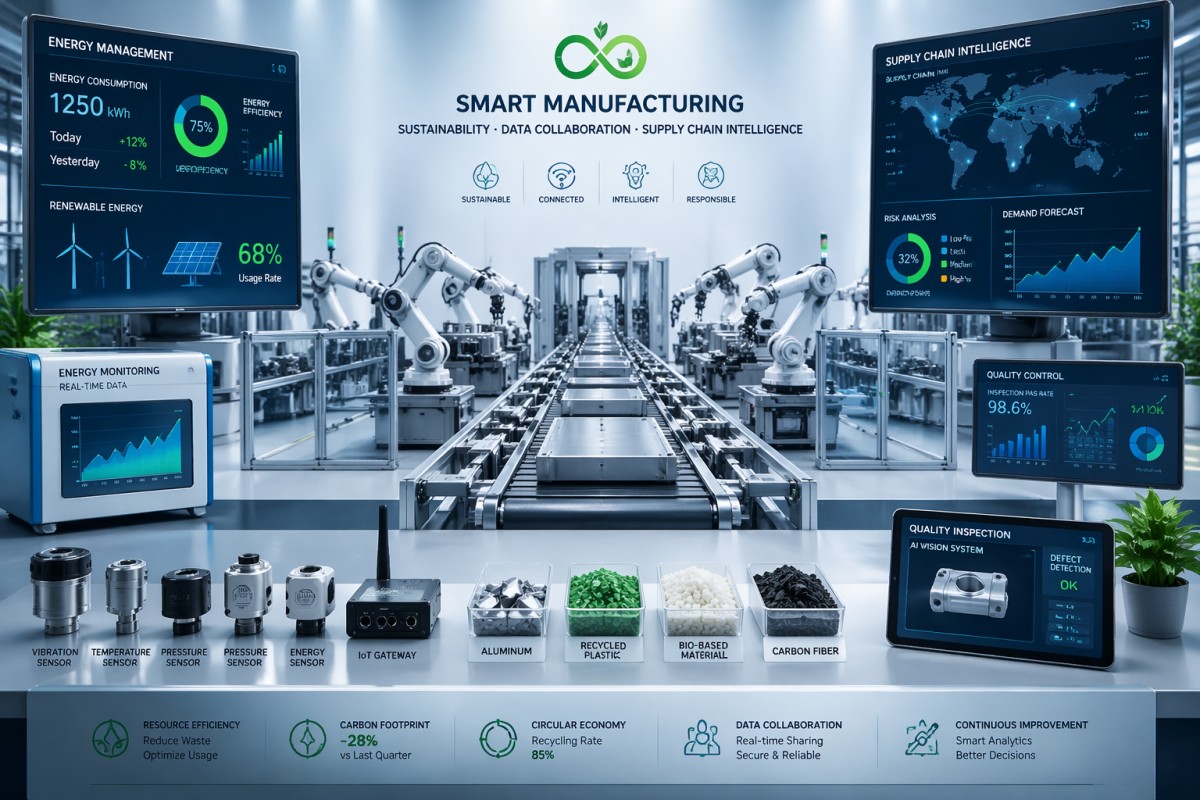
The most common data gap is not simply “missing data.” It is unusable data: information that is scattered, outdated, inconsistent, or impossible to compare across business units and suppliers. That gap affects nearly every sustainability initiative in industrial operations.
For example, a manufacturer may have energy consumption data from production lines, material specifications from engineering, emissions declarations from suppliers, and maintenance records from automation systems. But if these datasets are stored in different formats and managed by separate functions, decision-makers cannot reliably answer basic operational questions:
- Which material choice delivers the best balance of performance, cost, and environmental impact?
- Which supplier is actually improving sustainability outcomes, not just improving reporting?
- Which production assets consume disproportionate energy relative to output quality?
- Where are the largest hidden inefficiencies across the digital supply chain?
This is where many industrial sustainability programs lose momentum. The target exists, but the evidence chain is weak. Without comparable and decision-ready data, teams default to assumptions, short-term cost pressure, or isolated pilot projects.
What information researchers and operators care about most
For information researchers, the priority is clarity. They need to know which data sources are trustworthy, how to compare technologies or suppliers, and what signals actually indicate industrial sustainability progress. Broad sustainability claims are less useful than structured evidence tied to operations, materials, throughput, quality, and lifecycle performance.
For operators and users, the priority is usability. They need data that helps them make day-to-day decisions without adding reporting burden or disrupting production. They care about practical questions such as:
- Can this data improve line efficiency or reduce scrap?
- Can it support maintenance planning and energy optimization?
- Can it help validate supplier materials and process consistency?
- Can it make audits, compliance checks, and internal reporting easier?
Both groups ultimately want the same outcome: a more reliable basis for action. That is why industrial benchmarking and supply chain intelligence matter so much. They turn raw information into comparative context, helping teams understand not only what is happening, but whether performance is strong, weak, improving, or falling behind peers and targets.
Where the biggest industrial data gaps usually appear
In most industrial organizations, sustainability-related blind spots appear in a few predictable areas.
Supplier data quality: Supplier declarations may be incomplete, non-standardized, or difficult to verify. This makes procurement-led sustainability decisions vulnerable to inconsistency.
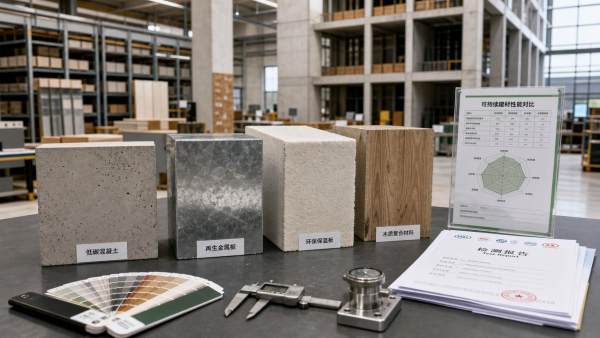
Material-performance linkage: Material science data often sits apart from operational data. As a result, companies struggle to connect material selection with lifecycle impact, process efficiency, durability, and downstream maintenance outcomes.
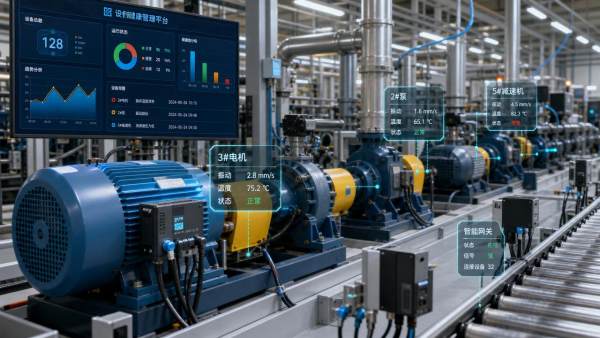
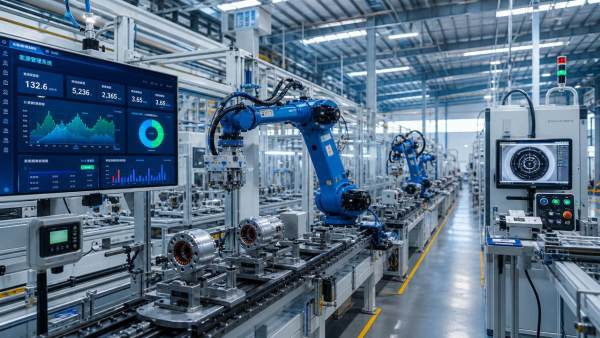
Machine and automation visibility: Industrial automation systems generate large volumes of operational data, but many firms still do not translate that information into sustainability metrics such as energy intensity, waste reduction, or utilization efficiency.
Cross-functional disconnects: Sustainability, procurement, engineering, operations, and digital teams may work with different definitions and priorities. This leads to metrics that cannot be reconciled and dashboards that do not support real decisions.
Benchmarking limitations: Internal performance data is useful, but without external industrial benchmarking, organizations often cannot determine whether improvements are meaningful or merely incremental.
How industrial convergence turns scattered data into action
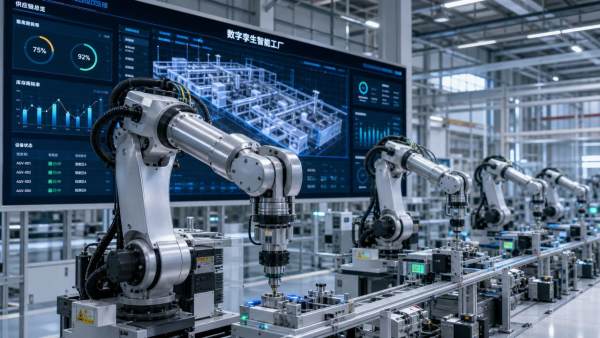
Industrial convergence matters because sustainability outcomes are no longer shaped by one function alone. Material science, automation technology, digital supply chains, and AI-driven manufacturing increasingly influence one another. Companies that treat these as separate domains usually struggle to scale progress.
A more effective model is to build connected intelligence across four layers:
- Asset layer: Gather reliable operational data from machines, sensors, automation systems, and plant infrastructure.
- Material layer: Map inputs, specifications, substitutions, durability, recyclability, and process compatibility.
- Supply chain layer: Standardize supplier, logistics, sourcing, and compliance data to make cross-partner comparison possible.
- Decision layer: Apply analytics, AI models, and benchmarking frameworks to identify trade-offs, risks, and improvement opportunities.
When these layers are connected, sustainability becomes measurable in operational terms. A team can compare supplier options based on both technical performance and environmental implications. Engineers can evaluate whether a material change reduces waste without harming throughput. Plant operators can identify where automation tuning improves both quality and energy efficiency. Procurement leaders can move from document collection to evidence-based sourcing decisions.
What good industrial intelligence looks like
Not all data maturity efforts deliver decision value. Good industrial intelligence has several clear characteristics.
- Comparable: Data is structured so teams can compare suppliers, assets, materials, and sites on a consistent basis.
- Contextual: Metrics are tied to actual production conditions, not isolated sustainability claims.
- Timely: Information is recent enough to support operational adjustment, not just annual reporting.
- Verifiable: Users can trace where the data came from and how it was validated.
- Decision-oriented: Outputs help teams choose between options, not just observe trends.
This is especially important for advanced industrial ecosystems, where complex products, high-performance materials, and automated production environments create trade-offs that cannot be managed with generic sustainability frameworks alone.
How to assess whether your current data foundation is holding sustainability back
If a company wants to know whether the data gap is the real barrier, a practical assessment can start with a few direct questions:
- Can we link sustainability targets to line-level operational metrics?
- Can we compare supplier sustainability performance using the same evaluation model across categories?
- Can engineering, procurement, and operations access the same decision-relevant material data?
- Can we benchmark internal performance against credible external industrial references?
- Can frontline teams use the data without creating new manual reporting work?
If the answer to most of these is no, the issue is not strategy ambition. It is intelligence readiness. That gap will continue to slow execution until the company improves its data architecture, governance, and benchmarking approach.
Practical priorities for researchers and operators
For researchers, the immediate priority is to identify high-value data categories rather than collect everything at once. Focus on data that affects sourcing decisions, material selection, production efficiency, and compliance exposure. From there, evaluate which sources are standardized, which are self-reported, and which require external validation or benchmarking support.
For operators, the best starting point is to connect sustainability with familiar production outcomes. Tie energy, waste, downtime, and quality metrics to existing workflows. This makes sustainability data useful instead of burdensome. Small but structured improvements often create the foundation for larger transformation.
Examples include:
- tracking scrap by material batch and machine setting
- mapping energy intensity by product family or production cell
- comparing supplier consistency against defect and rework rates
- using automation data to identify idle-time losses and maintenance inefficiencies
These actions help move sustainability from abstract goal-setting into measurable operational improvement.
Why benchmarking is the missing link for many organizations
One reason sustainability programs underperform is that internal data alone rarely provides enough perspective. A company may see lower energy use or improved supplier reporting and assume it is progressing. But without industrial benchmarking, it is difficult to know whether that progress is competitive, scalable, or materially significant.
Benchmarking provides the external frame needed to prioritize action. It helps organizations understand where they are ahead, where they are exposed, and which practices are likely to deliver the highest return. In sectors shaped by rapid advances in smart materials, automation technology, and vertical AI, this external reference becomes even more important because performance baselines shift quickly.
For B2B industrial teams, this is where a structured intelligence hub can create real value: not by adding more raw data, but by curating technical, operational, and supply chain signals into a form that supports better decisions.
Conclusion
Industrial sustainability goals often stall not because they are unrealistic, but because the data foundation beneath them is fragmented. For researchers, that creates uncertainty. For operators, it creates friction. For organizations, it weakens decision quality across sourcing, engineering, manufacturing, and compliance.
The path forward is not more disconnected reporting. It is better industrial intelligence: linked material data, clearer supply chain intelligence, stronger industrial benchmarking, and operational visibility that turns sustainability from an aspiration into a manageable performance system. In a market defined by industrial convergence, AI-driven manufacturing, and smart automation, the companies that close this data gap will be the ones most capable of turning sustainability into measurable business execution.
- material science
- intelligent automation
- Vertical AI
- industrial ecosystem
- industrial automation
- material innovation
- industrial intelligence
- automation technology
- industrial benchmarking
- supply chain intelligence
- industrial convergence
- smart materials
- AI-driven manufacturing
- industrial sustainability
- digital supply chain
- industrial automation systems
Recommended News
 May 02, 2026Choosing a Sustainable Materials Supplier for Stable Quality and Lead TimesSustainable materials supplier selection starts with quality and lead-time control. Learn a practical checklist to reduce risk, protect margins, and build a reliable supply network.
 May 02, 2026AI in Manufacturing Applications That Reduce Downtime in Daily OperationsAI in manufacturing applications help maintenance teams detect faults earlier, cut unplanned downtime, improve service response, and keep daily operations running with greater reliability.
 May 02, 2026Material Science Research Trends Shaping Better Industrial MaterialsMaterial science research is transforming industrial materials with smarter, lighter, and more sustainable solutions. Discover key trends driving performance, resilience, and competitive advantage.
 May 02, 2026Automation Technology for Factories: Key Features to Evaluate Before You InvestAutomation technology for factories: compare integration, scalability, flexibility, and lifecycle value before you invest. Learn how to reduce risk and choose the right-fit solution.
 May 02, 2026Manufacturing Technology Innovations Worth Piloting Before Full-Scale RolloutManufacturing technology innovations worth piloting first: discover practical ways to validate ROI, reduce rollout risk, and choose scalable solutions that improve quality, uptime, and efficiency.
 May 02, 2026Smart Materials Applications: Where They Solve Real Reliability ProblemsSmart materials applications help detect fatigue, vibration, heat, and corrosion earlier—learn where they solve real reliability problems and improve industrial safety.
 May 02, 2026AI in Manufacturing Benefits That Matter Most on the Factory FloorAI in manufacturing benefits include less downtime, faster troubleshooting, and stronger quality control. See how factory teams improve output, safety, and daily decision-making.
 May 02, 2026How to Compare Sustainable Materials for Construction Without Costly MistakesSustainable materials for construction: learn how to compare carbon impact, performance, supply resilience, and lifecycle cost to avoid costly mistakes and make smarter procurement decisions.
 May 02, 2026Smart Manufacturing Technology: What Actually Delivers ROI in 2026Smart manufacturing technology in 2026 is all about proven ROI. Discover which use cases boost uptime, quality, resilience, and sustainability across enterprise operations.
 May 02, 2026How Advanced Materials for Industrial Automation Improve Precision and UptimeAdvanced materials for industrial automation improve precision, reduce wear, and boost uptime. Discover how smarter material choices cut maintenance and strengthen reliable, high-output operations.
 May 02, 20262026 Global Trade & Investment Summit in Beijing: AI+Manufacturing FocusAI+Manufacturing takes center stage at the 2026 Global Trade & Investment Summit in Beijing — discover cross-border AI supply chain solutions, LLM white papers & POC matchmaking for global buyers.
 May 02, 2026Global Engineering Resins Index Up 8.2% in April; China Delivery Stability Gains FocusEngineering resins prices surge 8.2% in April—discover how rising costs and China’s 98.3% on-time delivery rate reshape global procurement strategies.
 May 02, 2026FDA Updates Bio-Plastics Food Contact Guidance: Migration Testing Deadline Nov 1, 2026FDA bio-plastics food contact guidance updated: migration testing deadline is Nov 1, 2026. Ensure compliance now to avoid U.S. market access delays.
 May 02, 20262026 China Bike Expo Focuses on Engineering Resins LightweightingEngineering resins take center stage at 2026 China Bike Expo—discover how PA66-GF30 and PPA-LCP are driving lightweighting, cost savings & export efficiency for bicycle OEMs and suppliers.
 May 02, 2026EU REACH SVHC List Adds 247 Substances Effective May 2026EU REACH SVHC List adds 247 substances effective May 2026 — critical for electronic-grade chemical exporters, SDS updates & supply chain compliance.
 May 02, 2026Vietnam Mandates Vietnamese SDS & QR Code for Industrial Catalysts from Oct 2026Vietnam SDS & QR code mandate for industrial catalysts starts Oct 2026 — ensure Vietnamese-language SDS and GS1-compliant origin labels now to avoid customs delays and supply chain disruption.
 May 02, 20262026 World Intelligent Industry Expo: Cargo Drones & Inspection UAVs in TianjinCargo drones & inspection UAVs take center stage at the 2026 World Intelligent Industry Expo in Tianjin — discover export-ready solutions, low-altitude economy innovations, and global procurement opportunities.
 May 02, 2026SABIC Mandates GCC Certification for Functional Coatings in Saudi Arabia from Q3 2026GCC certification mandatory for functional coatings in Saudi Arabia from Q3 2026 — essential for exporters, manufacturers & suppliers. Act now to ensure market access.
") May 02, 2026TÜV Rheinland Updates PV Backsheet Barrier Films Standard (V2.1)TÜV Rheinland PV Backsheet Barrier Films V2.1 now mandates UV-10000h & PID-1500V testing—key for EU, ME & LATAM solar exports. Act now to avoid project rejections.
May 02, 2026TÜV Rheinland Updates PV Backsheet Barrier Films Standard (V2.1)TÜV Rheinland PV Backsheet Barrier Films V2.1 now mandates UV-10000h & PID-1500V testing—key for EU, ME & LATAM solar exports. Act now to avoid project rejections. May 02, 2026US BIS Proposes Export Controls on Harmonic Reducers, Servo ActuatorsUS BIS proposes export controls on harmonic reducers and servo actuators—critical for robotics & embodied AI. Learn impacts, compliance steps, and strategic responses now.
 May 01, 2026AI in Manufacturing: The First Use Cases Worth TestingAI in manufacturing starts with practical pilots like visual inspection, predictive maintenance, and scheduling support. Discover the first use cases worth testing to cut risk, improve throughput, and unlock measurable ROI.
 May 01, 2026Industrial Automation Solutions That Reduce Downtime on Busy Production LinesIndustrial automation solutions reduce downtime on busy production lines with better machine visibility, faster fault response, and smarter operator support for safer, more stable output.
 May 01, 2026Choosing a Smart Materials Manufacturer Without Overlooking Scale-Up RisksSmart materials manufacturer selection goes beyond lab results. Learn how to spot scale-up risks, verify manufacturing maturity, and choose suppliers built for reliable growth.
 May 01, 2026High-Tech Industrial Projects: Where Delays Usually StartHigh-tech industrial projects often face delays long before construction begins. Discover the hidden risks in specs, interfaces, and procurement—and how to protect schedule and performance.