Search News
Industry Portal
Popular Tags
Are Material Innovation Technologies Ready to Scale?
Author
Time
Click Count
As manufacturers race to industrialize next-generation materials, the short answer is: some material innovation technologies are ready to scale, but most are only scalable under specific operational conditions. The real constraint is rarely the material science alone. It is the ability to align supplier readiness, process stability, quality assurance, digital traceability, and automation across the full manufacturing system. For information researchers and operators, the key question is not simply whether a material works in the lab, but whether it can perform consistently, economically, and compliantly at production volume.
That is why scaling now depends on more than discovery. Digital supply chain solutions, smart manufacturing systems, Vertical AI, and intelligent automation systems are becoming essential for turning promising materials into repeatable industrial outcomes. Companies that succeed are building not just better materials, but better execution architectures around them.
Are material innovation technologies actually ready for industrial scale?
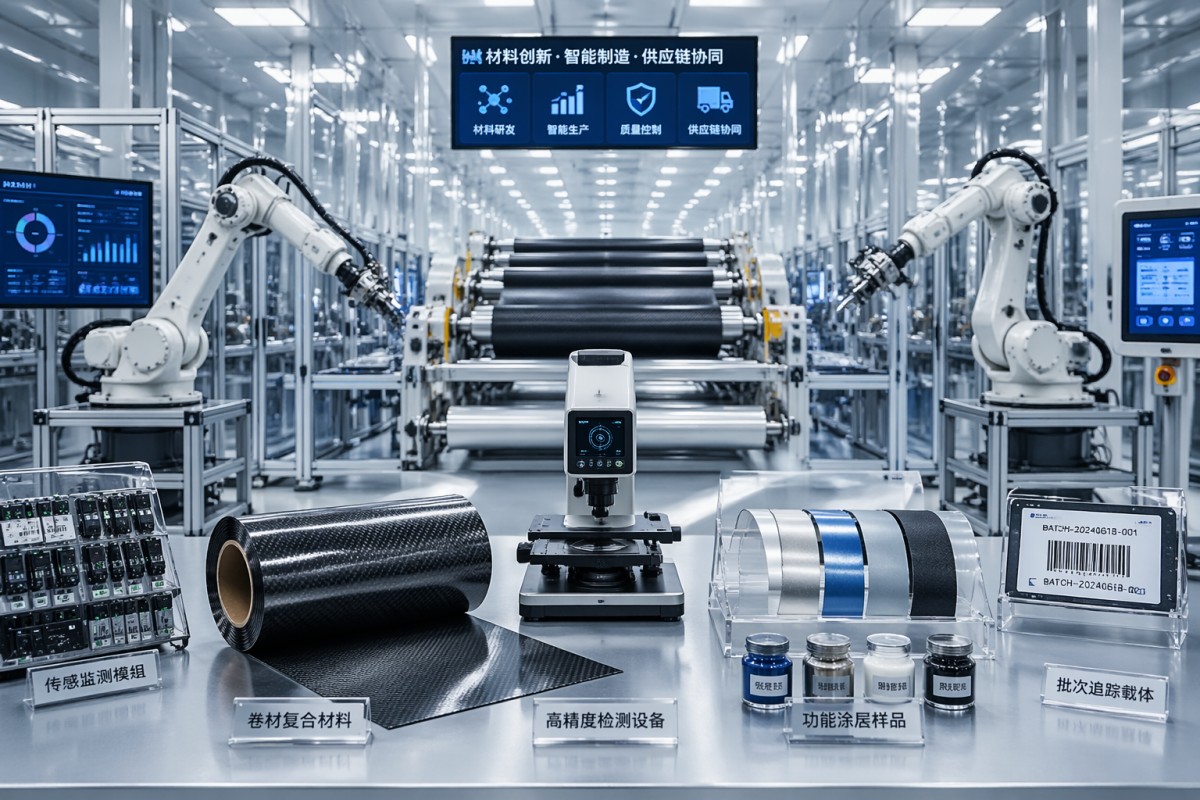
In practical terms, readiness to scale means a technology can move beyond pilot success and maintain performance across larger production runs, multiple sites, variable supply conditions, and commercial cost pressures. By that standard, the market is mixed.
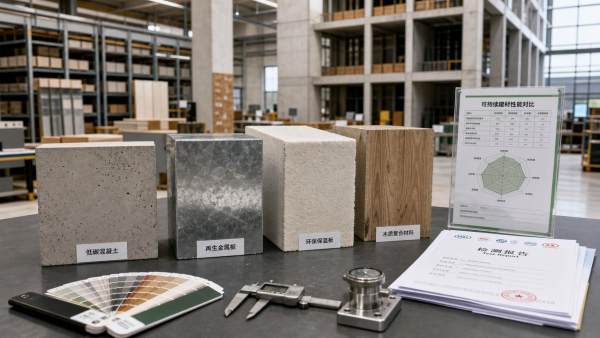
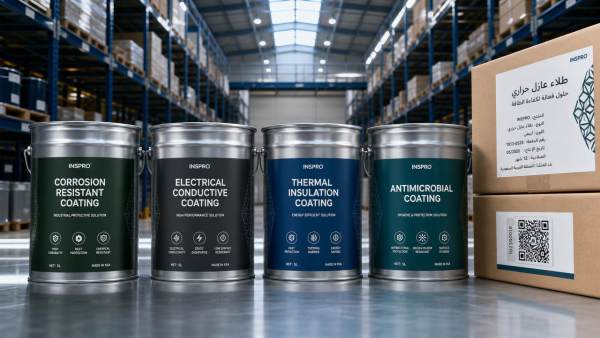
Several classes of advanced materials are clearly progressing toward broader adoption, especially where there is already strong demand, maturing supplier capability, and a compatible manufacturing base. Examples include lightweight composites, engineered polymers, battery materials, thermal interface materials, specialty coatings, and certain bio-based alternatives. However, readiness varies sharply by application.
What often looks like a material problem is actually an ecosystem problem. A novel material may demonstrate excellent mechanical, thermal, or electrical properties, yet still fail to scale because:
- raw material sources are limited or inconsistent,
- processing windows are too narrow for stable throughput,
- equipment retrofits are expensive or disruptive,
- quality control methods are not robust enough for high-volume inspection,
- regulatory or customer qualification cycles are too slow,
- the supply chain lacks visibility and traceability.
So, are material innovation technologies ready to scale? Some are. Many are not universally ready, but can scale in targeted environments where the industrial ecosystem is designed to support them.
What do information researchers and operators need to verify before trusting a “scalable” material?
For both research-oriented readers and operational users, the most useful way to assess scalability is through evidence, not claims. A material is not truly scale-ready because it performs well in a technical datasheet or a pilot line trial. It is scale-ready when the surrounding production system can absorb it without creating unacceptable cost, risk, or instability.
The most important checkpoints include:
1. Supply reliability
Can upstream suppliers provide consistent volume, chemistry, purity, and lead times? Advanced materials supplier networks are often fragmented, especially for emerging chemistries or regionally concentrated feedstocks.
2. Process compatibility
Will the material run on existing equipment, or does it require new tooling, handling conditions, environmental controls, or line redesign? Operators care about this immediately because small process deviations can destroy yield.
3. Quality reproducibility
Can the company measure the right properties at speed and at scale? Lab-grade verification is not enough. Industrial scaling requires inline sensing, repeatable testing protocols, and closed-loop control.
4. Unit economics
Even strong-performing materials can stall if scrap rates, cycle times, energy use, or qualification costs erase the value proposition. Procurement and operations teams need realistic landed-cost modeling, not best-case assumptions.
5. Compliance and traceability
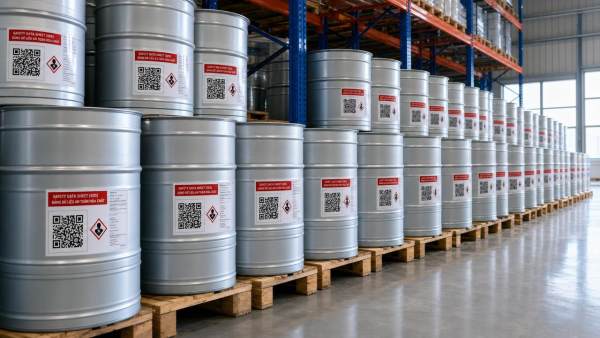
In regulated or high-spec sectors, traceability is part of scale readiness. If origin, batch integrity, processing history, and performance data cannot be tracked reliably, scale becomes risky.
6. Failure behavior under real-world conditions
Operators want to know how a material degrades, not just how it performs at peak. Long-term reliability under temperature swings, vibration, contamination, humidity, and stress cycling matters more than isolated benchmark results.
Why do so many promising materials fail between pilot and production?
The gap between innovation and execution remains one of the biggest barriers in manufacturing technology trends today. A material may reach technical validation but still fail in commercialization because the scaling model is incomplete.
Common failure points include:
- Pilot conditions do not reflect real production variability. Controlled pilots often hide instability that appears under continuous operation.
- Data is siloed. R&D, procurement, quality, and plant operations may evaluate the material through different metrics with no shared system of record.
- Supplier development lags behind product ambition. The OEM or manufacturer moves faster than the upstream ecosystem can support.
- Automation is added too late. Manual workarounds may support early-stage production, but they rarely scale efficiently.
- Qualification cycles are underestimated. In industrial settings, changing a material can trigger long validation timelines across customers, certifications, and production standards.
This is where a supply chain intelligence platform becomes highly valuable. Instead of treating scale-up as a linear engineering challenge, leading firms treat it as a cross-functional risk management problem. They map suppliers, process dependencies, logistics exposure, compliance requirements, and quality data together before committing to aggressive rollout targets.
How do digital supply chain solutions improve material scale-up success?
Digital supply chain solutions matter because material scale-up depends on visibility. Without reliable data across procurement, production, logistics, and quality, companies cannot detect where scalability is breaking down.
Effective digital systems support scale in several ways:
- Supplier benchmarking: comparing advanced materials supplier networks on quality stability, delivery performance, geographic risk, and technical capability.
- Traceability: linking raw material lots to process conditions, finished goods, and field performance.
- Scenario planning: testing how shortages, specification drift, or demand spikes affect output and cost.
- Qualification management: organizing approvals, documentation, and test histories across plants or customer programs.
- Cross-functional decision support: helping procurement, engineering, and operations work from the same evidence base.
For researchers, this improves market understanding. For users and operators, it reduces uncertainty at the point of execution. That is especially important when a new material introduces narrow tolerances or multiple handling dependencies.
What role do smart manufacturing systems, Vertical AI, and intelligent automation systems play?
Material scaling is becoming inseparable from digital manufacturing capability. Smart manufacturing systems, Vertical AI, and intelligent automation systems are no longer optional enhancements in many advanced material environments. They are becoming core enablers of repeatability.
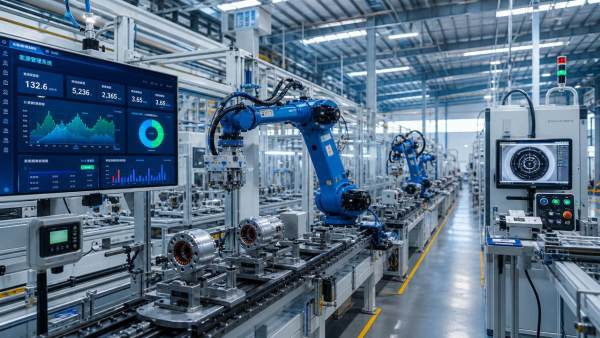
Smart manufacturing systems help standardize production conditions, monitor process drift, and capture high-resolution operational data. This is critical when new materials behave differently from conventional inputs.
Vertical AI adds industry-specific intelligence to decision-making. In material scale-up, it can be used to predict quality deviations, optimize process windows, identify root causes of instability, and support dynamic planning based on supply and production signals. The value is highest when AI is trained on real manufacturing and material performance data, not generic models.
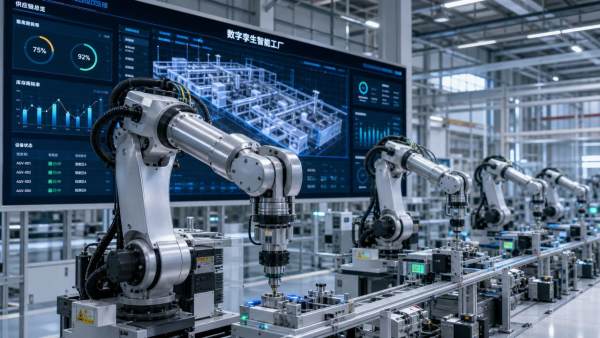
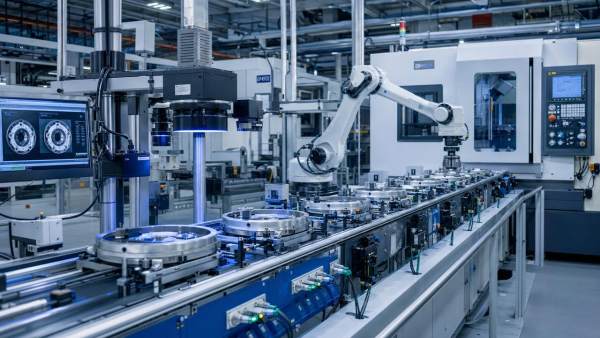
Intelligent automation systems reduce the variability that often prevents scaling. Automated dosing, handling, inspection, and adaptive controls can make a major difference for materials that are sensitive to contamination, moisture, temperature, or mixing variation.
Together, these technologies do not magically make every innovative material scalable. But they significantly improve the odds by reducing process noise, improving learning speed, and making scale-up more controllable.
How can companies judge whether a material innovation is worth scaling now, later, or not at all?
A useful decision framework is to classify opportunities into three categories:
Scale now
The material has stable supply, acceptable economics, qualified processing routes, measurable quality controls, and a clear performance advantage in a defined application.
Scale selectively
The material is promising, but only viable in limited regions, specific product lines, or controlled manufacturing environments. This is common when supply chains are still maturing or process windows remain narrow.
Monitor, but do not industrialize yet
The material may be scientifically impressive, but commercial and operational conditions are not ready. Forcing scale too early can damage margins, customer trust, and internal confidence in innovation programs.
For target readers, this means the best judgment is rarely binary. The better question is: under what conditions is this material innovation scalable, and what capabilities must be in place first?
What should operators and decision teams do next?
If your organization is evaluating whether material innovation technologies are ready to scale, focus on execution readiness as much as technical merit. A practical next step is to build a scale-readiness checklist across five dimensions:
- material performance under production conditions,
- supplier and logistics resilience,
- quality and traceability infrastructure,
- automation and process control capability,
- economic and regulatory viability.
Then assess whether current digital infrastructure can support those requirements. If not, the bottleneck may not be the material at all. It may be missing intelligence, fragmented data, or insufficient manufacturing orchestration.
For organizations operating in a global advanced industrial ecosystem, the strongest competitive advantage comes from connecting material science with operational intelligence. That is where technical benchmarking, supply chain visibility, and manufacturing data systems move from being support functions to strategic scale enablers.
Conclusion: material innovation can scale, but only with the right industrial ecosystem
Material innovation technologies are not uniformly ready to scale, and that is the most important reality for manufacturers to recognize. The winners will not be the companies with the most exciting materials alone. They will be the ones that can industrialize those materials through reliable supplier networks, digital supply chain solutions, smart manufacturing systems, Vertical AI, and intelligent automation systems.
For information researchers, the key takeaway is to evaluate scale through ecosystem readiness, not laboratory promise. For users and operators, the takeaway is even more practical: if the process, data, quality, and supply infrastructure are not ready, the material is not truly ready either.
In other words, the future of scalable material innovation belongs to organizations that can connect discovery with disciplined execution.
- material science
- intelligent automation
- Vertical AI
- industrial ecosystem
- technical benchmarking
- advanced materials
- smart manufacturing
- material innovation
- supply chain intelligence
- manufacturing technology
- digital supply chain
- advanced materials supplier
- manufacturing technology trends
- digital supply chain solutions
- smart manufacturing systems
- material innovation technologies
- intelligent automation systems
- supply chain intelligence platform
Recommended News
 May 02, 2026Choosing a Sustainable Materials Supplier for Stable Quality and Lead TimesSustainable materials supplier selection starts with quality and lead-time control. Learn a practical checklist to reduce risk, protect margins, and build a reliable supply network.
 May 02, 2026AI in Manufacturing Applications That Reduce Downtime in Daily OperationsAI in manufacturing applications help maintenance teams detect faults earlier, cut unplanned downtime, improve service response, and keep daily operations running with greater reliability.
 May 02, 2026Material Science Research Trends Shaping Better Industrial MaterialsMaterial science research is transforming industrial materials with smarter, lighter, and more sustainable solutions. Discover key trends driving performance, resilience, and competitive advantage.
 May 02, 2026Automation Technology for Factories: Key Features to Evaluate Before You InvestAutomation technology for factories: compare integration, scalability, flexibility, and lifecycle value before you invest. Learn how to reduce risk and choose the right-fit solution.
 May 02, 2026Manufacturing Technology Innovations Worth Piloting Before Full-Scale RolloutManufacturing technology innovations worth piloting first: discover practical ways to validate ROI, reduce rollout risk, and choose scalable solutions that improve quality, uptime, and efficiency.
 May 02, 2026Smart Materials Applications: Where They Solve Real Reliability ProblemsSmart materials applications help detect fatigue, vibration, heat, and corrosion earlier—learn where they solve real reliability problems and improve industrial safety.
 May 02, 2026AI in Manufacturing Benefits That Matter Most on the Factory FloorAI in manufacturing benefits include less downtime, faster troubleshooting, and stronger quality control. See how factory teams improve output, safety, and daily decision-making.
 May 02, 2026How to Compare Sustainable Materials for Construction Without Costly MistakesSustainable materials for construction: learn how to compare carbon impact, performance, supply resilience, and lifecycle cost to avoid costly mistakes and make smarter procurement decisions.
 May 02, 2026Smart Manufacturing Technology: What Actually Delivers ROI in 2026Smart manufacturing technology in 2026 is all about proven ROI. Discover which use cases boost uptime, quality, resilience, and sustainability across enterprise operations.
 May 02, 2026How Advanced Materials for Industrial Automation Improve Precision and UptimeAdvanced materials for industrial automation improve precision, reduce wear, and boost uptime. Discover how smarter material choices cut maintenance and strengthen reliable, high-output operations.
 May 02, 20262026 Global Trade & Investment Summit in Beijing: AI+Manufacturing FocusAI+Manufacturing takes center stage at the 2026 Global Trade & Investment Summit in Beijing — discover cross-border AI supply chain solutions, LLM white papers & POC matchmaking for global buyers.
 May 02, 2026Global Engineering Resins Index Up 8.2% in April; China Delivery Stability Gains FocusEngineering resins prices surge 8.2% in April—discover how rising costs and China’s 98.3% on-time delivery rate reshape global procurement strategies.
 May 02, 2026FDA Updates Bio-Plastics Food Contact Guidance: Migration Testing Deadline Nov 1, 2026FDA bio-plastics food contact guidance updated: migration testing deadline is Nov 1, 2026. Ensure compliance now to avoid U.S. market access delays.
 May 02, 20262026 China Bike Expo Focuses on Engineering Resins LightweightingEngineering resins take center stage at 2026 China Bike Expo—discover how PA66-GF30 and PPA-LCP are driving lightweighting, cost savings & export efficiency for bicycle OEMs and suppliers.
 May 02, 2026EU REACH SVHC List Adds 247 Substances Effective May 2026EU REACH SVHC List adds 247 substances effective May 2026 — critical for electronic-grade chemical exporters, SDS updates & supply chain compliance.
 May 02, 2026Vietnam Mandates Vietnamese SDS & QR Code for Industrial Catalysts from Oct 2026Vietnam SDS & QR code mandate for industrial catalysts starts Oct 2026 — ensure Vietnamese-language SDS and GS1-compliant origin labels now to avoid customs delays and supply chain disruption.
 May 02, 20262026 World Intelligent Industry Expo: Cargo Drones & Inspection UAVs in TianjinCargo drones & inspection UAVs take center stage at the 2026 World Intelligent Industry Expo in Tianjin — discover export-ready solutions, low-altitude economy innovations, and global procurement opportunities.
 May 02, 2026SABIC Mandates GCC Certification for Functional Coatings in Saudi Arabia from Q3 2026GCC certification mandatory for functional coatings in Saudi Arabia from Q3 2026 — essential for exporters, manufacturers & suppliers. Act now to ensure market access.
") May 02, 2026TÜV Rheinland Updates PV Backsheet Barrier Films Standard (V2.1)TÜV Rheinland PV Backsheet Barrier Films V2.1 now mandates UV-10000h & PID-1500V testing—key for EU, ME & LATAM solar exports. Act now to avoid project rejections.
May 02, 2026TÜV Rheinland Updates PV Backsheet Barrier Films Standard (V2.1)TÜV Rheinland PV Backsheet Barrier Films V2.1 now mandates UV-10000h & PID-1500V testing—key for EU, ME & LATAM solar exports. Act now to avoid project rejections. May 02, 2026US BIS Proposes Export Controls on Harmonic Reducers, Servo ActuatorsUS BIS proposes export controls on harmonic reducers and servo actuators—critical for robotics & embodied AI. Learn impacts, compliance steps, and strategic responses now.
 May 01, 2026AI in Manufacturing: The First Use Cases Worth TestingAI in manufacturing starts with practical pilots like visual inspection, predictive maintenance, and scheduling support. Discover the first use cases worth testing to cut risk, improve throughput, and unlock measurable ROI.
 May 01, 2026Industrial Automation Solutions That Reduce Downtime on Busy Production LinesIndustrial automation solutions reduce downtime on busy production lines with better machine visibility, faster fault response, and smarter operator support for safer, more stable output.
 May 01, 2026Choosing a Smart Materials Manufacturer Without Overlooking Scale-Up RisksSmart materials manufacturer selection goes beyond lab results. Learn how to spot scale-up risks, verify manufacturing maturity, and choose suppliers built for reliable growth.
 May 01, 2026High-Tech Industrial Projects: Where Delays Usually StartHigh-tech industrial projects often face delays long before construction begins. Discover the hidden risks in specs, interfaces, and procurement—and how to protect schedule and performance.