Search News
Industry Portal
Popular Tags
How to Compare a Remote Sensing Drones Manufacturer
Author
Time
Click Count
How to Compare a Remote Sensing Drones Manufacturer
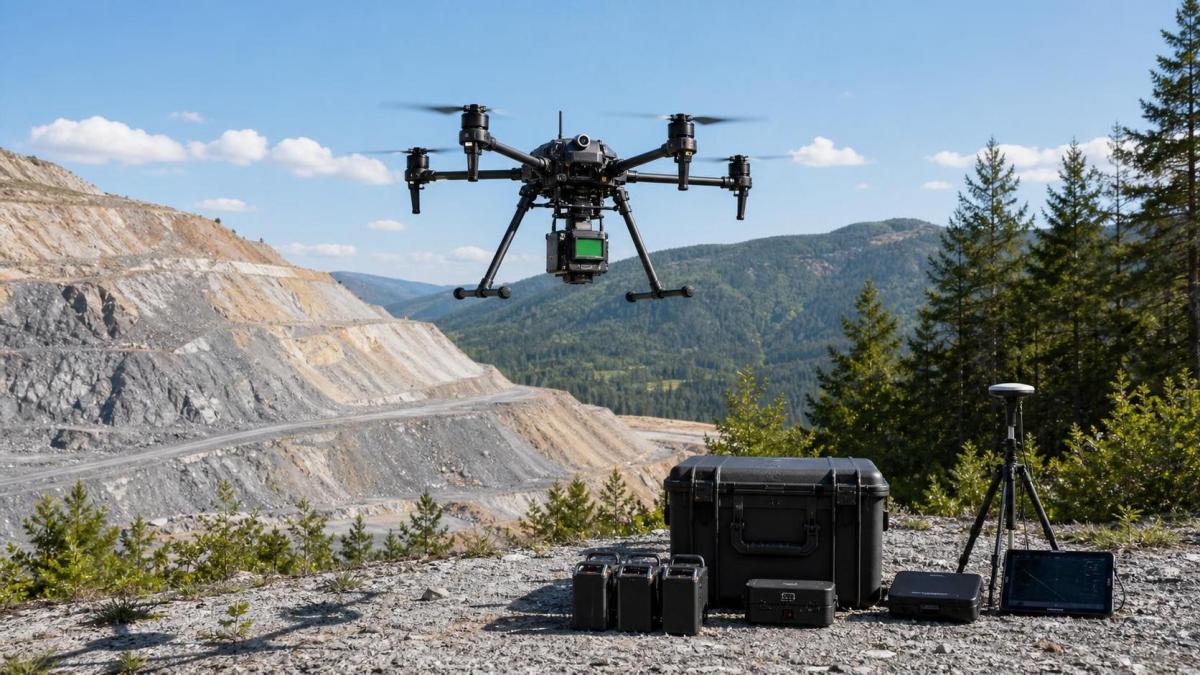
Choosing a remote sensing drones manufacturer is not a simple spec-sheet exercise.
A strong model on paper can still fail under industrial workloads.
That matters when projects depend on precise mapping, repeatable data capture, and reliable field deployment.
The better comparison starts with operational outcomes, not marketing language.
When reviewing a remote sensing drones manufacturer, focus on measurable performance, integration maturity, and lifecycle support.
This approach reduces procurement risk and makes vendor selection far more defensible.
Start with the mission profile
Before comparing any remote sensing drones manufacturer, define the actual sensing mission.
That sounds obvious, but many evaluations begin with airframe features instead of business requirements.
A forestry survey, powerline inspection, mining volume check, and coastal monitoring project need different sensor and flight priorities.
In practice, define five inputs first.
- Target object size and required ground sample distance.
- Survey area, mission duration, and revisit frequency.
- Required data type, such as RGB, thermal, LiDAR, multispectral, or hyperspectral.
- Site conditions, including wind, dust, humidity, altitude, and magnetic interference.
- Output format needed for GIS, CAD, digital twin, or AI analytics workflows.
Once these variables are clear, comparing a remote sensing drones manufacturer becomes more objective.
You are no longer buying a drone.
You are buying a repeatable remote sensing system for a specific industrial result.
Evaluate sensor credibility before airframe claims
The core value of any remote sensing drones manufacturer is data quality.
Flight time and range matter, but sensor output determines whether the mission creates usable intelligence.
Ask for validation details, not only sensor brand names.
Key sensor checkpoints
- Absolute and relative accuracy under real field conditions.
- Radiometric calibration method for thermal or multispectral payloads.
- Georeferencing capability with RTK, PPK, or hybrid workflows.
- Payload stability during turns, gusts, and altitude changes.
- Cross-mission consistency across different operators and sites.
A credible remote sensing drones manufacturer should provide test reports, sample datasets, and processing outputs.
Better still, ask for raw files from similar projects.
Processed screenshots alone hide important limitations.
From a decision standpoint, this is often the clearest signal of engineering maturity.
Check flight stability and platform engineering
A remote sensing drones manufacturer may advertise high endurance, but stability is usually more important than maximum duration.
Unstable flight affects overlap, image sharpness, LiDAR point quality, and geospatial consistency.
That creates hidden rework costs.
Look closely at these technical indicators.
- Wind resistance under loaded payload conditions.
- GNSS resilience near structures, terrain edges, or signal obstruction.
- Vibration control and gimbal isolation.
- Autonomous route repeatability for change detection missions.
- Battery health logic, redundancy, and fail-safe recovery behavior.
Ask each remote sensing drones manufacturer how performance changes at mission payload, not empty weight.
That distinction is easy to miss and often distorts comparisons.
In actual operations, fully loaded behavior is what drives usable coverage per day.
Assess software and data integration depth
This is where many remote sensing drones manufacturer comparisons become too shallow.
Industrial buyers do not need isolated flight hardware.
They need clean movement from capture to analysis to action.
A capable remote sensing drones manufacturer should support the broader stack.
Questions that expose integration risk
- Can mission plans be exported, reused, and version controlled?
- Are data outputs compatible with standard GIS and photogrammetry environments?
- Is there an API for telemetry, fleet management, or workflow automation?
- Can the platform feed AI inspection models without manual data restructuring?
- How are firmware, logs, and calibration records managed over time?
This becomes more important as remote sensing moves into enterprise asset intelligence.
The stronger manufacturers understand that the drone is only one layer in a digital industrial system.
That perspective aligns with how advanced procurement teams now benchmark technology suppliers.
Review compliance, support, and supply continuity
A remote sensing drones manufacturer should be reviewed as a long-term operational partner.
Technical performance alone does not protect a program if service, certification, or parts availability fail later.
More procurement teams are now weighting these factors earlier.
When comparing a remote sensing drones manufacturer, ask how they support deployed fleets after year one.
That answer usually reveals whether the company is built for industrial continuity or short sales cycles.
Use a weighted evaluation framework
At this stage, convert observations into a scoring model.
Without weighting, impressive features can distract from mission-critical weaknesses.
A practical framework often looks like this.
- Sensor performance and accuracy: 30%.
- Flight stability and field reliability: 20%.
- Software integration and data workflow: 20%.
- Compliance, security, and support: 15%.
- Total cost of ownership and scalability: 15%.
Then test each remote sensing drones manufacturer with the same mission scenario.
Use the same route type, payload category, processing method, and output expectation.
This keeps the comparison clean and defensible.
Run a proof-of-performance, not just a product demo
A polished demo can hide deployment risk.
A proof-of-performance shows how a remote sensing drones manufacturer handles your actual constraints.
That should include a real site whenever possible.
What to include in the validation
- Mission setup time and operator workflow clarity.
- Data quality under typical site conditions.
- Post-processing time and error rate.
- Compatibility with internal analytics or asset systems.
- Support responsiveness during issues or unexpected changes.
This is also the right moment to challenge vendor claims.
Ask the remote sensing drones manufacturer to explain any gap between brochure metrics and field outcomes.
The quality of that explanation matters almost as much as the gap itself.
Make the final decision on system fit
The best remote sensing drones manufacturer is rarely the one with the longest feature list.
It is the one that delivers consistent sensing accuracy, stable operations, usable data, and credible long-term support.
That is the real benchmark for industrial selection.
In a tighter, more data-driven market, comparison discipline matters more than ever.
Start with the mission, validate the sensor, test the workflow, and score each remote sensing drones manufacturer against operational reality.
That process leads to better decisions, lower risk, and a platform that can scale with future remote sensing demands.
Recommended News
 Sep 19, 2026When can a supply chain LLM reduce time spent finding shipment updates?Supply chain LLMs can cut shipment-update search time by connecting carrier events, ERP data, and documents—giving teams traceable answers and faster exception response.
 Sep 18, 2026How industrial monitoring equipment helps prevent unplanned downtimeIndustrial monitoring equipment helps teams detect early asset issues, prioritize maintenance, and prevent costly unplanned downtime. Explore practical strategies for reliable operations.
 Sep 17, 2026What next-gen harmonic drive research means for robot joint accuracyNext-gen harmonic drive research reveals how backlash, stiffness, thermal drift, and sensing shape robot joint accuracy. Explore smarter validation strategies.
 Sep 16, 2026How Southeast Asian climates affect cylinder seal frictionCylinder seal friction Southeast Asia: learn how humidity, heat, monsoons, and contamination affect motion stability, wear, and seal selection.
 Sep 15, 2026How to size DC gear motors for the required starting torqueGear motors DC sizing made practical: calculate starting torque, account for friction, gravity, inertia and voltage drop, then select a reliable motor with confidence.
 Sep 14, 2026How to verify high purity chemicals compliance before supplier approvalHigh purity chemicals compliance: learn how to verify supplier quality systems, CoAs, traceability, testing, and change control before approval.
 Sep 13, 2026What permits are needed to operate mapping drones in Europe?Mapping drones Europe: discover the permits, EASA categories, airspace approvals, site access, and GDPR checks needed for compliant aerial surveys.
 Sep 12, 2026What lead time should I expect for automatic transmission components? Planetary Gearboxes delivery forecasting for OEM planningWhat lead time should I expect for automatic transmission components? Get dynamic, AI-powered planetary gearbox delivery forecasting—designed for OEMs building next-gen hybrid & commercial powertrains.
 Sep 12, 2026Can polyamide replace metal in load-bearing components? Polymer Pulse structural performance data for 2026 applicationsCan polyamide replace metal in load-bearing components? Discover Polymer Pulse’s 2026 structural data—real-world performance, weight savings, and reliability breakthroughs.
 Sep 12, 2026How to handle a power electronics warranty claim: Harmonic Reducers documentation and escalation pathHow do I handle a power electronics warranty claim? Get a fast, intelligent, evidence-driven resolution for harmonic reducers—no bureaucracy, just precision diagnostics and real-time escalation.
 Sep 12, 2026Which motion control specifications matter most before purchase? Torque Logic selection criteria for automation engineersWhich motion control specifications are most important before purchase? Discover Torque Logic—the 4 non-negotiable, AI-aligned criteria that cut TCO by 27–41% and boost motion system availability to 99.992%.
 Sep 13, 2026Is agentic AI reliable enough for supplier screening? Supply Chain LLM validation framework for procurement teamsIs agentic AI reliable enough for supplier screening? Discover a rigorous LLM validation framework built for procurement teams—grounded in material traceability, regulatory compliance, and real-world operational constraints.
 Sep 14, 2026How to maintain edge AI systems after deployment: Predictive Maint AI operational protocols for field techniciansHow do I maintain edge AI systems after deployment? Discover predictive, physics-aware operational protocols designed for real-world field technicians—sustaining intelligence where silicon meets steel.
 Sep 15, 2026What compliance documents must a bioplastics supplier provide? Bio-Plastics regulatory checklist for procurementWhat compliance documents should a bioplastics supplier provide? Get our actionable regulatory checklist for food, medical & EU-bound applications.
 Sep 16, 2026How to prevent PET film defects during production: Barrier Films process control best practicesHow can I prevent PET film defects during production? Discover physics-driven barrier film process control—thermal precision, dynamic tension management & surface energy optimization.
 Sep 17, 2026Are thermoplastics suitable for long-term outdoor use? Engineering Resins durability assessment in 2026 UV/weather exposureAre thermoplastics suitable for long-term outdoor use? Discover 2026’s engineering resin durability insights — UV/weather resistance ranked, tested & actionable.
 Sep 18, 2026What to do when a servo motor fails during production: A Servo Actuators troubleshooting guide for maintenance teamsWhat should I do if a servo motor fails during production? Get a field-tested, AI-aware troubleshooting guide for maintenance teams—minimize downtime, maximize OEE.
 Sep 12, 2026How to compare wholesale party supplies by minimum order valueCompare wholesale party supplies by minimum order value, freight, SKU flexibility, and stock risk to choose suppliers that protect margins and simplify replenishment.
 Sep 11, 2026How proportional solenoid linearity affects precision motion controlProportional solenoid linearity directly affects precision motion control, valve metering, stability, and calibration. Learn how to evaluate performance for reliable automation.
 Sep 10, 2026When does supplier information platform automation reduce onboarding delays?Supplier information platform automation reduces onboarding delays by streamlining data collection, routing, renewals, and compliance checks—without replacing expert technical review.
 Sep 09, 2026How to size robotic motion systems for AMR payload changesRobotic motion systems for AMR payload changes: learn how to size motors, wheels, gearing, traction, and controls for safer, reliable performance.
 Sep 08, 2026How to perform a cylinder rod buckling calculation for long strokesCylinder rod buckling calculation made practical: learn how to assess effective length, end conditions, rod stiffness, load forces, and safety margins for reliable long-stroke cylinder design.
 Sep 07, 2026How to estimate the cost of industrial mechanical components before orderingIndustrial mechanical components cost: learn how to estimate material, machining, tooling, inspection, logistics, and hidden expenses before ordering. Compare quotes confidently and reduce sourcing risk.
 Sep 07, 2026What Is a Product Standards Database Used For?Product standards database guide: learn how to compare requirements, verify revisions, control specifications, and reduce compliance risks across design, sourcing, and production.