Search News
Industry Portal
Popular Tags
Digital Supply Chain Integration: Where Visibility Breaks First

Author
Time
Click Count
Where digital supply chain integration starts to lose visibility

Digital supply chain integration is often framed as a clean path to end-to-end control. In practice, visibility usually breaks much earlier, at the points where material status, engineering data, and commercial decisions stop matching.
That gap matters across industrial sectors. A delayed alloy batch, an outdated automation spec, or an unverified supplier revision can distort planning long before any dashboard shows a problem.
Within advanced industrial ecosystems, the issue is rarely a total lack of data. More often, digital supply chain integration fails because data is present, but not aligned to the physical reality of assets, materials, and workflow timing.
This is where technical benchmarking and operating context become useful. G-AIE reflects a broader market shift: resilient supply chains now depend on connecting material science, automation logic, and decision quality, not just connecting software systems.
Why the same integration model does not work in every operating context
Different environments break visibility for different reasons. A discrete manufacturing network may struggle with revision control, while a process-heavy operation may lose traceability when batch data cannot follow the material through handoffs.
The core point is simple. Digital supply chain integration behaves differently when the business is managing long qualification cycles, volatile lead times, regulated materials, or fast asset changeovers.
In actual operations, the first useful question is not whether systems are connected. It is where decisions rely on assumptions instead of verified shared context.
That distinction changes implementation priorities. Some sites need stronger supplier event capture. Others need tighter links between engineering change control and procurement execution. Treating those cases as identical usually creates a polished interface with weak operational truth.
A quick way to compare visibility pressure points
When supplier networks look connected but decisions still drift
One common situation appears in distributed supplier networks. Portals, EDI feeds, and planning tools may all be active, yet teams still work from conflicting assumptions about readiness, substitution, or transport risk.
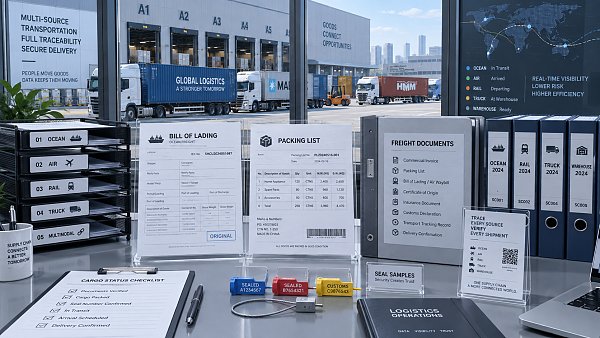
The first fracture usually comes from event quality, not event quantity. A supplier may report production complete, while testing, packaging, export clearance, or final document release is still unresolved.
In this setting, digital supply chain integration should prioritize milestone definitions before analytics. If each partner uses a different meaning for ready date, visibility remains cosmetic.
A useful adaptation is to map operational events to decision consequences. For example, a delayed material certificate may matter more than transit variance when the next process step depends on compliance release.
Material traceability becomes harder when physical behavior changes downstream
Another visibility break appears in material-intensive operations. Here, digital supply chain integration must follow not only movement, but condition, transformation, and performance relevance.
A high-performance polymer, specialty metal, or treated surface can pass every receiving check and still create problems later if storage conditions, rework steps, or process exposure are not linked to the batch record.
This is why simple inventory visibility is not enough. The more advanced requirement is contextual traceability: which material was used, under what constraints, and against which technical standard at the moment of application.
In sectors shaped by the Economy of Atoms, that distinction carries real weight. Sustainable material choices, recycled inputs, and alternative formulations increase the need for digital supply chain integration that can preserve equivalence evidence, not just part numbers.
What changes across common industrial material scenarios
- Certified raw materials need stronger genealogy and test linkage than standard consumables.
- Temperature-sensitive inputs require condition data, not only receipt timestamps.
- Alternative materials need comparison logic for performance thresholds and qualification status.
- Mixed-origin inputs need clear rules for traceability depth across sites and suppliers.
Engineering changes are often the hidden fault line
In automated and high-tech industrial environments, visibility often breaks at engineering change points. Procurement records may show availability, while installation teams are waiting on an updated interface spec, approved controller version, or revised mounting condition.
This is a harder problem than delayed shipping because it affects asset performance directly. A component can arrive on time and still create downtime if the digital thread between design intent and field execution is weak.
Digital supply chain integration works better here when the change signal is treated as operational, not administrative. Revision notices should trigger purchasing, planning, service part review, and commissioning checks in the same decision chain.
Vertical AI will likely deepen this requirement. Predictive planning only helps when the underlying engineering states are clean, current, and linked to actual asset constraints.
Different scenarios call for different integration priorities
A single digital supply chain integration roadmap rarely fits every plant, program, or supplier cluster. The better approach is to rank visibility needs by the operational consequence of being wrong.
That ranking often looks different from standard IT sequencing. A site may gain more value from reliable lot-level exception handling than from broad dashboard expansion.
Misread signals that weaken digital supply chain integration
Several mistakes appear repeatedly across industries. The first is assuming system connectivity equals operational visibility. It does not, especially when local workarounds still carry the decisive information.
Another common misread is focusing on purchase price while ignoring implementation friction. A lower-cost source may introduce document delays, batch ambiguity, or incompatible update cycles that cost more later.
There is also a tendency to treat similar sites as identical. In reality, one facility may depend on strict traceability depth, while another is constrained more by commissioning windows and spare part compatibility.
Digital supply chain integration becomes resilient when these differences are surfaced early, then translated into data rules, milestone definitions, and exception ownership.
What to check before scaling the next integration step
Before expanding any digital supply chain integration initiative, it helps to test a few practical questions against live operations. The aim is to confirm whether the digital model matches the physical business.
- Which event causes the earliest costly decision error?
- Where do engineering, material, and supplier records stop agreeing?
- Which exceptions still depend on email, spreadsheets, or informal approval?
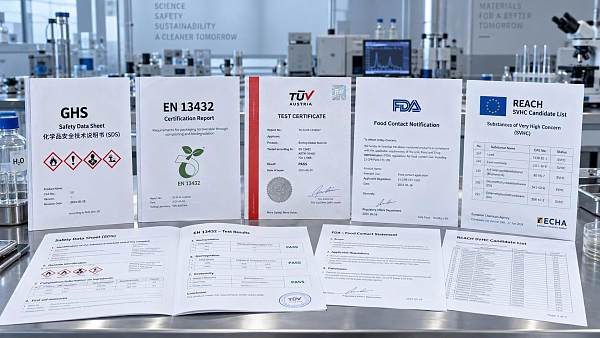
- What evidence is needed to validate substitutes, batches, or revisions?
- Which integration gaps threaten asset uptime, compliance, or material performance?
The most effective next move is usually narrow and concrete. Map one high-risk scenario, compare the digital record with the physical handoff, then build a standard for how that scenario should be validated across sites and suppliers.
That approach creates a more credible base for digital supply chain integration than adding another layer of reporting. Visibility improves when every critical transition is defined, verified, and tied to a real operating consequence.
Recommended News
 Sep 19, 2026When can a supply chain LLM reduce time spent finding shipment updates?Supply chain LLMs can cut shipment-update search time by connecting carrier events, ERP data, and documents—giving teams traceable answers and faster exception response.
 Sep 18, 2026How industrial monitoring equipment helps prevent unplanned downtimeIndustrial monitoring equipment helps teams detect early asset issues, prioritize maintenance, and prevent costly unplanned downtime. Explore practical strategies for reliable operations.
 Sep 17, 2026What next-gen harmonic drive research means for robot joint accuracyNext-gen harmonic drive research reveals how backlash, stiffness, thermal drift, and sensing shape robot joint accuracy. Explore smarter validation strategies.
 Sep 16, 2026How Southeast Asian climates affect cylinder seal frictionCylinder seal friction Southeast Asia: learn how humidity, heat, monsoons, and contamination affect motion stability, wear, and seal selection.
 Sep 15, 2026How to size DC gear motors for the required starting torqueGear motors DC sizing made practical: calculate starting torque, account for friction, gravity, inertia and voltage drop, then select a reliable motor with confidence.
 Sep 14, 2026How to verify high purity chemicals compliance before supplier approvalHigh purity chemicals compliance: learn how to verify supplier quality systems, CoAs, traceability, testing, and change control before approval.
 Sep 13, 2026What permits are needed to operate mapping drones in Europe?Mapping drones Europe: discover the permits, EASA categories, airspace approvals, site access, and GDPR checks needed for compliant aerial surveys.
 Sep 12, 2026What lead time should I expect for automatic transmission components? Planetary Gearboxes delivery forecasting for OEM planningWhat lead time should I expect for automatic transmission components? Get dynamic, AI-powered planetary gearbox delivery forecasting—designed for OEMs building next-gen hybrid & commercial powertrains.
 Sep 12, 2026Can polyamide replace metal in load-bearing components? Polymer Pulse structural performance data for 2026 applicationsCan polyamide replace metal in load-bearing components? Discover Polymer Pulse’s 2026 structural data—real-world performance, weight savings, and reliability breakthroughs.
 Sep 12, 2026How to handle a power electronics warranty claim: Harmonic Reducers documentation and escalation pathHow do I handle a power electronics warranty claim? Get a fast, intelligent, evidence-driven resolution for harmonic reducers—no bureaucracy, just precision diagnostics and real-time escalation.
 Sep 12, 2026Which motion control specifications matter most before purchase? Torque Logic selection criteria for automation engineersWhich motion control specifications are most important before purchase? Discover Torque Logic—the 4 non-negotiable, AI-aligned criteria that cut TCO by 27–41% and boost motion system availability to 99.992%.
 Sep 13, 2026Is agentic AI reliable enough for supplier screening? Supply Chain LLM validation framework for procurement teamsIs agentic AI reliable enough for supplier screening? Discover a rigorous LLM validation framework built for procurement teams—grounded in material traceability, regulatory compliance, and real-world operational constraints.
 Sep 14, 2026How to maintain edge AI systems after deployment: Predictive Maint AI operational protocols for field techniciansHow do I maintain edge AI systems after deployment? Discover predictive, physics-aware operational protocols designed for real-world field technicians—sustaining intelligence where silicon meets steel.
 Sep 15, 2026What compliance documents must a bioplastics supplier provide? Bio-Plastics regulatory checklist for procurementWhat compliance documents should a bioplastics supplier provide? Get our actionable regulatory checklist for food, medical & EU-bound applications.
 Sep 16, 2026How to prevent PET film defects during production: Barrier Films process control best practicesHow can I prevent PET film defects during production? Discover physics-driven barrier film process control—thermal precision, dynamic tension management & surface energy optimization.
 Sep 17, 2026Are thermoplastics suitable for long-term outdoor use? Engineering Resins durability assessment in 2026 UV/weather exposureAre thermoplastics suitable for long-term outdoor use? Discover 2026’s engineering resin durability insights — UV/weather resistance ranked, tested & actionable.
 Sep 18, 2026What to do when a servo motor fails during production: A Servo Actuators troubleshooting guide for maintenance teamsWhat should I do if a servo motor fails during production? Get a field-tested, AI-aware troubleshooting guide for maintenance teams—minimize downtime, maximize OEE.
 Sep 12, 2026How to compare wholesale party supplies by minimum order valueCompare wholesale party supplies by minimum order value, freight, SKU flexibility, and stock risk to choose suppliers that protect margins and simplify replenishment.
 Sep 11, 2026How proportional solenoid linearity affects precision motion controlProportional solenoid linearity directly affects precision motion control, valve metering, stability, and calibration. Learn how to evaluate performance for reliable automation.
 Sep 10, 2026When does supplier information platform automation reduce onboarding delays?Supplier information platform automation reduces onboarding delays by streamlining data collection, routing, renewals, and compliance checks—without replacing expert technical review.
 Sep 09, 2026How to size robotic motion systems for AMR payload changesRobotic motion systems for AMR payload changes: learn how to size motors, wheels, gearing, traction, and controls for safer, reliable performance.
 Sep 08, 2026How to perform a cylinder rod buckling calculation for long strokesCylinder rod buckling calculation made practical: learn how to assess effective length, end conditions, rod stiffness, load forces, and safety margins for reliable long-stroke cylinder design.
 Sep 07, 2026How to estimate the cost of industrial mechanical components before orderingIndustrial mechanical components cost: learn how to estimate material, machining, tooling, inspection, logistics, and hidden expenses before ordering. Compare quotes confidently and reduce sourcing risk.
 Sep 07, 2026What Is a Product Standards Database Used For?Product standards database guide: learn how to compare requirements, verify revisions, control specifications, and reduce compliance risks across design, sourcing, and production.