Search News
Industry Portal
Popular Tags
Compliance Risks Hidden in Industrial Sourcing Intelligence

Author
Time
Click Count
In today’s data-driven procurement landscape, industrial sourcing intelligence can reveal hidden opportunities—but also expose serious compliance risk. For business evaluators navigating complex supplier networks, incomplete due diligence, opaque data sources, and cross-border regulatory gaps can quickly undermine decision quality. Understanding where compliance vulnerabilities emerge is essential to making smarter, defensible sourcing decisions in advanced industrial markets.
Why does industrial sourcing intelligence create hidden compliance risk?

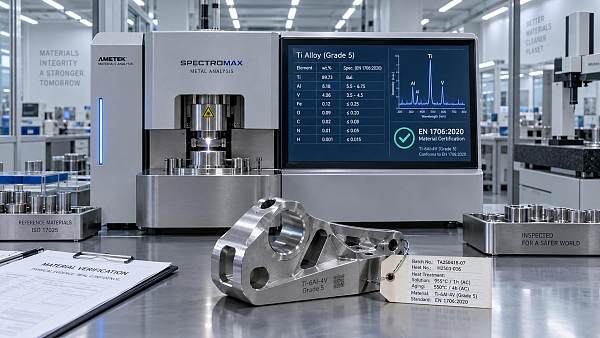
Industrial sourcing intelligence is no longer limited to price comparison or supplier discovery. It now includes material traceability, production capability signals, export control exposure, sanctions screening, sustainability claims, digital records, and third-party market data.
For business evaluators, the problem is not lack of information. The real problem is uneven information quality. A supplier may look operationally strong while still carrying hidden compliance risk in ownership structure, subcontracting behavior, document validity, or restricted market activity.
In cross-border industrial sourcing, a decision can fail even when cost, lead time, and technical fit appear acceptable. If intelligence inputs are incomplete or unverified, the final sourcing decision may become difficult to defend during audit, legal review, or internal approval.
- Data may come from brokers, directories, trade records, or self-declared supplier profiles with inconsistent update cycles.
- Critical production steps may be outsourced to unreviewed facilities, creating blind spots in labor, environmental, and quality compliance.
- Regional legal obligations may differ across import controls, anti-bribery standards, product safety, and documentation retention rules.
This is where G-AIE adds value. As a multidisciplinary B2B intelligence hub focused on material science and intelligent automation, G-AIE helps procurement and evaluation teams connect physical asset performance with digital intelligence validation, reducing decision blind spots before supplier commitment.
Where do business evaluators usually miss compliance signals?
Most industrial sourcing intelligence failures do not come from a single dramatic event. They usually result from small, overlooked gaps across documentation, supplier mapping, or source verification. Business evaluators often inherit fragmented information from engineering, procurement, finance, and regional teams.
The following table highlights common compliance risk points that appear early in sourcing analysis but are often underestimated during business evaluation.
A recurring pattern is that business evaluators are asked to approve suppliers on commercial timelines, while compliance review depends on slower, less integrated data. Strong industrial sourcing intelligence should close that timing gap instead of widening it.
Typical red flags hidden in otherwise attractive offers
- A major price advantage without a clear explanation of material source, process route, or regulatory burden.
- A technically capable supplier that resists disclosing subcontractors or plant locations.
- Certificates that are valid in format but mismatched to the exact product family or manufacturing site.
- Trade data showing unusual routing patterns that suggest attempts to bypass restrictions or duties.
How should industrial sourcing intelligence be evaluated before supplier approval?
A useful evaluation model must combine commercial viability, technical feasibility, and compliance defensibility. In industrial markets, these dimensions are tightly linked. A low-cost source with poor traceability is not a low-risk source. A technically advanced source with unverifiable declarations is not decision-ready.
The table below provides a practical selection framework for business evaluators reviewing industrial sourcing intelligence across multiple suppliers or regions.
This framework is especially valuable when industrial sourcing decisions involve advanced materials, automation components, or mixed supply models. G-AIE supports this process by connecting technical benchmarking with structured intelligence validation, which helps evaluators compare suppliers on more than headline claims.
A practical review sequence for evaluators
- Confirm the contracting entity, manufacturing entity, and shipping entity are clearly mapped and consistent.
- Validate whether the supplier’s technical capability is self-owned or dependent on external processors.
- Review applicable regulations by destination market, especially for controlled materials, safety declarations, and sustainability reporting.
- Score evidence quality, not only evidence presence. A certificate alone is not the same as a verified scope match.
Which compliance areas matter most in advanced industrial sourcing?
Different industrial categories carry different compliance priorities, but several areas repeatedly influence sourcing approval across sectors. Business evaluators should focus on the compliance points most likely to affect contract enforceability, importability, traceability, and reputation.
Core areas to screen
- Trade compliance, including sanctions exposure, denied party screening, customs classification, and export licensing questions.
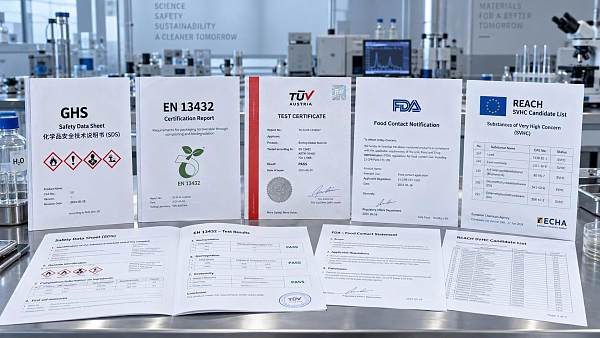
- Product and process compliance, including material declarations, quality documentation, and manufacturing control records.
- Environmental and sustainability obligations, especially where customers require upstream disclosure on restricted substances or carbon-related reporting.
- Business integrity checks, such as anti-bribery controls, beneficial ownership visibility, and conflict of interest review.
In many industrial ecosystems, compliance risk appears at the intersection of material science and automation. For example, a component may be technically acceptable but sourced from a process chain with poor environmental disclosure. Another supplier may offer sophisticated automated output but rely on unverifiable software or data security practices.
G-AIE is positioned to help in these mixed-risk environments because its intelligence model is not isolated to a single product category. It supports a broader view of how materials, process capability, digital systems, and procurement logic interact in real sourcing decisions.
What are common mistakes when comparing suppliers on compliance risk?
A common sourcing mistake is treating compliance as a pass-fail box checked at the end of selection. In practice, compliance risk should shape the shortlist from the beginning. Otherwise, evaluators spend time comparing offers that are not equally approvable.
Comparison traps to avoid
- Comparing quoted cost without comparing documentation quality, source transparency, and regulatory readiness.
- Assuming a familiar country of origin automatically means lower compliance risk.
- Relying on old audit reports even though ownership, plant scope, or subcontracting patterns may have changed.
- Accepting broad claims such as “compliant with international standards” without checking which standards, which scope, and which site.
Business evaluators need comparison models that balance price, technical suitability, continuity, and compliance effort. One supplier may have a higher unit price but lower onboarding friction and stronger audit defensibility. Over the life of the program, that may be the less risky and less costly choice.
How can teams build a defensible sourcing workflow?
A defensible workflow turns industrial sourcing intelligence into an approval-ready record. This matters when internal stakeholders question supplier selection, when customers request traceability evidence, or when regulators require document consistency across the supply chain.
The best workflows do not overload teams with generic paperwork. They target the evidence that directly supports sourcing decisions in specific product, region, and risk contexts.
Recommended workflow structure
- Define the sourcing scope by product type, destination market, technical criticality, and supply continuity need.
- Map supplier entities, production locations, and subcontracting dependencies before formal quotation comparison.
- Rank intelligence sources by reliability and note conflicts between self-declared data and external records.
- Request focused compliance evidence tied to actual risk triggers rather than generic document bundles.
- Record the approval rationale so the sourcing decision remains defensible after audit or supplier change.
G-AIE can support this workflow by supplying structured benchmarking, comparative intelligence, and technical context that make compliance review more actionable for business evaluators, not just legal teams.
FAQ: what do business evaluators ask most about industrial sourcing intelligence compliance risk?
How early should compliance review start in supplier evaluation?
It should start before the final shortlist is locked. Early screening prevents wasted effort on suppliers that look commercially attractive but cannot meet trade, documentation, or traceability expectations. A light pre-screen is often enough to identify major blockers.
What is the biggest hidden compliance risk in industrial sourcing intelligence?
The biggest hidden risk is false confidence from incomplete data. Teams may believe they have “enough” intelligence because they have certificates, quotations, and capability claims. But if ownership, process scope, or regulatory applicability is unclear, the sourcing decision remains exposed.
Which suppliers require deeper review?
Suppliers handling advanced materials, automated production systems, dual-use items, or multi-country subcontracting usually require deeper review. The same applies to new market entrants, unusually low-cost offers, and suppliers with limited documentation transparency.
Can technical excellence offset compliance weakness?
Usually no. Technical strength may improve operational fit, but it does not remove legal, trade, or reputational exposure. In industrial procurement, a technically strong supplier with unresolved compliance gaps often creates greater downstream disruption than a technically average but transparent supplier.
Why choose us for higher-confidence sourcing intelligence?
G-AIE helps business evaluators move beyond fragmented supplier data and toward sourcing decisions that are technically informed, commercially grounded, and compliance-aware. Our strength lies in linking material science, intelligent automation, and B2B intelligence into a decision framework suitable for advanced industrial markets.
If your team is reviewing new suppliers, comparing industrial sourcing intelligence sources, or facing uncertainty around compliance risk, we can support targeted analysis in areas that matter to procurement approval.
- Supplier screening support for entity verification, production mapping, and source reliability checks.
- Selection guidance for advanced materials, automation-related sourcing, and technically sensitive supplier categories.
- Clarification on documentation scope, certification relevance, and likely compliance review pressure points.
- Discussion of delivery considerations, sourcing alternatives, benchmarking logic, and quotation support needs.
Contact us if you need help with parameter confirmation, supplier selection logic, documentation review priorities, delivery timeline evaluation, customized intelligence support, or quote-stage risk assessment. For business evaluators, better industrial sourcing intelligence is not just about seeing more data. It is about making decisions that remain credible under scrutiny.
Recommended News
 Sep 19, 2026When can a supply chain LLM reduce time spent finding shipment updates?Supply chain LLMs can cut shipment-update search time by connecting carrier events, ERP data, and documents—giving teams traceable answers and faster exception response.
 Sep 18, 2026How industrial monitoring equipment helps prevent unplanned downtimeIndustrial monitoring equipment helps teams detect early asset issues, prioritize maintenance, and prevent costly unplanned downtime. Explore practical strategies for reliable operations.
 Sep 17, 2026What next-gen harmonic drive research means for robot joint accuracyNext-gen harmonic drive research reveals how backlash, stiffness, thermal drift, and sensing shape robot joint accuracy. Explore smarter validation strategies.
 Sep 16, 2026How Southeast Asian climates affect cylinder seal frictionCylinder seal friction Southeast Asia: learn how humidity, heat, monsoons, and contamination affect motion stability, wear, and seal selection.
 Sep 15, 2026How to size DC gear motors for the required starting torqueGear motors DC sizing made practical: calculate starting torque, account for friction, gravity, inertia and voltage drop, then select a reliable motor with confidence.
 Sep 14, 2026How to verify high purity chemicals compliance before supplier approvalHigh purity chemicals compliance: learn how to verify supplier quality systems, CoAs, traceability, testing, and change control before approval.
 Sep 13, 2026What permits are needed to operate mapping drones in Europe?Mapping drones Europe: discover the permits, EASA categories, airspace approvals, site access, and GDPR checks needed for compliant aerial surveys.
 Sep 12, 2026What lead time should I expect for automatic transmission components? Planetary Gearboxes delivery forecasting for OEM planningWhat lead time should I expect for automatic transmission components? Get dynamic, AI-powered planetary gearbox delivery forecasting—designed for OEMs building next-gen hybrid & commercial powertrains.
 Sep 12, 2026Can polyamide replace metal in load-bearing components? Polymer Pulse structural performance data for 2026 applicationsCan polyamide replace metal in load-bearing components? Discover Polymer Pulse’s 2026 structural data—real-world performance, weight savings, and reliability breakthroughs.
 Sep 12, 2026How to handle a power electronics warranty claim: Harmonic Reducers documentation and escalation pathHow do I handle a power electronics warranty claim? Get a fast, intelligent, evidence-driven resolution for harmonic reducers—no bureaucracy, just precision diagnostics and real-time escalation.
 Sep 12, 2026Which motion control specifications matter most before purchase? Torque Logic selection criteria for automation engineersWhich motion control specifications are most important before purchase? Discover Torque Logic—the 4 non-negotiable, AI-aligned criteria that cut TCO by 27–41% and boost motion system availability to 99.992%.
 Sep 13, 2026Is agentic AI reliable enough for supplier screening? Supply Chain LLM validation framework for procurement teamsIs agentic AI reliable enough for supplier screening? Discover a rigorous LLM validation framework built for procurement teams—grounded in material traceability, regulatory compliance, and real-world operational constraints.
 Sep 14, 2026How to maintain edge AI systems after deployment: Predictive Maint AI operational protocols for field techniciansHow do I maintain edge AI systems after deployment? Discover predictive, physics-aware operational protocols designed for real-world field technicians—sustaining intelligence where silicon meets steel.
 Sep 15, 2026What compliance documents must a bioplastics supplier provide? Bio-Plastics regulatory checklist for procurementWhat compliance documents should a bioplastics supplier provide? Get our actionable regulatory checklist for food, medical & EU-bound applications.
 Sep 16, 2026How to prevent PET film defects during production: Barrier Films process control best practicesHow can I prevent PET film defects during production? Discover physics-driven barrier film process control—thermal precision, dynamic tension management & surface energy optimization.
 Sep 17, 2026Are thermoplastics suitable for long-term outdoor use? Engineering Resins durability assessment in 2026 UV/weather exposureAre thermoplastics suitable for long-term outdoor use? Discover 2026’s engineering resin durability insights — UV/weather resistance ranked, tested & actionable.
 Sep 18, 2026What to do when a servo motor fails during production: A Servo Actuators troubleshooting guide for maintenance teamsWhat should I do if a servo motor fails during production? Get a field-tested, AI-aware troubleshooting guide for maintenance teams—minimize downtime, maximize OEE.
 Sep 12, 2026How to compare wholesale party supplies by minimum order valueCompare wholesale party supplies by minimum order value, freight, SKU flexibility, and stock risk to choose suppliers that protect margins and simplify replenishment.
 Sep 11, 2026How proportional solenoid linearity affects precision motion controlProportional solenoid linearity directly affects precision motion control, valve metering, stability, and calibration. Learn how to evaluate performance for reliable automation.
 Sep 10, 2026When does supplier information platform automation reduce onboarding delays?Supplier information platform automation reduces onboarding delays by streamlining data collection, routing, renewals, and compliance checks—without replacing expert technical review.
 Sep 09, 2026How to size robotic motion systems for AMR payload changesRobotic motion systems for AMR payload changes: learn how to size motors, wheels, gearing, traction, and controls for safer, reliable performance.
 Sep 08, 2026How to perform a cylinder rod buckling calculation for long strokesCylinder rod buckling calculation made practical: learn how to assess effective length, end conditions, rod stiffness, load forces, and safety margins for reliable long-stroke cylinder design.
 Sep 07, 2026How to estimate the cost of industrial mechanical components before orderingIndustrial mechanical components cost: learn how to estimate material, machining, tooling, inspection, logistics, and hidden expenses before ordering. Compare quotes confidently and reduce sourcing risk.
 Sep 07, 2026What Is a Product Standards Database Used For?Product standards database guide: learn how to compare requirements, verify revisions, control specifications, and reduce compliance risks across design, sourcing, and production.