Search News
Industry Portal
Popular Tags
Planetary Gearboxes Inline: Key Checks Before You Specify
Author
Time
Click Count
Selecting planetary gearboxes inline is rarely a matter of matching a ratio to a motor catalog. In current industrial programs, the gearbox sits inside a wider chain of mechanics, controls, thermal behavior, maintenance planning, and supply continuity.
That is why early specification work deserves more scrutiny than nameplate torque and output speed. A poor choice can look acceptable on paper, yet still create vibration, heat, backlash drift, or commissioning delays once the line starts moving.
Across automation-heavy sectors, this issue is gaining attention because project delivery now depends on tighter integration between physical assets and digital performance data. That broader industrial view is central to G-AIE, where material science, intelligent automation, and technical benchmarking meet practical sourcing decisions.
Why inline planetary designs draw attention
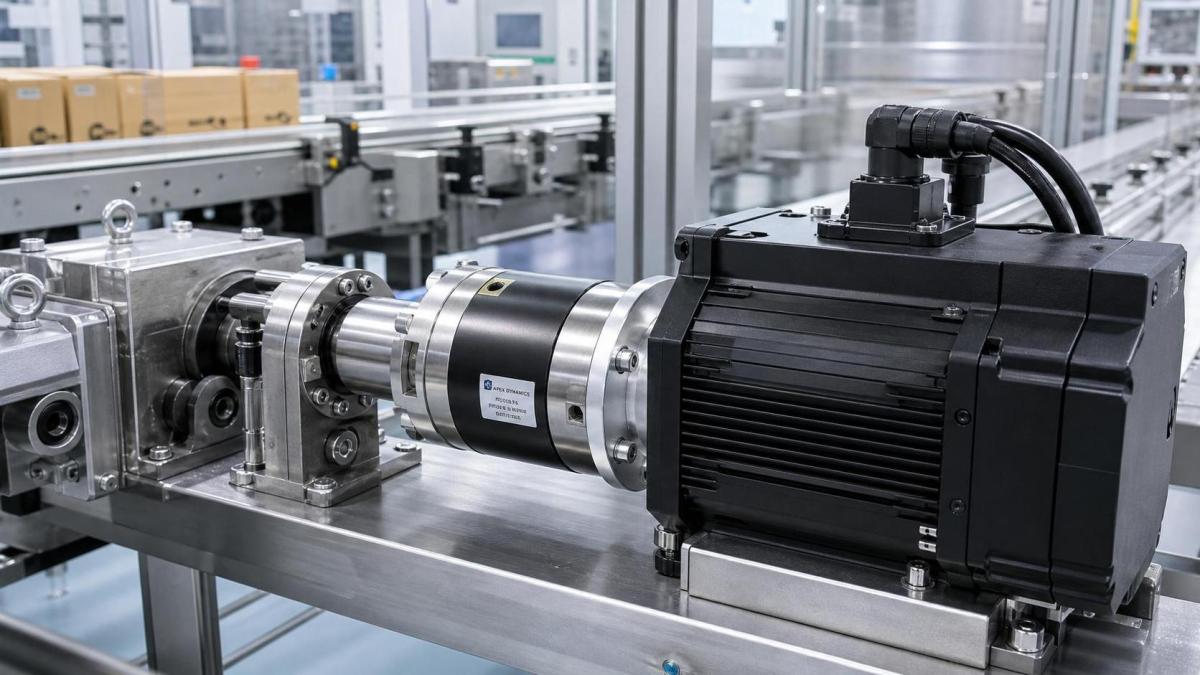
This layout is common because it combines compact geometry, high torque density, and direct alignment between motor and driven load. In many machines, that simplifies packaging without giving up stiffness or positioning quality.
Planetary gearboxes inline are especially relevant where space is limited, cycle times are aggressive, and repeatability matters. Typical examples include conveyors, robotic axes, packaging lines, automated storage, processing equipment, and precision transfer systems.
The interest is not only mechanical. Inline planetary units often sit at the junction between servo control, structural rigidity, and throughput economics. That makes them a specification item with direct impact on uptime and total lifecycle cost.
What should be understood before comparing models
At a basic level, planetary gearboxes inline use multiple planet gears around a sun gear inside a ring gear. This arrangement spreads load across several contact points, which supports higher torque transmission in a relatively compact body.
That core architecture explains their appeal, but it does not guarantee suitability in every project. Performance depends on ratio selection, bearing support, gear quality, lubrication method, housing stiffness, and how the unit is mounted into the machine.
It also helps to separate peak values from operating reality. A gearbox rated for intermittent torque may still underperform in a high-duty application with frequent starts, reversals, shock loads, or elevated ambient temperatures.
The first check is the real load cycle
Many specification mistakes begin with incomplete duty data. A gearbox may pass a nominal torque check and still fail because the application includes repeated acceleration, deceleration, indexing, or overload events that were not modeled early enough.
For planetary gearboxes inline, the useful question is not only “How much torque?” but also “How often, for how long, and with what dynamic pattern?” Duty cycle details shape sizing margins far more than a single steady-state number.
- Running torque versus acceleration torque
- Number of starts and stops per hour
- Direction reversals and indexing frequency
- Shock loads from jams, product impact, or tooling contact
- Required safety factor under worst-case conditions
When these inputs are vague, specification risk rises quickly. In practice, a load profile captured from the intended machine sequence is often more valuable than a broad estimate from a concept drawing.
Alignment, mounting, and structural fit matter earlier than expected
Inline gearboxes are often chosen to simplify machine layout, yet installation details can undermine that advantage. Coupling misalignment, soft mounting surfaces, or inadequate shaft support can introduce vibration, bearing stress, and premature wear.
This becomes more critical in servo-driven systems. Even a high-quality planetary gearbox can lose positioning performance if the surrounding frame deflects or if mounting tolerances are treated as secondary details.
The specification review should therefore include the full mechanical stack, not only the gearbox body. That means flange dimensions, shaft interface, keying or clamping method, allowable radial and axial loads, and access for service tools.
A practical fit-check table
Efficiency and heat should be reviewed together
Efficiency losses inside planetary gearboxes inline become heat, and heat changes reliability. In low-duty applications, this may be minor. In continuous or high-cycling systems, thermal buildup can become the hidden limit.
A specification that ignores thermal conditions often looks fine during bench review. It starts to unravel when the gearbox operates inside an enclosure, near furnaces, in washdown zones, or beside drives and motors with limited airflow.
Pay attention to ambient temperature, lubrication life, housing temperature rise, and whether the declared torque assumes a duty pattern different from the actual machine cycle. Continuous operation deserves a more conservative reading of catalog values.
Backlash, stiffness, and control response are not interchangeable
Two inline planetary units can share the same ratio and nominal torque but behave differently in motion control. Backlash, torsional stiffness, and inertia matching all affect how the axis responds during positioning, settling, and reversal.
This is one reason high-speed automation programs review the gearbox together with the motor, encoder, and drive strategy. Mechanical precision and control precision are linked, especially when throughput targets leave little room for tuning instability.
Where exact stop position matters, a lower-backlash unit may justify its cost. Where motion is simpler and tolerant, durability and serviceability may outweigh ultra-fine positioning performance.
Procurement risk now extends beyond the gearbox itself
The specification process now sits inside a wider industrial risk picture. Lead times, regional support, traceability, replacement compatibility, and digital documentation have become as important as pure mechanical fit in many programs.
This is where a benchmarking mindset helps. G-AIE frames equipment decisions through both physical performance and data readiness, which is increasingly useful when assets must fit predictive maintenance, smart commissioning, and globally distributed sourcing models.
For planetary gearboxes inline, that means checking more than the base specification sheet:
- Availability of consistent documentation across regions
- Part number stability and revision control
- Service intervals and lubricant guidance
- Spare unit interchangeability across machine families
- Compatibility with monitoring and maintenance records
These points do not replace technical sizing. They reduce the chance that a mechanically valid choice becomes an operational burden later.
Common use scenarios where specification quality changes outcomes
In packaging equipment, the challenge is often rapid cycling with accurate registration. In conveyor and material handling systems, continuous duty and shock events may dominate. In robotics, backlash and torsional stiffness move closer to the center of the decision.
Process industries may add chemical exposure, washdown demands, or heat. Advanced manufacturing lines may place more value on diagnostics, repeatability, and fast replacement. The same inline gearbox category serves all of these, but not with the same priorities.
That is why specification should begin with the machine context, not the catalog page. The better the operating scenario is described, the easier it becomes to narrow the right ratio, service factor, sealing level, and integration approach.
A disciplined next step before release
Before locking a part number, build a short decision sheet around the actual application. Include load cycle data, mounting constraints, radial and axial loads, expected temperature range, control accuracy target, and maintenance assumptions.
Then compare planetary gearboxes inline against those conditions rather than against headline ratings alone. That simple shift usually improves specification quality, reduces late-stage redesign, and creates a cleaner bridge between engineering intent and procurement execution.
Where uncertainty remains, the most useful move is to validate one level deeper: model the duty cycle, confirm the mounting stack, and benchmark lifecycle implications before release. That is often where a confident specification is actually made.
Recommended News
 Sep 19, 2026When can a supply chain LLM reduce time spent finding shipment updates?Supply chain LLMs can cut shipment-update search time by connecting carrier events, ERP data, and documents—giving teams traceable answers and faster exception response.
 Sep 18, 2026How industrial monitoring equipment helps prevent unplanned downtimeIndustrial monitoring equipment helps teams detect early asset issues, prioritize maintenance, and prevent costly unplanned downtime. Explore practical strategies for reliable operations.
 Sep 17, 2026What next-gen harmonic drive research means for robot joint accuracyNext-gen harmonic drive research reveals how backlash, stiffness, thermal drift, and sensing shape robot joint accuracy. Explore smarter validation strategies.
 Sep 16, 2026How Southeast Asian climates affect cylinder seal frictionCylinder seal friction Southeast Asia: learn how humidity, heat, monsoons, and contamination affect motion stability, wear, and seal selection.
 Sep 15, 2026How to size DC gear motors for the required starting torqueGear motors DC sizing made practical: calculate starting torque, account for friction, gravity, inertia and voltage drop, then select a reliable motor with confidence.
 Sep 14, 2026How to verify high purity chemicals compliance before supplier approvalHigh purity chemicals compliance: learn how to verify supplier quality systems, CoAs, traceability, testing, and change control before approval.
 Sep 13, 2026What permits are needed to operate mapping drones in Europe?Mapping drones Europe: discover the permits, EASA categories, airspace approvals, site access, and GDPR checks needed for compliant aerial surveys.
 Sep 12, 2026What lead time should I expect for automatic transmission components? Planetary Gearboxes delivery forecasting for OEM planningWhat lead time should I expect for automatic transmission components? Get dynamic, AI-powered planetary gearbox delivery forecasting—designed for OEMs building next-gen hybrid & commercial powertrains.
 Sep 12, 2026Can polyamide replace metal in load-bearing components? Polymer Pulse structural performance data for 2026 applicationsCan polyamide replace metal in load-bearing components? Discover Polymer Pulse’s 2026 structural data—real-world performance, weight savings, and reliability breakthroughs.
 Sep 12, 2026How to handle a power electronics warranty claim: Harmonic Reducers documentation and escalation pathHow do I handle a power electronics warranty claim? Get a fast, intelligent, evidence-driven resolution for harmonic reducers—no bureaucracy, just precision diagnostics and real-time escalation.
 Sep 12, 2026Which motion control specifications matter most before purchase? Torque Logic selection criteria for automation engineersWhich motion control specifications are most important before purchase? Discover Torque Logic—the 4 non-negotiable, AI-aligned criteria that cut TCO by 27–41% and boost motion system availability to 99.992%.
 Sep 13, 2026Is agentic AI reliable enough for supplier screening? Supply Chain LLM validation framework for procurement teamsIs agentic AI reliable enough for supplier screening? Discover a rigorous LLM validation framework built for procurement teams—grounded in material traceability, regulatory compliance, and real-world operational constraints.
 Sep 14, 2026How to maintain edge AI systems after deployment: Predictive Maint AI operational protocols for field techniciansHow do I maintain edge AI systems after deployment? Discover predictive, physics-aware operational protocols designed for real-world field technicians—sustaining intelligence where silicon meets steel.
 Sep 15, 2026What compliance documents must a bioplastics supplier provide? Bio-Plastics regulatory checklist for procurementWhat compliance documents should a bioplastics supplier provide? Get our actionable regulatory checklist for food, medical & EU-bound applications.
 Sep 16, 2026How to prevent PET film defects during production: Barrier Films process control best practicesHow can I prevent PET film defects during production? Discover physics-driven barrier film process control—thermal precision, dynamic tension management & surface energy optimization.
 Sep 17, 2026Are thermoplastics suitable for long-term outdoor use? Engineering Resins durability assessment in 2026 UV/weather exposureAre thermoplastics suitable for long-term outdoor use? Discover 2026’s engineering resin durability insights — UV/weather resistance ranked, tested & actionable.
 Sep 18, 2026What to do when a servo motor fails during production: A Servo Actuators troubleshooting guide for maintenance teamsWhat should I do if a servo motor fails during production? Get a field-tested, AI-aware troubleshooting guide for maintenance teams—minimize downtime, maximize OEE.
 Sep 12, 2026How to compare wholesale party supplies by minimum order valueCompare wholesale party supplies by minimum order value, freight, SKU flexibility, and stock risk to choose suppliers that protect margins and simplify replenishment.
 Sep 11, 2026How proportional solenoid linearity affects precision motion controlProportional solenoid linearity directly affects precision motion control, valve metering, stability, and calibration. Learn how to evaluate performance for reliable automation.
 Sep 10, 2026When does supplier information platform automation reduce onboarding delays?Supplier information platform automation reduces onboarding delays by streamlining data collection, routing, renewals, and compliance checks—without replacing expert technical review.
 Sep 09, 2026How to size robotic motion systems for AMR payload changesRobotic motion systems for AMR payload changes: learn how to size motors, wheels, gearing, traction, and controls for safer, reliable performance.
 Sep 08, 2026How to perform a cylinder rod buckling calculation for long strokesCylinder rod buckling calculation made practical: learn how to assess effective length, end conditions, rod stiffness, load forces, and safety margins for reliable long-stroke cylinder design.
 Sep 07, 2026How to estimate the cost of industrial mechanical components before orderingIndustrial mechanical components cost: learn how to estimate material, machining, tooling, inspection, logistics, and hidden expenses before ordering. Compare quotes confidently and reduce sourcing risk.
 Sep 07, 2026What Is a Product Standards Database Used For?Product standards database guide: learn how to compare requirements, verify revisions, control specifications, and reduce compliance risks across design, sourcing, and production.