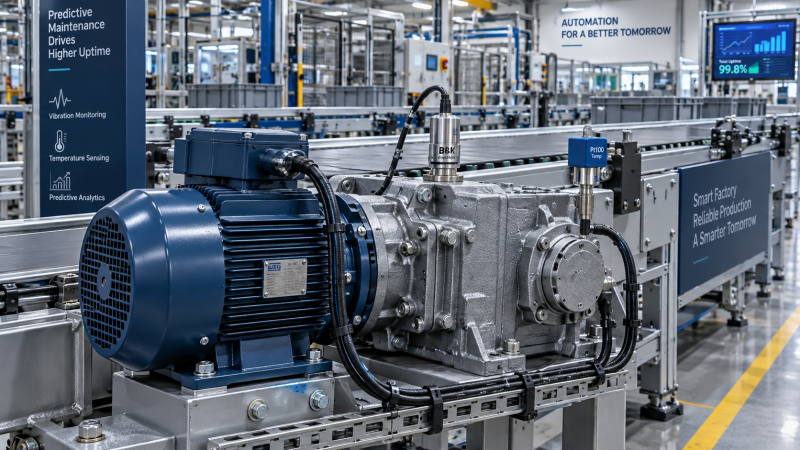
Predictive maintenance can reduce unplanned automation downtime when equipment failures show detectable warning signs—and teams can act before those signals become production stoppages.
For technical evaluators, the challenge is distinguishing actionable diagnostics from noisy alerts, then verifying whether sensor coverage, failure models, and maintenance workflows justify deployment.
Drawing on G-AIE’s focus on intelligent automation and technical benchmarking, this article examines the conditions that make predictive maintenance effective, from asset criticality to intervention timing.
The strongest candidates combine recurring, consequential failures with measurable degradation, sufficient warning time, and practical maintenance actions that can prevent or shorten a stoppage.
A monitoring platform alone cannot establish those conditions. Evaluation must connect each proposed prediction to a specific failure mechanism, operational consequence, and achievable maintenance response.
Begin with the equipment and failure modes responsible for significant production losses. Then assess whether earlier intervention would actually change their contribution to downtime.
Which automation failures are suitable for predictive maintenance?
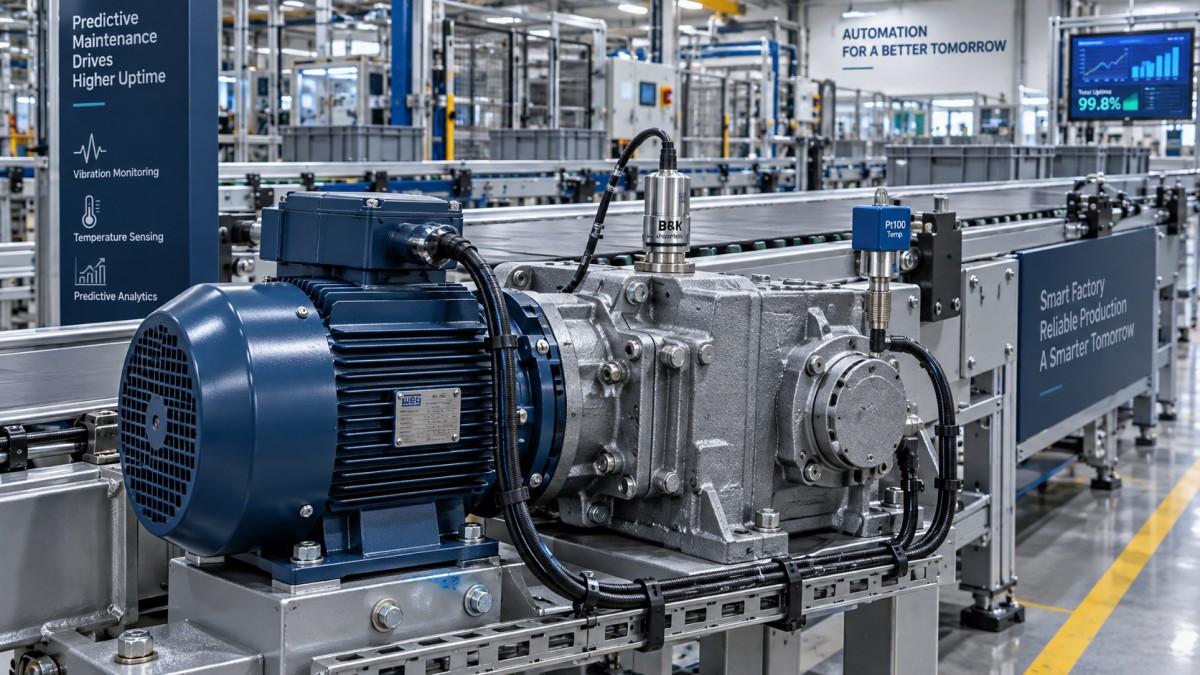
Predictive maintenance works best when degradation develops progressively. Bearing wear, lubrication deterioration, mechanical looseness, and some thermal problems can produce observable changes before functional failure.
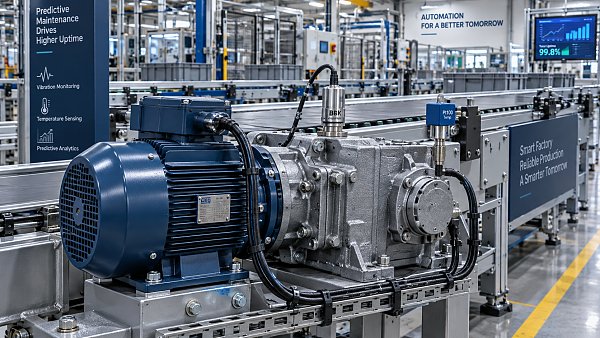
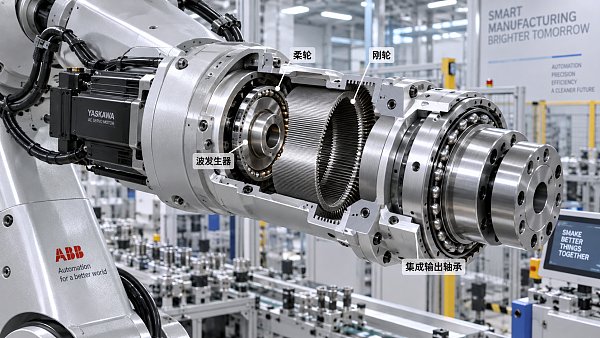
In automated production, potential candidates include conveyor drives, robot gearboxes, pumps supporting process equipment, spindle assemblies, cooling systems, and selected electrical components with measurable deterioration.
However, the equipment category does not determine suitability. A robot may experience predictable gearbox wear alongside sudden communication faults that require entirely different reliability measures.
Start with maintenance records and downtime codes. Identify the failure modes that recur, their production impact, and whether existing inspections already detect them adequately.
Separate equipment breakdowns from material shortages, upstream starvation, changeover delays, programming errors, and quality holds. Predictive maintenance cannot directly resolve every source of automation downtime.
For abrupt failures without reliable precursors, redundancy, protective controls, design changes, or stocked replacement modules may deliver more dependable results than additional predictive analytics.
Asset criticality also depends on production architecture. A modest conveyor motor can become a high-priority monitoring candidate when its failure stops an entire assembly line.
Conversely, expensive equipment with redundancy or substantial buffer capacity may create limited production loss. Prioritize recoverable operational impact rather than purchase price or technological complexity.
Are the signals reliable enough to support a maintenance decision?
Sensor availability is only a starting point. The measurement must capture the relevant failure mechanism at an appropriate sampling rate, location, resolution, and operating condition.
Low-frequency controller trends may reveal rising temperatures or changing cycle times, yet miss vibration features needed to identify certain bearing faults before substantial damage develops.
Likewise, motor current can indicate changing load without uniquely identifying its cause. Product variation, mechanical friction, and process adjustments may produce similar observed patterns.
Technical evaluators should request evidence connecting each monitored signal to the proposed failure mode. Correlation with abnormal operation is weaker evidence than a verified diagnosis.
Operating context matters because automated equipment changes speed, payload, tooling, and duty cycle. Comparisons should account for these conditions rather than assume one universal baseline.
Data quality checks should cover timestamp alignment, missing values, sensor calibration, mounting integrity, and maintenance events. Poor records can make healthy equipment appear to deteriorate.
For machine-learning systems, examine whether validation separates training data from later operating periods or different assets. Leakage can make reported performance misleadingly optimistic during evaluation.
Demand results at the failure-mode level, including missed events and false alerts. An overall accuracy percentage can conceal weak performance on rare, costly breakdowns.
Will the warning arrive early enough to prevent a stoppage?
A correct diagnosis has limited operational value if it arrives after the maintenance team can realistically intervene. Warning time must exceed the complete response process.
That process includes reviewing the alert, confirming the condition, obtaining parts, scheduling technicians, accessing equipment, completing the repair, and verifying successful restart under production conditions.
A useful decision rule is that credible warning time should exceed total response time, with a margin for uncertainty in diagnosis and remaining equipment life.
Consider an illustrative gearbox alert issued three days before likely failure. If replacement parts require two weeks, the prediction alone cannot enable a timely replacement.
The same warning could become actionable with a stocked spare, approved repair procedure, and available maintenance window. Operational preparation changes the value of identical analytics.
Where immediate repair is impractical, an alert may support temporary load reduction or production rescheduling. Such measures need engineering approval and evidence that they help.
Distinguish an anomaly alert from a remaining-life estimate. Detecting unusual behavior does not automatically establish how long the equipment can continue operating safely or reliably.
Ask suppliers to explain uncertainty and recommended response thresholds. Evaluators need evidence of actionable warning intervals, rather than confidence scores without an operational interpretation attached.
Can maintenance teams turn predictions into completed interventions?
Even reliable alerts fail when ownership is unclear. Every actionable notification needs an assigned reviewer, escalation route, response expectation, and documented criteria for maintenance action.
Integration with a computerized maintenance management system can connect alerts to work orders, inspection findings, parts requirements, and completed repairs, supporting traceability across the workflow.
However, integration should not automatically convert every anomaly into a repair order. Initial triage helps distinguish sensor problems, operating changes, and faults requiring physical intervention.
Alert design should specify the affected asset, suspected failure mode, supporting evidence, urgency, and recommended next step. Generic warnings increase investigation effort and operator frustration.
Review deployment constraints early: network access, historian compatibility, edge processing requirements, cybersecurity controls, and ownership of operational data can materially affect implementation effort and sustainability.
For safety-related equipment, predictive outputs must fit established engineering and safety procedures. A favorable model score does not justify bypassing protective systems or mandated inspections.
Maintenance feedback should close the loop. Record whether inspection confirmed the diagnosis, what technicians changed, and whether the monitored condition returned to its expected range.
This feedback helps expose persistent false positives and incorrect failure labels. It also creates an auditable connection between a prediction, maintenance action, and operational result.
How should a pilot prove reduced automation downtime?
Define the pilot around selected assets and failure modes, with an agreed baseline. A broad platform trial without clear success criteria makes attribution unnecessarily difficult.
Use historical downtime records only after checking coding consistency and completeness. Missing events, changed equipment boundaries, and inconsistent timestamps can distort comparisons before deployment begins.
Normalize results for operating hours and relevant production conditions. Lower downtime during reduced utilization is not persuasive evidence that predictive maintenance improved equipment reliability materially.
Track unplanned downtime hours per operating hour, targeted failure frequency, and restoration time. Also record planned maintenance hours, because intervention may shift rather than eliminate downtime.
Measure alert precision, missed detectable failures, and actionable warning time. Define event matching rules so repeated notifications about one developing fault do not inflate performance.
Report false alerts per asset-month or operating period alongside precision. Evaluators need to understand the investigation workload imposed on technicians, particularly when failures are uncommon.
Where practical, compare similar monitored and unmonitored assets, accounting for utilization and maintenance differences. Simple before-and-after comparisons can confuse predictive benefits with unrelated operational improvements.
Rare failures may require longer observation than a short pilot allows. Confirmed degradation and successful interventions support feasibility, but do not alone prove sustained downtime reduction.
Do the avoided losses justify the full deployment cost?
Estimate value from the failure modes the system can realistically influence. Applying an assumed improvement percentage to all plant downtime usually overstates the opportunity substantially.
A practical calculation compares expected avoided production and repair losses with sensing, software, integration, maintenance labor, training, and ongoing support costs over an agreed evaluation period.
Use contribution margin or another agreed financial measure for production losses. Gross revenue can exaggerate benefits when delayed output is recoverable or downstream demand is constrained.
Include secondary consequences only when supported by evidence: scrap, damaged tooling, expedited freight, overtime, and extended restart losses may materially change the economics of intervention.
Costs also include sensor upkeep, data management, model review, and investigation time. A low subscription price does not necessarily indicate a low total operating burden.
Build conservative, expected, and favorable scenarios using transparent assumptions about failure frequency, detection coverage, successful intervention, and recoverable production loss. Avoid treating every alert as savings.
For illustration, four actionable warnings do not equal four prevented failures. Inspection evidence and engineering review should establish whether each intervention plausibly avoided a stoppage.
Compare predictive maintenance with simpler alternatives, including improved lubrication, periodic condition checks, spare availability, and redesign. Select the approach delivering the strongest justified reliability improvement.
What evidence supports a decision to scale?
Scale when the pilot demonstrates detectable degradation, sufficient intervention time, manageable alert workload, completed corrective actions, and credible economic value for the targeted asset population.
Before expansion, check whether other machines share the same failure mechanisms and operating conditions. Successful results on one asset do not automatically transfer across equipment families.
Request documented sensor requirements, diagnostic limitations, validation methods, and integration responsibilities. Supplier demonstrations should show representative operating conditions and outcomes that technical reviewers can independently examine.
For procurement and engineering teams using G-AIE’s benchmarking perspective, comparable evidence matters more than feature counts. Evaluate operational fit alongside diagnostic performance and lifecycle support requirements.
Pause expansion when alerts remain unexplained, repairs cannot be scheduled, or baseline data are unreliable. Address those constraints before adding assets to the monitoring program.
Continue periodic review after deployment. Equipment modifications, new products, sensor changes, and altered maintenance practices can weaken previously valid assumptions and require diagnostic thresholds to change.
Predictive maintenance reduces automation downtime when it connects a credible warning to an effective intervention. Its value depends on both diagnostic capability and maintenance execution.
The decisive question is whether your team can detect consequential deterioration, act within the available window, and verify fewer production losses against a trustworthy baseline.