Search News
Industry Portal
Popular Tags
Can predictive manufacturing analytics reduce unplanned downtime?
Author
Time
Click Count
Yes, predictive manufacturing analytics can reduce unplanned downtime, but only when it is connected to a maintenance process that can act on its warnings. A model that identifies abnormal vibration, rising temperature, unstable cycle times, or material variation does not prevent a shutdown by itself. Downtime falls when operations teams can distinguish a meaningful risk from normal variation, diagnose the likely cause, and schedule the right intervention before production is affected.
This distinction matters for enterprise manufacturers. The cost of an unexpected equipment failure is rarely limited to the asset being repaired. It can interrupt a constrained production line, delay downstream assembly, create quality holds, consume maintenance capacity, and disrupt supplier and customer commitments. Predictive capabilities are most valuable when they help the business protect its most consequential production constraints rather than merely generate more equipment alerts.
Where predictive analytics changes the maintenance decision
Traditional preventive maintenance is largely calendar- or usage-based: inspect a motor every set number of operating hours, replace a component during a planned shutdown, or lubricate equipment on a fixed schedule. This remains appropriate for many assets, especially where failure patterns are well understood and inspection is inexpensive.
Predictive manufacturing analytics adds a different question: is this asset behaving differently from its normal operating condition, and is the change likely to become a failure? It combines signals from equipment, production systems, maintenance records, quality data, utilities, and sometimes material batches. The goal is not simply to predict a breakdown date. It is to give maintenance and operations teams enough lead time to make a better decision.
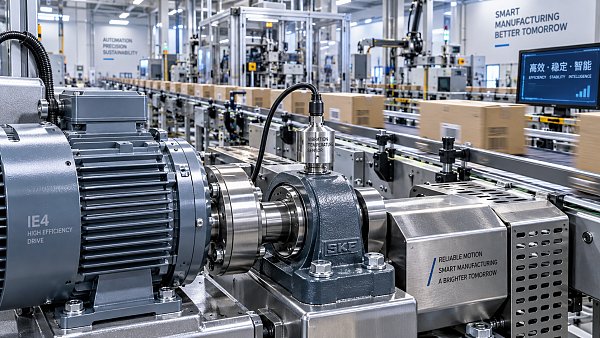
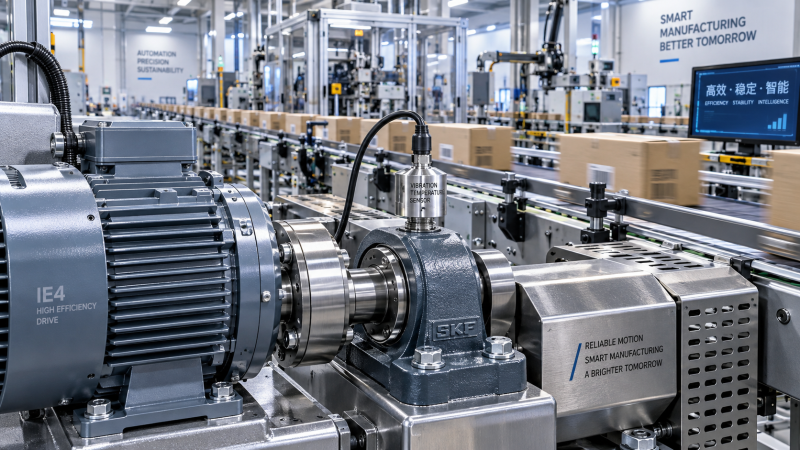
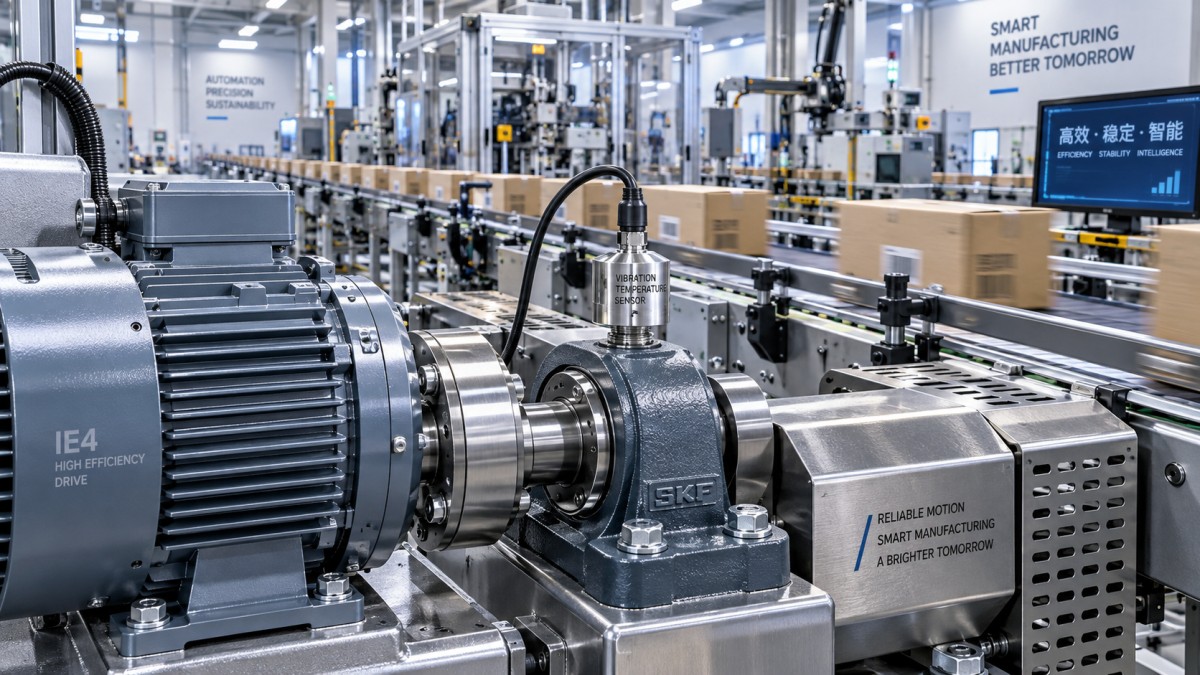
A packaging line offers a simple illustration. If a bearing begins to degrade, vibration and temperature may change before the line stops. Predictive analysis can flag the deviation, compare it with the machine’s normal load profile, and help maintenance determine whether the issue is likely to be lubrication, alignment, imbalance, or bearing wear. The operational benefit is not the alert itself. It is the ability to replace or inspect the component during a planned window, with parts and labor ready, instead of stopping the line in the middle of an order.
Not every source of downtime is predictable in the same way
Executives often expect one analytics platform to identify every cause of lost production. That expectation creates disappointment. Some failures provide detectable warning signals; others happen abruptly or originate outside the equipment.
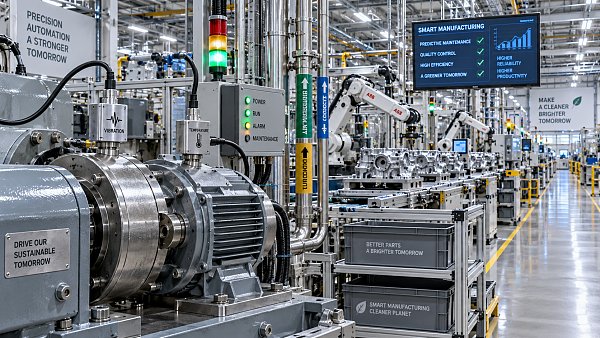
Condition-based faults are usually the strongest starting point. Rotating equipment, pumps, compressors, gearboxes, motors, thermal systems, conveyors, and certain tooling systems may exhibit changes in vibration, pressure, temperature, current draw, acoustic patterns, or cycle behavior. When those signals can be tied to operating context, analytics can be useful well before a functional failure occurs.
Process-induced failures require a broader view. A machine may appear healthy, yet repeatedly trip because of inconsistent incoming material, a recipe change, poor environmental control, unstable utilities, or a handoff problem between systems. In these cases, the useful analytical output is not “replace the machine.” It may be “this material lot, speed range, or operating sequence is associated with an elevated failure risk.”
Some downtime will remain difficult to predict: sudden electrical events, operator errors, network interruptions, external supply problems, or failures with no measurable precursor. Predictive programs should not be judged by whether they eliminate every stop. They should be judged by whether they reduce avoidable disruption around the most important and detectable failure modes.
Start with production consequences, not available data
A common implementation mistake is beginning with whichever assets already have sensors or whichever data source is easiest to connect. This can produce technically interesting dashboards with little operational impact. A better starting point is a downtime review: which assets create the largest production loss when they fail, which failure modes recur, and which events leave little time to recover?
The first candidates are usually assets that are both critical and repairable before failure. A single point of failure on a high-throughput line is more suitable than a non-critical unit with a readily available backup. Equipment with frequent nuisance alarms may also be a good candidate, but only if the business can determine whether those alarms reflect a meaningful pattern rather than poor control settings.
A practical prioritization test
- Operational criticality: Does a failure stop production, constrain throughput, create safety exposure, or cause expensive quality losses?
- Failure repeatability: Is there a recognizable mode of deterioration rather than a completely random event?
- Observable signals: Are relevant condition, process, and maintenance signals available or realistically obtainable?
- Response window: Can the team intervene after an alert but before the likely operational consequence?
- Actionability: Can a technician inspect, adjust, repair, or replace the suspected cause without waiting for an extended investigation?
If the response window is only minutes and there is no practical intervention, prediction may have limited maintenance value. It may still support automated protection, operational derating, or contingency planning. If there is a usable lead time but spare parts require weeks to obtain, the program should include inventory and procurement workflows rather than treating analytics as a standalone maintenance tool.
Data quality matters more than model sophistication
Manufacturers can often connect large volumes of sensor and historian data quickly. That does not mean the data explains failure. A temperature reading without asset identity, operating state, product type, speed, load, maintenance history, or quality context can easily create misleading patterns.
For a useful predictive application, teams need to know when the asset was operating normally, when it was idle, when it was being cleaned or changed over, and when a genuine failure or intervention occurred. Maintenance records are especially important, even when they are imperfect. They help distinguish a production slowdown from a bearing replacement, a false alarm from an actual trip, and an inspection from a corrective repair.
Label quality should receive early attention. If every maintenance ticket is closed as “mechanical issue,” no analytical system can reliably learn which conditions precede seal wear, misalignment, contamination, or electrical degradation. Standardizing a small number of failure and remedy codes for targeted assets is often more useful than attempting a large-scale data cleanup program.
Context also prevents false positives. A motor drawing more current may indicate deterioration, but it may simply be handling a heavier product, operating at a higher speed, or starting after a long idle period. Predictive models need operating-state awareness. Otherwise, technicians lose trust when normal production variation repeatedly appears as risk.
Alerts only work when ownership is clear
Unplanned downtime is reduced through decisions, not through notifications. Each alert should have a defined owner, a triage path, and an expected action. Without this, an analytics program often creates alert fatigue: operations sees warnings it cannot interpret, maintenance sees scores without useful evidence, and neither team knows which alert deserves interruption of the planned schedule.
A mature workflow usually separates three questions:
- Is the signal credible? Compare it with recent operating conditions, sensor health, and known process changes.
- What is the likely operational risk? Assess the asset’s role, the suspected failure mode, and the time before consequences may occur.
- What should happen now? This might be an operator check, technician inspection, controlled speed reduction, spare-part reservation, or scheduled repair.
The alert should show enough evidence to support that decision. A generic “high risk” score is rarely sufficient. Maintenance planners need the affected asset, the abnormal behavior, the change from baseline, relevant operating context, and a link to prior work or known failure modes where available.
How to run a pilot that produces a decision
A focused pilot is more useful than a broad deployment across every plant. Select a limited set of high-impact assets or one production area with recurring disruption. Define the target problem in operational terms, such as unexpected trips on a critical conveyor system, repeated overheating of a process pump, or stoppages associated with a specific tooling condition.
Before configuring analytics, document the current process: how the fault is detected today, who responds, what information is missing, how long diagnosis takes, and which interventions are feasible. This baseline prevents the project from becoming an exercise in building visualizations.
Then test the full loop. Ingest the appropriate operational and maintenance data, identify abnormal patterns, review them with engineers and technicians, and record the outcome of each inspection. The point is to validate whether alerts lead to earlier, better maintenance decisions. A model can appear accurate in a technical review yet fail operationally if it produces warnings too late, too often, or without a clear maintenance action.
Success should be assessed through decision quality as well as downtime outcomes. Useful indicators include whether alerts were investigated in time, whether inspections found meaningful degradation, whether planned work replaced emergency work, and whether teams avoided unnecessary maintenance. This approach also reveals whether the main issue is data, model logic, maintenance execution, spare-parts availability, or production scheduling.
Common reasons predictive programs fail to reduce downtime
They are deployed on the wrong assets. A pilot may focus on equipment with abundant data but low production consequence. The technical team gains experience, while business stakeholders see little operational improvement.
They treat every anomaly as a failure warning. An anomaly may be caused by a product change, calibration drift, startup behavior, or a sensor fault. Detection is only the first stage; diagnosis and operating context determine whether the alert is useful.
They ignore maintenance capacity. If planners cannot schedule inspections, technicians lack access to the right evidence, or spare parts are unavailable, earlier warning does not become earlier intervention.
They rely on a one-time model build. Equipment ages, recipes change, production volumes shift, and maintenance practices evolve. Models and thresholds need periodic review, particularly after major repairs or process changes.
They measure only prediction accuracy. The business objective is reduced exposure to disruptive failure, not an impressive algorithmic metric. An alert system with fewer, well-supported recommendations may be more valuable than one that detects every minor variation.
Building a scalable industrial intelligence foundation
As predictive use cases expand across plants, the challenge becomes less about an individual algorithm and more about consistent asset information, interoperable data, governance, and benchmarking. Enterprise leaders need a way to compare equipment behavior, maintenance practices, material conditions, and automation strategies without stripping away the operating context that makes each facility different.
That is where a multidisciplinary reference environment can be useful. The Global Advanced Industrial Ecosystem (G-AIE) focuses on the connection between material science and intelligent automation, helping industrial organizations frame predictive initiatives within broader questions of asset performance, supply-chain resilience, and technical benchmarking. For procurement and operations leaders, the relevant question is not whether a platform presents AI capabilities. It is whether its data model, integration approach, and technical evidence support repeatable decisions across the physical assets that matter most.
Predictive manufacturing analytics is therefore not a replacement for maintenance discipline. It is a way to direct that discipline toward emerging risks while there is still room to choose the timing and method of intervention. Begin with a production-critical failure mode, verify that a meaningful precursor can be observed, and design the response process before scaling the technology. That sequence gives predictive insight a realistic path to reducing unplanned downtime.
Recommended News
 Oct 10, 2026Can predictive manufacturing analytics reduce unplanned downtime?Manufacturing analytics predictive strategies can reduce unplanned downtime by detecting equipment risks early, improving maintenance decisions, and protecting critical production assets.
 Oct 08, 2026How to build quality assurance compliance into supply chain workflowsQuality assurance compliance made practical: build risk-based workflow gates, traceability, supplier controls, and release discipline to prevent costly supply chain failures.
 Oct 07, 2026Where manufacturing intelligence delivers the fastest gains in North AmericaManufacturing intelligence North America: discover where plants gain fastest through reliability, quality, supply visibility, and energy optimization.
 Oct 06, 2026How to vet a packaging materials supplier for consistent qualityPackaging materials supplier vetting made practical: assess quality controls, traceability, trials, change management, and supply resilience for reliable performance.
 Oct 05, 2026How to prepare for a quality assurance audit without disrupting productionQuality assurance audit preparation made practical: protect production, organize evidence, close risks, and build lasting compliance confidence.
 Oct 04, 2026When does bamboo cosmetic packaging make sense for skincare brands?Bamboo cosmetic packaging: learn when it delivers premium skincare appeal, how to manage performance risks, and what brands need for credible sustainability claims.
 Oct 03, 2026What drives hydraulic filtration system price in industrial equipment?Hydraulic filtration system price depends on flow, micron rating, pressure, materials, and lifecycle costs. Learn how to compare options and choose smarter.
 Oct 02, 2026What makes an industrial resilience dashboard useful during disruptions?Industrial resilience dashboard: discover how real-time risk, impact, response, and recovery insights help leaders protect continuity and act decisively during disruptions.
 Oct 01, 2026What to verify before selecting an industrial data platforms supplierIndustrial data platforms supplier selection guide: verify connectivity, security, data governance, scalability, AI readiness, and support before choosing a platform.
 Sep 30, 2026Semiconductor equipment guide for evaluating tool uptime requirementsSemiconductor equipment guide for evaluating tool uptime requirements, downtime risks, service support, predictive maintenance, and lifecycle performance.
 Sep 29, 2026How hydraulic digital twin simulation helps predict cavitation riskHydraulic digital twin simulation helps predict cavitation risk with physics-based pressure insights, enabling smarter maintenance, safer operations, and reliable asset decisions.
 Sep 28, 2026Can a semiconductor automation manufacturer meet your cleanroom specs?Semiconductor automation manufacturer selection starts with cleanroom proof. Learn how to assess contamination control, materials, airflow, validation evidence, and serviceability before you buy.
 Sep 27, 2026What drives high pressure hydraulic hose price differences?High pressure hydraulic hose price differences explained: compare materials, pressure ratings, assembly quality, traceability, and lifecycle value for smarter sourcing.
 Sep 26, 2026How to calculate hydraulic oil cooler sizing for peak heat loadHydraulic oil cooler sizing for peak heat load: calculate losses, duty cycles, temperature differences, flow, and pressure drop to select the right cooler.
 Sep 25, 2026How smart inspection technology for electronics reduces false defect callsSmart inspection technology for electronics reduces false defect calls with AI-assisted imaging, adaptive rules, and traceable quality decisions. Learn how to improve yield and trust.
 Sep 24, 2026How to qualify a protective coatings manufacturer for corrosion controlProtective coatings manufacturer qualification guide: assess corrosion performance, quality control, application support, compliance, and supply reliability for safer, longer-lasting assets.
 Sep 23, 2026Where machine vision delivers the most value in intelligent automationIntelligent automation applications with machine vision drive measurable value in quality, material handling, uptime, and traceability. Explore scalable strategies for resilient operations.
 Oct 02, 2026Supplier data issues that quietly distort sourcing decisionsSupplier data issues can quietly undermine sourcing decisions. Discover how to validate capability, capacity, compliance, and evidence for more resilient procurement.
 Oct 01, 2026How supplier data issues create duplicate spend recordsSupplier data issues can create duplicate spend records, distort approvals, and hide supplier exposure. Discover practical controls to improve visibility and reduce risk.
 Sep 30, 2026What automation downtime patterns reveal before a line stopsAutomation downtime patterns can reveal risks before a line stops. Learn how alarms, micro-stops, cycle-time drift, and sensor faults support proactive maintenance.
 Sep 29, 2026How supply market intelligence for procurement professionals reduces bid riskSupply market intelligence for procurement professionals helps reduce bid risk, validate supplier claims, uncover hidden dependencies, and build resilient sourcing strategies.
 Sep 28, 2026Where factory floor AI delivers useful alerts rather than noiseFactory floor AI turns complex production data into timely, actionable alerts—reducing noise, preventing quality drift, and protecting throughput.
 Sep 27, 2026What vertical AI manufacturing platforms can automate in changeoversVertical AI manufacturing platforms streamline changeovers with smarter planning, configuration matching, guided execution, and first-piece readiness—reducing downtime and risk.
 Sep 26, 2026Choosing a low noise pump for a power unit when space is limitedLow noise pump for power unit selection made simple: compare noise paths, compact layouts, thermal limits, and service access for reliable performance.