Search News
Industry Portal
Popular Tags
When do CNC precision engineering components justify tighter tolerances?
Author
Time
Click Count
For technical evaluators, the decision to specify tighter tolerances in precision engineering components CNC production should be driven by function, risk, and total lifecycle value rather than by capability alone.
Stricter limits can improve assembly accuracy, dynamic stability, sealing performance, and repeatability, but they also increase machining time, inspection burden, scrap risk, and supplier cost.
The practical question is simple: do tighter tolerances prevent a known failure mode, protect a critical interface, or reduce total cost of ownership in a measurable way?
What Is the Core Search Intent Behind This Topic?
Users searching “when do CNC precision engineering components justify tighter tolerances” are usually not looking for a basic definition of tolerance. They want a decision framework.
In most cases, the search intent is evaluative and commercial-technical. The reader is comparing specification choices, supplier proposals, inspection effort, and downstream performance implications.
They need to know when tighter tolerances create real engineering value and when they simply add unnecessary cost to precision engineering components CNC manufacturing.
That makes this topic especially relevant for technical assessment teams involved in sourcing, design review, quality planning, and supplier qualification.
What Technical Evaluators Usually Care About Most
Technical evaluators tend to focus on five questions. First, which dimensions are function-critical and actually influence product performance?
Second, what is the cost penalty for moving from standard machining capability to tighter process control and higher inspection intensity?
Third, will the tighter requirement improve yield, reliability, interchangeability, or maintenance performance enough to justify that cost?
Fourth, can the supplier repeatedly hold the specified tolerance across production volume, material variation, and machine changes rather than only on first articles?
Fifth, what evidence supports the specification: tolerance stack-up, failure analysis, process capability data, or field performance history?
These are not abstract concerns. In industrial procurement and technical benchmarking, over-specified tolerances often create hidden cost without strengthening product function.
When Tighter Tolerances Are Usually Justified
Tighter tolerances make sense when dimensional variation directly affects a critical outcome. The strongest justification appears when a measurable functional relationship exists between deviation and failure risk.
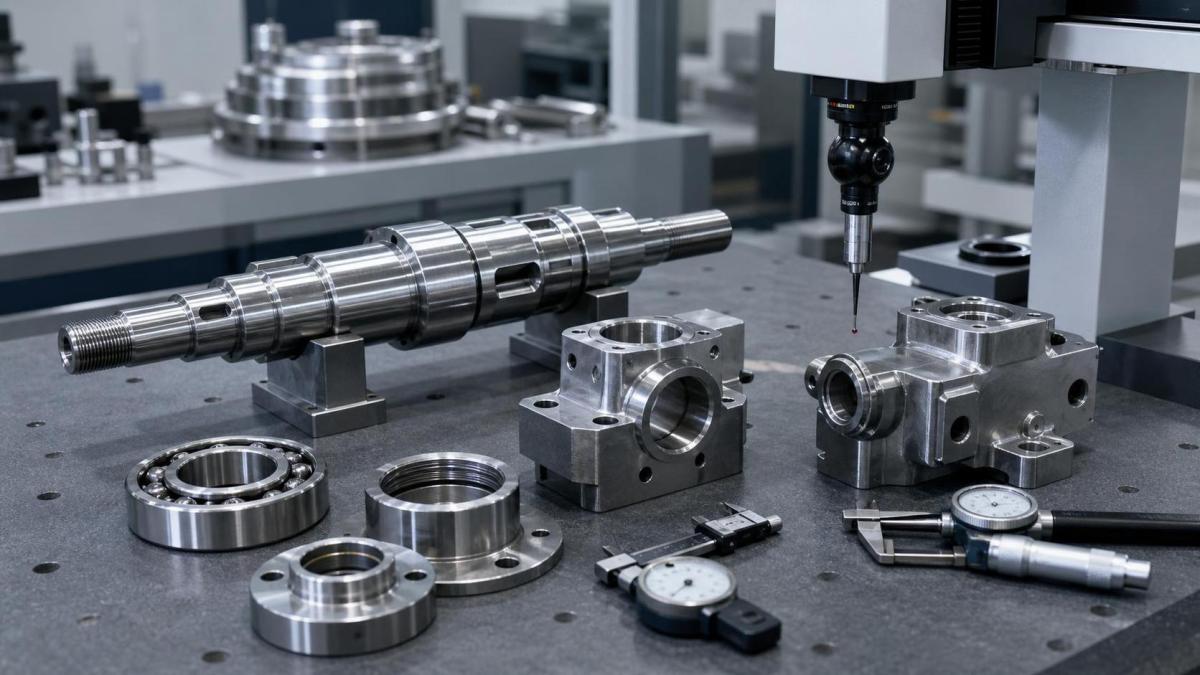
One common case is precision fit between mating parts. Bearings, shafts, housings, bushings, and linear motion interfaces often depend on controlled clearances or interference.
If variation causes vibration, uneven wear, thermal instability, or loss of positional accuracy, narrower limits can be justified because the dimensional control protects system behavior.
Another case is sealing performance. Hydraulic manifolds, valve bodies, pump components, and fluid control assemblies often rely on geometry that affects leakage paths and compression balance.
In these applications, a looser tolerance may still allow assembly, but it can shorten service life or reduce efficiency under real operating pressure.
Tighter tolerances are also justified in high-speed rotating systems. Spindles, couplings, impellers, and precision balancing features are sensitive to concentricity, runout, and alignment error.
When the assembly operates at high RPM or under cyclic loading, small dimensional errors can translate into noise, fatigue, and premature failure.
A fourth justification appears in modular or interchangeable assemblies. If components are built across multiple lines, plants, or suppliers, tolerance control supports predictable fit without selective assembly.
This matters in scaled production environments where rework, hand fitting, and field adjustment are more expensive than tighter process control at the machining stage.
Where Tighter Tolerances Often Do Not Pay Back
Not every dimension on a CNC part deserves the same level of control. In fact, many unnecessary cost overruns begin with blanket tight tolerances on non-critical features.
Features used only for cosmetic appearance, generous clearance zones, non-locating faces, or simple envelope limits often do not create enough performance value to justify stricter machining.
The same applies when downstream processes dominate the result. For example, if welding distortion, coating buildup, thermal growth, or assembly compliance exceeds the machining variation, tighter CNC limits may add little benefit.
Another weak case is when design teams specify very tight dimensions to compensate for uncertainty rather than evidence. That usually shifts risk to suppliers without resolving the real engineering problem.
In precision engineering components CNC sourcing, a narrow tolerance should never be used as a substitute for proper datum strategy, material control, or stack-up analysis.
How to Judge Value: Start with Functional Criticality
The best starting point is to classify features by functional criticality. Ask which dimensions affect motion, load transfer, sealing, thermal behavior, electrical contact, or alignment to another controlled feature.
If a feature has a direct, traceable effect on product function, it may deserve tighter tolerance. If it does not, standard machinability should remain the default.
For technical evaluators, this approach improves discussions with both design teams and suppliers because it links specification to outcome rather than preference.
A useful method is to divide features into three categories: critical to function, important to assembly, and low-impact geometry. Not every dimension belongs in the first group.
This simple classification often reveals where precision engineering components CNC requirements have become inflated over time through drawing inheritance rather than current performance needs.
Use Cost Drivers, Not Just Capability Claims
Many suppliers can machine to very tight tolerances on selected features. The more important question is what it takes to do so consistently at the required volume.
Cost increases usually come from slower feeds, additional finishing passes, more stable fixtures, tighter tool control, climate considerations, in-process probing, and expanded final inspection.
Scrap and rework risk also rise because a smaller deviation can push a part outside acceptance limits. That affects both unit cost and delivery reliability.
For evaluators, this means tolerance review should include process capability, measurement method, sampling plan, and expected yield impact, not only nominal drawing compliance.
If the supplier can hold the requirement only through exceptional effort, the part may be technically possible but commercially fragile.
Inspection and Metrology Matter More Than Many Teams Expect
Tighter tolerances in precision engineering components CNC production do not only change machining. They also change how confidence is established.
As limits shrink, measurement uncertainty becomes more important. The inspection system must be capable enough that acceptance decisions remain trustworthy.
This affects gauge selection, fixture design, coordinate measuring machine strategy, environmental stability, operator training, and reporting discipline.
In some sourcing situations, the hidden issue is not whether the part can be machined, but whether it can be measured repeatedly across sites and batches.
Technical evaluators should therefore ask for metrology evidence alongside machining claims, especially for geometric tolerances, datum relationships, and fine surface requirements.
A Practical Decision Framework for Technical Evaluation
When reviewing whether a tighter tolerance is justified, use a structured sequence of questions rather than negotiating dimension by dimension.
First, identify the failure mode the tighter tolerance is intended to prevent. Second, verify the functional link between dimensional variation and that failure mode.
Third, quantify the consequence of failure in cost, safety, service disruption, or warranty exposure. Fourth, compare that consequence with the incremental manufacturing and inspection cost.
Fifth, check whether the same outcome could be achieved through a better datum scheme, material change, feature redesign, or tolerance redistribution.
Sixth, request evidence of supplier repeatability at production scale, not just prototype success. Seventh, confirm that incoming and final inspection methods can reliably validate the requirement.
This framework keeps the discussion grounded in value creation and helps prevent over-engineering in precision engineering components CNC procurement.
Typical Industrial Scenarios Where the Case Is Strong
In aerospace subassemblies, tighter tolerances are often justified where alignment, weight distribution, sealing integrity, or fatigue performance are highly sensitive to variation.
In semiconductor equipment, precision interfaces and motion components may require narrow limits because micron-level drift can affect process consistency and output quality.
In medical device manufacturing equipment, repeatability and clean assembly conditions can justify tighter control on contact, motion, and fluid-path features.
In industrial automation, gearbox interfaces, servo mounting surfaces, precision rails, and sensor alignment features often justify higher precision when uptime and positional accuracy are key.
In energy and process systems, valve seats, sealing grooves, and critical bores may justify tighter tolerances when leakage, erosion, or pressure instability creates major lifecycle cost.
The common pattern across these sectors is not prestige or complexity. It is a clear connection between dimensional control and measurable operational performance.
How Buyers and Technical Teams Can Avoid Over-Specification
One effective practice is tolerance rationalization during drawing review. Challenge every unusually tight feature with a direct question: what functional risk does this limit control?
If the answer is vague, historical, or based only on preference, that feature may be a candidate for relaxation without hurting performance.
Another useful step is supplier feedback early in the review cycle. Experienced machining partners can identify where a modest tolerance relaxation produces major savings with no real functional loss.
Design of experiments, stack-up analysis, and pilot builds can also show which dimensions are truly sensitive and which are consuming cost without meaningful return.
For large procurement organizations, this approach improves not only part cost but also sourcing resilience, because more qualified suppliers can meet well-justified requirements consistently.
Conclusion: Tight Tolerances Should Earn Their Place
Tighter tolerances in precision engineering components CNC manufacturing are justified when they protect a critical function, reduce meaningful failure risk, or improve total lifecycle economics.
They are not justified simply because advanced CNC processes can achieve them, or because previous drawings carried them forward without challenge.
For technical evaluators, the best decisions come from linking tolerance to function, cost, process capability, and metrology confidence in one coherent assessment.
When that link is clear, tighter specifications create value. When it is not, they usually create expense, complexity, and supply risk that the product does not need.
Recommended News
 Sep 19, 2026When can a supply chain LLM reduce time spent finding shipment updates?Supply chain LLMs can cut shipment-update search time by connecting carrier events, ERP data, and documents—giving teams traceable answers and faster exception response.
 Sep 18, 2026How industrial monitoring equipment helps prevent unplanned downtimeIndustrial monitoring equipment helps teams detect early asset issues, prioritize maintenance, and prevent costly unplanned downtime. Explore practical strategies for reliable operations.
 Sep 17, 2026What next-gen harmonic drive research means for robot joint accuracyNext-gen harmonic drive research reveals how backlash, stiffness, thermal drift, and sensing shape robot joint accuracy. Explore smarter validation strategies.
 Sep 16, 2026How Southeast Asian climates affect cylinder seal frictionCylinder seal friction Southeast Asia: learn how humidity, heat, monsoons, and contamination affect motion stability, wear, and seal selection.
 Sep 15, 2026How to size DC gear motors for the required starting torqueGear motors DC sizing made practical: calculate starting torque, account for friction, gravity, inertia and voltage drop, then select a reliable motor with confidence.
 Sep 14, 2026How to verify high purity chemicals compliance before supplier approvalHigh purity chemicals compliance: learn how to verify supplier quality systems, CoAs, traceability, testing, and change control before approval.
 Sep 13, 2026What permits are needed to operate mapping drones in Europe?Mapping drones Europe: discover the permits, EASA categories, airspace approvals, site access, and GDPR checks needed for compliant aerial surveys.
 Sep 12, 2026What lead time should I expect for automatic transmission components? Planetary Gearboxes delivery forecasting for OEM planningWhat lead time should I expect for automatic transmission components? Get dynamic, AI-powered planetary gearbox delivery forecasting—designed for OEMs building next-gen hybrid & commercial powertrains.
 Sep 12, 2026Can polyamide replace metal in load-bearing components? Polymer Pulse structural performance data for 2026 applicationsCan polyamide replace metal in load-bearing components? Discover Polymer Pulse’s 2026 structural data—real-world performance, weight savings, and reliability breakthroughs.
 Sep 12, 2026How to handle a power electronics warranty claim: Harmonic Reducers documentation and escalation pathHow do I handle a power electronics warranty claim? Get a fast, intelligent, evidence-driven resolution for harmonic reducers—no bureaucracy, just precision diagnostics and real-time escalation.
 Sep 12, 2026Which motion control specifications matter most before purchase? Torque Logic selection criteria for automation engineersWhich motion control specifications are most important before purchase? Discover Torque Logic—the 4 non-negotiable, AI-aligned criteria that cut TCO by 27–41% and boost motion system availability to 99.992%.
 Sep 13, 2026Is agentic AI reliable enough for supplier screening? Supply Chain LLM validation framework for procurement teamsIs agentic AI reliable enough for supplier screening? Discover a rigorous LLM validation framework built for procurement teams—grounded in material traceability, regulatory compliance, and real-world operational constraints.
 Sep 14, 2026How to maintain edge AI systems after deployment: Predictive Maint AI operational protocols for field techniciansHow do I maintain edge AI systems after deployment? Discover predictive, physics-aware operational protocols designed for real-world field technicians—sustaining intelligence where silicon meets steel.
 Sep 15, 2026What compliance documents must a bioplastics supplier provide? Bio-Plastics regulatory checklist for procurementWhat compliance documents should a bioplastics supplier provide? Get our actionable regulatory checklist for food, medical & EU-bound applications.
 Sep 16, 2026How to prevent PET film defects during production: Barrier Films process control best practicesHow can I prevent PET film defects during production? Discover physics-driven barrier film process control—thermal precision, dynamic tension management & surface energy optimization.
 Sep 17, 2026Are thermoplastics suitable for long-term outdoor use? Engineering Resins durability assessment in 2026 UV/weather exposureAre thermoplastics suitable for long-term outdoor use? Discover 2026’s engineering resin durability insights — UV/weather resistance ranked, tested & actionable.
 Sep 18, 2026What to do when a servo motor fails during production: A Servo Actuators troubleshooting guide for maintenance teamsWhat should I do if a servo motor fails during production? Get a field-tested, AI-aware troubleshooting guide for maintenance teams—minimize downtime, maximize OEE.
 Sep 12, 2026How to compare wholesale party supplies by minimum order valueCompare wholesale party supplies by minimum order value, freight, SKU flexibility, and stock risk to choose suppliers that protect margins and simplify replenishment.
 Sep 11, 2026How proportional solenoid linearity affects precision motion controlProportional solenoid linearity directly affects precision motion control, valve metering, stability, and calibration. Learn how to evaluate performance for reliable automation.
 Sep 10, 2026When does supplier information platform automation reduce onboarding delays?Supplier information platform automation reduces onboarding delays by streamlining data collection, routing, renewals, and compliance checks—without replacing expert technical review.
 Sep 09, 2026How to size robotic motion systems for AMR payload changesRobotic motion systems for AMR payload changes: learn how to size motors, wheels, gearing, traction, and controls for safer, reliable performance.
 Sep 08, 2026How to perform a cylinder rod buckling calculation for long strokesCylinder rod buckling calculation made practical: learn how to assess effective length, end conditions, rod stiffness, load forces, and safety margins for reliable long-stroke cylinder design.
 Sep 07, 2026How to estimate the cost of industrial mechanical components before orderingIndustrial mechanical components cost: learn how to estimate material, machining, tooling, inspection, logistics, and hidden expenses before ordering. Compare quotes confidently and reduce sourcing risk.
 Sep 07, 2026What Is a Product Standards Database Used For?Product standards database guide: learn how to compare requirements, verify revisions, control specifications, and reduce compliance risks across design, sourcing, and production.