Search News
Industry Portal
Popular Tags
What drives ROI in high-tech industrial automation projects?
Author
Time
Click Count
ROI in high-tech industrial automation projects starts with the cost of failure, not the sticker price of equipment. A line that runs fast but drifts out of tolerance, needs frequent recalibration, or forces manual rework can erase the expected payback long before throughput gains show up. The real question is how the automation behaves under production stress: changing material lots, temperature swings, dust, vibration, operator turnover, and the timing gaps that appear between receiving, storage, processing, inspection, and shipment.
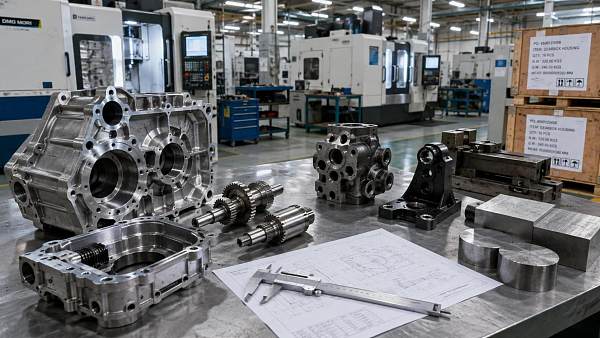
In high-tech industrial automation, the first value driver is process stability. When control logic, motion systems, sensors, and material handling are aligned, the plant spends less time correcting variation. That matters in electronics assembly, precision machining, battery production, pharmaceutical packaging, smart logistics, and other integrated environments where a small deviation can trigger scrap, rework, or downstream stoppage. A machine that holds position accurately is useful only if the feeders, tooling, fixtures, and inspection modules can support that accuracy through a full shift, not just during commissioning.
Material performance is often overlooked in ROI calculations. Advanced automation systems do not operate in isolation from the materials they move, cut, bond, dispense, or inspect. Polymer films can change behavior with humidity; composite parts may require different clamping force; conductive powders can create contamination risks; delicate substrates may demand low-contact transport surfaces and tighter acceleration profiles. When procurement assumptions ignore these material conditions, the installed system may look efficient on paper but spend its life compensating for friction, static, deformation, or thermal expansion.
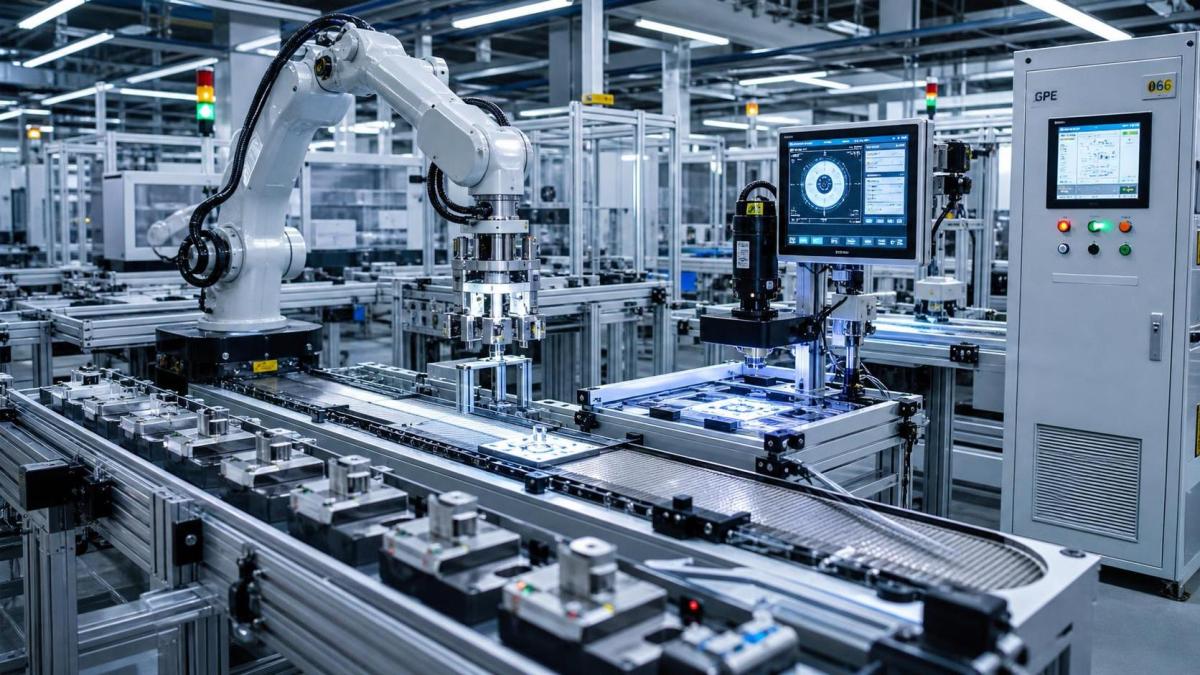
Interoperability is another major factor. High-tech industrial automation projects rarely fail because a single robot arm is underperforming. They fail because controllers, MES layers, machine vision, safety systems, conveyors, and upstream or downstream equipment do not exchange usable data cleanly enough for stable operations. Every integration point has a cost: protocol conversion, signal mapping, custom middleware, validation, and the maintenance burden that follows. If a project depends on a large amount of hand-built interface logic, future upgrades become more expensive and line changes become slower.
That is why the purchasing case should include the full integration envelope. Cabling, industrial networking, fieldbus compatibility, cabinet space, power quality, cooling capacity, and floor loading all affect deployment cost. An automation cell that seems compact on a drawing may need extra clearance for service access, end-effector changes, inspection lighting, or safe material staging. If the site needs a reinforced foundation, dust extraction, cleanroom adaptation, or temperature control, the capital budget can shift materially before the first part is processed. Those costs are not side issues; they are part of ROI.
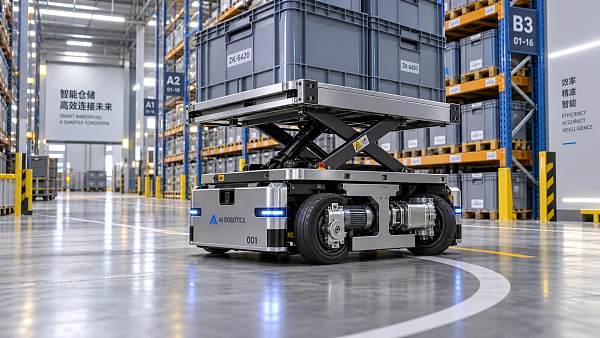
Cycle time alone is also an incomplete metric. A shorter takt time helps only when the upstream supply of materials is reliable and the downstream output can be absorbed without creating congestion. In complex industrial environments, the bottleneck may be in kitting, pallet transfer, tool changeover, curing time, calibration, or quality release rather than in the robot motion itself. Automation delivers stronger returns when it removes the constraint that actually limits the line, not when it merely accelerates a noncritical step.
Maintenance design has a direct effect on lifetime economics. Systems built around hard-to-source components, proprietary service tools, or tightly coupled subsystems can become expensive to support. Bearings, belts, servo drives, grippers, cameras, nozzles, and filters all have different wear patterns, and the replacement interval depends on duty cycle, ambient conditions, and contamination exposure. If maintenance access is poor, the labor needed for inspection and repair rises, and planned downtime becomes longer than expected. A project with strong upfront performance but weak serviceability often loses its economic case after the first few maintenance cycles.
Supply chain resilience belongs in the ROI model as well. Industrial automation projects depend on lead times for motion components, industrial PCs, specialty sensors, tooling plates, cable assemblies, and safety hardware. If a design uses uncommon parts or a narrow vendor pool, the project becomes exposed to procurement delays and lifecycle risk. That exposure is costly in a multi-site rollout, where standardization matters. A design that can tolerate approved substitutes, modular spares, and regional sourcing options is usually easier to sustain over time.
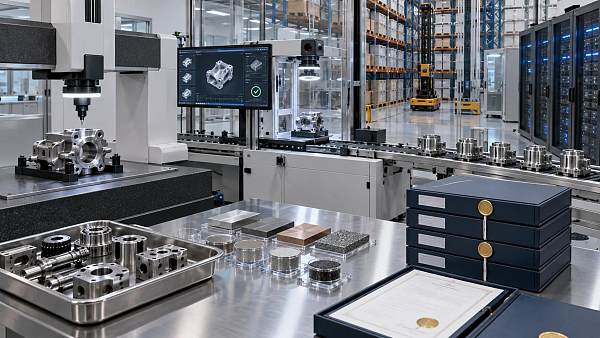
The quality system changes the math in a quieter way. High-tech industrial automation can increase throughput while still producing hidden losses if inspection is weak or too late in the process. Inline metrology, vision inspection, force monitoring, and traceable data capture reduce the chance that defects travel downstream. That lowers scrap, warranty exposure, and the labor needed for containment. Still, inspection must be matched to the defect mode. Over-inspecting a stable process adds cost without adding much value, while under-inspecting a sensitive process leaves defects undiscovered until they are expensive.
Data architecture is part of the asset, not just the software layer. Useful operational data needs to be time-synced, attributable to the right machine state, and retained long enough to support process tuning or quality investigation. If tags are inconsistent, if timestamps are not reliable, or if the data model changes between lines, the organization pays for analytics that cannot be trusted. In practice, ROI improves when the project defines which variables truly matter: torque curves, reject locations, dwell times, temperature bands, vibration signatures, or energy draw during specific operations. Collecting everything is usually less valuable than collecting the right things.
Energy use can matter, but only when it is measured in context. A highly automated line may consume more electricity than a manually intensive process, yet still produce a better cost structure if it reduces scrap, compresses floor space, cuts rework, or enables consistent output with fewer interruptions. On the other hand, compressed air leakage, poorly tuned servo profiles, excessive vacuum demand, and unnecessary idle states can quietly weaken economics. Energy savings are real when they come from process design, not from vague assumptions about machine modernization.
Installation and ramp-up deserve conservative treatment in any purchase case. Commissioning time depends on site readiness, utility availability, operator training, test materials, and the number of edge cases that must be validated before production release. A project with complex safety interlocks or tightly coupled process steps may require extended acceptance testing. If the installation schedule assumes immediate steady-state output, the business case can overstate early returns. Realistic ROI models separate procurement lead time, build-out work, validation, and stabilized production.
Labor reduction is often discussed first, but the better gain is labor reallocation. In many industrial settings, automation returns value by moving people away from repetitive or hazardous tasks and toward exception handling, process oversight, maintenance, and quality control. That shift only works if the new workflow is designed carefully. A plant may still need trained technicians, material handlers, and controls support even after automation is installed. If those roles are not accounted for, the project can be under-resourced after startup.
There is also a common misunderstanding around flexibility. Some systems are marketed as adaptable simply because they include software recipes or quick-change tooling. In practice, flexibility depends on the full operating envelope: part geometry tolerance, gripper compatibility, changeover time, vision robustness, and the amount of retesting required after each variant switch. A highly flexible system that is difficult to validate can be less attractive than a narrower system that runs consistently with minimal setup overhead. The right tradeoff depends on product mix, batch size, and how often the line actually changes.
Risk belongs inside the ROI calculation, not beside it. Safety compliance, thermal management, cyber exposure, obsolescence, and quality escape risk all have financial consequences. If a control platform cannot be supported over the expected life of the asset, or if security patches disrupt production planning, the apparent savings can fade. The strongest automation investments are usually the ones that reduce the probability of disruptive events while keeping the operating model understandable enough to support over several years.
For industrial procurement, the practical test is whether the project creates measurable operating discipline. That may show up as fewer stoppages, cleaner handoffs, lower scrap, shorter changeovers, tighter traceability, or more predictable maintenance windows. In high-tech industrial automation, those effects are often more valuable than a simple labor model because they improve the reliability of the whole production chain. When the system, the material, the integration layer, and the service plan fit the actual plant conditions, ROI becomes visible in the operating ledger rather than in the proposal.
Recommended News
 Sep 19, 2026When can a supply chain LLM reduce time spent finding shipment updates?Supply chain LLMs can cut shipment-update search time by connecting carrier events, ERP data, and documents—giving teams traceable answers and faster exception response.
 Sep 18, 2026How industrial monitoring equipment helps prevent unplanned downtimeIndustrial monitoring equipment helps teams detect early asset issues, prioritize maintenance, and prevent costly unplanned downtime. Explore practical strategies for reliable operations.
 Sep 17, 2026What next-gen harmonic drive research means for robot joint accuracyNext-gen harmonic drive research reveals how backlash, stiffness, thermal drift, and sensing shape robot joint accuracy. Explore smarter validation strategies.
 Sep 16, 2026How Southeast Asian climates affect cylinder seal frictionCylinder seal friction Southeast Asia: learn how humidity, heat, monsoons, and contamination affect motion stability, wear, and seal selection.
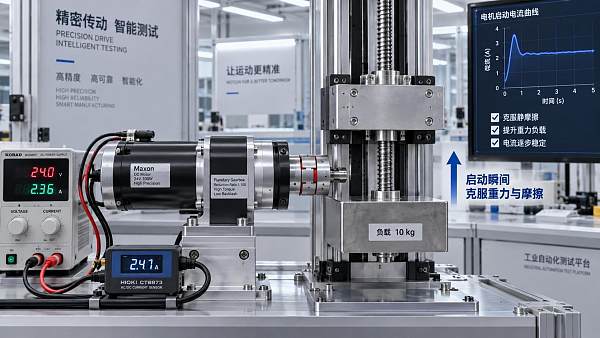
 Sep 15, 2026How to size DC gear motors for the required starting torqueGear motors DC sizing made practical: calculate starting torque, account for friction, gravity, inertia and voltage drop, then select a reliable motor with confidence.
 Sep 14, 2026How to verify high purity chemicals compliance before supplier approvalHigh purity chemicals compliance: learn how to verify supplier quality systems, CoAs, traceability, testing, and change control before approval.
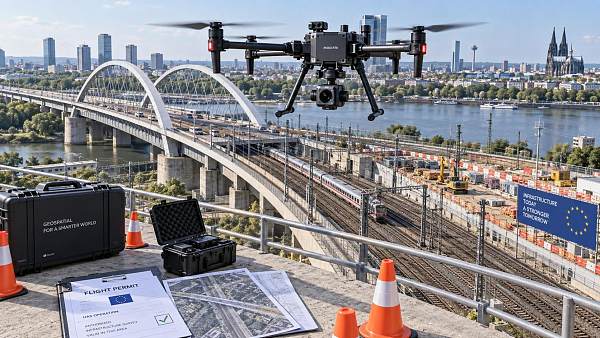
 Sep 13, 2026What permits are needed to operate mapping drones in Europe?Mapping drones Europe: discover the permits, EASA categories, airspace approvals, site access, and GDPR checks needed for compliant aerial surveys.
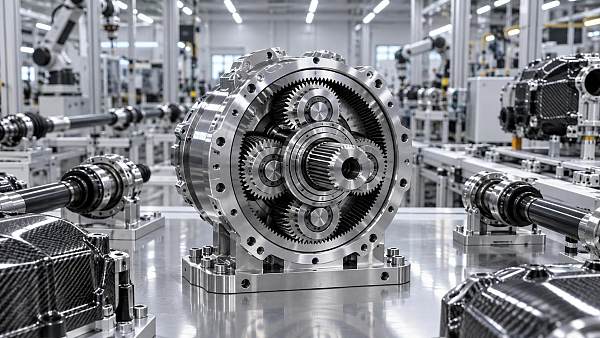
 Sep 12, 2026What lead time should I expect for automatic transmission components? Planetary Gearboxes delivery forecasting for OEM planningWhat lead time should I expect for automatic transmission components? Get dynamic, AI-powered planetary gearbox delivery forecasting—designed for OEMs building next-gen hybrid & commercial powertrains.
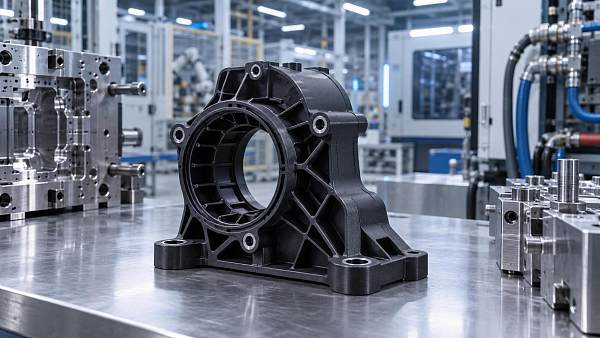
 Sep 12, 2026Can polyamide replace metal in load-bearing components? Polymer Pulse structural performance data for 2026 applicationsCan polyamide replace metal in load-bearing components? Discover Polymer Pulse’s 2026 structural data—real-world performance, weight savings, and reliability breakthroughs.
 Sep 12, 2026How to handle a power electronics warranty claim: Harmonic Reducers documentation and escalation pathHow do I handle a power electronics warranty claim? Get a fast, intelligent, evidence-driven resolution for harmonic reducers—no bureaucracy, just precision diagnostics and real-time escalation.
 Sep 12, 2026Which motion control specifications matter most before purchase? Torque Logic selection criteria for automation engineersWhich motion control specifications are most important before purchase? Discover Torque Logic—the 4 non-negotiable, AI-aligned criteria that cut TCO by 27–41% and boost motion system availability to 99.992%.
 Sep 13, 2026Is agentic AI reliable enough for supplier screening? Supply Chain LLM validation framework for procurement teamsIs agentic AI reliable enough for supplier screening? Discover a rigorous LLM validation framework built for procurement teams—grounded in material traceability, regulatory compliance, and real-world operational constraints.
 Sep 14, 2026How to maintain edge AI systems after deployment: Predictive Maint AI operational protocols for field techniciansHow do I maintain edge AI systems after deployment? Discover predictive, physics-aware operational protocols designed for real-world field technicians—sustaining intelligence where silicon meets steel.
 Sep 15, 2026What compliance documents must a bioplastics supplier provide? Bio-Plastics regulatory checklist for procurementWhat compliance documents should a bioplastics supplier provide? Get our actionable regulatory checklist for food, medical & EU-bound applications.
 Sep 16, 2026How to prevent PET film defects during production: Barrier Films process control best practicesHow can I prevent PET film defects during production? Discover physics-driven barrier film process control—thermal precision, dynamic tension management & surface energy optimization.
 Sep 17, 2026Are thermoplastics suitable for long-term outdoor use? Engineering Resins durability assessment in 2026 UV/weather exposureAre thermoplastics suitable for long-term outdoor use? Discover 2026’s engineering resin durability insights — UV/weather resistance ranked, tested & actionable.
 Sep 18, 2026What to do when a servo motor fails during production: A Servo Actuators troubleshooting guide for maintenance teamsWhat should I do if a servo motor fails during production? Get a field-tested, AI-aware troubleshooting guide for maintenance teams—minimize downtime, maximize OEE.
 Sep 12, 2026How to compare wholesale party supplies by minimum order valueCompare wholesale party supplies by minimum order value, freight, SKU flexibility, and stock risk to choose suppliers that protect margins and simplify replenishment.
 Sep 11, 2026How proportional solenoid linearity affects precision motion controlProportional solenoid linearity directly affects precision motion control, valve metering, stability, and calibration. Learn how to evaluate performance for reliable automation.
 Sep 10, 2026When does supplier information platform automation reduce onboarding delays?Supplier information platform automation reduces onboarding delays by streamlining data collection, routing, renewals, and compliance checks—without replacing expert technical review.
 Sep 09, 2026How to size robotic motion systems for AMR payload changesRobotic motion systems for AMR payload changes: learn how to size motors, wheels, gearing, traction, and controls for safer, reliable performance.
 Sep 08, 2026How to perform a cylinder rod buckling calculation for long strokesCylinder rod buckling calculation made practical: learn how to assess effective length, end conditions, rod stiffness, load forces, and safety margins for reliable long-stroke cylinder design.
 Sep 07, 2026How to estimate the cost of industrial mechanical components before orderingIndustrial mechanical components cost: learn how to estimate material, machining, tooling, inspection, logistics, and hidden expenses before ordering. Compare quotes confidently and reduce sourcing risk.
 Sep 07, 2026What Is a Product Standards Database Used For?Product standards database guide: learn how to compare requirements, verify revisions, control specifications, and reduce compliance risks across design, sourcing, and production.