Search News
Industry Portal
Popular Tags
PEEK Material Price: What Drives Cost in 2026?

Author
Time
Click Count
PEEK Material Price: What Drives Cost in 2026?

For procurement teams planning 2026 sourcing, understanding PEEK material price is no longer just about comparing quotes.
Costs are being reshaped by resin supply, energy volatility, processing complexity, certification demands, and regional logistics.
This article explains the key pricing drivers behind PEEK material price, helping buyers evaluate suppliers more accurately.
It also shows how to manage budget risk and make stronger purchasing decisions in a fast-changing industrial market.
Why PEEK Material Price Is Under More Pressure in 2026
PEEK sits in a narrow band of high-performance polymers with limited global production capacity.
That matters because small shifts in supply can move PEEK material price faster than many commodity plastics.
From recent market changes, the clearer signal is supply concentration.
A limited number of producers control much of the resin base, especially for high-purity and reinforced grades.
This means resin availability, plant maintenance, and feedstock interruptions can influence quotes very quickly.
Another factor is demand quality, not just demand volume.
Medical, semiconductor, aerospace, and EV-related programs often require stricter traceability and tighter tolerances.
Those requirements push up PEEK material price even when headline market demand looks stable.
The Core Cost Drivers Behind PEEK Material Price
In practical sourcing, five variables shape most PEEK material price outcomes.
1. Resin Supply and Feedstock Constraints
PEEK production depends on specialized chemistry and controlled polymerization.
Feedstock cost changes can pass through quickly, especially when upstream supply is tight.
If producers prioritize strategic sectors, open-market buyers may face longer lead times and higher pricing.
2. Energy and Processing Intensity
PEEK is not cheap to make or convert.
High processing temperatures increase energy use during compounding, molding, machining, and quality control.
When electricity and industrial gas costs rise, PEEK material price usually follows.
3. Grade Selection
Unfilled PEEK, glass-filled PEEK, carbon-filled PEEK, and medical-grade PEEK do not share the same cost base.
Higher-performance grades add formulation complexity and testing overhead.
That creates a wide spread in PEEK material price across applications.
4. Certification and Documentation
A quote may look competitive until documentation requirements appear.
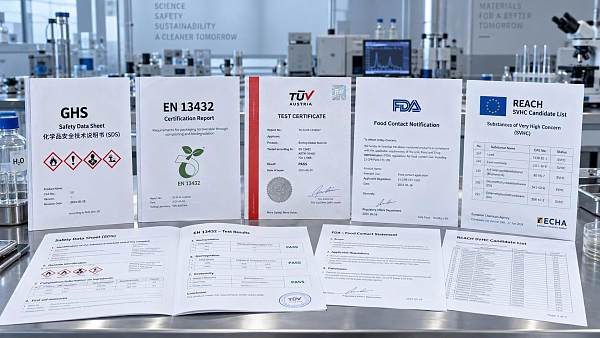
Lot traceability, REACH, RoHS, FDA-related support, aerospace records, and cleanroom handling add cost.
For regulated programs, these extras are often embedded in PEEK material price rather than listed separately.
5. Freight, Region, and Inventory Strategy
Regional sourcing differences remain significant in 2026.
Ocean freight may have normalized compared with earlier peaks, but premium lanes still affect landed cost.
Suppliers holding local inventory often charge more, but they reduce disruption risk.
That tradeoff should be measured inside total PEEK material price, not unit price alone.
How Application Requirements Change PEEK Material Price
The same polymer can carry very different economics depending on use case.
This is where many sourcing comparisons go wrong.
A buyer may compare two offers labeled PEEK, while the real cost structure is not comparable.
Machined Parts vs. Injection Molded Parts
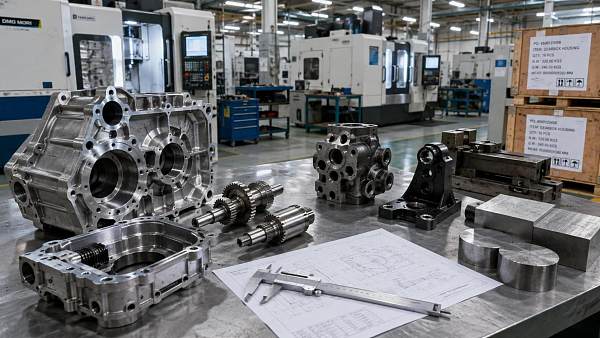
Machined components often carry higher scrap rates and longer cycle times.
That pushes the effective PEEK material price per finished part well above pellet cost.
Molded parts may lower unit economics at scale, but tooling, drying control, and process validation matter.
Virgin Material vs. Reprocessed Content
Some programs allow controlled regrind or secondary streams.
Others require fully virgin material with documented consistency.
That distinction can materially change PEEK material price and qualification effort.
Tight Tolerance and Surface Quality Demands
Thin walls, low warpage, and strict cosmetic standards increase reject risk.
The supplier then prices in processing difficulty, inspection time, and contingency.
This is one reason finished-part PEEK material price can vary more than raw resin benchmarks suggest.
A Practical Way to Benchmark PEEK Material Price
Better benchmarking starts with a cleaner cost framework.
Instead of asking who offers the lowest quote, ask what each quote actually includes.
This kind of structure helps separate a realistic offer from a deceptively low quote.
It also creates a better base for supplier negotiations.
How to Reduce PEEK Material Price Risk Without Sacrificing Performance
The goal is not always the lowest PEEK material price.
The better target is a stable, defendable cost position.
- Standardize grades where possible. Too many part-specific variants weaken volume leverage.
- Request should-cost visibility. Ask suppliers to break out resin, conversion, testing, and freight logic.
- Match specification to function. Overengineering is a common source of avoidable PEEK material price inflation.
- Qualify dual sources early. This improves resilience when one region tightens unexpectedly.
- Use forecast sharing. Suppliers often respond better when demand visibility supports inventory planning.
- Compare total cost, not resin price alone. Scrap, downtime, and qualification delays can erase nominal savings.
In day-to-day business, the most effective savings often come from specification discipline and better planning.
That approach usually outperforms aggressive spot buying in a tight specialty polymer market.
What to Ask Suppliers Before Accepting a PEEK Material Price
A stronger RFQ process leads to better pricing clarity.
These questions usually expose the real commercial picture:
- Is the quoted PEEK material price tied to virgin resin, a specific producer, or an approved alternative source?
- What testing, compliance files, and traceability records are included?
- What assumptions were used for scrap rate, yield, and batch size?
- Does the quote include safety stock, local warehousing, or expedited freight contingencies?
- How long is the price valid, and what triggers an adjustment?
- Which design or tolerance changes would alter the current PEEK material price?
These questions help convert a price discussion into a risk discussion.
That is usually where better procurement decisions are made.
Final Take for 2026 Sourcing
In 2026, PEEK material price will be shaped by more than raw resin cost.
Supply concentration, energy exposure, grade complexity, compliance burden, and regional logistics all matter.
The most reliable strategy is to benchmark like-for-like offers, tighten specifications, and validate total landed cost.
With that discipline, PEEK material price becomes easier to forecast, negotiate, and defend across critical sourcing programs.
Recommended News
 Sep 19, 2026When can a supply chain LLM reduce time spent finding shipment updates?Supply chain LLMs can cut shipment-update search time by connecting carrier events, ERP data, and documents—giving teams traceable answers and faster exception response.
 Sep 18, 2026How industrial monitoring equipment helps prevent unplanned downtimeIndustrial monitoring equipment helps teams detect early asset issues, prioritize maintenance, and prevent costly unplanned downtime. Explore practical strategies for reliable operations.
 Sep 17, 2026What next-gen harmonic drive research means for robot joint accuracyNext-gen harmonic drive research reveals how backlash, stiffness, thermal drift, and sensing shape robot joint accuracy. Explore smarter validation strategies.
 Sep 16, 2026How Southeast Asian climates affect cylinder seal frictionCylinder seal friction Southeast Asia: learn how humidity, heat, monsoons, and contamination affect motion stability, wear, and seal selection.
 Sep 15, 2026How to size DC gear motors for the required starting torqueGear motors DC sizing made practical: calculate starting torque, account for friction, gravity, inertia and voltage drop, then select a reliable motor with confidence.
 Sep 14, 2026How to verify high purity chemicals compliance before supplier approvalHigh purity chemicals compliance: learn how to verify supplier quality systems, CoAs, traceability, testing, and change control before approval.
 Sep 13, 2026What permits are needed to operate mapping drones in Europe?Mapping drones Europe: discover the permits, EASA categories, airspace approvals, site access, and GDPR checks needed for compliant aerial surveys.
 Sep 12, 2026What lead time should I expect for automatic transmission components? Planetary Gearboxes delivery forecasting for OEM planningWhat lead time should I expect for automatic transmission components? Get dynamic, AI-powered planetary gearbox delivery forecasting—designed for OEMs building next-gen hybrid & commercial powertrains.
 Sep 12, 2026Can polyamide replace metal in load-bearing components? Polymer Pulse structural performance data for 2026 applicationsCan polyamide replace metal in load-bearing components? Discover Polymer Pulse’s 2026 structural data—real-world performance, weight savings, and reliability breakthroughs.
 Sep 12, 2026How to handle a power electronics warranty claim: Harmonic Reducers documentation and escalation pathHow do I handle a power electronics warranty claim? Get a fast, intelligent, evidence-driven resolution for harmonic reducers—no bureaucracy, just precision diagnostics and real-time escalation.
 Sep 12, 2026Which motion control specifications matter most before purchase? Torque Logic selection criteria for automation engineersWhich motion control specifications are most important before purchase? Discover Torque Logic—the 4 non-negotiable, AI-aligned criteria that cut TCO by 27–41% and boost motion system availability to 99.992%.
 Sep 13, 2026Is agentic AI reliable enough for supplier screening? Supply Chain LLM validation framework for procurement teamsIs agentic AI reliable enough for supplier screening? Discover a rigorous LLM validation framework built for procurement teams—grounded in material traceability, regulatory compliance, and real-world operational constraints.
 Sep 14, 2026How to maintain edge AI systems after deployment: Predictive Maint AI operational protocols for field techniciansHow do I maintain edge AI systems after deployment? Discover predictive, physics-aware operational protocols designed for real-world field technicians—sustaining intelligence where silicon meets steel.
 Sep 15, 2026What compliance documents must a bioplastics supplier provide? Bio-Plastics regulatory checklist for procurementWhat compliance documents should a bioplastics supplier provide? Get our actionable regulatory checklist for food, medical & EU-bound applications.
 Sep 16, 2026How to prevent PET film defects during production: Barrier Films process control best practicesHow can I prevent PET film defects during production? Discover physics-driven barrier film process control—thermal precision, dynamic tension management & surface energy optimization.
 Sep 17, 2026Are thermoplastics suitable for long-term outdoor use? Engineering Resins durability assessment in 2026 UV/weather exposureAre thermoplastics suitable for long-term outdoor use? Discover 2026’s engineering resin durability insights — UV/weather resistance ranked, tested & actionable.
 Sep 18, 2026What to do when a servo motor fails during production: A Servo Actuators troubleshooting guide for maintenance teamsWhat should I do if a servo motor fails during production? Get a field-tested, AI-aware troubleshooting guide for maintenance teams—minimize downtime, maximize OEE.
 Sep 12, 2026How to compare wholesale party supplies by minimum order valueCompare wholesale party supplies by minimum order value, freight, SKU flexibility, and stock risk to choose suppliers that protect margins and simplify replenishment.
 Sep 11, 2026How proportional solenoid linearity affects precision motion controlProportional solenoid linearity directly affects precision motion control, valve metering, stability, and calibration. Learn how to evaluate performance for reliable automation.
 Sep 10, 2026When does supplier information platform automation reduce onboarding delays?Supplier information platform automation reduces onboarding delays by streamlining data collection, routing, renewals, and compliance checks—without replacing expert technical review.
 Sep 09, 2026How to size robotic motion systems for AMR payload changesRobotic motion systems for AMR payload changes: learn how to size motors, wheels, gearing, traction, and controls for safer, reliable performance.
 Sep 08, 2026How to perform a cylinder rod buckling calculation for long strokesCylinder rod buckling calculation made practical: learn how to assess effective length, end conditions, rod stiffness, load forces, and safety margins for reliable long-stroke cylinder design.
 Sep 07, 2026How to estimate the cost of industrial mechanical components before orderingIndustrial mechanical components cost: learn how to estimate material, machining, tooling, inspection, logistics, and hidden expenses before ordering. Compare quotes confidently and reduce sourcing risk.
 Sep 07, 2026What Is a Product Standards Database Used For?Product standards database guide: learn how to compare requirements, verify revisions, control specifications, and reduce compliance risks across design, sourcing, and production.