Search News
Industry Portal
Popular Tags
How Supply Chain Orchestration Tools Reduce Delays Across Multi-Supplier Operations
Author
Time
Click Count
In multi-supplier industrial projects, even small disruptions can trigger costly delays across engineering, procurement, and production. Supply chain orchestration tools help project leaders gain real-time visibility, align supplier timelines, and respond faster to risks before they escalate. For managers responsible for complex delivery targets, these platforms are becoming essential to keeping operations coordinated, resilient, and on schedule.
For project managers and engineering leads working across global industrial programs, the challenge is rarely a single missed shipment. Delays usually emerge from stacked dependencies: a tooling revision arriving 4 days late, a subassembly inspection slipping by 48 hours, or a customs hold that forces a downstream production line to idle for 1 shift or more. In complex environments where 8, 20, or even 50 suppliers contribute to one delivery milestone, fragmented communication creates hidden risk.
This is where supply chain orchestration tools have moved from optional software to operational infrastructure. They connect order status, engineering changes, supplier capacity signals, logistics milestones, and exception workflows into a single decision layer. For organizations navigating advanced manufacturing, intelligent automation, and material-intensive production, these tools help reduce delay propagation, improve coordination speed, and support more predictable execution.
Why Multi-Supplier Operations Break Down So Easily
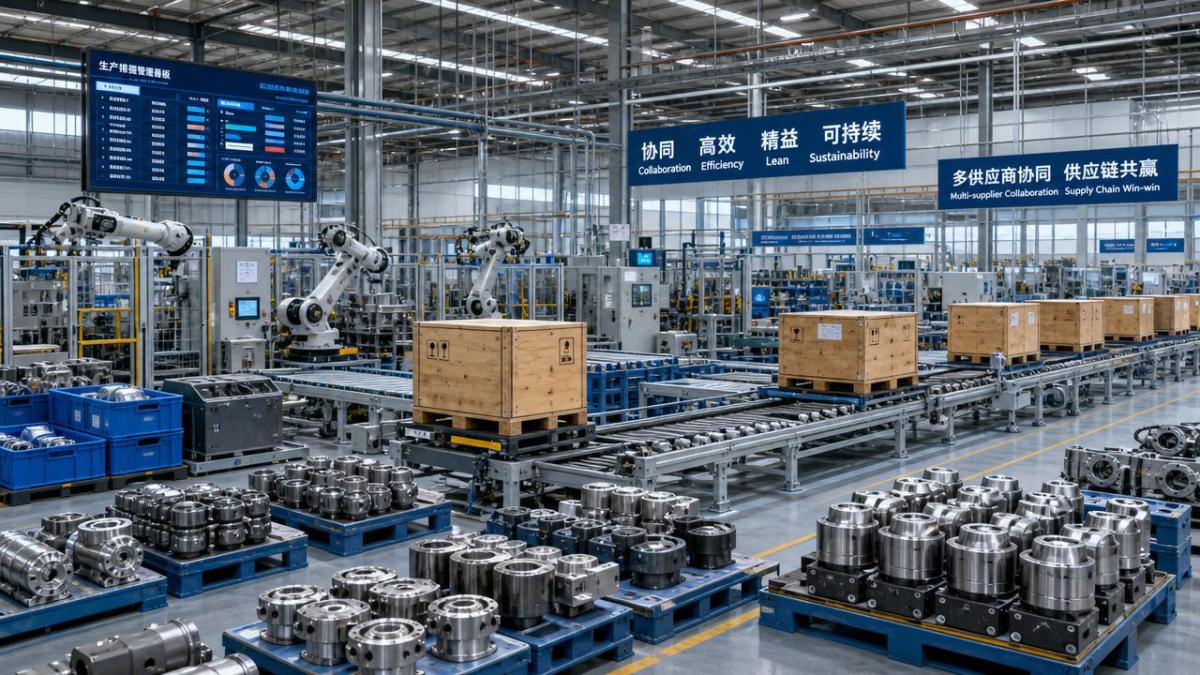
Multi-supplier programs are vulnerable because they run on interdependence. A fabricated component cannot move to machining until raw material certification is approved. A robotic cell cannot be commissioned until controls hardware, sensors, safety enclosures, and software validation all converge within a narrow window. When each supplier reports through different spreadsheets, emails, portals, or weekly calls, project teams often discover issues 3 to 7 days too late.
Common delay sources in industrial delivery networks
In most industrial projects, delay risk comes from 4 recurring categories: schedule misalignment, inventory uncertainty, engineering change impact, and logistics disruption. These categories appear across sectors such as process equipment, automated production systems, energy infrastructure, electronics assembly, and high-performance materials supply. Even when each supplier performs reasonably well on its own, the combined system may still fail because milestones are not synchronized.
- Schedule gaps between purchase order dates, production slots, and installation windows
- Insufficient visibility into WIP, quality hold status, or shipment readiness
- Engineering revisions that affect 2 to 5 downstream suppliers without immediate notification
- Transport variability, customs clearance, and regional compliance documentation delays
The compounding effect of small disruptions
A 24-hour slip at one supplier does not remain a 24-hour problem. In an engineered project with tightly linked handoffs, that delay can expand into 3 separate forms of impact: missed assembly sequencing, labor reallocation, and expedited freight cost. If a site installation team has a 5-day access window and one critical module misses departure, the entire commissioning phase may shift by 1 to 2 weeks.
Supply chain orchestration tools reduce this compounding effect by turning disconnected status updates into coordinated action triggers. Instead of waiting for weekly review meetings, project teams can detect a threshold breach in near real time, reroute dependent tasks, and prioritize corrective action where schedule sensitivity is highest.
What Supply Chain Orchestration Tools Actually Do
At a practical level, supply chain orchestration tools sit above transactional systems and unify workflow across suppliers, internal planners, procurement teams, logistics providers, and project owners. Their purpose is not just visibility. The real value comes from coordinated execution: aligning commitments, identifying exceptions, and automating response logic before delays spread across the program.
Core functions that matter to project leaders
For engineering and project teams, the most useful platforms typically combine 5 functional layers: milestone tracking, dependency mapping, exception management, supplier collaboration, and forecast-based alerting. These functions are especially important when lead times range from 2 weeks for standard parts to 16 weeks or more for custom fabricated assets, castings, electronics, or automation components.
The table below shows how common orchestration capabilities translate into delay reduction across industrial operations.
The key takeaway is that supply chain orchestration tools do more than display a dashboard. They create a control system for cross-company execution. That matters in industrial environments where delays often originate in handoffs rather than in isolated supplier failure.
Visibility alone is not enough
Many organizations already have ERP, MES, PLM, TMS, or supplier portals, yet still struggle with schedule reliability. The gap is orchestration logic. A project manager needs to know not only that a shipment moved from “in production” to “delayed,” but also which 3 tasks, 2 contractors, and 1 installation date are now exposed. Effective tools translate status into priority and action.
How These Tools Reduce Delays Across Engineering, Procurement, and Production
In multi-supplier programs, delays tend to move across functions. An engineering revision affects procurement commitments. Procurement slippage affects production sequencing. Production disruption affects logistics windows and site delivery. Supply chain orchestration tools reduce total delay by managing these transitions as one connected process instead of 3 separate departments.
Engineering change control with supplier impact awareness
In capital equipment and advanced industrial systems, design changes often occur after supplier engagement. If a bill of materials update changes tolerances, coatings, firmware, or material grade, the impact may cascade to 2 to 6 suppliers. Orchestration platforms help teams push revision notices, capture acknowledgment timestamps, and assess whether the revised lead time still fits the project critical path.
Procurement alignment across long and short lead items
A frequent planning mistake is managing all suppliers with the same cadence. In reality, standard MRO or catalog components might require 7 to 14 days, while machined frames, power electronics, specialty alloys, or control cabinets may require 6 to 18 weeks. Supply chain orchestration tools segment suppliers by risk profile, lead-time class, and milestone sensitivity so project managers can focus effort where slippage will hurt most.
Production and logistics coordination
When production scheduling and outbound logistics are disconnected, finished goods may sit idle for 3 days waiting on paperwork, consolidation, or transport allocation. Orchestration systems help synchronize readiness checks, packaging milestones, export documents, and carrier booking status. That reduces dwell time and lowers the need for premium freight, especially when plant shutdown windows or customer acceptance dates are fixed.
- Identify critical path items and assign threshold alerts, such as more than 48 hours variance.
- Map supplier dependencies to downstream work packages and site activities.
- Automate escalation when milestone confidence drops below an agreed level.
- Resequence build, inspection, or shipping activities to preserve the final delivery date.
For project leaders, this means fewer surprises at stage-gate reviews and better recovery options when disruption occurs. The strongest value usually appears not in eliminating every delay, but in reducing the severity, duration, and downstream spread of unavoidable disruptions.
What to Look for When Selecting Supply Chain Orchestration Tools
Not every platform is suitable for industrial project delivery. Some tools are optimized for retail replenishment or basic order tracking but lack the depth needed for engineered products, validation stages, multi-tier supplier coordination, and change-intensive workflows. Project managers should evaluate solutions against operational reality, not only software feature lists.
Five evaluation dimensions for industrial buyers
The most effective procurement approach is to score platforms across 5 dimensions: integration depth, milestone configurability, supplier usability, exception management, and analytics quality. A practical assessment period is often 4 to 8 weeks, enough to test data flow, role-based access, and live exception handling with a pilot supplier group.
The comparison below can help structure a selection process for complex industrial environments.
A strong platform should also support multi-tier reasoning. In advanced industrial supply chains, a Tier 1 supplier may look healthy while its Tier 2 electronics, resin, or machined component source is already late. If the tool cannot surface that dependency, project teams still operate with incomplete risk visibility.
Questions buyers should ask vendors
- Can the platform manage both repetitive procurement and one-off project milestones?
- How quickly can it onboard 10 to 25 suppliers in a pilot phase?
- Can it track document-driven checkpoints such as certificates, test reports, or compliance forms?
- Does it support date confidence scoring, not just binary status reporting?
Implementation Best Practices for Project Managers
Even the best supply chain orchestration tools underperform if implementation starts as a software rollout instead of an operating model change. Success depends on clear milestone definitions, disciplined supplier engagement, and response rules that teams actually use. For most organizations, a phased deployment over 90 to 180 days is more effective than a full-network launch on day one.
A practical 5-step rollout model
- Select one project family or product line with 5 to 12 active suppliers.
- Define milestone templates, date thresholds, risk codes, and escalation owners.
- Integrate the minimum required data sources before adding advanced analytics.
- Run a live pilot for 6 to 8 weeks and measure response time, schedule adherence, and data completeness.
- Expand to additional suppliers only after workflow discipline is proven.
Metrics that indicate real progress
Project leaders should avoid judging success only by login rates or dashboard views. Better indicators include milestone update latency, number of exception cases closed within 24 hours, reduction in expedite shipments, and improvement in on-time-in-full delivery at critical handoff points. A useful target in early phases is to cut manual status chasing by 30% to 50% while improving issue detection speed.
Typical implementation mistakes
Three mistakes appear frequently. First, teams overload the platform with too many data fields before core workflows are stable. Second, they track every purchase equally instead of focusing on high-impact dependencies. Third, they fail to define who acts when an alert is triggered. Supply chain orchestration tools only reduce delays when exception ownership is unambiguous.
For institutions such as G-AIE that evaluate industrial resilience through the convergence of material science and intelligent automation, the strategic value is clear: orchestration turns fragmented supply events into structured operational intelligence. That supports stronger benchmarking, better procurement governance, and more resilient delivery execution across advanced industrial ecosystems.
Final Considerations for Delay-Resilient Operations
As supplier networks become more global, customized, and technically interdependent, delay management can no longer rely on spreadsheets, periodic calls, and isolated departmental systems. Supply chain orchestration tools give project managers a practical way to align engineering, sourcing, production, and logistics around shared milestones and faster exception response. The result is not just better visibility, but tighter control over delivery outcomes.
If your team is managing multi-supplier industrial programs with strict deadlines, variable lead times, and high change sensitivity, now is the right time to assess where orchestration can reduce schedule risk. To explore a more resilient operating model, contact us to discuss your requirements, get a tailored solution framework, or learn more about industrial supply chain orchestration strategies built for complex project environments.
Recommended News
 Jun 15, 2026EU Requires nano-TiO₂ Traceability for Coatings ImportsEU requires nano-TiO₂ traceability for coatings imports from July 1, 2026. Learn the EU-CEP filing rules, customs risks, and key compliance steps for importers and suppliers.
 Jun 15, 2026ECI-26Q2 Hits 142.3, Pressuring Electronic Grade Chem ExportsElectronic Grade Chem exports face rising pressure as ECI-26Q2 hits 142.3. Explore supply tightening, higher freight costs, quota-based supply, and what buyers and exporters should do now.
 Jun 15, 2026TÜV Rheinland Adds Nano-Migration Test for Barrier FilmsTÜV Rheinland adds mandatory nano-migration testing for Barrier Films under EN 13432:2026, impacting CE marking, EU market access, and certification timelines. Learn what exporters and manufacturers must do now.
 Jun 15, 2026U.S. Expands Export Controls on Anti-Drone GearU.S. Expands Export Controls on Anti-Drone Gear: learn how new ECCN 7A994 rules, licensing demands, and military end-use limits may disrupt exports, compliance, and delivery planning.
 Jun 15, 2026Hormuz Closure Extends EU Resin ShipmentsHormuz Closure Extends EU Resin Shipments: explore how the Strait of Hormuz shutdown is delaying EU resin deliveries, driving freight costs up, and reshaping procurement, logistics, and electronics supply-chain planning.
 Jun 14, 2026Industrial Automation Solutions: How to Balance ROI, Scalability, and DowntimeIndustrial automation solutions explained: learn how to balance ROI, scalability, and downtime risk with scenario-based strategies that improve uptime, integration, and long-term value.
 Jun 14, 2026Product Testing Methods That Reduce Failure Risk Before LaunchProduct testing methods that reduce launch risk: learn how to match functional, stress, environmental, and compliance testing to real-world conditions before release.
 Jun 14, 2026Stem Learning Kits Wholesale: Key Factors Before You Compare SuppliersStem learning kits wholesale decisions go beyond price. Compare suppliers by safety, curriculum fit, supply stability, and private-label support to protect margins and scale with confidence.
 Jun 14, 2026Consumer Development Trends Shaping Product Strategy in 2026Consumer development is reshaping product strategy in 2026 through measurable value, sustainability, digital services, and supply resilience. Explore the trends driving smarter decisions.
 Jun 14, 2026How to Evaluate Glass Christmas Ornaments OEM for Quality and Lead Timeglass christmas ornaments OEM evaluation guide: learn how to compare quality control, packaging protection, customization costs, and lead time reliability before choosing a supplier.
 Jun 14, 2026TÜV Rheinland adds nano migration test to EN 13432 barrier filmsTÜV Rheinland adds nano migration test to EN 13432 barrier films, reshaping EU certification and customs fast-track access. See what exporters, converters, and buyers must do now.
 Jun 14, 2026ECI-26Q2 Hits 142.3, Raising Export Cost PressureECI-26Q2 hits 142.3, driving export cost pressure across electronic chemicals. Learn how pricing, supplier qualification, and delivery risks are reshaping global trade decisions.
 Jun 14, 2026US Tightens Export Controls on Anti-Drone ModulesUS Tightens Export Controls on Anti-Drone Modules: learn how the BIS update affects sourcing, licensing, compliance, and joint development before the July 15 deadline.
 Jun 14, 2026Hormuz Closure Extends EU Resin Shipments by 14 DaysHormuz Closure Extends EU Resin Shipments by 14 Days: learn how longer routes, higher freight, and rising insurance costs are reshaping PEEK, PPSU, and PEI deliveries to Europe.
 Jun 14, 2026EU Requires Nano TiO₂ Traceability for Functional CoatingsEU nano TiO₂ traceability rules will reshape functional coatings exports from July 1, 2026. See who is affected, required certification, and how to prepare for EU compliance.
 Jun 13, 2026Toy Materials Guide: Safe, Durable, and Easy to SourceToy materials guide for safer, longer-lasting products: compare plastics, wood, silicone, and metals with sourcing, compliance, and durability insights to choose smarter.
 Jun 13, 2026Gift Manufacturers: MOQ, Lead Time, and Margin FactorsGift manufacturers compared the smart way: learn how MOQ, lead time, and hidden margin factors affect cost, delivery, and repeat-order success before you buy.
 Jun 13, 2026Nursery Furniture Safety Standards and Material ChoicesNursery furniture safety standards and material choices shape product trust. Learn how compliance, low-emission materials, and durable design reduce risk and improve market confidence.
 Jun 13, 2026ODM Pet Products: How to Evaluate Factory CapabilitiesODM pet sourcing starts with factory capability. Learn how to assess quality control, compliance readiness, customization, and supply resilience before choosing a reliable ODM pet partner.
 Jun 13, 2026Industrial Procurement: Cost Risks and Supplier ChecksIndustrial procurement explained: uncover hidden cost risks, verify suppliers beyond price, and compare sourcing options with practical checks that protect quality, delivery, and margins.
 Jun 13, 2026EU to Require nano-TiO₂ Traceability Reports for Functional Coatings ImportsEU to require nano-TiO₂ traceability reports for Functional Coatings imports from July 2026. Learn compliance risks, supplier checks, customs impact, and how to prepare early.
 Jun 13, 2026GAIE 2026 Opens as Humanoid Robot Prices FallGAIE 2026 opens in Shenzhen as humanoid robot prices fall below RMB 100,000. Explore what this means for manufacturing, procurement, integration, and industrial AI adoption.
 Jun 13, 2026Shenzhen Joins 6G Pilot to Expand AI-Ready NetworksShenzhen joins the 6G pilot to expand AI-ready networks, signaling new opportunities in industrial digitalization, low-latency infrastructure, smart manufacturing, and cross-border service delivery.
 Jun 13, 2026WTO Cuts 2026 Trade Growth Outlook to 1.9%WTO Cuts 2026 Trade Growth Outlook to 1.9% as Hormuz disruption delays ocean freight. See how Servo Actuators, Harmonic Reducers, and Planetary Gearboxes buyers can manage risk.