Search News
Industry Portal
Popular Tags
Toy Materials Guide: Safe, Durable, and Easy to Source

Author
Time
Click Count
Choosing toy materials is no longer a narrow product decision. It sits at the intersection of child safety, mechanical performance, regulatory control, and supply continuity. A material that looks cost-effective on paper can fail when exposed to repeated impact, saliva, UV light, cleaning agents, or unstable upstream supply. That is why a practical toy materials guide must connect lab properties with real production conditions.
For organizations tracking industrial benchmarks through ecosystems such as G-AIE, the question is not simply which material is popular. The more useful question is which option remains safe, durable, and easy to source across changing compliance rules, regional manufacturing footprints, and digital quality systems. In that context, toy materials become a strategic evaluation topic rather than a routine purchasing line.
Why toy materials matter more than before

Material selection influences almost every downstream outcome. It affects mold design, assembly methods, shipping damage rates, surface finish stability, testing requirements, and even how quickly substitute suppliers can be qualified.
The market also expects more from toys than simple visual appeal. Products are handled more intensely, used across age ranges, and sold into markets with stricter chemical and traceability controls.
At the same time, sourcing has become less predictable. Resin volatility, timber certification pressure, silicone formulation differences, and metal finishing compliance all shape risk. A good toy materials decision balances performance in use with resilience in procurement.
A practical way to read material suitability
In toy development, “safe” does not only mean non-toxic. It also means low migration risk, appropriate edge behavior, stable colorants, predictable wear, and a production process that does not introduce contamination.
“Durable” is equally context-specific. A rattle, teether, ride-on toy, puzzle, or electronic learning device will stress materials in very different ways. Impact resistance, flex fatigue, bite resistance, coating adhesion, and dimensional stability all matter, but not equally.
“Easy to source” also deserves closer reading. Availability should include regional supplier depth, consistency between lots, access to compliance paperwork, price predictability, and ease of switching to an equivalent grade when needed.
Core evaluation dimensions
- Chemical safety profile, including additives, pigments, plasticizers, and coatings
- Mechanical behavior under drop, torsion, compression, and repeated handling
- Process fit for molding, machining, assembly, overmolding, or finishing
- Regulatory documentation quality and lot-level traceability
- Supplier ecosystem maturity across more than one region
How major toy materials compare in real use
There is no universal best choice. Different toy materials solve different design and sourcing problems. The most reliable approach is to compare them against likely use conditions, not against idealized brochure claims.
Plastics remain dominant for a reason
For many categories, plastics are still the most efficient toy materials. They support tight tolerances, integrated features, color flexibility, and high-volume molding. Polypropylene and polyethylene often perform well where toughness and chemical resistance matter.
ABS remains attractive for harder housings and dimensional precision. Still, not every grade behaves the same. Regrind percentage, flame retardants, pigments, and finish chemistry can change both performance and compliance outcomes.
Wood succeeds when process discipline is strong
Wooden toys carry clear market appeal, but wood is not automatically lower risk. Grain variation, moisture content, knot frequency, and coating absorption can create inconsistent results if incoming control is weak.
Where wood works best, machining standards and finish validation are tightly controlled. Certified sources and documented species substitution rules also reduce procurement surprises.
Silicone and metals need closer specification control
Silicone is widely used in sensory and infant-related products because it offers softness, thermal stability, and good cleanability. Yet performance depends heavily on formulation purity, curing quality, and post-processing discipline.
Metals are less common as primary toy bodies, but they are important in axles, fasteners, frames, springs, and precision inserts. Surface treatment quality often matters more than base metal selection alone.
Compliance is part of material performance
A material cannot be treated as suitable until compliance evidence is as robust as its technical data. For toy materials, substance restrictions and migration limits are not side documents. They directly affect design release and supplier approval.
Standards vary by market, but several themes remain consistent: restricted chemicals, flammability requirements, mechanical hazard prevention, and documentation traceability. Testing must align with the actual construction, not just the raw input.
Documents worth reviewing early
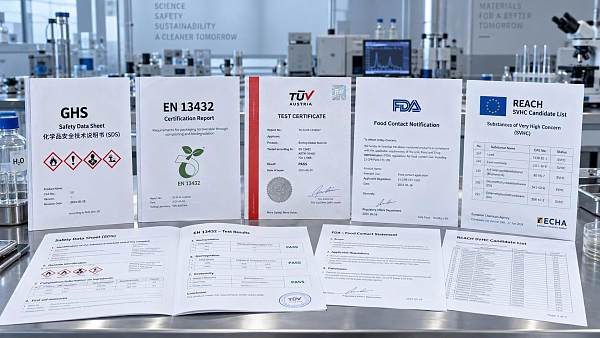
- Material declarations linked to exact grades and color variants
- Migration or substance test reports from recognized laboratories
- Coating and ink compliance records for decorated surfaces
- Lot traceability records covering resin, timber, or elastomer batches
- Change notification procedures for formulation or source shifts
From a benchmarking perspective, strong suppliers treat compliance as a living system. They maintain revision control, digital records, and structured substitution management. This is where the G-AIE view becomes useful, because material science and intelligent automation increasingly operate together.
What sourcing teams often miss
Low quoted price can hide a fragile supply model. With toy materials, the bigger risk often sits in second-order details: undocumented additives, unstable color masterbatch sources, inconsistent moisture control, or a single qualified molder.
Ease of sourcing should be tested through real questions. Can the same material grade be purchased in multiple regions? Are equivalent grades truly equivalent in impact strength, shrinkage, and compliance data? How quickly can a replacement source be validated?
Useful sourcing checks
- Confirm whether color and additive packages are globally standardized
- Review historical lot variation, not only target specifications
- Map single-source dependencies for critical toy materials
- Validate packaging and storage conditions that affect stability
- Track lead-time volatility by region and processing partner
Matching toy materials to common product scenarios
Material choice becomes clearer when tied to use cases rather than abstract rankings. A teething product has little in common with a battery-powered vehicle or a painted stacking block.
The point is not to force one answer. It is to narrow toy materials according to the actual stress profile, cleaning pattern, age grading, and supply architecture behind each product family.
A better decision process for the next evaluation cycle
A stronger review process starts by linking material data, compliance evidence, and sourcing resilience in one matrix. That makes trade-offs visible before tooling or supplier nomination moves too far.
Shortlist toy materials using four filters: use-condition fit, chemical confidence, process repeatability, and alternate-source readiness. Then compare candidate grades against a small number of failure modes that matter most.
Where possible, use benchmark repositories and cross-functional digital records to track how materials perform over time, not just at launch. That discipline turns material selection from a one-time choice into a repeatable capability.
The next useful step is to build a scenario-based checklist for current products, test the most critical toy materials against real operating conditions, and flag any dependency that lacks a credible backup source.
Recommended News
 Sep 19, 2026When can a supply chain LLM reduce time spent finding shipment updates?Supply chain LLMs can cut shipment-update search time by connecting carrier events, ERP data, and documents—giving teams traceable answers and faster exception response.
 Sep 18, 2026How industrial monitoring equipment helps prevent unplanned downtimeIndustrial monitoring equipment helps teams detect early asset issues, prioritize maintenance, and prevent costly unplanned downtime. Explore practical strategies for reliable operations.
 Sep 17, 2026What next-gen harmonic drive research means for robot joint accuracyNext-gen harmonic drive research reveals how backlash, stiffness, thermal drift, and sensing shape robot joint accuracy. Explore smarter validation strategies.
 Sep 16, 2026How Southeast Asian climates affect cylinder seal frictionCylinder seal friction Southeast Asia: learn how humidity, heat, monsoons, and contamination affect motion stability, wear, and seal selection.
 Sep 15, 2026How to size DC gear motors for the required starting torqueGear motors DC sizing made practical: calculate starting torque, account for friction, gravity, inertia and voltage drop, then select a reliable motor with confidence.
 Sep 14, 2026How to verify high purity chemicals compliance before supplier approvalHigh purity chemicals compliance: learn how to verify supplier quality systems, CoAs, traceability, testing, and change control before approval.
 Sep 13, 2026What permits are needed to operate mapping drones in Europe?Mapping drones Europe: discover the permits, EASA categories, airspace approvals, site access, and GDPR checks needed for compliant aerial surveys.
 Sep 12, 2026What lead time should I expect for automatic transmission components? Planetary Gearboxes delivery forecasting for OEM planningWhat lead time should I expect for automatic transmission components? Get dynamic, AI-powered planetary gearbox delivery forecasting—designed for OEMs building next-gen hybrid & commercial powertrains.
 Sep 12, 2026Can polyamide replace metal in load-bearing components? Polymer Pulse structural performance data for 2026 applicationsCan polyamide replace metal in load-bearing components? Discover Polymer Pulse’s 2026 structural data—real-world performance, weight savings, and reliability breakthroughs.
 Sep 12, 2026How to handle a power electronics warranty claim: Harmonic Reducers documentation and escalation pathHow do I handle a power electronics warranty claim? Get a fast, intelligent, evidence-driven resolution for harmonic reducers—no bureaucracy, just precision diagnostics and real-time escalation.
 Sep 12, 2026Which motion control specifications matter most before purchase? Torque Logic selection criteria for automation engineersWhich motion control specifications are most important before purchase? Discover Torque Logic—the 4 non-negotiable, AI-aligned criteria that cut TCO by 27–41% and boost motion system availability to 99.992%.
 Sep 13, 2026Is agentic AI reliable enough for supplier screening? Supply Chain LLM validation framework for procurement teamsIs agentic AI reliable enough for supplier screening? Discover a rigorous LLM validation framework built for procurement teams—grounded in material traceability, regulatory compliance, and real-world operational constraints.
 Sep 14, 2026How to maintain edge AI systems after deployment: Predictive Maint AI operational protocols for field techniciansHow do I maintain edge AI systems after deployment? Discover predictive, physics-aware operational protocols designed for real-world field technicians—sustaining intelligence where silicon meets steel.
 Sep 15, 2026What compliance documents must a bioplastics supplier provide? Bio-Plastics regulatory checklist for procurementWhat compliance documents should a bioplastics supplier provide? Get our actionable regulatory checklist for food, medical & EU-bound applications.
 Sep 16, 2026How to prevent PET film defects during production: Barrier Films process control best practicesHow can I prevent PET film defects during production? Discover physics-driven barrier film process control—thermal precision, dynamic tension management & surface energy optimization.
 Sep 17, 2026Are thermoplastics suitable for long-term outdoor use? Engineering Resins durability assessment in 2026 UV/weather exposureAre thermoplastics suitable for long-term outdoor use? Discover 2026’s engineering resin durability insights — UV/weather resistance ranked, tested & actionable.
 Sep 18, 2026What to do when a servo motor fails during production: A Servo Actuators troubleshooting guide for maintenance teamsWhat should I do if a servo motor fails during production? Get a field-tested, AI-aware troubleshooting guide for maintenance teams—minimize downtime, maximize OEE.
 Sep 12, 2026How to compare wholesale party supplies by minimum order valueCompare wholesale party supplies by minimum order value, freight, SKU flexibility, and stock risk to choose suppliers that protect margins and simplify replenishment.
 Sep 11, 2026How proportional solenoid linearity affects precision motion controlProportional solenoid linearity directly affects precision motion control, valve metering, stability, and calibration. Learn how to evaluate performance for reliable automation.
 Sep 10, 2026When does supplier information platform automation reduce onboarding delays?Supplier information platform automation reduces onboarding delays by streamlining data collection, routing, renewals, and compliance checks—without replacing expert technical review.
 Sep 09, 2026How to size robotic motion systems for AMR payload changesRobotic motion systems for AMR payload changes: learn how to size motors, wheels, gearing, traction, and controls for safer, reliable performance.
 Sep 08, 2026How to perform a cylinder rod buckling calculation for long strokesCylinder rod buckling calculation made practical: learn how to assess effective length, end conditions, rod stiffness, load forces, and safety margins for reliable long-stroke cylinder design.
 Sep 07, 2026How to estimate the cost of industrial mechanical components before orderingIndustrial mechanical components cost: learn how to estimate material, machining, tooling, inspection, logistics, and hidden expenses before ordering. Compare quotes confidently and reduce sourcing risk.
 Sep 07, 2026What Is a Product Standards Database Used For?Product standards database guide: learn how to compare requirements, verify revisions, control specifications, and reduce compliance risks across design, sourcing, and production.