Search News
Industry Portal
Popular Tags
AI in Manufacturing Benefits That Matter Most on the Factory Floor
Author
Time
Click Count
From reducing downtime to helping operators make faster, safer decisions, AI in manufacturing benefits are becoming impossible to ignore on today’s factory floor. For users and frontline personnel, the value is not just about advanced technology—it is about smoother workflows, fewer disruptions, better quality control, and more confidence in daily operations. This article explores the practical advantages that matter most where production performance is won or lost.
For operators, technicians, line leaders, and plant users, the discussion around AI is no longer theoretical. It is tied to daily realities: unplanned stoppages, variable cycle times, defect escapes, labor pressure, and the need to hit output targets shift after shift. In complex industrial environments shaped by advanced materials, automation, and stricter supply chain expectations, practical deployment matters more than buzzwords.
Within the broader industrial ecosystem, organizations such as G-AIE focus attention on the intersection of material science and intelligent automation because this is where measurable gains appear. On the factory floor, the most important AI in manufacturing benefits are usually visible within 3 to 6 months in the form of faster response, better process visibility, and more consistent execution across machines, cells, and workstations.
Where AI Delivers the Most Value to Factory Floor Users
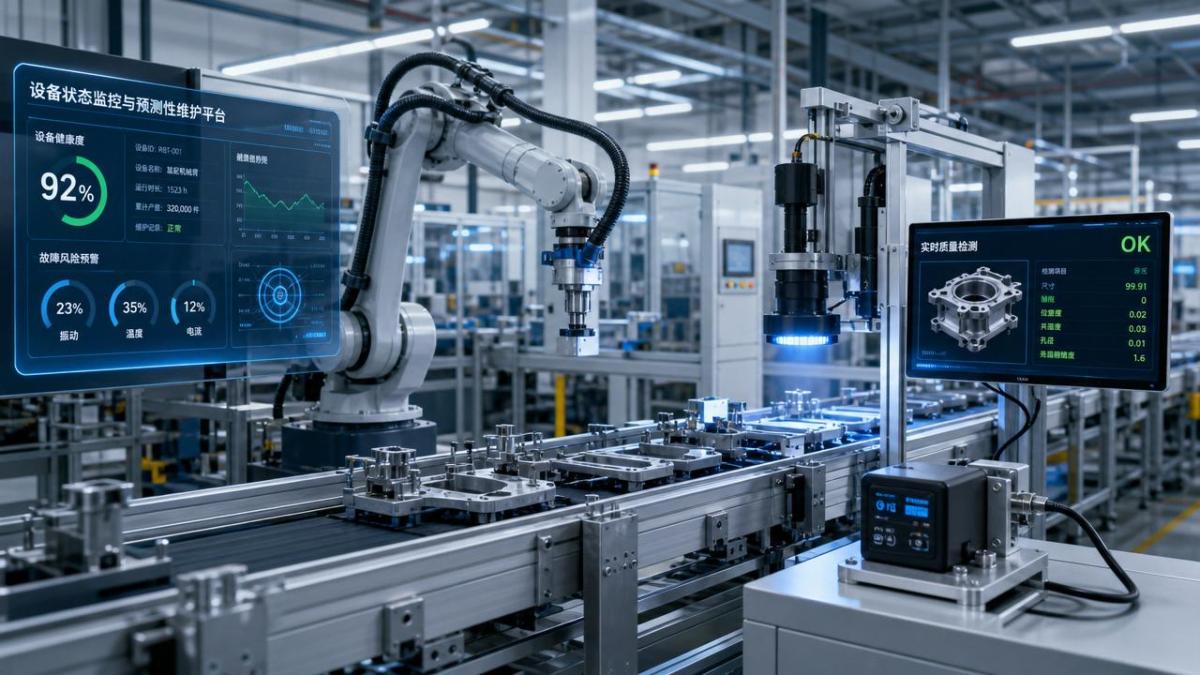
The strongest AI in manufacturing benefits usually emerge in high-frequency, high-variability tasks. These include monitoring equipment health, guiding operators through process adjustments, identifying early defect signals, and prioritizing maintenance actions before a small issue becomes a 4-hour shutdown. For frontline users, the value is immediate when AI reduces guesswork and shortens the time between problem detection and corrective action.
In many plants, operators still rely on manual logs, alarm histories, and tribal knowledge. That works until complexity rises. A line with 20 to 50 critical variables—temperature, torque, pressure, vibration, feed rate, curing time, or dimensional tolerance—can drift in ways that are difficult to detect with standard dashboards. AI systems help by recognizing patterns across thousands of data points per shift and surfacing exceptions that matter.
1. Less Downtime and Faster Recovery
Unplanned downtime is one of the clearest areas where AI shows operational value. Instead of waiting for a motor, conveyor, robot joint, pump, or thermal unit to fail, predictive models can flag abnormal behavior 24 to 72 hours earlier based on vibration changes, rising current draw, or cycle deviation. That gives users time to escalate, inspect, and plan intervention during a scheduled pause.
Even when failures still occur, AI can reduce mean time to diagnose. By correlating alarms, sensor patterns, and recent process changes, systems can suggest the top 3 likely causes instead of forcing users to search through dozens of machine events. On lines where every 10 minutes of downtime affects takt adherence, this can have a meaningful impact on shift performance.
Operator-Level Impact
- Earlier warning before wear reaches failure threshold
- Fewer emergency callouts during second or third shift
- Shorter troubleshooting cycles, often reduced from 45 minutes to 15–20 minutes
- Better coordination between production, maintenance, and quality teams
2. Better Quality Control at the Point of Production
Another major area of AI in manufacturing benefits is in-process quality assurance. Traditional inspection often catches defects at the end of the line, after labor, material, and machine time have already been consumed. AI-assisted vision systems and process analytics can detect anomalies in real time, whether the issue is surface inconsistency, assembly misalignment, fill variation, bonding instability, or thermal distortion.
For users, this means fewer repeated checks and fewer situations where a defect trend goes unnoticed for 50 or 100 parts. In many manufacturing settings, catching a drift within the first 5 to 10 units is far less costly than identifying it after a full batch or pallet has been processed. That matters even more when advanced materials or tight tolerance assemblies are involved.
The table below shows how common factory floor problems translate into user-facing AI advantages in day-to-day production.
The pattern is clear: when AI is tied to an identifiable shop-floor pain point, the outcome is easier adoption and faster operational payback. Users respond best when the system helps them act sooner, not when it simply adds another dashboard.
Why These Benefits Matter in Real Production Conditions
Factory environments are noisy, time-sensitive, and constrained by output commitments. A recommendation engine is only useful if it works within the reality of shift changeovers, preventive maintenance windows, production sequencing, and material handling limits. This is why the most durable AI in manufacturing benefits are those that improve execution under pressure rather than just generating reports after the fact.
Safer Decisions Under Time Pressure
Operators often make decisions within 30 to 90 seconds when responding to abnormal conditions. AI can support those moments by ranking probable causes, highlighting which parameter moved outside target band, and suggesting the next inspection step. In environments involving heat treatment, automated material transfer, chemical dosing, or high-speed assembly, better decision support can reduce both safety exposure and process loss.
This is especially important where experienced labor is limited. A plant may have 2 highly experienced troubleshooters for 3 shifts, leaving newer staff to manage routine disturbances. AI-assisted guidance helps standardize response quality without claiming to replace skilled technicians. That distinction matters for adoption and trust on the floor.
More Consistent Output Across Shifts and Sites
Variation between shifts remains a common problem in industrial operations. One crew may run at 96% of target rate while another runs at 88%, even on the same equipment. AI helps reduce this gap by identifying which setup parameters, environmental conditions, or handling sequences are linked to higher first-pass yield. Over time, those insights become standardized operating guidance rather than isolated observations.
For multi-site manufacturers, the advantage is even broader. A best-performing cell in one facility can become a reference model for others, provided the process and material conditions are comparable. This is highly relevant in advanced industrial ecosystems where digital intelligence must support physical asset performance at scale.
Signals That AI Is Solving a Real User Problem
- Alerts are actionable within 1 production cycle, not hours later.
- Operators can explain what the alert means in plain language.
- Recommended actions fit existing safety and quality procedures.
- The number of nuisance alarms stays low enough to preserve trust.
- Response time and scrap trends improve over 4 to 8 weeks.
How to Evaluate AI Tools from a User and Operations Perspective
Not every AI system is useful on the factory floor. Some are technically impressive but difficult to maintain, poorly integrated, or disconnected from operator workflow. For procurement teams, plant engineers, and frontline stakeholders, selection should focus on usability, integration effort, and measurable operational relevance within a defined 60- to 180-day evaluation window.
Key Selection Criteria for Industrial Deployment
A practical evaluation should include at least 4 dimensions: data readiness, workflow fit, explainability, and maintenance burden. If a system needs six months of data cleansing before producing useful output, it may not suit urgent production goals. If users cannot interpret why an alert was triggered, adoption will stall. And if the tool depends on constant data science intervention, the support model may be too fragile.
The following framework helps compare AI options in a way that reflects both operational value and user practicality.
A good solution is not defined by the number of algorithms it uses. It is defined by whether operators can act on it consistently, whether maintenance teams can support it, and whether plant management can trace improvements in downtime, quality loss, or throughput within a realistic operating cycle.
Common Buying Mistakes to Avoid
One common mistake is starting with enterprise ambition instead of a bounded use case. A better approach is to begin with 1 line, 1 constraint, and 1 measurable target such as reducing false rejects by 15%, cutting changeover instability, or lowering unplanned stops on a critical asset group. Another mistake is judging value only by IT metrics rather than floor outcomes like response time, scrap rate, or OEE loss categories.
A third mistake is ignoring human adoption. If users receive too many notifications, unclear alerts, or recommendations that contradict proven safety routines, the system will be bypassed. In industrial settings, trust is earned through relevance, consistency, and clear boundaries on what AI should and should not control.
Implementation Steps That Help AI Succeed on the Factory Floor
Successful rollout usually follows a structured 5-step path rather than a full-scale launch. This is where many of the long-term AI in manufacturing benefits are either secured or lost. The goal is not only technical activation, but repeatable use under real production constraints.
A Practical 5-Step Rollout Model
- Define one operational problem with a baseline metric, such as downtime minutes per week or defect rate per 1,000 units.
- Confirm data sources and quality over a 2- to 4-week observation period.
- Pilot in one area with one user group, usually operators and maintenance on a critical line.
- Measure actionability, false alerts, and response improvements over 30 to 60 days.
- Standardize work instructions, escalation rules, and ownership before scaling.
This phased model lowers risk. It also allows industrial teams to evaluate whether AI recommendations align with process capability, material behavior, and production economics. In sectors where materials are sensitive to humidity, cure time, or thermal stability, process context is as important as the digital model itself.
What Users Need During Deployment
Frontline adoption improves when deployment includes short training loops, not just a one-time presentation. A practical format is 20- to 30-minute sessions per shift, focused on alert meaning, expected response steps, and escalation boundaries. Users also need visible feedback on whether the system is improving outcomes; otherwise, AI becomes another tool competing for attention.
Plants that treat rollout as a joint effort between operations, engineering, maintenance, and quality typically move faster. Each group sees different signals. Operators notice recurring disturbances, maintenance teams understand failure modes, and quality teams see where defects escape. AI works best when these perspectives are linked, not siloed.
Risk Control and Long-Term Maintenance
AI performance can drift if process conditions change. New materials, tooling wear, product mix variation, or altered cycle times can reduce model accuracy over 8 to 12 weeks if no review process exists. That is why plants need governance: who checks alert precision, who approves retraining, and how often model behavior is reviewed against real events.
Users do not need to manage the model itself, but they do need a clear path for reporting weak recommendations or missed events. That feedback loop is essential. The strongest AI in manufacturing benefits come from systems that learn with the process, while staying grounded in plant realities and controlled operational change.
What Frontline Teams Should Expect Next
The next phase of industrial AI will likely be more embedded, more specific, and more operationally aware. Instead of generic analytics, users will increasingly see line-level assistance built around particular assets, material behaviors, and workflow stages. This is aligned with the rise of vertical AI, where tools are designed for concrete industrial tasks rather than broad office productivity.
For factory floor users, that means better contextual alerts, more precise process recommendations, and tighter connection between digital intelligence and physical asset performance. It also means expectations will rise. Plants will look for systems that support resilience, traceability, and sustainable use of materials without adding unnecessary complexity.
Questions Users and Buyers Should Ask
- Which 2 or 3 production losses will this tool reduce first?
- How quickly can operators act on each alert or recommendation?
- What data is required, and how stable is that data source?
- How often will the model need review or recalibration?
- How will success be measured at 30, 60, and 90 days?
When these questions are answered early, adoption improves and procurement decisions become more grounded. That is especially important for advanced industrial organizations trying to connect smart automation with material performance, operating discipline, and scalable production value.
The most important AI in manufacturing benefits are not abstract. They show up in fewer stoppages, faster troubleshooting, better quality decisions, more stable output, and stronger confidence among the people running the line every day. For users and operations teams, the right AI approach is one that supports action, fits workflow, and respects the realities of industrial production.
If your organization is evaluating intelligent automation, predictive maintenance, or AI-driven quality improvement across advanced manufacturing environments, now is the right time to assess where practical gains can be achieved first. Contact us to discuss your application, get a tailored solution path, or learn more about industrial intelligence strategies aligned with your production goals.
Recommended News
 May 12, 2026Hydraulic Motor Torque Density: When Higher Is Not BetterHydraulic motor torque density is not always better. Learn how to assess thermal stability, efficiency, control, and lifecycle cost for smarter industrial motor selection.
 May 12, 2026Hydraulic Manifold Flow Resistance Data for Better Circuit DesignHydraulic manifold flow resistance data helps engineers cut pressure drop, improve efficiency, and design more reliable circuits. Learn what to verify before finalizing your system.
 May 12, 2026Cylinder Seal Friction Metrics and Their Impact on DriftCylinder seal friction metrics reveal how breakaway force, running friction, and stick-slip shape drift, accuracy, and reliability—learn what to compare before selecting or benchmarking industrial cylinders.
 May 12, 2026Proportional Valve Hysteresis Metrics: What Counts as AcceptableProportional valve hysteresis metrics explained: learn what counts as acceptable, compare real-world thresholds, and make smarter sourcing decisions for stable, accurate automation.
 May 12, 2026Hose Burst Pressure Safety Data: Key Limits Before SpecificationHose burst pressure safety data helps buyers verify pressure limits, safety factors, and derating risks before specification. Learn how to compare suppliers and reduce failure exposure.
 May 12, 2026Accumulator Precharge Metrics That Prevent Pressure InstabilityAccumulator precharge metrics help prevent pressure instability, reduce hydraulic risk, and improve uptime. Learn which indicators matter most for safer, more stable industrial performance.
 May 12, 2026Oil Viscosity Effects on Pump Performance and Energy LossOil viscosity effect on pump performance explained: learn how viscosity impacts efficiency, energy loss, heat, leakage, and pump life, with practical checks to improve system reliability.
 May 12, 2026Servo Valve Frequency Response Data for Faster Tuning DecisionsServo valve frequency response data helps engineers tune faster, reduce commissioning risk, and improve control stability. Learn how dynamic response insights support smarter system decisions.
 May 12, 2026Valve Response Time Benchmarks That Matter in Motion ControlValve response time benchmarks that matter in motion control: compare on/off time, rise behavior, repeatability, and pressure effects to choose valves that improve accuracy, stability, and cycle speed.
 May 12, 2026How ISO 4406 Codes Predict Hydraulic FailuresHydraulic system contamination standards (ISO 4406) help predict wear, valve sticking, and pump stress early. Learn how trending codes reduces downtime and supports smarter maintenance.
 May 12, 2026China's Digital Twin AI Solutions Achieve 73% Deal Rate at Hannover Messe 2026Digital Twin AI solutions from China achieved a 73% deal rate at Hannover Messe 2026—driving smart manufacturing collaboration with Siemens and global industrial leaders.
 May 12, 2026FDA-EFSA Joint Guideline Sets Nano-Silver Migration Limit for Bio-PlasticsFDA-EFSA joint guideline sets strict 0.005 mg/kg nano-silver migration limit for bio-plastics — critical for food packaging, medical containers & exporters.
 May 12, 2026BAF Hike to 18% on East Asia–SEA Routes; Air Cargo Inquiries SurgeBAF hike to 18% on East Asia–SEA routes sparks air cargo surge—discover how electronics & AI hardware exporters are adapting with smarter, risk-avoidance routing.
 May 12, 2026TÜV Rheinland Launches Express Vibration Endurance Testing for Planetary Gearboxes in ChinaTÜV Rheinland’s Express Vibration Endurance Testing for planetary gearboxes in China delivers dual-standard (DIN ISO/AGMA) certification in just 5 days — accelerate global market entry.
 May 12, 2026SABIC Updates GCC Certification for Barrier Films with New WVTR StandardSABIC updates GCC certification for barrier films with new ASTM F1249-23 WVTR standard—critical for food, pharma & energy packaging exporters. Act now to avoid delays!
 May 12, 2026Japan METI Adds ICP-MS Fluorohydric Acid Testing for Chinese ExportsICP-MS fluorohydric acid testing now mandatory for Chinese HF exports to Japan—METI’s new rule demands full spectral data within 72h. Act now to avoid clearance delays!
 May 12, 2026EU Functional Coatings Nanoform Registration Deadline: Sep 1, 2026EU Functional Coatings Nanoform Registration Deadline: Sep 1, 2026 — Ensure REACH-compliant nanoform dossiers are submitted now to avoid customs blockage and shipment delays.
 May 11, 2026ISWG Raises BAF on East Asia–Southeast Asia Routes to 18%BAF raised to 18% on East Asia–Southeast Asia routes—+22% total freight costs. Urgent air cargo demand surges 41%. Optimize logistics now.
 May 11, 2026TÜV Rheinland Launches Express Vibration Testing for Planetary Gearboxes in ChinaTÜV Rheinland’s Express Vibration Testing for planetary gearboxes in China slashes validation time to 5 days—fast-track ISO 10816-3 & DIN 3990 certification for EV, robotics & industrial drive suppliers.
 May 11, 2026Vietnam Enforces Trilingual SDS & Toxicity Re-Testing for Industrial CatalystsVietnam enforces trilingual SDS & toxicity re-testing for industrial catalysts—urgent compliance guidance for exporters, importers, and refineries.
 May 11, 2026Japan METI Adds ICP-MS Isotope Analysis for E-Grade HF ImportsICP-MS isotope analysis now mandatory for e-grade HF imports to Japan—key compliance update for Chinese exporters. Act now to meet METI’s 72-hour data submission rule.
 May 11, 2026Global Engineering Resins Prices Rise 1.3% Amid Record-Low InventoryEngineering resins prices surge 1.3% as port inventory hits record low—critical for automotive electronics, 5G, and precision molding teams. Act now.
 May 11, 2026EU Nano-REACH Coating Archive Deadline: Sept 1, 2026EU Nano-REACH coating archive deadline is Sept 1, 2026 — submit SIP & Nanoform Dossiers now to avoid EU customs rejection. Critical for exporters, formulators & OEMs.
![]() May 10, 2026China's Digital Twin AI Solutions Achieve 73% Signing Rate at Hannover Messe 2026Digital Twin AI solutions from China hit 73% signing rate at Hannover Messe 2026 — discover how Siemens’ new Joint Innovation Centers reshape global manufacturing.
May 10, 2026China's Digital Twin AI Solutions Achieve 73% Signing Rate at Hannover Messe 2026Digital Twin AI solutions from China hit 73% signing rate at Hannover Messe 2026 — discover how Siemens’ new Joint Innovation Centers reshape global manufacturing.