Search News
Industry Portal
Popular Tags
How ISO 4406 Codes Predict Hydraulic Failures
Author
Time
Click Count
For after-sales maintenance teams, unexpected hydraulic failures often begin long before alarms appear.
By understanding hydraulic system contamination standards (iso 4406), particle count data becomes a practical early warning signal.
It helps reveal wear, valve sticking, pump stress, and hidden fluid degradation across industrial equipment.
This article explains how ISO 4406 codes support failure prediction, smarter maintenance timing, and lower downtime risk.
What does ISO 4406 actually measure in a hydraulic system?
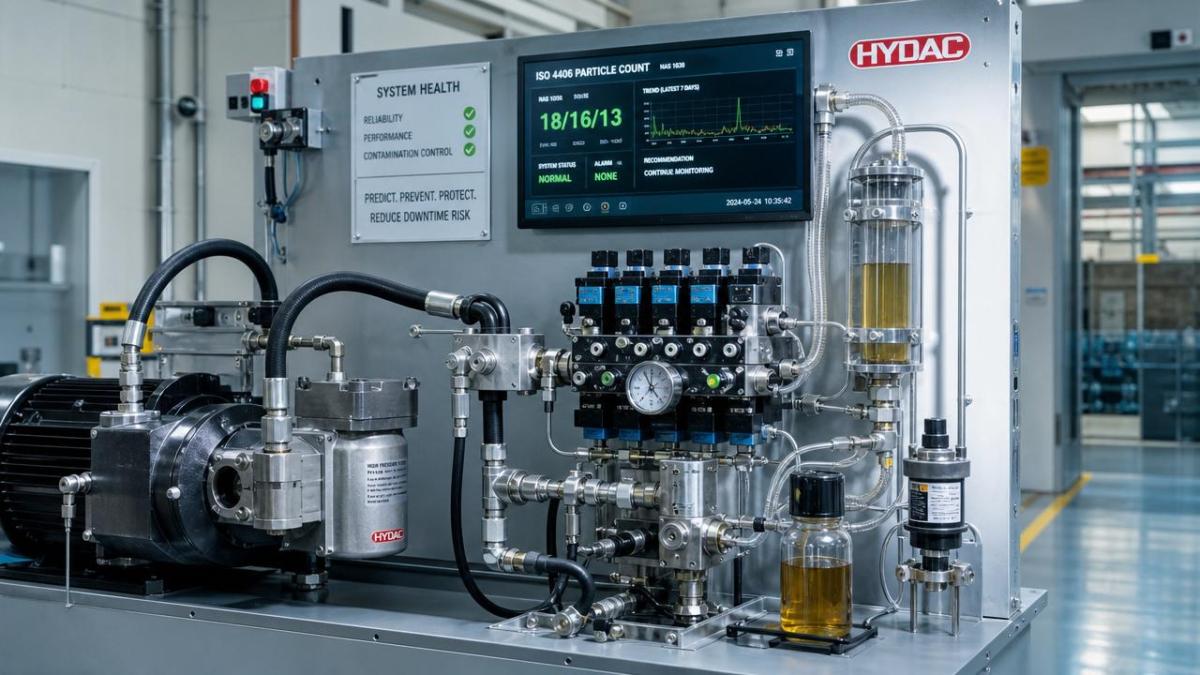
ISO 4406 is a cleanliness coding method for hydraulic fluids.
It converts particle counts into a three-number code, often shown like 18/16/13.
Those numbers represent particles larger than 4, 6, and 14 microns per milliliter.
The higher the code, the dirtier the fluid and the greater the contamination risk.
In practice, hydraulic system contamination standards (iso 4406) create a common language for fluid condition.
That language matters because hydraulic failures are often particle-driven, not sudden or random.
Small particles can scratch pump surfaces, block servo clearances, and accelerate seal wear.
Without a coding standard, contamination trends become subjective and hard to compare over time.
With ISO 4406, service records become measurable, repeatable, and easier to use for root-cause analysis.
How can ISO 4406 codes predict hydraulic failures before alarms appear?
Hydraulic alarms usually react to pressure, temperature, or flow changes after damage has started.
ISO 4406 works earlier because contamination rises during the wear process itself.
A steady increase from 16/14/11 to 19/17/14 may indicate abnormal component distress.
That trend can appear before audible noise, sluggish movement, or temperature spikes.
Pump wear often creates fine metallic debris first.
Valve sticking may follow when contamination reaches critical clearances inside control elements.
Cylinder scoring can develop when larger particles bypass filtration and circulate repeatedly.
Hydraulic system contamination standards (iso 4406) become predictive when codes are trended, not viewed once.
One sample gives a snapshot.
A sequence of samples gives a failure trajectory.
That trajectory helps distinguish normal aging from active failure development.
- Sudden code jump: likely ingression, filter bypass, or maintenance contamination.
- Gradual code rise: often internal wear or declining filtration efficiency.
- High large-particle count: possible severe wear, seal damage, or reservoir contamination.
- Recurring unstable readings: sampling inconsistency or intermittent contamination source.
Which failure modes are most closely linked to hydraulic system contamination standards (iso 4406)?
Not every failure begins with contamination, but many hydraulic failures worsen because of it.
ISO 4406 is especially useful for contamination-sensitive components with tight internal tolerances.
1. Servo and proportional valve sticking
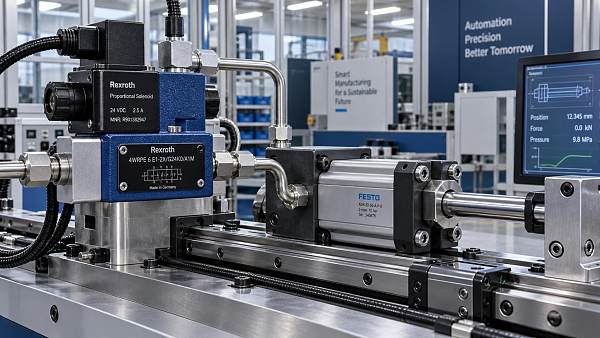
These valves rely on very small clearances and precise spool movement.
Even a moderate cleanliness shift can cause hesitation, drift, or unstable response.
2. Pump wear and efficiency loss
Contaminants can scratch rotating surfaces and disturb lubrication films.
That leads to reduced volumetric efficiency and rising heat generation.
3. Actuator seal damage
Abrasive particles increase seal wear and may damage rod or bore surfaces.
Leakage then grows, creating contamination, heat, and motion instability together.
4. Filter overload and bypass
When particle loading rises quickly, filters can enter bypass or lose efficiency.
That creates a fast contamination spiral across the entire hydraulic circuit.
In broad industrial environments, these patterns appear in presses, mobile machinery, robotics cells, and process systems.
Hydraulic system contamination standards (iso 4406) therefore support both general maintenance and precision troubleshooting.
How should ISO 4406 results be interpreted for maintenance decisions?
A code only becomes useful when compared against equipment targets, fluid history, and operating conditions.
There is no universal acceptable code for every hydraulic system.
High-pressure servo systems usually need cleaner fluid than simple industrial power units.
Interpretation should follow a structured review.
- Confirm the target cleanliness level for the component class.
- Compare the latest code with previous results.
- Check whether all three size ranges increased together.
- Review filter condition, recent service activity, and environment exposure.
- Decide whether to monitor, filter offline, inspect components, or stop operation.
If only one code level changes slightly, it may reflect normal variation.
If all three levels worsen together across several samples, risk is increasing.
Hydraulic system contamination standards (iso 4406) are strongest when paired with temperature, viscosity, and wear debris analysis.
That combination improves confidence before major intervention is approved.
What are the most common mistakes when using ISO 4406 codes?
The first mistake is treating one result as a final diagnosis.
ISO 4406 shows contamination level, not the exact failed part.
The second mistake is poor sampling technique.
Dirty bottles, dead-leg sample points, and inconsistent operating states can distort results.
The third mistake is ignoring machine context.
A code acceptable in one circuit may be dangerous in another.
The fourth mistake is using hydraulic system contamination standards (iso 4406) without action thresholds.
When no trigger levels exist, teams collect data but fail to prevent breakdowns.
- Sample from active flow zones, not stagnant areas.
- Keep sampling intervals consistent.
- Record fluid age, filter age, and recent maintenance events.
- Use trend charts instead of isolated reports.
How can a practical ISO 4406 monitoring program reduce downtime and cost?
A workable program does not need to be complex.
It needs consistent sampling, defined limits, and clear response steps.
Start by ranking systems by criticality, contamination sensitivity, and repair impact.
Then assign target cleanliness levels and sampling frequency for each asset group.
Hydraulic system contamination standards (iso 4406) are especially valuable for equipment with high downtime cost.
Examples include automated production cells, construction fleets, marine systems, and energy process equipment.
When contamination is identified early, response options stay cheaper.
Offline filtration, seal replacement, or targeted inspection usually costs less than catastrophic pump failure.
For a multidisciplinary industrial ecosystem, this data also improves benchmarking across sites and equipment platforms.
That supports stronger reliability governance and better lifecycle planning.
Quick FAQ reference
ISO 4406 is more than a cleanliness label.
Used correctly, it becomes a predictive maintenance tool for hydraulic reliability.
Hydraulic system contamination standards (iso 4406) help translate invisible particle activity into visible service decisions.
The next practical step is simple: define target codes, standardize sampling, and trend results against failure history.
That approach turns contamination control into measurable downtime prevention.
Recommended News
 Sep 19, 2026When can a supply chain LLM reduce time spent finding shipment updates?Supply chain LLMs can cut shipment-update search time by connecting carrier events, ERP data, and documents—giving teams traceable answers and faster exception response.
 Sep 18, 2026How industrial monitoring equipment helps prevent unplanned downtimeIndustrial monitoring equipment helps teams detect early asset issues, prioritize maintenance, and prevent costly unplanned downtime. Explore practical strategies for reliable operations.
 Sep 17, 2026What next-gen harmonic drive research means for robot joint accuracyNext-gen harmonic drive research reveals how backlash, stiffness, thermal drift, and sensing shape robot joint accuracy. Explore smarter validation strategies.
 Sep 16, 2026How Southeast Asian climates affect cylinder seal frictionCylinder seal friction Southeast Asia: learn how humidity, heat, monsoons, and contamination affect motion stability, wear, and seal selection.
 Sep 15, 2026How to size DC gear motors for the required starting torqueGear motors DC sizing made practical: calculate starting torque, account for friction, gravity, inertia and voltage drop, then select a reliable motor with confidence.
 Sep 14, 2026How to verify high purity chemicals compliance before supplier approvalHigh purity chemicals compliance: learn how to verify supplier quality systems, CoAs, traceability, testing, and change control before approval.
 Sep 13, 2026What permits are needed to operate mapping drones in Europe?Mapping drones Europe: discover the permits, EASA categories, airspace approvals, site access, and GDPR checks needed for compliant aerial surveys.
 Sep 12, 2026What lead time should I expect for automatic transmission components? Planetary Gearboxes delivery forecasting for OEM planningWhat lead time should I expect for automatic transmission components? Get dynamic, AI-powered planetary gearbox delivery forecasting—designed for OEMs building next-gen hybrid & commercial powertrains.
 Sep 12, 2026Can polyamide replace metal in load-bearing components? Polymer Pulse structural performance data for 2026 applicationsCan polyamide replace metal in load-bearing components? Discover Polymer Pulse’s 2026 structural data—real-world performance, weight savings, and reliability breakthroughs.
 Sep 12, 2026How to handle a power electronics warranty claim: Harmonic Reducers documentation and escalation pathHow do I handle a power electronics warranty claim? Get a fast, intelligent, evidence-driven resolution for harmonic reducers—no bureaucracy, just precision diagnostics and real-time escalation.
 Sep 12, 2026Which motion control specifications matter most before purchase? Torque Logic selection criteria for automation engineersWhich motion control specifications are most important before purchase? Discover Torque Logic—the 4 non-negotiable, AI-aligned criteria that cut TCO by 27–41% and boost motion system availability to 99.992%.
 Sep 13, 2026Is agentic AI reliable enough for supplier screening? Supply Chain LLM validation framework for procurement teamsIs agentic AI reliable enough for supplier screening? Discover a rigorous LLM validation framework built for procurement teams—grounded in material traceability, regulatory compliance, and real-world operational constraints.
 Sep 14, 2026How to maintain edge AI systems after deployment: Predictive Maint AI operational protocols for field techniciansHow do I maintain edge AI systems after deployment? Discover predictive, physics-aware operational protocols designed for real-world field technicians—sustaining intelligence where silicon meets steel.
 Sep 15, 2026What compliance documents must a bioplastics supplier provide? Bio-Plastics regulatory checklist for procurementWhat compliance documents should a bioplastics supplier provide? Get our actionable regulatory checklist for food, medical & EU-bound applications.
 Sep 16, 2026How to prevent PET film defects during production: Barrier Films process control best practicesHow can I prevent PET film defects during production? Discover physics-driven barrier film process control—thermal precision, dynamic tension management & surface energy optimization.
 Sep 17, 2026Are thermoplastics suitable for long-term outdoor use? Engineering Resins durability assessment in 2026 UV/weather exposureAre thermoplastics suitable for long-term outdoor use? Discover 2026’s engineering resin durability insights — UV/weather resistance ranked, tested & actionable.
 Sep 18, 2026What to do when a servo motor fails during production: A Servo Actuators troubleshooting guide for maintenance teamsWhat should I do if a servo motor fails during production? Get a field-tested, AI-aware troubleshooting guide for maintenance teams—minimize downtime, maximize OEE.
 Sep 12, 2026How to compare wholesale party supplies by minimum order valueCompare wholesale party supplies by minimum order value, freight, SKU flexibility, and stock risk to choose suppliers that protect margins and simplify replenishment.
 Sep 11, 2026How proportional solenoid linearity affects precision motion controlProportional solenoid linearity directly affects precision motion control, valve metering, stability, and calibration. Learn how to evaluate performance for reliable automation.
 Sep 10, 2026When does supplier information platform automation reduce onboarding delays?Supplier information platform automation reduces onboarding delays by streamlining data collection, routing, renewals, and compliance checks—without replacing expert technical review.
 Sep 09, 2026How to size robotic motion systems for AMR payload changesRobotic motion systems for AMR payload changes: learn how to size motors, wheels, gearing, traction, and controls for safer, reliable performance.
 Sep 08, 2026How to perform a cylinder rod buckling calculation for long strokesCylinder rod buckling calculation made practical: learn how to assess effective length, end conditions, rod stiffness, load forces, and safety margins for reliable long-stroke cylinder design.
 Sep 07, 2026How to estimate the cost of industrial mechanical components before orderingIndustrial mechanical components cost: learn how to estimate material, machining, tooling, inspection, logistics, and hidden expenses before ordering. Compare quotes confidently and reduce sourcing risk.
 Sep 07, 2026What Is a Product Standards Database Used For?Product standards database guide: learn how to compare requirements, verify revisions, control specifications, and reduce compliance risks across design, sourcing, and production.