Search News
Industry Portal
Popular Tags
AI in Manufacturing Applications That Reduce Downtime in Daily Operations
Author
Time
Click Count
For after-sales maintenance teams, unplanned stoppages can quickly disrupt service commitments and production continuity. AI in manufacturing applications is reshaping daily operations by enabling faster fault detection, predictive maintenance, and smarter response planning. As industrial systems grow more connected, these tools help maintenance professionals reduce downtime, improve asset reliability, and make data-driven decisions with greater confidence.
For readers searching this topic, the core intent is practical: which AI use cases in manufacturing actually reduce downtime, how they work in daily operations, and what maintenance teams need in order to apply them successfully. After-sales personnel are usually less interested in broad digital transformation messaging and more focused on faster troubleshooting, fewer emergency callouts, clearer maintenance priorities, and better coordination with plant operators.
The most useful answer, therefore, is not a generic overview of artificial intelligence. It is a field-oriented explanation of where AI delivers measurable value, what data and workflows are required, what common implementation problems look like, and how maintenance teams can judge whether a solution will help or create extra complexity. This article focuses on those operational questions.
Why downtime reduction starts with maintenance workflow, not AI theory
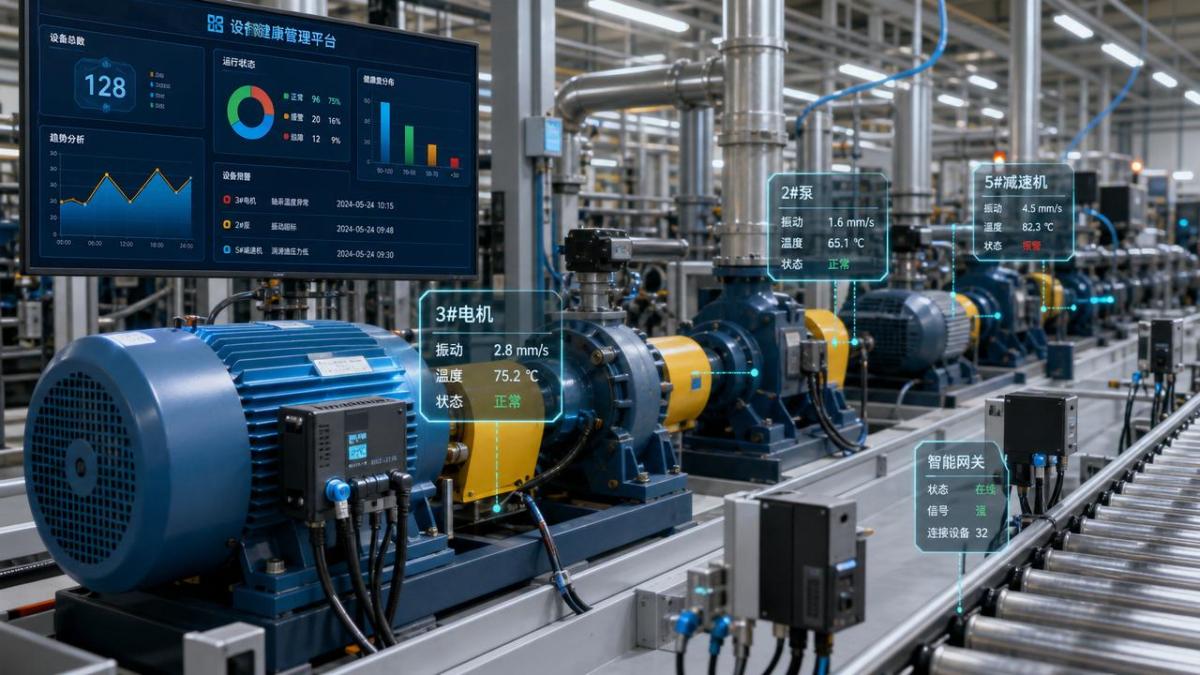
In daily industrial operations, downtime rarely comes from a single dramatic machine failure. More often, it builds from small warning signs that go unnoticed, delayed root-cause identification, spare parts that are not available when needed, or response teams that lack clear diagnostic direction. That is why the best AI in manufacturing applications do not replace technicians. They strengthen the maintenance workflow around detection, prioritization, and action.
For after-sales maintenance teams, the value of AI appears when the system helps answer urgent questions faster. Is this vibration pattern normal or a sign of bearing wear? Which alarm should be treated as critical? Is the fault electrical, mechanical, thermal, or process-related? Should the team dispatch now, schedule intervention during a planned stop, or simply keep monitoring? AI reduces downtime when it shortens the time between signal and decision.
This matters especially in facilities with mixed equipment generations, multiple vendors, and limited on-site specialists. Many plants already generate data from PLCs, SCADA systems, historians, CMMS platforms, and condition monitoring tools. The challenge is not only collecting more information. It is turning fragmented data into maintenance actions that are clear, timely, and operationally realistic.
Which AI in manufacturing applications have the biggest impact on daily uptime
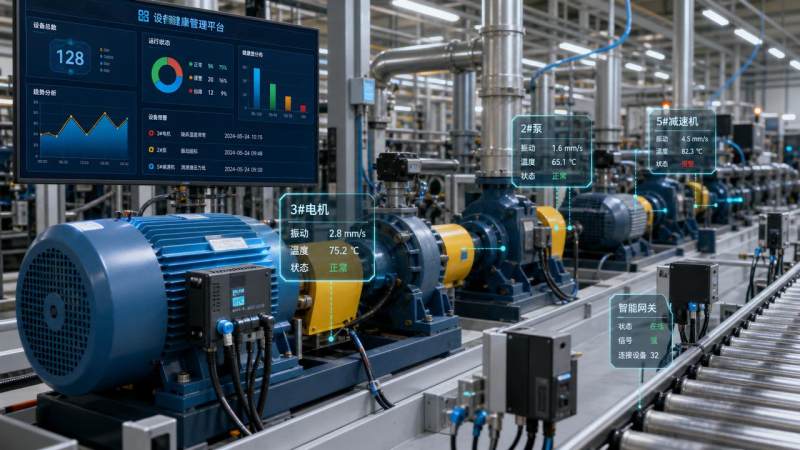
Among the many industrial AI use cases discussed in the market, a few consistently deliver the strongest downtime benefits for maintenance teams. The first is predictive maintenance. Instead of servicing assets strictly by calendar interval or waiting for visible failure, predictive models use data such as vibration, temperature, motor current, pressure, acoustic signals, and cycle counts to estimate abnormal behavior before breakdown happens.
When predictive maintenance works well, teams can intervene during planned windows, prepare the right spare parts, and avoid emergency shutdowns. This approach is particularly valuable for rotating equipment, conveyors, pumps, compressors, fans, spindles, robotic joints, and thermal systems where subtle degradation creates recognizable patterns over time.
A second high-value application is AI-assisted anomaly detection. In many plants, machines operate under changing loads, recipes, or environmental conditions. Static alarm thresholds often miss emerging issues or create too many false alerts. AI models can learn what normal behavior looks like across varying conditions and flag unusual deviations earlier than conventional limits. For after-sales personnel, this helps focus attention on equipment that is drifting toward failure even before a classic alarm is triggered.
A third major use case is fault diagnosis support. Once an issue appears, AI can compare current patterns with historical incidents, maintenance records, and known failure modes to suggest probable causes. This does not eliminate the need for technical judgment, but it can reduce troubleshooting time significantly. Instead of checking ten possibilities, technicians may start with the two or three most likely root causes.
Another practical application is maintenance scheduling optimization. AI can combine asset condition, production schedules, labor availability, and spare parts status to recommend when to perform service with the least operational impact. This is important in high-utilization environments where even a short maintenance stop must be coordinated carefully.
Finally, AI can support spare parts and service readiness. By forecasting likely failures across installed equipment, organizations can hold more appropriate inventory, reduce stockouts, and avoid long waits for critical components. For after-sales teams serving distributed customer sites, this can be as important as the diagnostic model itself. A perfect prediction does not reduce downtime if the replacement part arrives three days late.
How maintenance teams use AI during real service events
To understand the operational value, it helps to look at how AI fits into a typical service event. Imagine a packaging line where a drive motor begins showing rising vibration and fluctuating current draw. In a traditional workflow, the issue may remain unnoticed until the line slows, trips, or fails unexpectedly. Maintenance reacts only after production is already affected.
With AI-enabled monitoring, the abnormal pattern can be identified earlier. The system may detect that vibration is increasing beyond the machine’s learned normal range under similar load conditions. It could then correlate that signal with historical events and suggest possible causes such as misalignment, lubrication failure, or bearing degradation.
The maintenance team receives a prioritized alert instead of a raw data stream. They can review the recommended checks, compare the current trend with past failures, and decide whether the machine should be inspected during the next planned stop. If needed, a replacement bearing kit can be reserved in advance and a field technician assigned with the right tools and probable repair steps.
In this scenario, AI reduces downtime in several ways at once. It detects sooner, filters noise, accelerates diagnosis, improves preparation, and supports better scheduling. The real gain is not just avoiding one catastrophic failure. It is removing the wasted time that usually surrounds uncertainty.
For after-sales teams, similar gains appear in chillers, HVAC units, injection molding machines, CNC systems, pumps, material handling equipment, and industrial utilities. In each case, AI is most valuable when it converts noisy operational signals into a clear maintenance decision pathway.
What after-sales maintenance staff care about most before trusting AI
Maintenance professionals are right to be skeptical of any tool that promises perfect prediction. In the field, trust is earned through useful outputs, not through advanced terminology. The first concern is false alarms. If a system floods technicians with warnings that do not lead to actionable findings, it will quickly be ignored. Good AI must reduce noise, not add another dashboard to monitor.
A second concern is explainability. After-sales teams often need to justify actions to customers, plant managers, or production supervisors. A black-box score without context is not enough. The system should indicate which parameters shifted, how serious the deviation is, and what likely failure modes are associated with the event. Even simple explanatory layers can make the difference between adoption and resistance.
Third, teams care about compatibility with existing tools. If AI outputs are disconnected from CMMS workflows, alarm management systems, or service ticketing processes, the efficiency gain is limited. The most effective AI in manufacturing applications fit naturally into the way maintenance already documents, escalates, and closes work.
Another common concern is data quality. Sensors may drift, machines may be retrofitted, operating modes may change, and asset tags may be inconsistent across systems. These realities can weaken model reliability. Maintenance teams need to know that success does not require perfect data from day one, but it does require disciplined data governance and a plan for gradual improvement.
Finally, after-sales staff want to know whether AI will help them in mixed and aging asset environments, not only on brand-new smart equipment. In practice, many useful applications can begin with relatively modest data sources, especially when targeting high-value assets with repetitive failure patterns. The starting point should be operational relevance, not technical idealism.
What is required to make AI downtime reduction work in practice
Reducing downtime with AI depends on four building blocks: the right assets, the right data, the right workflow integration, and the right human response. If any one of these is missing, performance suffers.
First, choose assets where downtime is expensive, failures are somewhat recurrent, and condition signals can be measured. Not every machine needs AI monitoring. Teams usually gain the fastest returns by starting with bottleneck assets, utilities that affect multiple lines, or equipment with a long repair lead time.
Second, make sure the available data is meaningful. This may include sensor data, alarm history, production context, maintenance logs, operator notes, and spare parts usage. Many organizations underestimate the value of maintenance history. Work orders, technician observations, and failure codes often provide the context that makes machine data useful.
Third, connect AI outputs to actual maintenance actions. An alert should not end as an email that nobody owns. It should trigger triage rules, inspection checklists, service priorities, and where possible, CMMS work order creation. Downtime reduction comes from disciplined response, not from analytics alone.
Fourth, involve technicians and field service teams in model validation. They know which fault patterns matter, which signals are misleading, and which recommendations are realistic during an active production schedule. AI projects perform better when maintenance expertise shapes model logic and alert thresholds from the beginning.
Organizations that succeed usually build incrementally. They start with one or two critical asset classes, establish baseline failure behavior, test alert quality, refine escalation rules, and then expand. This phased approach creates operational trust and avoids the common mistake of launching a large system with unclear ownership.
How to evaluate whether an AI solution will really reduce downtime
For maintenance teams and industrial buyers, the best evaluation question is not “Does this platform use AI?” but “How exactly will this reduce unplanned stoppages in our operating context?” That means reviewing evidence in terms of workflow outcomes, not presentation features.
Start by asking what type of downtime the solution targets. Is it designed for early failure detection, alarm prioritization, root-cause assistance, maintenance planning, or service logistics? Different tools solve different parts of the problem. A strong vibration analytics product may not improve dispatch coordination. A scheduling optimizer may not detect faults early enough on its own.
Next, review measurable performance indicators. Useful benchmarks include mean time to detect, mean time to diagnose, false positive rate, percentage of prevented failures, emergency work order reduction, maintenance labor efficiency, and asset availability improvement. These metrics are far more informative than broad claims about intelligence or automation.
Also examine the implementation burden. How many sensors are required? Can the solution use existing historian or PLC data? How long is the training period? Does it require extensive labeling of historical failures? Can it handle multi-site environments with similar assets but different operating conditions? Practical deployment questions often determine value more than model sophistication.
Cybersecurity and governance also matter, particularly for global industrial networks. If equipment data flows across sites, vendors, and cloud platforms, teams need clarity on access control, data ownership, update procedures, and integration responsibility. A downtime solution that creates governance risk may be rejected even if the analytics are strong.
Finally, ask whether the output is serviceable by the people who will use it every day. Can a maintenance planner understand it? Can a field technician act on it? Can a customer-facing service manager explain it? The strongest industrial AI tools are not the ones that produce the most data. They are the ones that create the clearest action.
Common mistakes that limit downtime benefits
One common mistake is trying to monitor everything at once. This often creates large volumes of low-value alerts and overwhelms maintenance teams before any workflow discipline is established. A focused pilot on critical assets typically delivers better learning and faster proof.
Another mistake is separating AI deployment from maintenance process design. If alert ownership, escalation steps, and response timing are undefined, even accurate predictions may not lead to intervention. Plants then conclude that the AI failed when the actual gap was organizational.
A third issue is poor failure labeling. If historical records are inconsistent, missing, or too generic, models can struggle to distinguish meaningful patterns. Standardized failure codes and technician notes can substantially improve performance over time.
Some organizations also expect immediate full automation. In reality, many of the best AI in manufacturing applications work as decision support systems rather than autonomous maintenance engines. Human review remains important, especially in complex environments with changing process conditions or safety implications.
Lastly, teams sometimes ignore change management. Technicians may distrust a system that appears to second-guess their judgment. Adoption improves when AI is positioned as a tool that enhances technical expertise, captures institutional knowledge, and reduces repetitive diagnostic effort rather than replacing field experience.
The practical outlook for after-sales maintenance teams
For after-sales maintenance professionals, the strongest case for AI is straightforward: less unplanned downtime, faster diagnosis, better preparation, and more predictable service delivery. These gains matter not only to production continuity but also to customer trust, SLA performance, and maintenance cost control.
In day-to-day operations, the most valuable AI in manufacturing applications are the ones that support maintenance decisions at the moment they matter. They identify weak signals before failure, help teams understand what is happening, and improve the timing and quality of intervention. When connected to maintenance workflows, these tools can shift teams from reactive firefighting toward more controlled and confident service execution.
The key is to stay practical. Start with the assets where downtime hurts most. Use the data you already have where possible. Measure success through operational outcomes. Involve technicians early. And choose solutions that produce clear, actionable insight instead of abstract scores.
AI will not eliminate every stoppage, and it will not replace hands-on maintenance skill. But in modern industrial environments, it can materially reduce the uncertainty, delay, and avoidable failure that drive daily downtime. For maintenance teams responsible for keeping operations moving, that is where the real value begins.
Recommended News
 Jun 18, 2026DBDPE Added to SVHC List, Raising Barrier Film Export DutiesDBDPE added to the SVHC List is reshaping Barrier Films exports to the EU. Learn the 0.1% threshold, SCIP, SDS, and supply chain compliance risks now.
 Jun 18, 2026ECI-26Q2 Hits 142.3 as Electronic Grade Chem Export Quotes RiseElectronic Grade Chem export quotes are rising as ECI-26Q2 hits 142.3. See what tighter supply, longer lead times, and Q3 pricing shifts mean for semiconductor chemical buyers.
 Jun 18, 2026EU Ban List Adds 12 Adjuvants, Reformulation Deadline NearsEU Ban List adds 12 adjuvants as the reformulation deadline nears. Learn how the EU adjuvant ban, 0.1% impurity limit, and withdrawal timeline could impact compliance, exports, and supply planning.
 Jun 18, 2026EU PPWR Takes Effect on July 12: PFAS and Recyclability Rules Tighten for Functional CoatingsEU PPWR takes effect on July 12, tightening PFAS limits and recyclability rules for functional coatings. See what importers, packaging teams, and suppliers must do now to stay compliant.
 Jun 18, 2026Strait Reopening Eases Resin Exports to EuropeStrait Reopening Eases Resin Exports to Europe: learn how the partial Hormuz reopening may reduce freight pressure, improve delivery reliability, and reshape short-term supply chain planning.
 Jun 17, 2026B2B Intelligence Platforms: Key Features and Common GapsB2B intelligence platforms can speed supplier discovery, benchmarking, and due diligence. Explore key features, common gaps, and how to choose tools that support smarter industrial decisions.
 Jun 17, 2026How to Choose an Airline Approved Pet Carrier with WheelsAirline approved pet carrier with wheels buying guide: learn how to compare size, comfort, ventilation, and wheel quality to choose a safe, cabin-friendly option for stress-free travel.
 Jun 17, 2026Brand Analytics Tools: What Metrics Matter Most?Brand analytics reveals which metrics truly drive trust, visibility, and conversions. Learn how to measure branded search, sentiment, share of voice, and competitive market strength.
 Jun 17, 2026Custom Challenge Coins Wholesale: MOQ, Lead Time, and Cost FactorsCustom challenge coins wholesale explained: compare MOQ, lead time, and key cost factors to avoid hidden fees, choose the right supplier, and source with more confidence.
 Jun 17, 2026Retail Supply Chain Risks to Watch in 2026Retail supply chain risks in 2026 go beyond cost, from AI-driven demand swings to upstream concentration and sustainability pressure. Discover the signals retailers should watch now.
 Jun 17, 2026Hormuz Closure Extends Resin Shipments to EuropeHormuz Closure Extends Resin Shipments to Europe: learn how a 14-day transit delay and soaring freight rates are reshaping engineering resins supply, delivery risk, and procurement planning.
 Jun 17, 2026TÜV Rheinland adds nano migration test to EN 13432 filmsTÜV Rheinland adds nano migration test to EN 13432 films, reshaping CE marking and EU green procurement access. Learn what Barrier Film makers, exporters, and buyers must do now.
 Jun 17, 2026ECI-26Q2 Jumps to 142.3 as Export Costs RiseECI-26Q2 jumps to 142.3 as export costs rise, lifting Electronic Grade Chem quotes 12%–15% and extending lead times. See what buyers, exporters, and supply chains should do now.
 Jun 17, 2026EU Rule on Nano TiO₂ Traceability Starts July 1EU Rule on Nano TiO₂ Traceability starts July 1, 2026. Learn how ECHA filing, customs risks, and supply chain compliance could impact importers of functional coatings.
 Jun 17, 2026Yiwu Gains Local Liner Shipping CapabilityYiwu Gains Local Liner Shipping Capability reshapes cross-border logistics with stronger local control over routes, schedules, and rates—see what it means for exporters, buyers, and supply chain planning.
 Jun 16, 2026High-Tech Industrial Equipment Trends Shaping 2026 Capex PlansHigh-tech industrial equipment is reshaping 2026 capex plans with smarter automation, material adaptability, and stronger ROI. See the trends driving resilient investment decisions.
 Jun 16, 2026Baby Clothing Safety Labels: What to Check Before OrderingBaby clothing safety labels can make or break an order. Learn what to check for compliance, traceability, warnings, and market-specific rules before you buy.
 Jun 16, 2026Aerospace Hydraulic System Alerts: Common Causes and Fix PathsAerospace hydraulic system alerts explained with common causes, context-first troubleshooting, and practical fix paths to reduce repeat faults, cut downtime, and improve maintenance decisions.
 Jun 16, 2026Pet Grooming Setup Costs: What Matters Before You BuyPet grooming setup costs go beyond equipment prices. Learn what really affects your budget, uncover hidden expenses, and compare smarter before you buy.
 Jun 16, 2026How to Choose a Brand Chain for Load, Wear, and Service LifeBrand chain selection starts with real load, wear, and lubrication demands. Learn how to compare service life, precision, and supplier support for reliable uptime.
 Jun 16, 2026Hormuz Strait Ban Extends EU Resin Lead TimesHormuz Strait ban extends EU resin lead times by 14 days, driving freight spikes and urgent supply-chain changes. See how China-to-EU Engineering Resins buyers can respond fast.
 Jun 16, 2026Langfang Matchmaking Event Signals Tighter Buyer-Ready Trade RulesLangfang matchmaking event highlights tighter buyer-ready trade rules for green building materials and high-performance materials, signaling stronger FOB sourcing, factory review, and technical matching trends.
 Jun 16, 2026TÜV Rheinland Adds Mandatory Nano Migration Test for Barrier FilmsTÜV Rheinland adds a mandatory nano migration test for biodegradable Barrier Films under EN 13432. Learn what ISO/TS 19003:2025 means for certification, compliance, and delivery timelines.
 Jun 16, 2026ECI-26Q2 Hits 142.3 as Export Cost Pressure BuildsElectronic chemicals market alert: ECI-26Q2 hits 142.3 as export cost pressure builds, PCB precursor shortages deepen, and lead times stretch to 12–18 weeks. See key risks and actions now.